

Business
England World Cup match times ‘welcome boost’ for pubs and bars

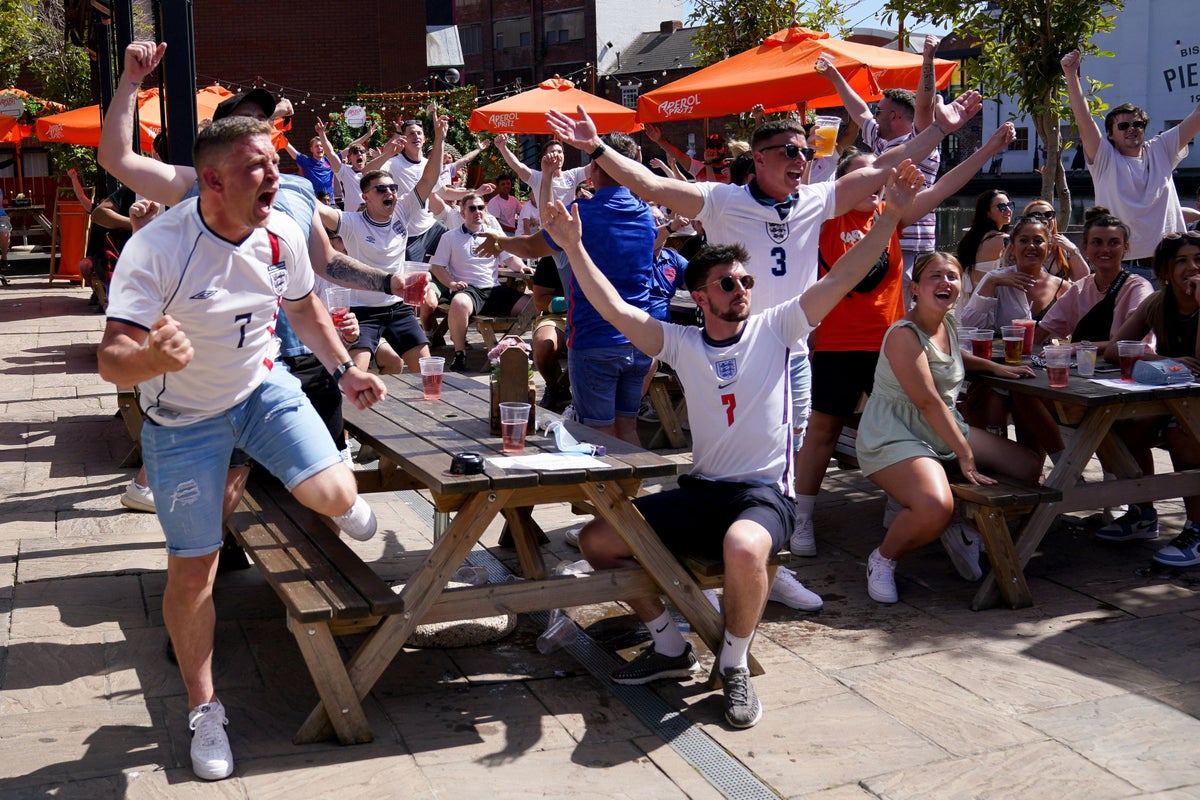
The announcement that England’s group stage matches in the World Cup will kick off before midnight is a “welcome boost” for pubs and bars, the boss of an industry body has said.
There had been some concerns among fans that late fixtures could curtail celebrations as next summer’s tournament will take place in the US, Canada and Mexico, meaning some games will not start until 3am UK time.
Dates, kick off times and stadiums for group stage matches were confirmed on Saturday, with Thomas Tuchel’s side to face Croatia at 9pm UK time on June 17, 3pm local time in Texas, at the home of the Dallas Cowboys NFL team.
The second match against Ghana on June 23 is a 4pm kick-off in Boston, 9pm in the UK, while the final group game against Panama at the MetLife Stadium in East Rutherford, New Jersey, is a 5pm kick-off local time – 10pm in the UK on June 27.
Kate Nicholls, the chairwoman of UK Hospitality, said: “This news is a welcome boost for the hospitality industry.
“Everyone knows that if you aren’t able to attend the game itself, your local pub or bar is the next best place to do it.”
But there are concerns that venues in Scotland risk missing out on that boost with later kick-offs for their national team.
There will be late nights for armchair fans watching Scotland’s games, with the opening game against Haiti in Boston kicking off at 9pm local time – 2am on June 14 back at home.
The second game against Morocco on June 19 is also in Boston, kicking off at 6pm – 11pm in the UK, and in the final group match they will take on Brazil in Miami on June 24, again at 6pm, or 11pm in the UK.
Paul Togneri, of the Scottish Beer and Pub Association, called for flexibility from licensing boards following the announcement.
“This is a once-in-a-generation moment for Scotland fans and should be a major boost for Scotland’s pubs, but with kick-offs at 11pm and 2am, that opportunity is at risk,” he said.
“Each match should give an estimated £3 million boost to Scotland’s pubs but we need licensing boards to show flexibility and allow pubs to open their doors, that’s why we’re calling for temporary licensing statements for the whole of the tournament.
“People will rightly want to come together and celebrate, like they did a few weeks ago when we qualified. Let’s make sure they can do that in a safe, regulated environment, and give our pubs a chance to benefit from this incredible occasion. No Pubs, No Party.”
Football fans across the UK may appreciate the 8pm kick-off for the final, which will take place at the MetLife Stadium in New Jersey on July 19.
For England and Wales, the Government on Thursday launched a consultation on extending pub licensing hours for the tournament next summer.
If approved, already licensed venues could have their licensing hours extended for the semi-finals and final until 1am, if matches for England, Wales, Scotland or Northern Ireland kick-off at 9pm or earlier UK time.
The power was recently employed for the Women’s Euros in summer and it was also used during the King’s coronation in 2023.
Ms Nicholls said: “Big sporting events always provide a sales boost for the sector and operators will be pulling out all the stops to ensure fans get the very best experience, as they come together to cheer on the home nations teams this summer.”
Business
India opposes China-led IFD pact’s inclusion; flags risks to WTO framework and core principles – The Times of India
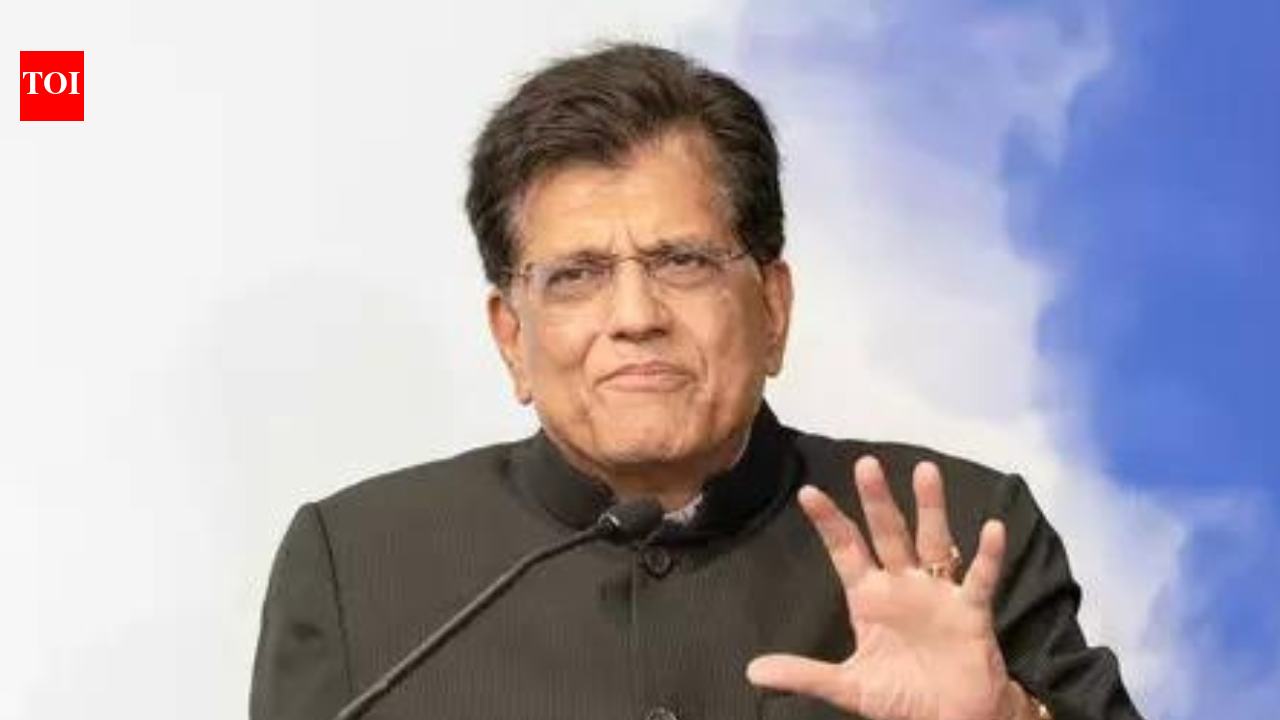
India on Saturday said it has strongly opposed the China-led Investment Facilitation for Development (IFD) Agreement being incorporated into the World Trade Organisation (WTO) framework, flagging concerns over its systemic implications, PTI reported.The issue was raised at the ongoing 14th ministerial conference (MC14) of the WTO in Yaounde, Cameroon, where Commerce and Industry Minister Piyush Goyal said such a move could weaken the institution’s foundational structure.“Incorporation of the IFD agreement risks eroding the functional limits of the WTO and undermining its foundational principles,” Goyal said in a social media post.“At #WTOMC14, drawing inspiration from Mahatma Gandhi ji’s philosophy of Truth prevailing over conformity, India showed the courage to stand alone on the contentious issue of the IFD Agreement and did not agree to its incorporation into the WTO framework as an Annex 4 Agreement,” he said.Annex 4 of the WTO Agreement contains Plurilateral Trade Agreements that are binding only on members that have accepted them, unlike multilateral agreements which apply to all members.Goyal said that as part of WTO reform discussions, members are deliberating on guardrails and legal safeguards for plurilateral agreements before integrating any such outcomes into the framework.“In view of the systemic issue at hand, India showed openness to have good faith, comprehensive discussions and constructive engagement under the WTO Reform Agenda,” he added.India had also opposed the pact during the WTO’s 13th ministerial conference (MC13) in Abu Dhabi.The Investment Facilitation for Development proposal was first mooted in 2017 by China and a group of countries that rely significantly on Chinese investments, including those with sovereign wealth funds. The agreement, if adopted, would be binding only on signatory members.
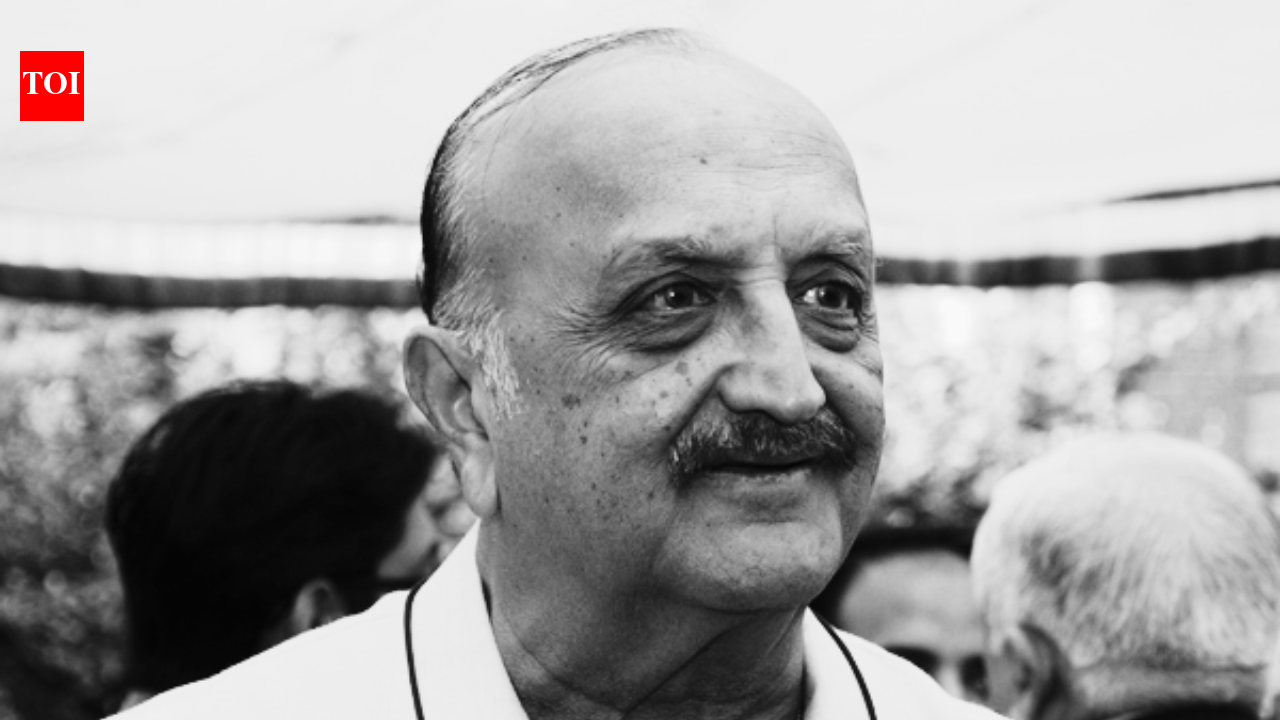
Vijaypat Singhania, former Raymond chairman, Padma Bhushan awardee and noted aviator, has passed away.He died in Mumbai at the age of 87.His son Gautam Singhania, chairman and managing director of the Raymond Group, announced the death on microblogging platform X.A company spokesperson said Singhania passed away “peacefully” and his last rites will be performed on Sunday, reported PTI.A recipient of the Padma Bhushan, Vijaypat Singhania was known not only for his leadership at Raymond but also for his passion for aviation. He held a world record for achieving the highest altitude in a hot air balloon.He led Raymond as chairman for around two decades until 2000, after which he handed over the reins of the company to Gautam Singhania. He had also transferred his entire 37 per cent stake in the company to his son.Vijaypat Singhania and Gautam Singhania were later involved in legal disputes, which were subsequently resolved.
Business
Middle East crisis: Jubilant FoodWorks reports some Domino’s outlets affected by LPG shortage – The Times of India
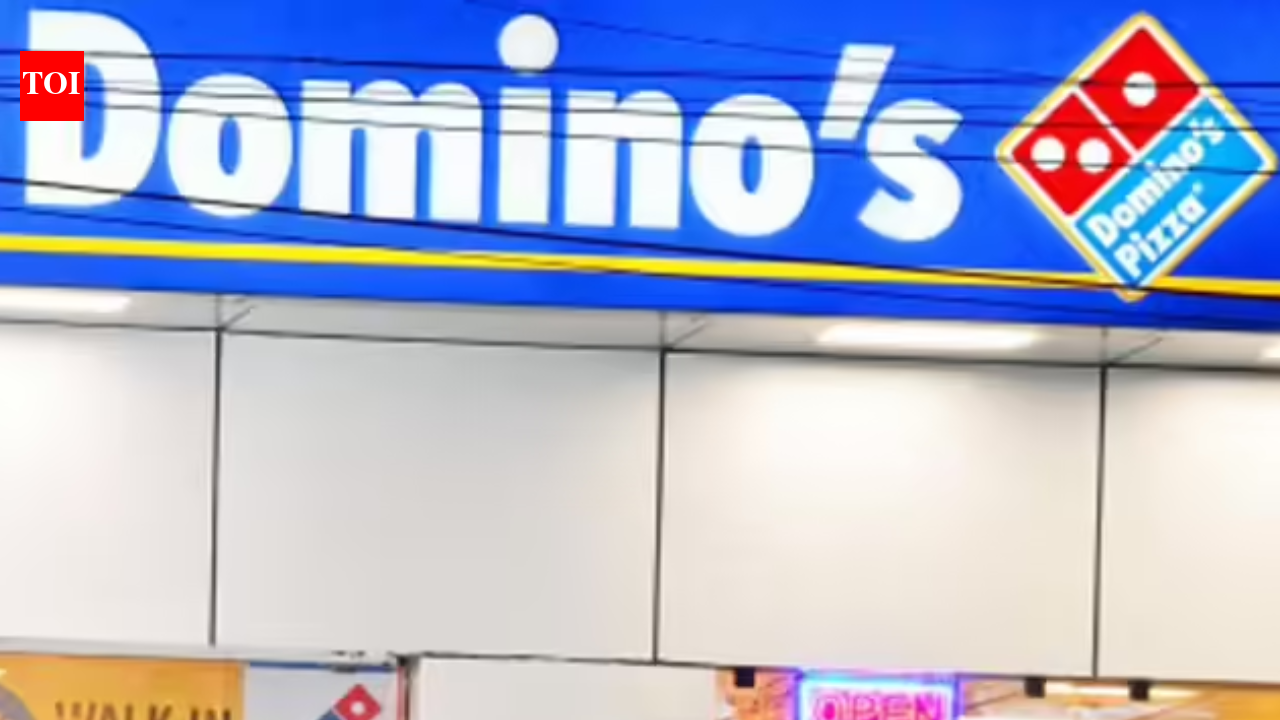
Jubilant FoodWorks Ltd (JFL), which operates Domino’s Pizza and Dunkin Donuts in India, has reported constraints in LPG cylinder supplies across parts of its store network due to the ongoing West Asia war, according to ET.In a filing to the BSE, the company said, “Operational impact at this stage is limited and being actively managed. The company is taking several steps to conserve LPG and working overtime to move to alternate energy sources like electricity and piped natural gas (PNG).”It added that it is in continuous touch with oil marketing companies to track developments and respond to the evolving situation. “The company is in constant engagement with oil marketing companies (OMCs) to remain apprised of the latest developments and plan operational responses accordingly, given the rapidly evolving nature of the situation,” the filing said.The company noted that it is closely monitoring the situation as supply disruptions persist.The impact is being felt across the restaurant industry, with several chains facing similar challenges due to LPG shortages.On March 10, the National Restaurant Association of India (NRAI) had advised its five lakh members to consider shorter operating hours, reduce items requiring long cooking times or deep frying, and adopt fuel-saving measures such as using lids while cooking, in view of supply constraints linked to the Gulf war.


USMNT handed reality check by Doku, Belgium ahead of World Cup

Hubert Kós leads Texas men to second straight NCAA swim title

Pakistan rejects India’s remarks on Shia community, calls them ‘cynical, diversionary’

-
 Business1 week ago
Flipkart group CFO to leave co amid IPO plans – The Times of India
-

 Fashion1 week ago
China’s textile & apparel exports surge 17% to $50 bn in Jan-Feb 2026
-

 Sports1 week ago
Rating Adidas’ 2026 World Cup away shirts: Argentina, Spain, Mexico and more
-

 Sports1 week ago
American Conference Commissioner Tim Pernetti thanks Trump for Army-Navy game executive order
-
Tech1 week ago
The Corsair 4000D RS PC Case Keeps Your System Cool
-

 Tech1 week ago
Gamers Hate Nvidia’s DLSS 5. Developers Aren’t Crazy About It, Either
-
 Business5 days ago
Property Play: Home flippers see smallest profits since the Great Recession, real estate data firm says
-
 Business1 week ago
‘Marriage penalty’ in Washington state’s new millionaire tax stirs debate