

Sports
Everything that had to go right for Florida to prepare for a title defense

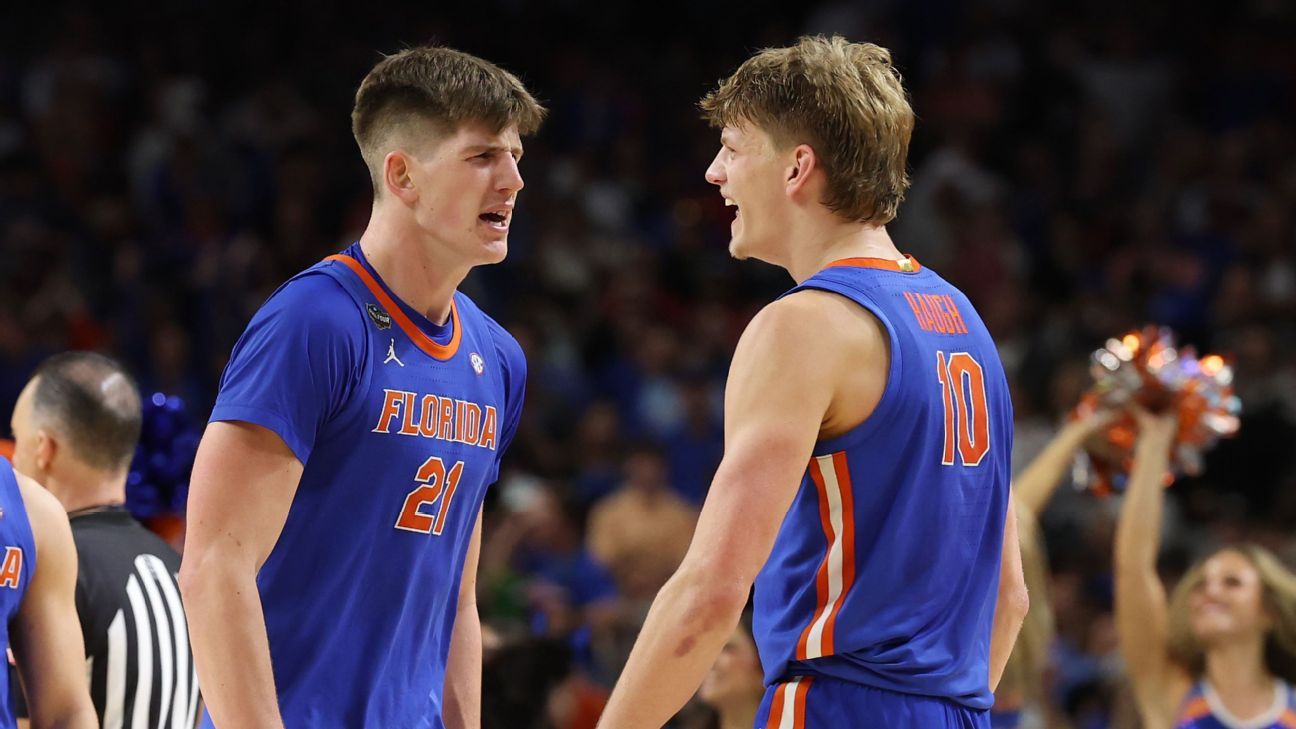
GAINESVILLE, FLA. — THIS OFFSEASON, months before the Florida Gators could focus on its pursuit of back-to-back national titles, a feat the program had previously achieved in 2006 and 2007, head coach Todd Golden first needed another championship roster.
He had known the best backcourt in America would graduate and push for spots on NBA rosters, but he couldn’t predict Denzel Aberdeen receiving NIL offers that would turn Florida’s new potential leader into what Golden called a “cap casualty,” ultimately departing for Kentucky. At that point, he didn’t know whether Alex Condon would remain in the 2025 NBA draft or return to Gainesville.
Through that draft process, though, not only did Condon decide to return, but he crossed paths with former Arkansas star Boogie Fland and tipped the scales of Florida’s title defense.
“I was like, ‘Come to the Gators. We might have to all run it back,'” Condon told ESPN of their conversation at a Brooklyn Nets workout. “So I don’t know if that swung his decision at all, but seeing him [commit to Florida] really helped me out with my decision.”
Fland clarified: “For sure, it added to my decision, especially when I knew everybody was coming back.”
That fortuitous meeting between Condon and Fland wasn’t the only stroke of luck Golden’s Gators benefited from as they prepared to chase another ring. To have a realistic chance at etching their names next to the John Wooden-era UCLA Bruins as only the second school to achieve a two-peat more than once, Florida needed more dominoes to fall. A chance connection to an Ivy League star and a watch party at Golden’s house were the next foundational pieces in the Gators becoming only the second reigning champion in the past decade to earn a top-three ranking in the following year’s preseason AP Top 25 — expectations that they are collectively embracing.
“I think we need to lean into [the pressure] a little bit because this team at some point is going to fail,” Golden said. “That’s just the bottom line. And I would love to be able to say, we’re going to go 31-0 before the NCAA tournament. That’s not going to happen. I think for us to be the best we can be, we need to, at some point, deal with that — the frustration, the vulnerability, the disappointment — to really grow.
“If we try to protect our guys from that pressure, I’m not sure we’re ever going to be able to experience that.”
THREE DAYS BEFORE Princeton’s season finale, Xaivian Lee was mesmerized, watching Florida flirt with a 100-point game against Alabama from a dorm room in New Jersey.
The two-time All-Ivy League guard couldn’t believe what he was witnessing. There was a Walter Clayton Jr. to Will Richard to Condon whip-around that ended with a dunk. An Alijah Martin slam on a fast break. Thomas Haugh got a finish in transition, too. And Clayton stood out as the maestro of a furious attack.
That’s when Lee began to envision himself in a blue and orange jersey.
“I just remember they were playing really fast and Condon was getting a billion lobs and I thought that it was good offense,” Lee said about watching that game. “It was fun. It was fast-paced, flowing. And everything was open and they were getting up and down the court.”
After the Gators punched their ticket to the Final Four a few weeks later, Lee received a text from someone new. Golden had broken his own rule of not recruiting during the NCAA tournament — he didn’t want potential reports to distract his team — to capitalize on the fact that Lee and Haugh, teammates during prep school, had kept tabs on each other through a group chat, including Lee’s decision to enter the transfer portal.
A week after the confetti fell at the Alamodome, Lee committed to Florida.
Golden’s decision to limit recruiting during the postseason put Florida in a tough spot. By the time his team had cut down the nets after a come-from-behind win over Houston in the title game, he had an inkling that Lee would join the squad, but he still had more work to do. While the frontcourt seemed to be intact after a flurry of NBA-related decisions — with Condon, Haugh and Rueben Chinyelu opting to return — the backcourt still had more questions than answers after Aberdeen’s surprising departure.
Fortunately for the Gators, another elite guard was having second thoughts about his future.
Fland was a five-star prospect who entered the 2024-25 campaign as a projected lottery pick before a thumb injury interrupted his season and, with it, his shot to prove that he could excel at the next level. It didn’t help that NBA teams questioned the measurements of the 6-foot-2 guard. A return to college — and maybe Florida, after his convo with Condon — began to feel like his best move.
“To be honest, I didn’t have a plan of coming back to college basketball,” Fland said. “I was going to tough it out and see what the draft experience was like and see what the scouts were saying. And then when I was in New York doing my predraft workout, I had a private meeting — that became public — with Coach Golden and the staff and the proposal was fantastic … it made me think and self-evaluate about the last year and things that I wasn’t able to accomplish and the things I need to work on.”
The phone kept ringing after Golden and Fland connected, with either Condon or Fland wanting to know whether the other had committed.
“As soon as [Fland] goes in the portal, I’m like, ‘Dude, this is a picture-perfect situation for both sides,'” Golden said. “It just really is. We need a point guard and another ball handler with [Lee]. We needed one more really talented guy and we had what I thought were all the other pieces really in place. We had the whole frontcourt back and for [Fland], I’m like, ‘This guy is going to be so much better this year just from last year’s experience.”
AS HE LOOKED at his roster over the summer and thought about its chance to make history, Golden had to remind himself that most of his players might not understand the past.
“Some of them hadn’t been born yet,” he said about the program’s 2006 and 2007 national title runs, a stretch led by Al Horford, Corey Brewer and Joakim Noah, a trio of future lottery picks and NBA standouts.
He aimed to solidify the magnitude of the moment by inviting the team to his house to watch “SEC Storied: Repeat after Us,” an ESPN documentary about the program’s two-peat, once practice began in August.
“I wanted them to understand how tight that team really was and about their relationships and that it was about more than making money in the NBA,” Golden said. “They loved each other, man. That was why they were really, really good. I wanted to show them the documentary because the second year was really hard for those guys. It was tough.”
At the Final Four, Condon got in touch with Horford and visited Noah’s house later that summer. Connecting with them helped Condon understand where this team could cement itself in the annals of Florida men’s basketball history if they can accomplish what Horford and Noah’s Gators did almost 20 years ago.
“I think creating a legacy is something we want to do,” Condon said.
Emulating the bond that the 2005-07 rosters had is why the 2025-26 Florida Gators have all been intentional about building their chemistry this offseason. There have been frequent trips to Dragonfly, a local sushi joint, but some members of the team prefer a nearby hibachi restaurant with unlimited portions. The team also went snorkeling with turtles in a den on a recent Sunday, a first-time experience for many of them.
“[Lee] and [Fland] have done a good job of hanging out with us off the court and starting to build those connections,” added Condon. Scattered around Golden’s office are trinkets yielded by the bond of last year’s group.
There is a framed key to the city that was presented to the team by Gainesville Mayor Harvey Ward when the Gators returned with their new hardware. In another frame, there is a proclamation from the U.S. Senate that commemorates the day they won the program’s third national title, and a signed letter from President Donald Trump that Golden picked up on the customary trip to the White House.
But it’s the sea of shoes that have arrived in droves — 32 pairs, to be exact — that align his office and highlight the role Florida now plays in the Jordan Brand hierarchy, also stamping the benefits of a national title run.
“I don’t know a ton about shoes,” Golden said. “But the kids love that s—.”
When he was the head coach at San Francisco, Golden said he had just four pairs of shoes in his office. That fortune, though, also comes with a pressure that is magnified with his entire frontcourt back — 7-foot-1 center Micah Handlogten (2.6 PPG) should play a bigger role this season — and a new pair of elite guards.
Lee and Fland both thrive with the ball in their hands, but they’ll have to share the load this season and find the same synergy that anchored last year’s backcourt. The frontcourt will also demand a few tweaks. Haugh will have to showcase a perimeter game and versatility he mostly demonstrated in spurts a year ago. Chinyelu and Handlogten will play more significant roles for a deep frontcourt, too. Are they ready for that? Condon was never the same after he suffered a midseason ankle injury last year, though he’s doing extra workouts on a stationary bike after every practice to increase his durability.
At this time last year, Florida had not yet been viewed as a real contender. The fanfare came later. That’s the difference between the two iterations of these teams: The expectations for 2025-26 were set at a high level before the season even tipped.
Golden knows the Gators can either run from them, or — like the 2007 and 2008 national title teams — use those great expectations to make history.
“We flew under the radar for a long time last season,” Golden said. “This year … we’re going to be preseason top-five most places, so we’re not going to have the ability to do that. And I want the guys that are back to feel the pressure and the pride of trying to repeat.”
Sports
NASCAR’s Truck Series and O’Reilly Autoparts Series honor Kyle Busch with moments of silence at Charlotte
NEWYou can now listen to Fox News articles!
The NASCAR world is paying tribute to Kyle Busch this weekend, and that includes some classy ones from two series in which the late driver had a lot of success.
While Busch — who passed away Thursday after “severe pneumonia [that] progressed into sepsis” — had been a full-time driver in NASCAR’s top series, the Cup Series, for more than 20 years, he still competed occasionally in both the O’Reilly Auto Parts Series and the Craftsman Truck Series.
He was especially known for his dominance in the Truck Series, winning 69 of his 184 races, and at one point owned a team. In fact, the final win of Busch’s career came just under a week before his death in a Truck Series race at Dover.
ZERO BS. JUST DAKICH. TAKE THE DON’T @ ME PODCAST ON THE ROAD. DOWNLOAD NOW!
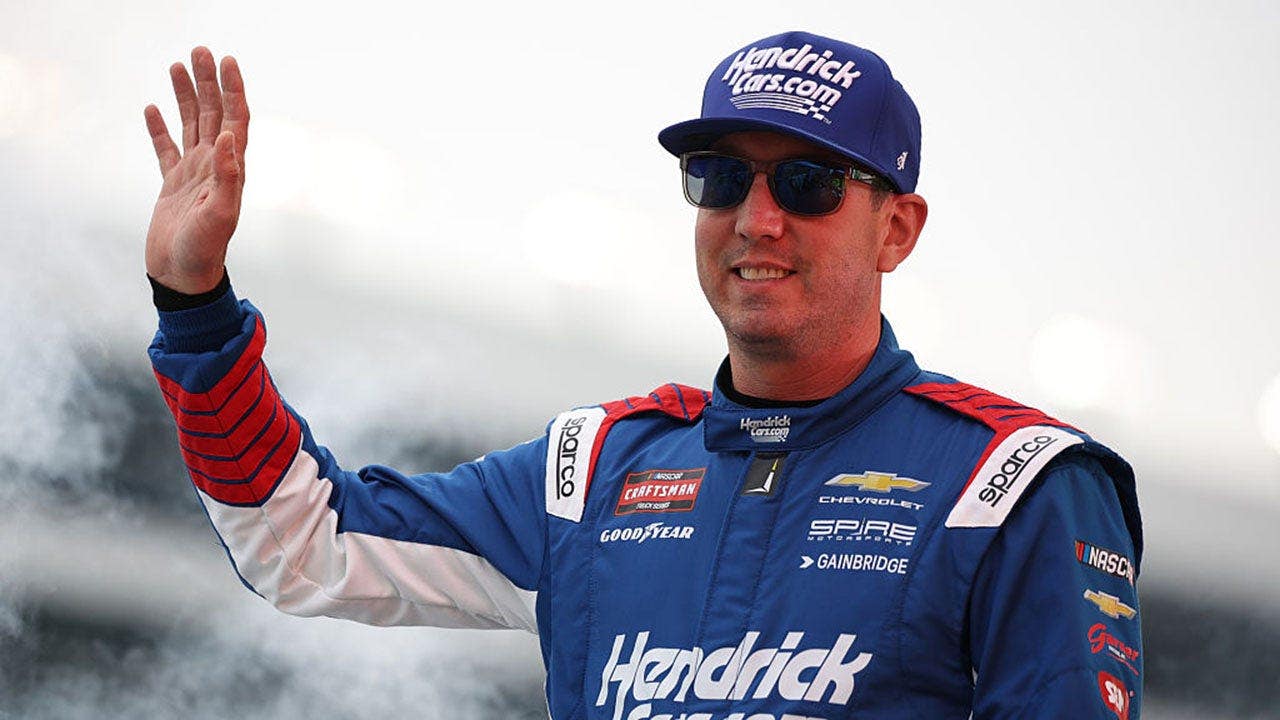
Kyle Busch, driver of the No. 7 HendrickCars.com Chevrolet, is introduced before the NASCAR Craftsman Truck Series SpeedyCash.com 250 at Texas Motor Speedway in Fort Worth, Texas, on May 1, 2026. (James Gilbert/Getty Images)
On Friday, the Truck Series was in Charlotte as part of the Coca-Cola 600 weekend for a race that Busch was supposed to take part in.
NASCAR, RACING WORLD REACTS TO KYLE BUSCH’S SHOCKING DEATH AT 41: ‘CANNOT COMPREHEND THIS NEWS’
Corey Day was in the No. 7 Chevrolet for Spire Motorsports, the truck in which Busch took his final win, and it was set to start on pole after Friday’s qualifying was rained out.
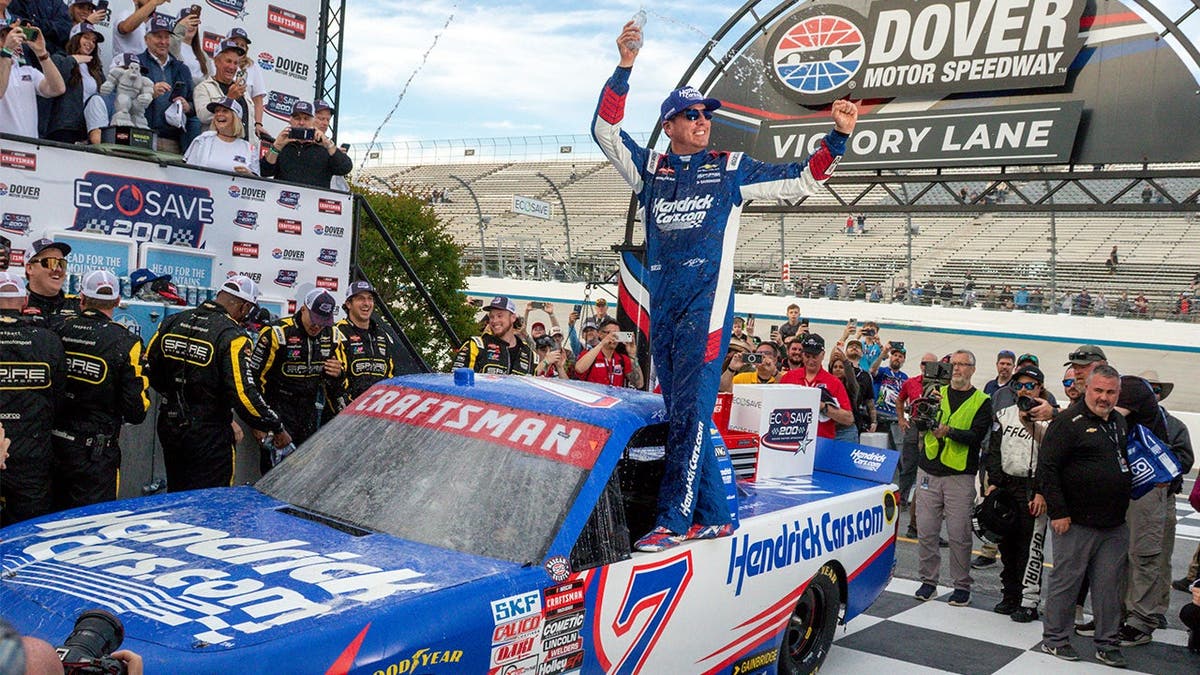
Kyle Busch celebrates the final win of his NASCAR career at Dover Motor Speedway. (Photo by David Hahn/Icon Sportswire)
Before the race was set to begin on Friday evening, teams and fans held a moment of silence for Busch.
Unfortunately, the race never got underway and was postponed until Saturday morning and then again to Saturday night.
The O’Reilly Autoparts Series, which Busch raced in many times and won many times during his career, also took a moment to remember him before their race at Charlotte on Saturday.
CLICK HERE TO DOWNLOAD THE FOX NEWS APP
That race was also suspended due to rain.
There will be some heavy hearts on Sunday when the Coca-Cola 600, the NASCAR Cup Series’ longest race of the year, gets started at 6 p.m. ET.
NEWYou can now listen to Fox News articles!
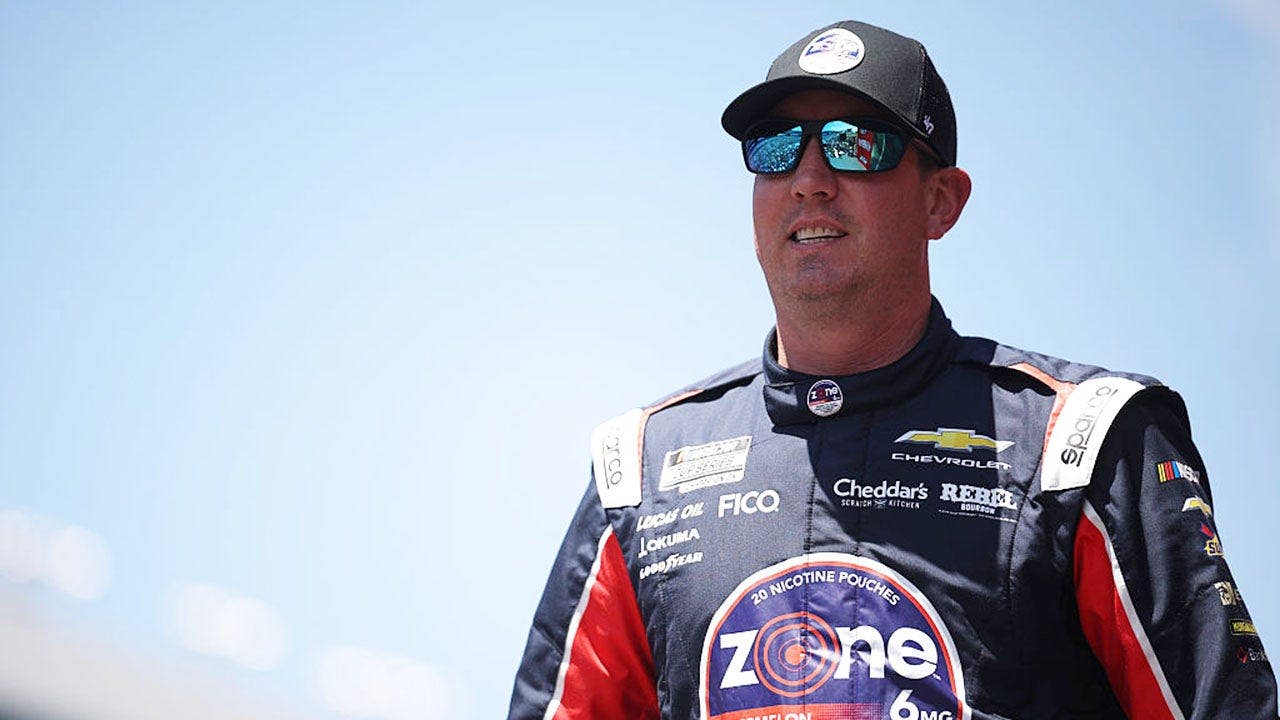
While Kyle Busch was a legend in the NASCAR ranks, he was incredibly well respected throughout the world of motorsports.
That’s why one of Busch’s NASCAR numbers — the one I’d argue is most iconic — will make an appearance in the 110th Running of the Indianapolis 500.
Busch had a bunch of numbers across NASCAR’s three national series, but in the Cup Series, he used No. 5, No. 18 and No. 8.
ZERO BS. JUST DAKICH. TAKE THE DON’T @ ME PODCAST ON THE ROAD. DOWNLOAD NOW!
Kyle Busch used No. 18 during his years with Joe Gibbs Racing. (Isaac Brekken/AP)
For many fans, No. 18 is the number they associate with Busch, as he used it for 15 years, including during both of his championship seasons.
NASCAR, RACING WORLD REACTS TO KYLE BUSCH’S SHOCKING DEATH AT 41: ‘CANNOT COMPREHEND THIS NEWS’
You can close your eyes and picture it on the side of those legendary M&M’s paint schemes.
Well, Sports Business Journal’s Adam Stern shared that Dale Coyne Racing, which runs the No. 18 Honda driven by Romain Grosjean, will display the classic No. 18 used on Busch’s car during his time with Joe Gibbs Racing in the Cup Series.
How about that tribute?
Of course, the numbers are typically trademarked, so as Stern reported, the idea — which came from Fox Sports IndyCar commentator Townsend Bell — required getting in touch with Joe Gibbs Racing.
Busch never raced in the Indy 500 or in the IndyCar Series; however, he did have a lot of success at the Indianapolis Motor Speedway in NASCAR.
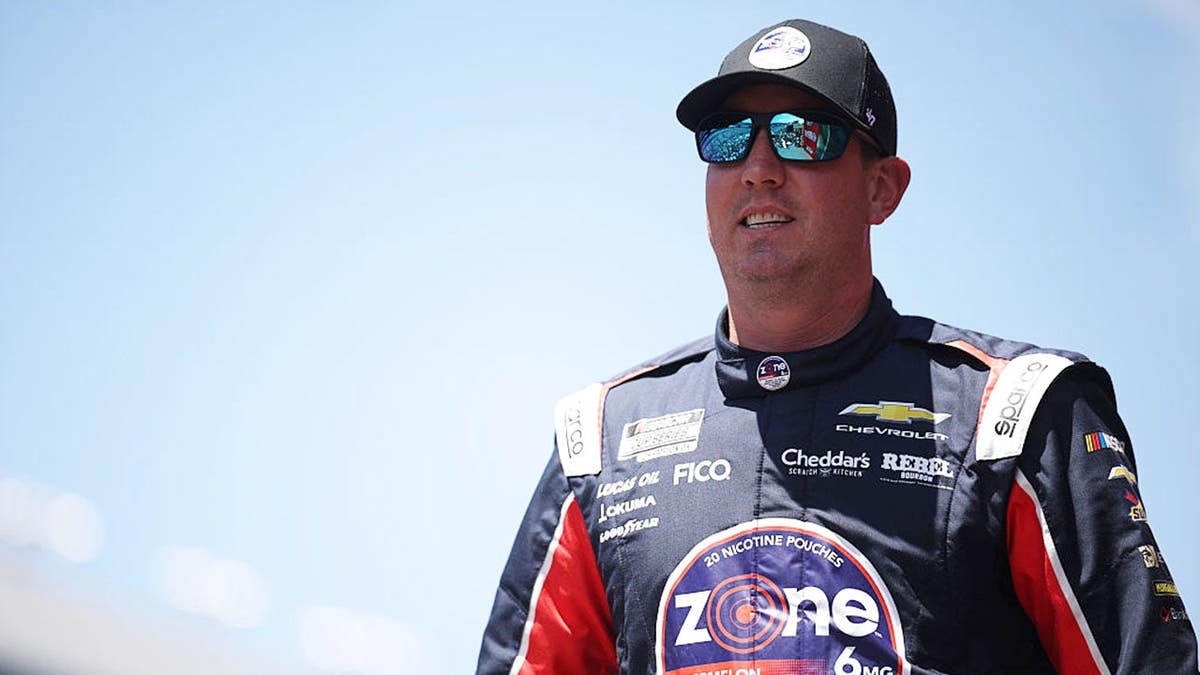
NASCAR star Kyle Busch died on Thursday at just 41 years old. (James Gilbert/Getty Images)
His brother, retired NASCAR driver and former Cup Series champ, Kurt Busch, attempted double duty by competing in both the Indianapolis 500 and Coca-Cola 600 on the same day in 2014.
It’s a heck of a tribute from the folks at Dale Coyne Racing with an assist from JGR.
CLICK HERE TO DOWNLOAD THE FOX NEWS APP
And while I don’t want to play favorites, wouldn’t it be something to see that No. 18 in Victory Lane?
Grosjean will start Sunday’s race in 24th, which means he has some ground to make up, but anything can happen in the Indy 500.
NEWYou can now listen to Fox News articles!
The 2026 INDYCAR season has already delivered stellar moments, even before “The Greatest Spectacle in Racing.”
That highly anticipated race happens on Sunday, May 24, with the 110th Running of the Indianapolis 500.
Coverage for the Indy 500 begins at 10 a.m. ET.
You can watch the Indy 500 pre-race and race broadcasts on FOX and stream the broadcasts on FOX One, FOX Sports.com and the FOX Sports App.
Ahead of all the action, we’ve rounded up the best drivers to grace the course.
Here are the 10 best Indianapolis 500 drivers of all time.
10 Best Indy 500 Drivers Of All Time
10. Dario Franchitti
Although he had one of the shorter Indy 500 careers on this list, Franchitti managed to compile some impressive results. He earned three victories at the track between 2007-2012. Moreover, he added three other top-10 finishes to his name despite participating in just 10 races. His best stretch was when he claimed six top-seven finishes in seven attempts from 2005 and 2012.
9. Arie Luyendyk
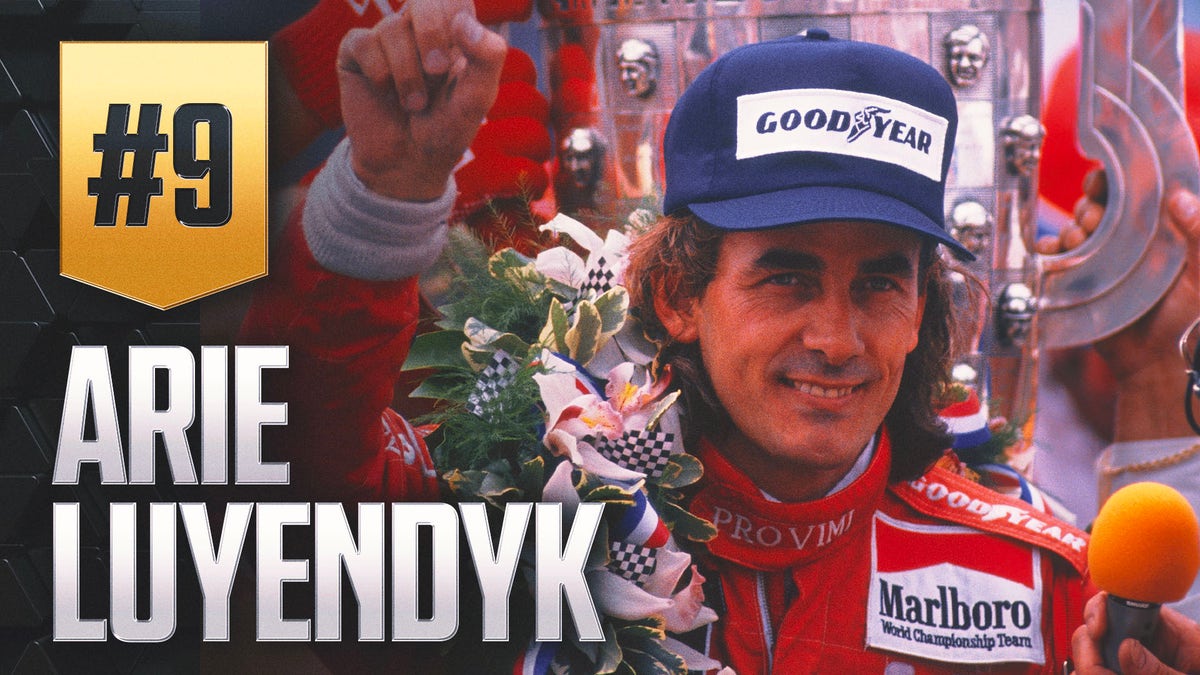
Luyendyk won the Indy 500 twice, but it was a mixed bag overall. He raced in the event every year from 1985 to 2002 and withdrew in 2003, but he finished outside the top 10 in 10 different races. Still, few can match the success he found, with seven top-10 finishes at Indianapolis Motor Speedway.
8. Louis Meyer
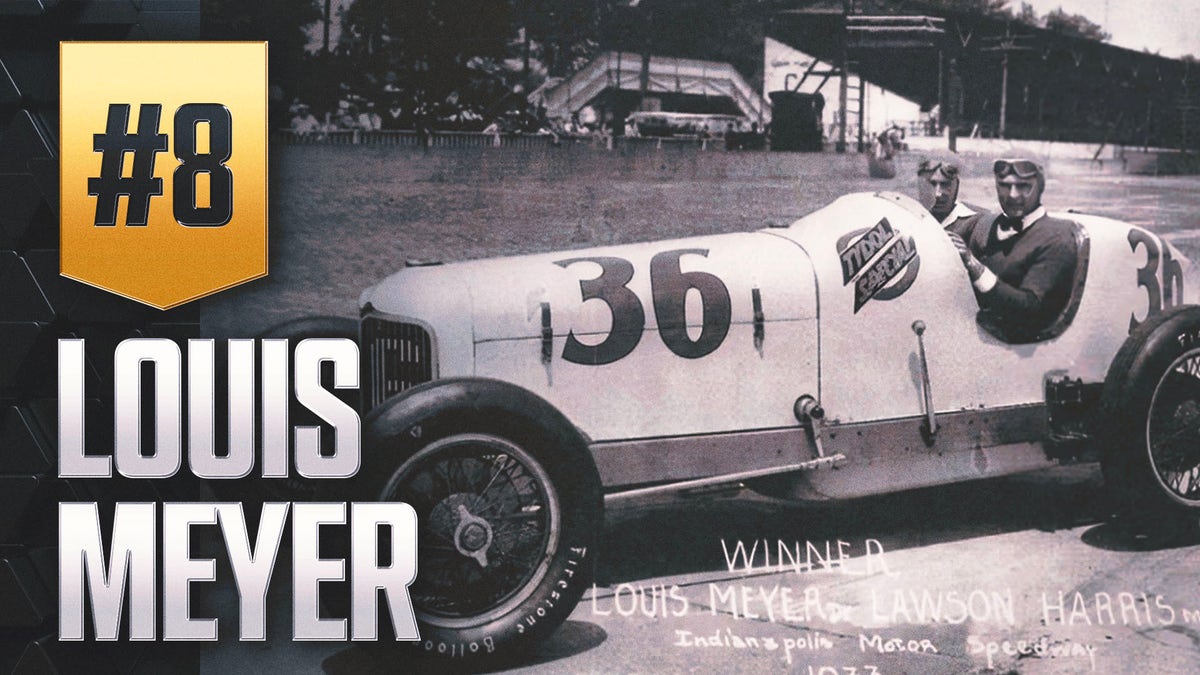
The first three-time winner in the race’s history, Meyer is one of the top drivers who isn’t talked about nearly enough. He had a truly remarkable race in 1936, becoming just the second racer in history — and last — to win the Indy 500 from a starting position of 28th or lower. Meyer grabbed first and second, respectively, in his first two tries in Indianapolis.
7. Bobby Unser
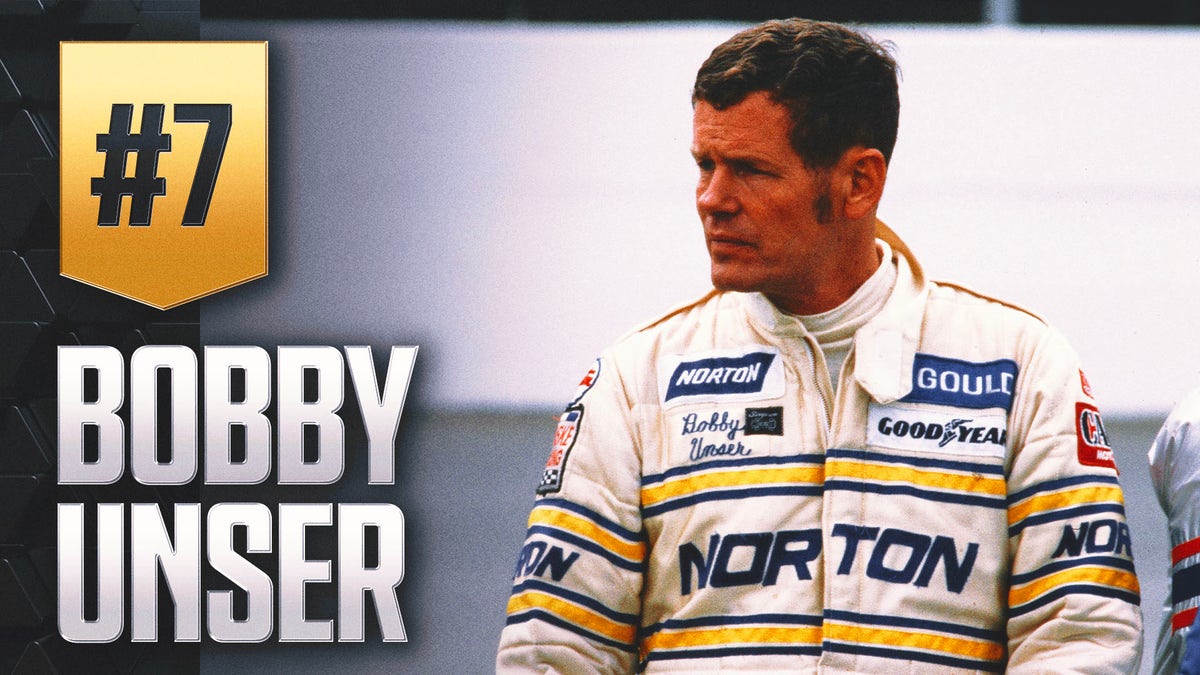
It’s not how you start, it’s how you finish. Never has that been more true than with Unser, who had just one top-10 finish in his first four tries at Indy. However, Unser would eventually win the Indy 500 three times (1968, 1975 and 1981). In his last four starts, he had three top-six finishes, including winning the event on his last time at the track at age 47.
6. Johnny Rutherford
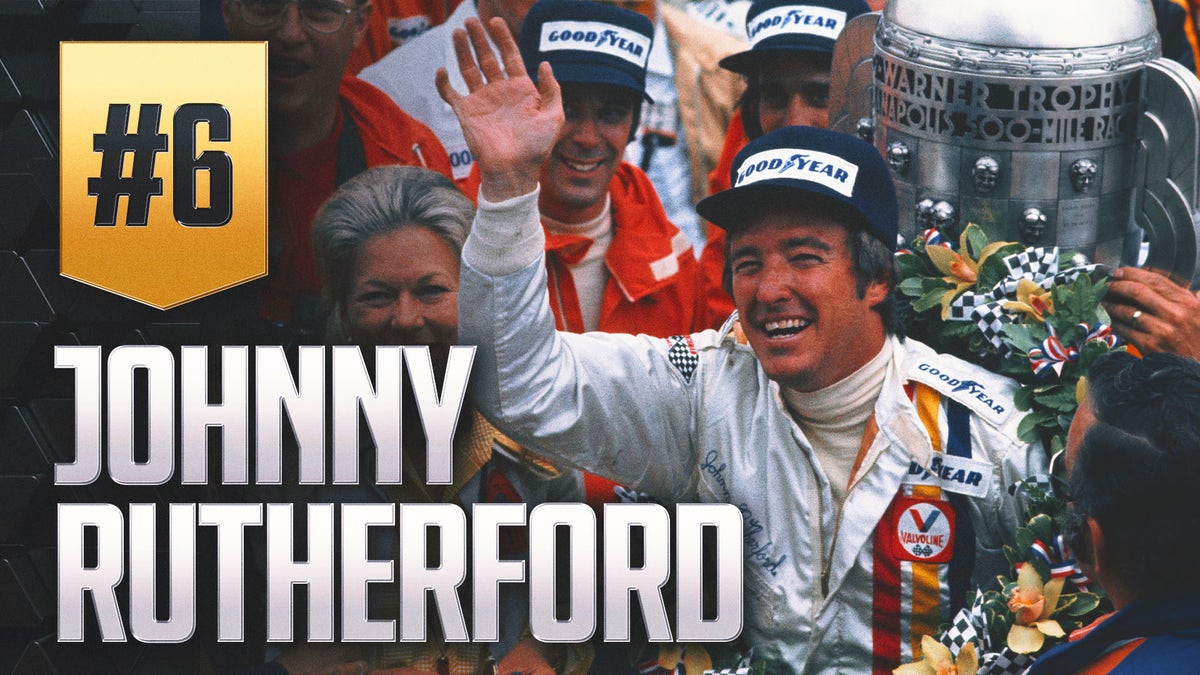
Another three-time Indy 500 winner, Rutherford claimed his victories between 1974 and 1980. Rutherford had a bit of a slow start to this race, finishing 18th or lower in each of his first nine times at the track. He then turned in four straight top-10 finishes, including winning in 1974 and 1976 and grabbing second in 1975.
5. Wilbur Shaw
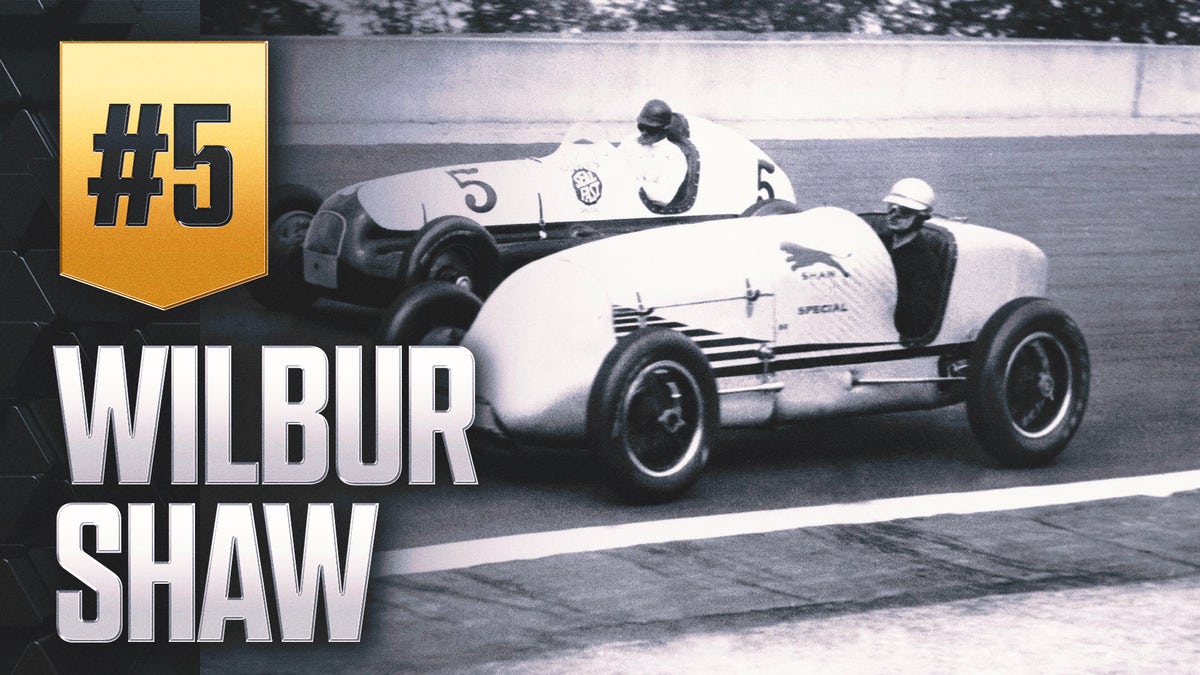
As good as Rutherford’s three-year stretch was, Shaw one-ups him with his bonkers four-year run. From 1937 to 1940, Shaw placed first, second, first and first. A run like that automatically vaults you into the top five in the history of the Indy 500. Before that, it had been an up-and-down race for Shaw, but you cannot overlook just how dominant he was overall, with three victories and seven top-five finishes.
4. Helio Castroneves
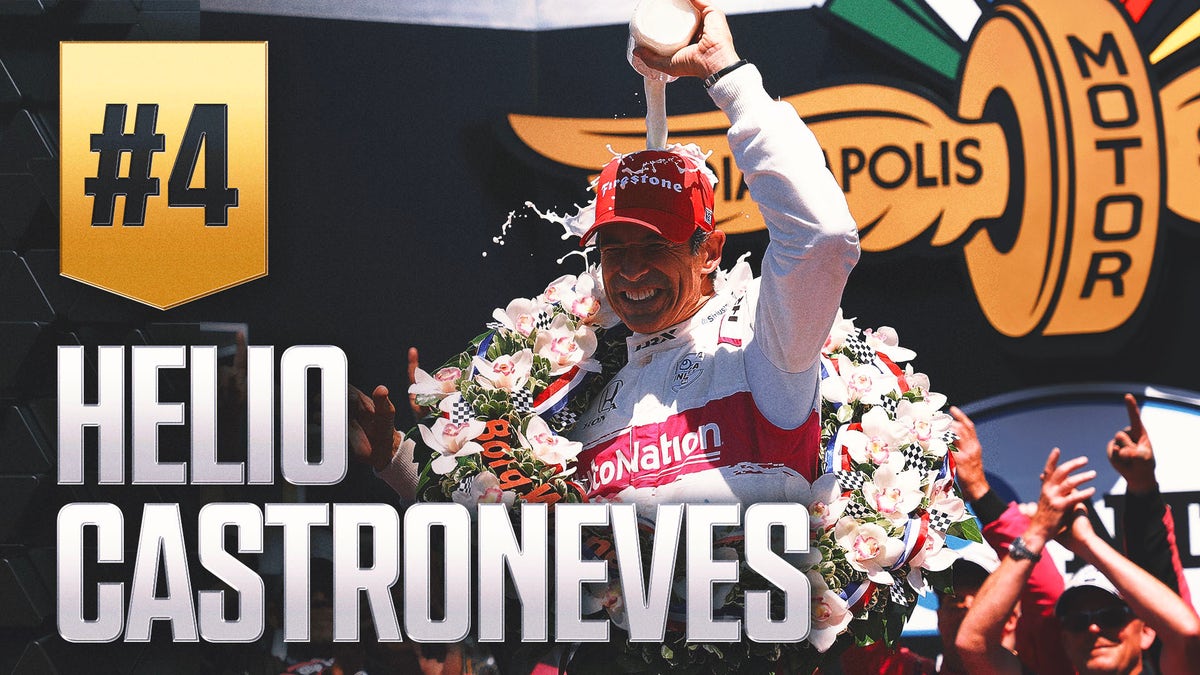
Castroneves is the first of four drivers on this list tied for the most wins (four) at the Indy 500. He earned his most recent victory in 2021, while his previous three wins came between 2001 and 2009. He’s also one of just six drivers to claim back-to-back Indy 500 victories, doing so in 2001 and 2002. Perhaps the most remarkable part of his driving career at IMS is the fact that he owns the record for the longest span between his first and last win — 20 years.
3. Al Unser Sr.
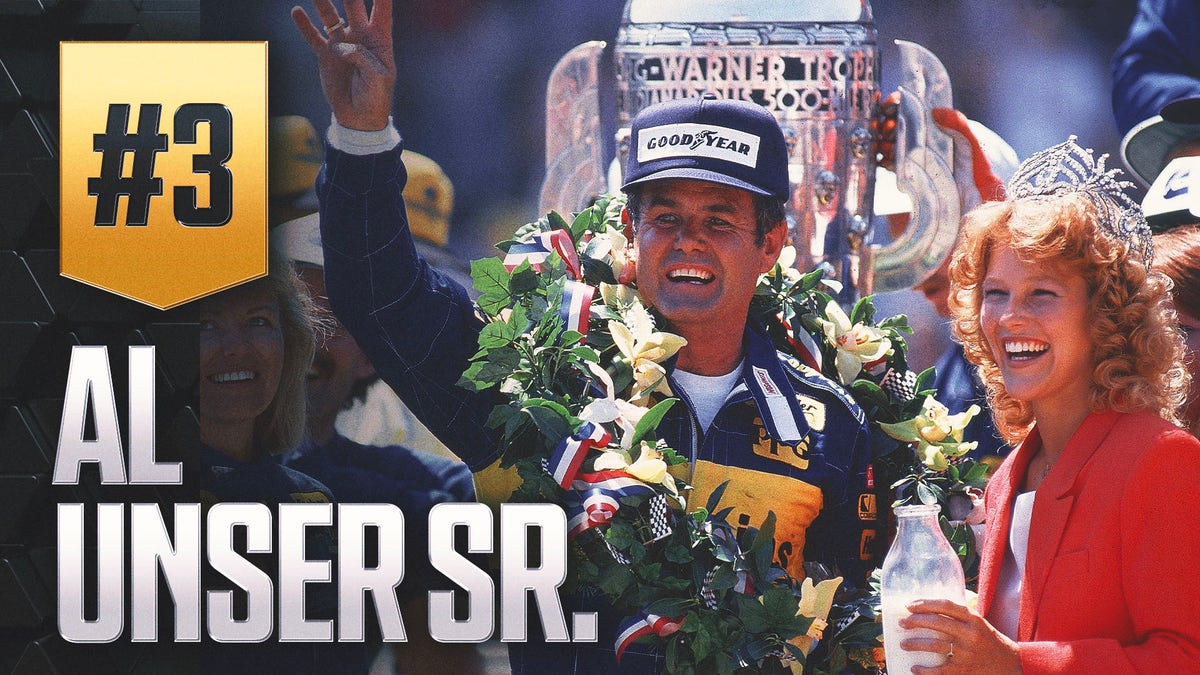
Unser isn’t just tied for the most Indy 500 wins, claiming his four in 1970, 1971, 1978 and 1987. He’s also the oldest winner ever at 47 years, 360 days old, slightly edging out his brother, Bobby. In his second-to-last race at IMS in 1992, Unser finished in third, while his son, Al Unser Jr., was the winner.
2. A.J. Foyt

Foyt is undoubtedly deserving of one of the top spots on this list as the first four-time winner in the race’s history, finishing in first place in 1961, 1964, 1967 and 1977. Most impressive about his career in Indy, though, is that Foyt has the most starts there of any driver (35), including racing in every single one from 1958 to 1992.
1. Rick Mears
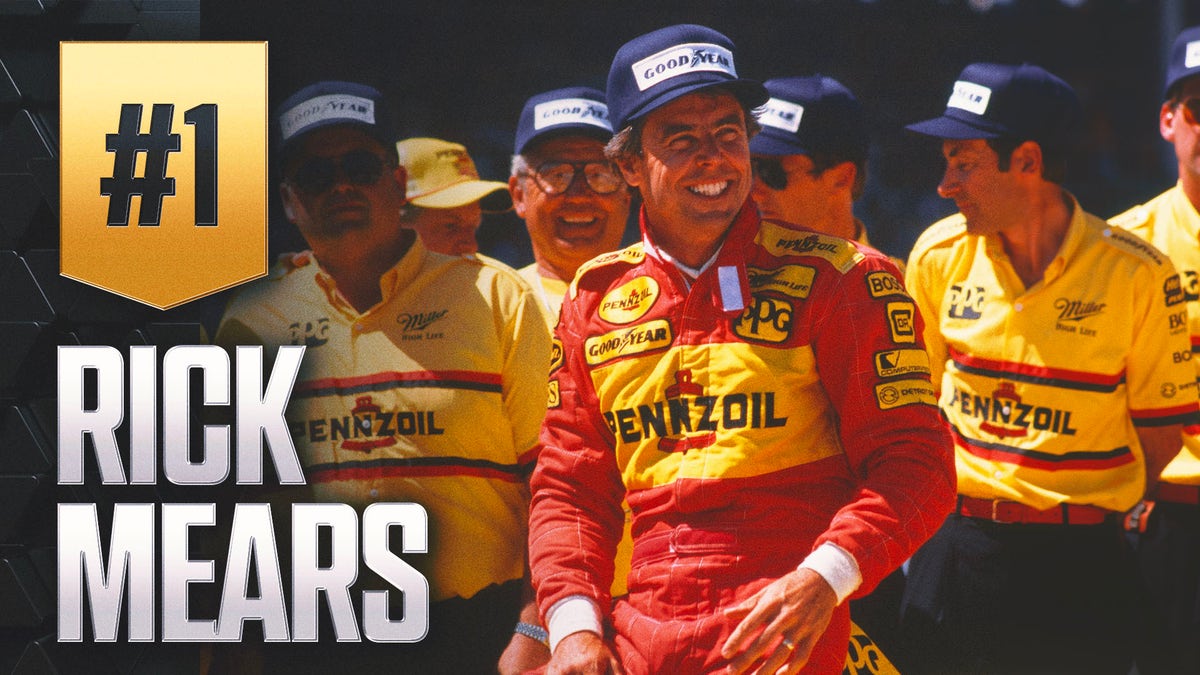
The other driver tied for the most wins at IMS, Mears dominated in Indy. He started 11 times on the front row, with six of those times coming consecutively from 1986 to 1991 — both of which are records at the track. He has also claimed a record six pole positions at the event and is one of just 12 racers to earn back-to-back pole positions.
Check out all of our Daily Rankers.


PET prices decline after April peak amid weak polyester operating rate

Georgia’s apparel imports expand as post-war spending strengthens

NASCAR’s Truck Series and O’Reilly Autoparts Series honor Kyle Busch with moments of silence at Charlotte

-

 Entertainment1 week ago
Where Pete Davidson, Elsie Hewitt stand after breakup: Details revealed
-
 Politics1 week ago
Rising diesel costs from Iran war strain US school budgets
-

 Entertainment1 week ago
Drake drops highly anticipated "Iceman" album, plus two surprise albums
-

 Tech1 week ago
Greg Brockman Officially Takes Control of OpenAI’s Products in Latest Shakeup
-

 Tech7 days ago
Why Is Your Grill So Dumb? The Best Grills Set Temp Like an Oven
-

 Tech7 days ago
This Solar-Powered Smart Sprinkler Keeps My Lawn Watered Without Any Power Cables
-
 Business1 week ago
UK borrowing costs rise and pound falls as leadership drama continues
-
 Business1 week ago
Oil price gains and Westminster worry sink stocks