

Business
Family offices double down on stocks and dial back on private equity


07 July 2025, USA, New York: A street sign reading “Wall Street” hangs on a post in front of the New York Stock Exchange in Manhattan’s financial district. Photo: Sven Hoppe/dpa (Photo by Sven Hoppe/picture alliance via Getty Images)
Picture Alliance | Picture Alliance | Getty Images
A version of this article first appeared in CNBC’s Inside Wealth newsletter with Robert Frank, a weekly guide to the high-net-worth investor and consumer. Sign up to receive future editions, straight to your inbox.
Family offices have ramped up their bets on stocks while dialing back their private equity bets, according to a new survey by Goldman Sachs.
Investment firms of ultra-wealthy families reported an average allocation of 31% to public equities, up 3 percentage points from the bank’s last poll in 2023. Over the same two-year period, their allocation to private equity dropped from 26% to 21%, the largest change for all surveyed asset classes.
The shift to stocks was marked for family offices in the U.S. and the Americas, which raised their average allocation from 27% to 31%. As for private equity, their allocation dropped by 2 percentage points to 25% but still exceeds that of their international peers. The bank polled 245 worldwide family offices, two-thirds of which reported managing at least $1 billion in assets, from May 20 to June 18.
Tony Pasquariello, global head of hedge fund coverage at Goldman Sachs, described the portfolio as a “pro-risk asset mix,” as family offices have maintained a relatively high allocation to private equity.
This is despite growing concerns about geopolitical risks and inflation. In the next 12 months, more than three-quarters of respondents said they expected tariffs to be the same or higher and expected valuations to stay the same or decrease.
Family offices, especially those in the U.S., can face hefty tax bills if they make significant divestments, according to Sara Naison-Tarajano, leader of Goldman Sach’s Apex family office business. Moreover, she said, family offices tend to invest opportunistically when other market players retreat, as they did in April when tariff announcements roiled the markets.
“There are concerns in the market, geopolitical issues, trade war issues,” said Naison-Tarajano, who is also the global head of capital markets for the private wealth division. “If they’re concerned about these things, they’re going to be ready to put money to work when these dislocations happen.”
Investing in public equities and ETFs is also the preferred way for family offices to invest in artificial intelligence, according to the survey. The vast majority (86%) of respondents said they were invested in AI in some capacity, with other popular options including investments in secondary beneficiaries of the AI boom like data centers or AI-focused VC funds.
Goldman Sachs’ Meena Flynn added that family offices are still making opportunistic plays in private equity, with 72% investing in secondaries, up from 60% in 2023. Endowments and foundations have been divesting as they are pressed for liquidity, but family offices can scoop attractive assets at a discount and weather the exit slowdown.
“They have the ability to invest in assets that they can hold over multiple generations and not be worried about an exit,” said Flynn, co-head of global private wealth management.
And while family offices appear to be drawing down in private equity, 39% reported plans to invest more in the asset class in the next 12 months, the highest of any category. Nearly the same proportion (38%) intend to invest more in stocks.
Most family offices did not expect to change their portfolios in the upcoming year. However, across every asset class, more family offices planned to increase their allocations rather than decrease. A third of respondents intend to deploy more capital while only 16% intended to increase their cash and cash equivalents allocation.
“I think what this forward-looking picture tells us is that family offices realize the importance of staying invested, and they realize the importance of vintaging, especially with private equity,” Naison-Tarajano said.
That said, family offices in the Americas are more bullish than their peers. More than a third reported not positioning for tail risk compared with 14% and 12% of firms in EMEA and APAC. The most popular method of preparing for a black-swan event was geographic diversification at 53%, with gold ranking second at 24%. While gold made up less than 1% of the average family office portfolio, Flynn said she has seen allocations in some portfolios as high at 15%.
“Especially in regions where our clients are very worried about political instability, they’re actually holding gold in physical form,” Flynn said. “Many of our clients literally want to see the serial number and know where it is in the vault.”
Asian family offices have also taken to using cryptocurrency as a hedge, according to Flynn. Only a quarter (26%) of APAC family offices said they were not interested in crypto, compared with 47% and 58% of their peers in the Americas and EMEA, respectively.
Overall, a third of family offices are invested in crypto, up from 26% in 2023 and doubled from 2021. Of those who haven’t, Asian family offices reported the most interest (39%) in doing so, versus 17% of their peers. Flynn attributed much of their interest to concerns about geopolitics.




Heineken has announced a substantial investment exceeding £44 million into hundreds of its pubs across the UK, a move expected to create approximately 850 jobs.
The Dutch brewing giant’s Star Pubs operation, which manages 2,350 sites nationwide, is undertaking this significant financial commitment despite a challenging period for the pub sector.
The industry has faced considerable pressure over the past year, grappling with escalating labour costs and increases in national insurance contributions.
Concurrently, consumer spending has been constrained by concerns over inflation and rising unemployment, further impacting pub revenues. However, pubs did receive additional business rates support from the government last month, aimed at alleviating some of these financial burdens.
Lawson Mountstevens, managing director of Star Pubs, indicated that the investment strategy is partly designed to bolster revenues and help the group navigate the recent “sustained increases in running costs”.
This year, £44.5 million will be allocated to upgrades for 647 pubs. A notable 108 of these venues are earmarked for particularly significant cash injections, with each transformation costing at least £145,000.
Heineken clarified that while the majority of its pubs are group-owned, they are independently operated by local licensees. A key focus for this investment, particularly in the lead-up to the 2026 football World Cup, will be on sports-focused venues.
The pub firm and brewer has a history of significant investment in British pubs, having pumped £328 million into the sector since 2018. Work has already commenced at 52 locations, including eight projects dedicated to reopening boarded-up pubs that have endured lengthy closures.
Mr Mountstevens also urged the government to reduce the tax burden on pubs, arguing it would ease cost pressures and foster further job creation within the industry.
He stated: “We can only do so much; the root-and-branch reform of business rates that the industry has been calling for over many years is urgently required, as well as a lowering of the burden of taxation on pubs, including VAT and beer duty.”
He concluded with a direct appeal: “We are calling on the Government to support us in bringing out the best in the Great British pub.”
It comes as the US said on Monday it will begin to help “guide” vessels out of the Strait of Hormuz.
Source link
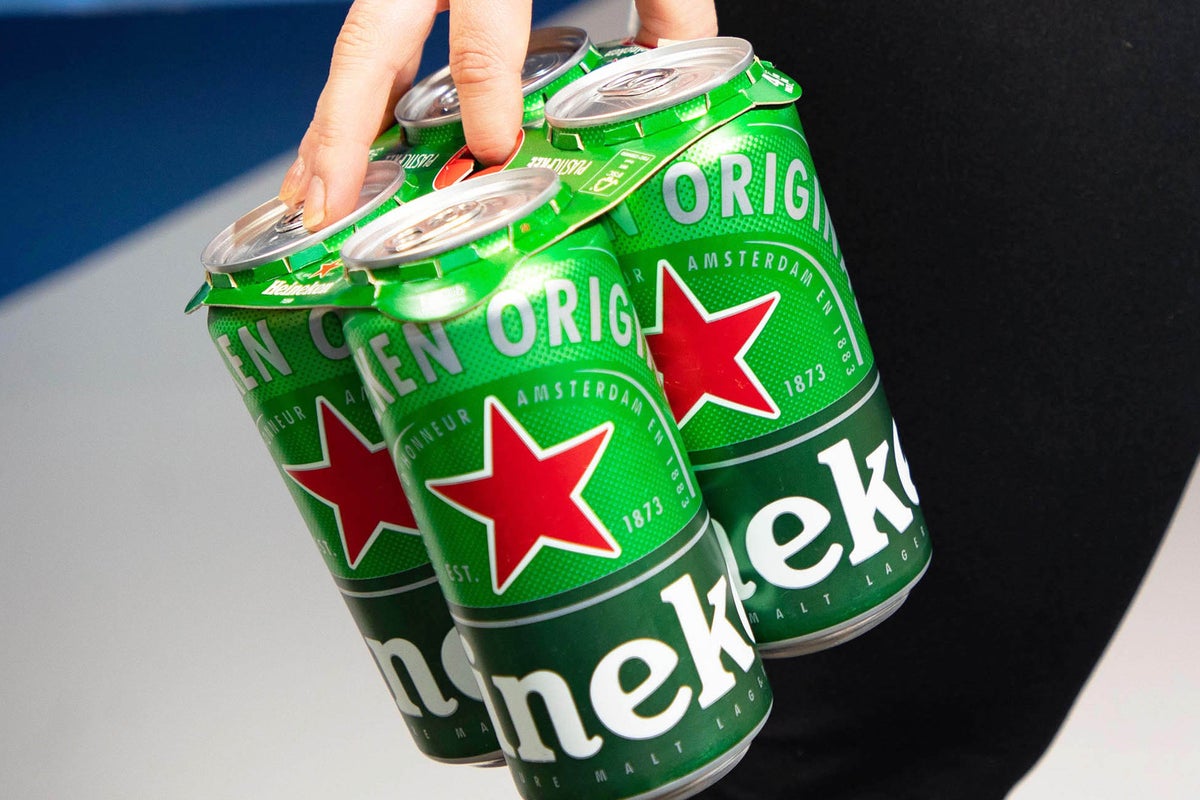
Heineken has revealed plans to invest more than £44 million into improvements for hundreds of its UK pubs.
The Dutch brewing giant said the cash injection into its Star Pubs operation, which runs 2,350 sites across the UK, will create around 850 jobs.
The major investment plan comes despite a challenging backdrop for the pub sector.
Pubs have come under pressure from rising labour costs and increases to national insurance contributions over the past year, while consumer spending has also come under pressure with concerns over inflation and rising unemployment.
However, pubs received additional business rates support from the Government from last month to help ease their cost pressures.
Lawson Mountstevens, Star Pubs’ managing director, said the company’s investment plan is partly aimed at boosting revenues to help the group cope with the recent “sustained increases in running costs”.
The plans will see the business invest £44.5 million this year into upgrades for 647 of its pubs.
It said 108 of its venues will see particularly significant cash injections, with these all set for transformations costing at least £145,000.
Heineken said the majority of pubs are owned by the group but independently operated by locals, with sports-focused venues an emphasis for investment in the run-up to the 2026 football World Cup.
The pub firm and brewer said it has pumped £328 million into British pubs since 2018.
It has already started work in 52 locations, including eight projects where it is reopening boarded-up pubs which have suffered from lengthy closures.
Mr Mountstevens urged the Government to reduce the tax burden on pubs to help ease the cost burden and support more job creation in the industry.
He said: “We can only do so much; the root-and-branch reform of business rates that the industry has been calling for over many years is urgently required, as well as a lowering of the burden of taxation on pubs, including VAT and beer duty.
“We are calling on the Government to support us in bringing out the best in the Great British pub.”

Heineken to boost British pubs with £44 million investment before World Cup

India aligns RoDTEP schedules with amended customs tariff

Emily Blunt celebrates as ‘Devil Wears Prada 2’ dominates box office

-

 Tech7 days ago
A Brain Implant for Depression Is About to Be Tested in Humans
-

 Tech1 week ago
Almost 90% of women leave tech industry within 10 years | Computer Weekly
-
 Business7 days ago
‘I had £20,000 stolen and had to fight a 13-month fraud reporting rule to get it back’
-
 Business1 week ago
Pakistan’s oil market is fuelling the crisis | The Express Tribune
-

 Sports6 days ago
Pro wrestling star Steph De Lander reveals how colleague’s advice helped lead her to title triumph at ACW
-

 Tech6 days ago
This Ambitious Laptop Doesn’t Leave Much Room for Your Hands
-

 Entertainment7 days ago
Norway joins Type 26 Frigate Programme to boost NATO naval power
-

 Entertainment7 days ago
Melania Trump says ABC should ‘take a stand’ on late-night host Kimmel