

Business
FTSE 100 hits high and oil jumps amid US-Iran tension

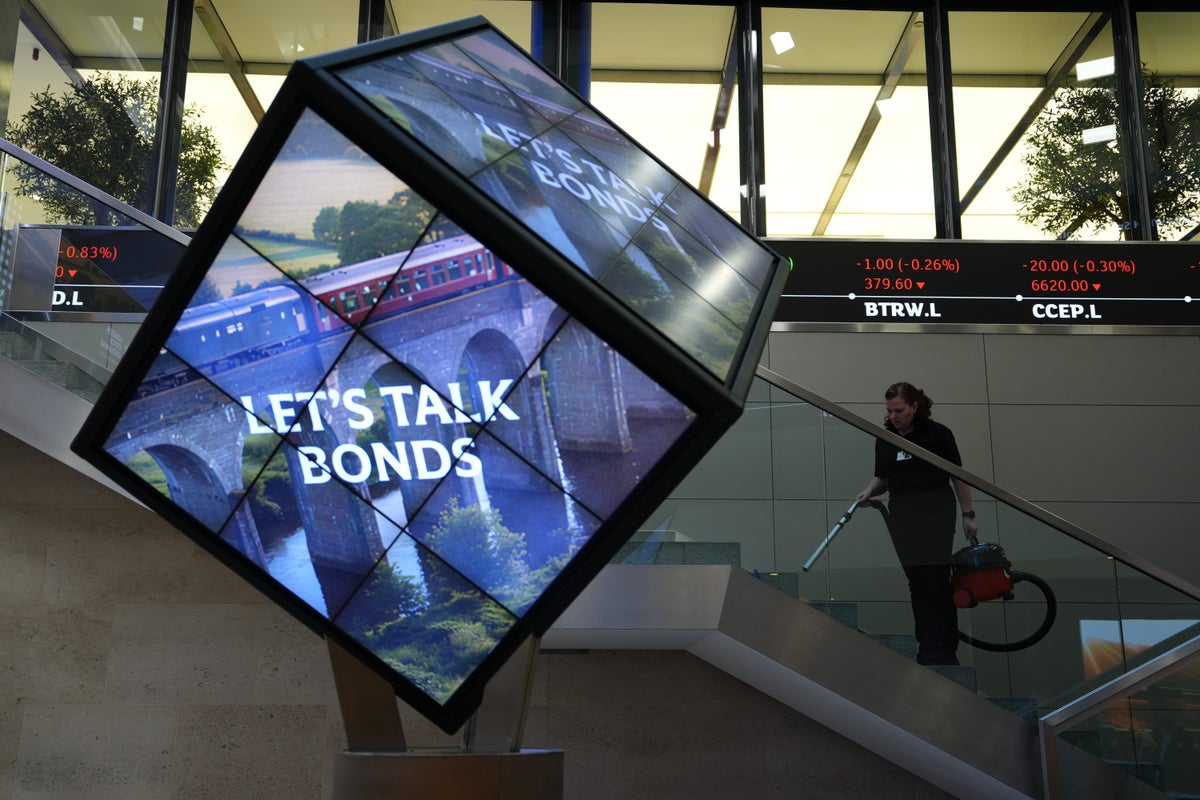
The FTSE 100 outperformed European and US peers on Friday, ending a record-breaking week at another new high.
“Two months in, it looks like 2026 could be a second bumper year in a row for investors putting their faith in UK stocks if current performance trends continue,” said Russ Mould, investment director at AJ Bell.
The FTSE 100 index ended up 63.85 points, 0.6%, at 10,910.55, a record close.
It had earlier hit a record intra-day high of 10,934.94, and is up 9.6% for the year to date.
The FTSE 250 ended up 38.15 points, 0.2%, at 23,757.15, and the AIM All-Share closed up 4.30 points, 0.5%, at 819.53.
For the week, the FTSE 100 rose 1.1%, the FTSE 250 was slightly higher, and the AIM All-Share climbed 0.9%.
London’s gains came despite renewed losses on Wall Street as investors weighed stronger-than-forecast wholesale inflation data, and assessed rising tension between the US and Iran.
The Dow Jones Industrial Average was down 1.0%, the S&P 500 index was 0.6% lower, and the Nasdaq Composite declined 0.9%.
According to the US Bureau of Labour Statistics the producer price index (PPI) rose 0.5% in January on-month, the same pace of growth as reported in December.
The annual rate of growth cooled to 2.9% from 3.0%.
FXStreet consensus had forecast headline growth of 0.3% on-month and annual growth of 2.6%.
Excluding food and energy, the PPI rose 0.8% on-month in January, surprisingly picking up pace from 0.7% in December. The annual rate of growth sped up to 3.8% from 3.3%.
FXStreet consensus forecast core PPI would rise 0.3% on-month giving an annual increase of 3.0%.
After folding in January CPI and PPI figures, Barclays estimates that core PCE inflation – the Federal Reserve’s favoured inflation gauge – rose 0.4% on-month and 3.1% on-year in January.
Oil prices jumped as Iran said that in order to reach a deal the US will have to drop its “excessive demands”, tempering the optimism expressed after recent talks which had been seen as a last-ditch bid to avert war.
The Oman-mediated talks followed repeated threats from US President Donald Trump to strike Iran, and with the US conducting its biggest military build-up in the region in decades.
Mr Trump on February 19 gave Iran 15 days to reach a deal, and while Iran has insisted the discussions focus solely on its nuclear programme, the US wants Tehran’s missile programme, its ballistic missile capabilities, and its support for militant groups curtailed.
The Wall Street Journal reported on Thursday that Mr Trump’s negotiating team would demand that Iran dismantle its three main nuclear sites and hand over all its remaining enriched uranium to the US.
On Friday, the US authorised the departure of non-emergency embassy staff from Israel, while growing fears of conflict spurred China to join other countries in warning its citizens to leave Iran “as soon as possible”. The UK too withdrew its embassy staff from Iran.
Brent oil traded higher at 72.71 dollars a barrel on Friday afternoon, up from 72.58 dollars at the same time on Thursday, and sharply higher from 70.00 dollars at the time of the equity close in New York.
The oil price strength supported BP, up 0.7%, and Shell, up 1.6%.
The geopolitical uncertainty gave a lift to the gold price, supporting Fresnillo, up 3.4%, and Endeavour Mining, up 2.3%.
But the US-Iran worries and the rising oil price put airlines under pressure.
British Airways owner IAG was down 7.4%,despite strong annual results, and budget airline easyJet was down 2.6%.
Gold firmed to 5,235.52 dollars an ounce on Friday from 5,180.61 dollars on Thursday.
In European equities on Friday, the CAC 40 in Paris closed down 0.5%, while the DAX 40 in Frankfurt ended slightly lower.
The pound was lower at 1.3458 dollars on Friday afternoon, from 1.3513 dollars at the equities close on Thursday.
The euro stood higher at 1.1818 dollars, from 1.1792 dollars. Against the yen, the dollar was trading lower at 156.05 yen, compared with 156.20 yen.
The yield on the US 10-year Treasury narrowed to 3.98% on Friday from 4.03% on Thursday. The yield on the US 30-year Treasury trimmed to 4.64% from 4.68%.
London Stock Exchange Group rose 4.2%, and led blue-chip risers, on further reflection of Thursday’s results.
Bank of America played down fears of AI disruption to LSEG’s business.
“The market fails to differentiate between software and data providers like LSEG, where it is partnering with AI agents,” BofA said.
Rightmove advanced 4.3% as it announced a total dividend for 2025 that was higher than expected, alongside a share buyback programme as it highlighted it entered 2026 “with confidence”.
The Milton Keynes-based online property portal said pre-tax profit climbed 12% to £290.0 million in 2025 from £258.4 million in 2024.
“The shares have been weighed down by broader AI concerns, but we see no evidence of any impact. We expect another solid year of growth, supported by further product development that should strengthen its market position,” analysts at Peel Hunt said.
But Melrose plummeted 12% after its annual earnings.
Citi analyst Charles Armitage said the share price fall was an “over-reaction and mainly due to the increase in factoring from £338 million to £396 million”.
Melrose bears argued that as a result of the rise in factoring, the aerospace firm “actually” produced £67 million of free cash flow last year, rather than the £125 million reported, and hence missed the £100 million plus guidance.
But Mr Armitage explained that factoring “was in the £100 million (plus) guidance – this is not a miss”.
On the FTSE 250, Senior leapt 20% after it confirmed receipt of two cash bids, higher than offers the firm had previously turned down this year.
Private equity investor Advent International, based in Boston, Massachusetts, subsequently confirmed it was one of the interested parties.
But it was another tough day for investors in Hays, which fell 9.6%.
The recruiter, which has seen its share price plummet 43% in the last 12 months, reported a decline in first-half earnings and said it has kicked off a search for a new boss, after Dirk Hahn’s immediate resignation as chief executive.
Finally, Wizz Air nosedived 8.7%, after Indigo Partners LLC reported the sale of a £125 million chunk of the low-cost carrier.
The biggest risers on the FTSE 100 were Diageo, up 76.5p at 1,662.5p, Rightmove, up 18.6p at 447.4p, BT, up 8.9p at 216.8p, London Stock Exchange Group, up 360p at 8,860p, and Fresnillo, up 136p at 4,240p.
The biggest fallers on the FTSE 100 were Melrose Industries, down 74.2p at 565.8p, IAG, down 33.6p at 423.7p, Hikma Pharmaceuticals, down 59p at 1,314p, Barclays, down 19.8p at 452.85p, and Intercontinental Hotels Group, down 4.25p at 137.5p.
Monday’s global economic calendar has a slew of manufacturing PMI reports plus UK mortgage approvals data.
Monday’s UK corporate calendar has full-year results from lender Bank of Ireland, distribution and services company Bunzl and medical technology firm Smith & Nephew.
Contributed by Alliance News
Business
Coal gasification to boost energy security and cut imports, says G Kishan Reddy – The Times of India
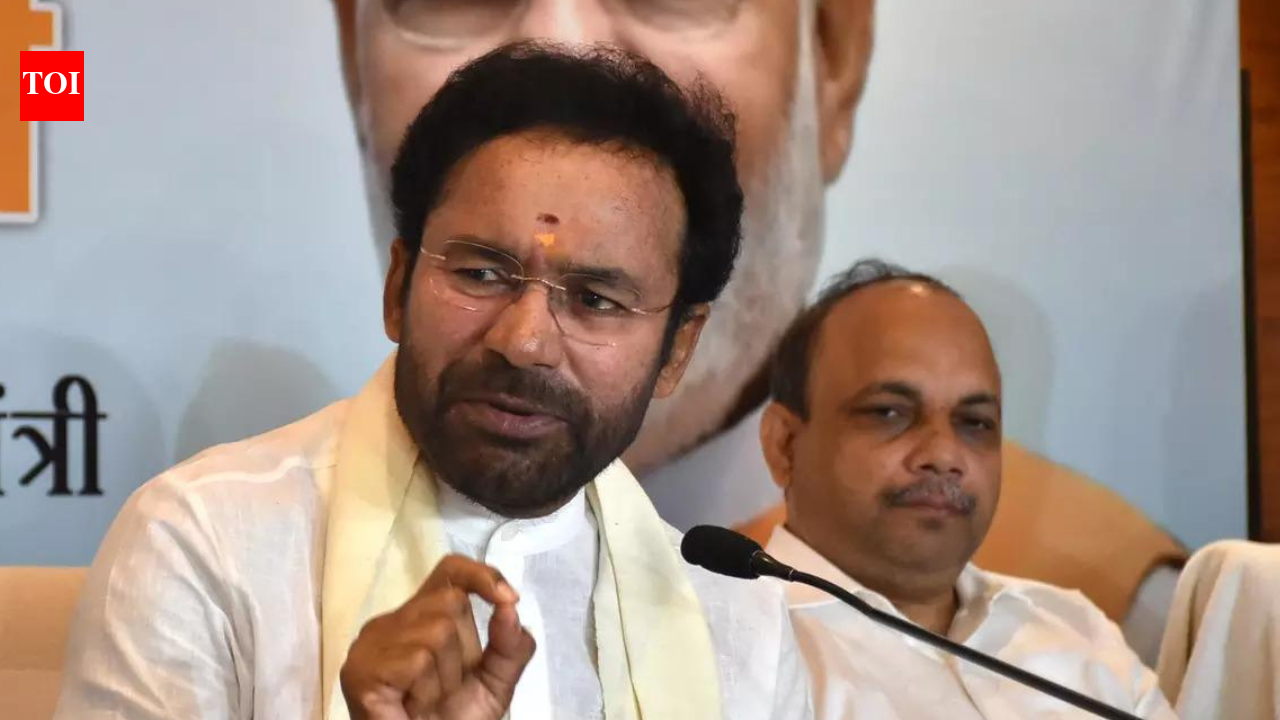
Union coal and mines minister G Kishan Reddy on Sunday said coal gasification will play a critical role in enhancing India’s energy security, reducing import dependence and supporting industrial growth.The renewed push has gained urgency amid the ongoing Middle East conflict, which has led to a surge in global energy prices.Speaking at the Bharat Electricity Summit 2026, the minister described coal gasification as a transformative technology that converts coal into syngas, which can be used to produce cleaner fuels, chemicals, fertilisers and hydrogen, as reported by PTI.He said the approach would enable more efficient and sustainable utilisation of domestic resources while strengthening economic resilience.Reddy highlighted India’s dependence on energy imports, noting that the country imports about 83 per cent of its crude oil requirements, 50 per cent of natural gas and more than 90 per cent of methanol and fertilisers, making energy security a strategic priority.To promote adoption of the technology, the Centre has launched the National Coal Gasification Mission with a target of achieving 100 million tonnes of coal gasification by 2030.“…. An incentive framework of Rs 8,500 crore has been introduced to support public and private sector projects, with several large-scale initiatives already underway and investments exceeding Rs 64,000 crore in the pipeline,” he said.The minister also pointed to advanced technologies such as Underground Coal Gasification, which can help tap previously inaccessible reserves while lowering environmental impact.Calling for greater collaboration, Reddy said coal gasification spans multiple sectors including power, oil and gas and fertilisers, and requires a coordinated ecosystem involving industry, academia, start-ups and research institutions.He reiterated the government’s commitment to streamlined approvals, supportive policies and incentives to encourage early participation and investment.Expressing confidence in India’s potential, the minister said that with innovation, indigenous technology development and coordinated efforts, the country can emerge as a global leader in clean coal technologies while advancing energy security, sustainability and self-reliance.
Business
Sri Lanka increases fuel prices around 25% as Middle East tensions disrupt global oil supplies – The Times of India
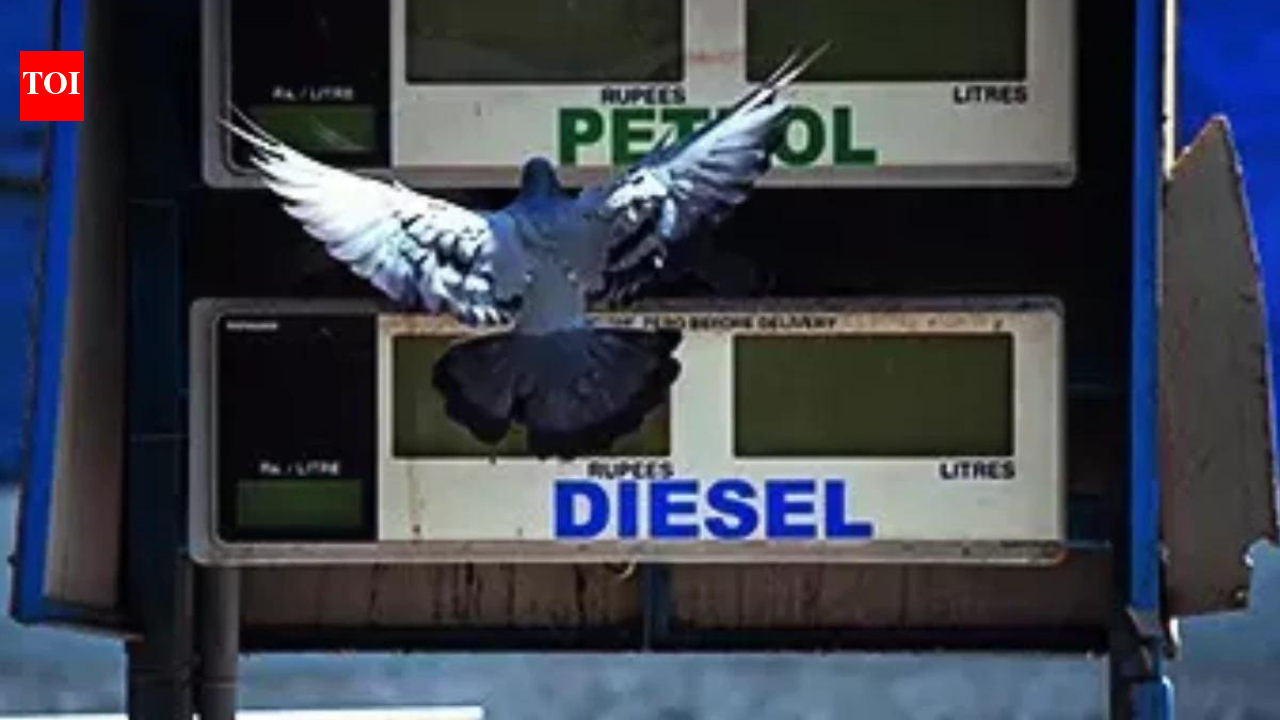
Sri Lanka on Sunday raised fuel prices by around 25 per cent, marking the second increase within a week as the ongoing Middle East conflict continues to disrupt global energy markets, news agency PTI reported.The price revision, effective from midnight, comes as tensions triggered by joint US–Israel strikes on Iran and retaliatory action by Tehran have spread across the Gulf region, leading to the closure of the Strait of Hormuz — a key global energy transit route.According to official announcements, the price of auto diesel rose 26.1 per cent from Sri Lankan rupees (LKR) 303 to LKR 382 per litre, while super diesel increased 25.5 per cent from LKR 353 to LKR 443. Petrol 92 octane climbed 25.6 per cent from LKR 317 to LKR 398, petrol 95 octane rose 24.7 per cent from LKR 365 to LKR 455, and kerosene jumped 30.8 per cent from LKR 195 to LKR 255.This is the third fuel price hike since March 1 and comes as the conflict, which has unsettled global oil markets, entered its fourth week.With the latest revision, retail fuel prices in Sri Lanka are set to return close to levels seen during the 2022 economic crisis, when the country declared its first-ever sovereign default since independence in 1948. The unprecedented financial turmoil at the time forced then president Gotabaya Rajapaksa to resign amid widespread civil unrest.The steep increase has sparked concern among transport operators. Non-state bus owners warned that up to 90 per cent of their fleet could be taken off the roads unless fares are revised.“This is the biggest rise of diesel ever. We will not be able to operate buses without an adequate fare revision. We need a minimum 15 per cent fare hike to stay afloat,” Gamunu Wijeratne, chairman of the Lanka Private Bus Owners’ Association, told reporters.The association threatened a nationwide strike if authorities fail to announce a scheduled fare revision.Responding to the developments, the National Transport Commission (NTC) said the latest diesel price increase, when applied to its fare formula, translates into a rise of more than 10 per cent in current bus fares. NTC Director General Nilan Miranda said Cabinet approval is expected on Monday to implement revised fares, according to media reports.Private operators account for about 65–75 per cent of the island nation’s public transport fleet, while the state-run share stands at around 25–35 per cent.Three-wheeler taxi operators, many of whom use petrol vehicles dominated by India’s Bajaj brand, said the price of commonly used petrol had risen to nearly LKR 400 per litre.“Who would want to ride with us at this rate?” a three-wheeler driver said, as quoted news agency PTI.Apart from state-owned Ceylon Petroleum Corporation (CPC), fuel retailing in Sri Lanka is also carried out by Lanka IOC — a subsidiary of IndianOil –as well as China’s Sinopec and Australia’s United Petroleum. Following CPC’s decision, LIOC and Sinopec also revised their retail fuel prices, media reports said.Opposition leaders criticised the government’s tax policy, claiming that authorities collect about LKR 119 per litre of petrol and LKR 93 per litre of diesel in taxes. They demanded that these levies be scrapped to provide relief to consumers.Analysts warned that the fresh fuel price hike could push inflation higher by 5–8 per cent.Earlier, government spokesman and minister Nalinda Jayatissa said that despite the price revisions, the government continues to bear a monthly subsidy burden of around Rs 20 billion by subsidising diesel by Rs 100 per litre and petrol by Rs 20 per litre.He said that without the revision, the state would have faced an additional financial burden of approximately $1.5 billion. Jayatissa urged the public to consume electricity and fuel “mindfully” and warned against hoarding, calling on citizens to report any such attempts.
Business
Govt orders faster city gas project clearances, hikes commercial LPG allocation to ease supply stress – The Times of India
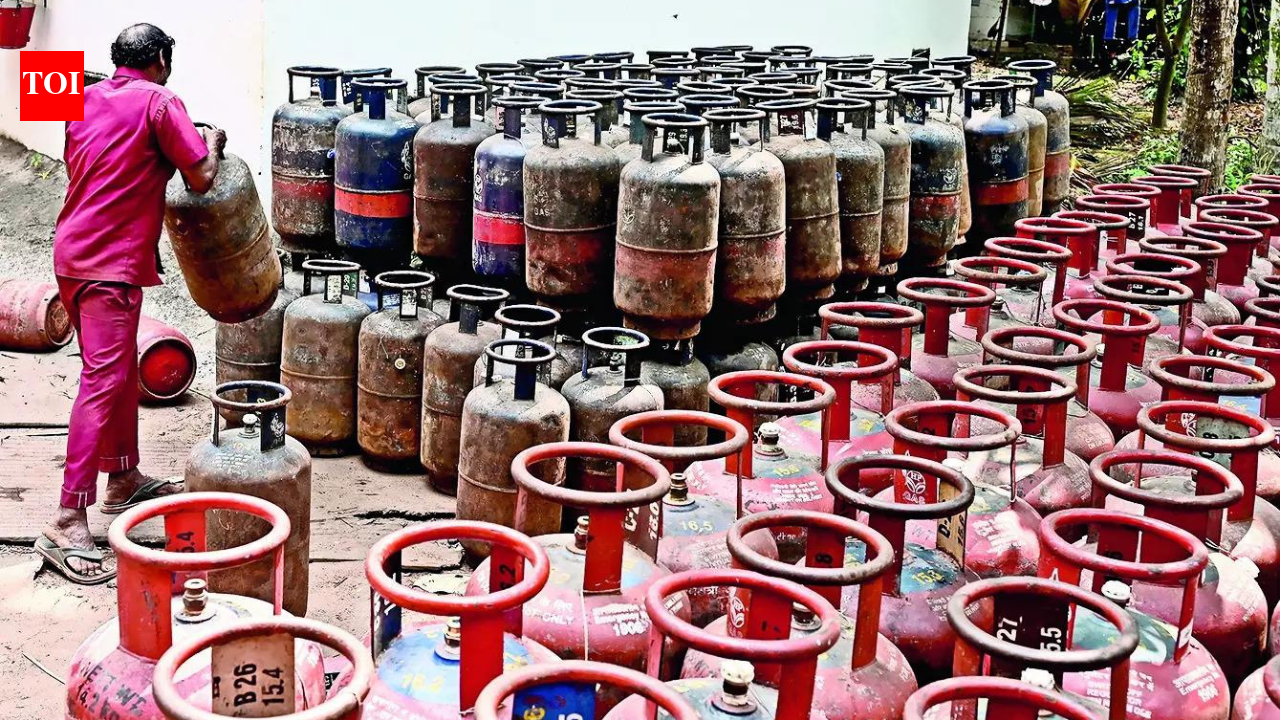
The government has stepped up efforts to streamline gas distribution and ease supply pressures, directing faster processing of city gas projects while increasing allocations of commercial LPG to key sectors amid a challenging geopolitical environment.The Petroleum and Explosives Safety Organisation (PESO) has instructed its offices to dispose of City Gas Distribution (CGD) applications within 10 days, aiming to accelerate the rollout of piped natural gas (PNG), an official statement said.Commercial LPG consumers in major cities and urban areas have also been advised to shift to PNG as part of a broader strategy to reduce dependence on liquefied petroleum gas. Domestic LPG supply remains stable, with no reported dry-outs at distributorships and normal delivery patterns across the country, the statement said, adding that most deliveries are being carried out through the Delivery Authentication Code (DAC) while panic bookings have subsided, PTI reported.On the commercial LPG front, the government has progressively increased allocations. After restoring 20 per cent supply earlier, an additional 10 per cent allocation linked to PNG expansion reforms was announced on March 18. A further 20 per cent allocation was cleared on March 21, taking total commercial LPG supply to 50 per cent.The latest increase prioritises sectors such as restaurants, dhabas, hotels, industrial canteens, food processing units, dairy operations, community kitchens and subsidised food outlets run by state governments and local bodies. Provision has also been made for 5 kg cylinders for migrant workers.Around 20 states and Union Territories have implemented the revised allocation guidelines, while public sector oil marketing companies are supplying commercial LPG in the remaining regions. In the past eight days, about 15,440 tonnes of LPG have been lifted by commercial entities.Educational institutions and hospitals continue to receive priority, accounting for nearly half of the total commercial LPG allocation. Despite global uncertainties affecting supply, the government indicated that domestic availability remains under control while efforts continue to transition urban consumers towards PNG.


Carabao Cup final LIVE: Arsenal and Manchester City battle for first trophy of the season

PCB unveils revised schedule for PSL 11
Coal gasification to boost energy security and cut imports, says G Kishan Reddy – The Times of India

Tips and Advice for Buying Used or Refurbished Electronics

UAE savings strategies 2026 explained: Best apps, tools, budget rules and smart money hacks to beat rising cost of living in emirates – The Times of India

An Air Fryer That Makes Juicy Steak? Yes. It’s Nearly Half Off

-
 Tech1 week ago
Tips and Advice for Buying Used or Refurbished Electronics
-
Business1 week ago
UAE savings strategies 2026 explained: Best apps, tools, budget rules and smart money hacks to beat rising cost of living in emirates – The Times of India
-
 Tech1 week ago
An Air Fryer That Makes Juicy Steak? Yes. It’s Nearly Half Off
-
 Politics1 week ago
Iran threatens US-linked oil facilities after Kharg Island bombed
-

 Fashion1 week ago
US court to review de minimis ban on imports from China & Hong Kong
-

 Sports1 week ago
Japan suffers shocking collapse to Venezuela in World Baseball Classic
-
 Entertainment7 days ago
Strategic oil stocks to be released ‘immediately’ in Asia and Oceania: IEA
-
 Entertainment1 week ago
Iran at war