

Business
FTSE 100 lower as Starmer resists pressure


Stock prices in London closed mixed on Tuesday, after an underwhelming retail sales reading from the US.
Meanwhile, in the UK, Prime Minister Sir Keir Starmer sought to move on from speculation about his future after fending off serious calls to step down.
The Labour leader told a meeting of government ministers that they were “strong and united” after he vowed not to walk away from office just 19 months into a five-year term.
Sir Keir’s position had looked precarious on Monday, when Scottish Labour leader Anas Sarwar demanded his resignation for appointing Peter Mandelson as US ambassador, despite knowing he had maintained links to convicted sex offender Jefferey Epstein.
“The truth is that, at the moment, no potential successor is willing to step forward,” Commerzbank analyst Michael Pfister commented.
“Local elections are coming up in the spring, and there are fears that the Labour Party will suffer significant losses. It is questionable whether any potential successor would dare to come forward before then.”
The FTSE 100 index closed down 32.39 points, 0.3%, at 10,353.84. The FTSE 250 ended up 129.27 points, 0.6%, at 23,469.30, and the AIM all-share closed down 1.65 points, 0.2%, at 815.39.
Coca-Cola HBC was the second-highest UK blue-chip, up 4.7%.
The Zug, Switzerland-based soft drinks bottler, reported net profit of 940.4 million euros (£818.91 million) for 2025, rising 15% from 820.6 million euros (£714.54 million) in 2024, while net sales revenue climbed to 11.60 billion euros (£10.10 billion), up from 10.75 billion euros (£9.36 billion), driven by organic revenue growth of 8.1%.
Coca-Cola HBC proposed a 1.20 euros (£1.04) dividend, up 17% from 1.03 euros (89p). It guided for 2026 organic Ebit growth of 7% to 10%, and expects organic revenue to rise 6% to 7%, in line with its medium-term target range.
BP was down 3.2%.
The London-based oil major will reduce capital expenditure in 2026, cut operating costs, and pursue its 20 billion US dollar (£14.63 billion) disposal programme.
Also, it is suspending its share buyback programme, saying excess cash will be used instead to reduce debt to create a “strong platform” from which to invest in its “distinctive deep hopper of oil and gas opportunities”.
On AIM, Switch Metals jumped 14%.
The mining explorer, which is focused on developing battery and technology metals mines in the Ivory Coast, has identified additional tantalum-rich alluvial targets at its Issia project following the completion of a targeted alluvial work programme.
Stocks in New York were higher. The Dow Jones Industrial Average was up 0.3%, the S&P 500 index up 0.1%, and the Nasdaq Composite up marginally.
Apple was down 0.1%, and Alphabet Class A shares lost 1.9%.
The UK Competition and Markets Authority on Tuesday said it secured commitments from Apple and Alphabet’s Google to improve fairness in app store processes.
The UK competition watchdog said the California-based technology companies with a combined market share of more than 99% of global mobile operating systems have agreed commitments “to deliver immediate improvements in certainty, transparency and fairness for thousands of UK businesses dependent on app stores to serve their customers.”
The commitments include an app review which aims to ensure that Apple and Google review apps to be distributed on their app stores in a fair, objective and transparent way without discriminating against apps which compete with their own.
The yield on the US 10-year Treasury was quoted at 4.14%, narrowing from 4.21%. The yield on the US 30-year Treasury was quoted at 4.78%, narrowing from 4.86%.
This follows data published by the US Census Bureau showing that retail sales were lower than anticipated in December.
Advance estimates of US retail and food services sales for December were virtually flat at 735.0 billion US dollars (£537.88 billion) in December, compared to 735.1 billion US dollars (£537.95 billion) in November when they had risen 0.6%. The FXStreet-cited consensus had expected monthly growth of 0.4% in December.
Separately, the US Bureau of Labour Statistics reported that US import prices edged up 0.1% monthly in December, lower than 0.4% in November and below an expected uptick of 0.2%.
US export prices, meanwhile, advanced 0.3% in December, lower than 0.5% in November but ahead of an expected increase of just 0.1%.
Finally, ADP Research reported that for the four weeks ending January 24, US private employers added an average of 6,500 jobs a week, higher than an average of 5,000 a week for the four weeks ending January 17.
Also in the US, commerce secretary Howard Lutnick on Tuesday denied having connections to the late convicted sex offender Jeffrey Epstein, as he came under fire from lawmakers calling for him to step down.
“Over a 14 year period, I did not have any relationship with him. I barely had anything to do with that person,” Mr Lutnick told a Senate committee hearing.
In European equities on Tuesday, the CAC 40 in Paris closed up 0.1%, while the DAX 40 in Frankfurt ended down 0.1%.
The pound was quoted higher at 1.3661 US dollars (£1) at the time of the London equities close on Tuesday, compared to 1.3612 US dollars (99p) on Monday. The euro stood at 1.1901 US dollars (1 euro), higher against 1.1814 US dollars (99 cents). Against the yen, the dollar was trading lower at 154.23 yen (99 cents) compared to 157.04 yen (1.01 dollars).
Brent oil was quoted at 68.82 dollars a barrel at the time of the London equities close on Tuesday, slightly down from 68.85 dollars late on Monday.
Gold was quoted at 5,011.70 US dollars (£3,668.49) an ounce, down against 5,068.99 US dollars (£3,710.63
The biggest risers on the FTSE 100 were Croda International, up 275.0p at 3,201.0p, Coca-Cola HBC, up 200.0p at 4,478.0p, Burberry, up 50.0p at 1,225.5, Berkeley Group, up 160.0p at 4,272.0p, and Barratt Redrow, up 13.7p at 389.1p.
The biggest fallers on the FTSE 100 were Standard Chartered, down 109.0p at 1,790.0p, Babcock International, down 65.0p at 1,364.0p, Antofagasta, down 17.0p at 3,648.0p, St James’s Place, down 53.0p at 1,449.0p, and Hiscox, down 50.5p at 1,453.4p.
Wednesday’s economic calendar includes Chinese consumer and producer inflation data, and US nonfarm payrolls figures.
Wednesday’s UK corporate calendar includes third-quarter results from James Hardie Industries, and half-year results from both Renishaw and Barratt Redrow.
– Contributed by Alliance News
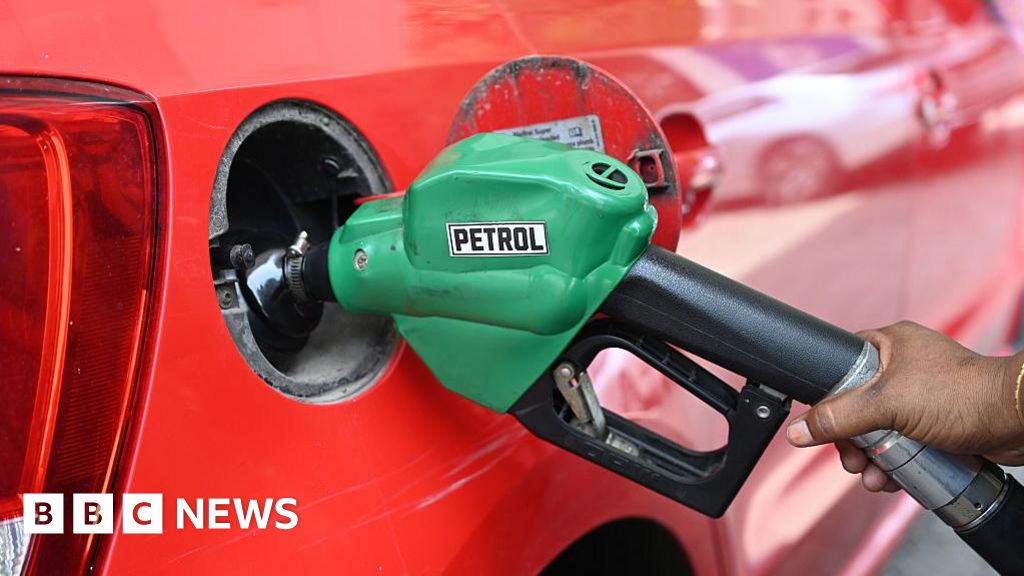
Trump said on Saturday that an agreement would include the reopening of the Strait of Hormuz, without giving further details.
Source link
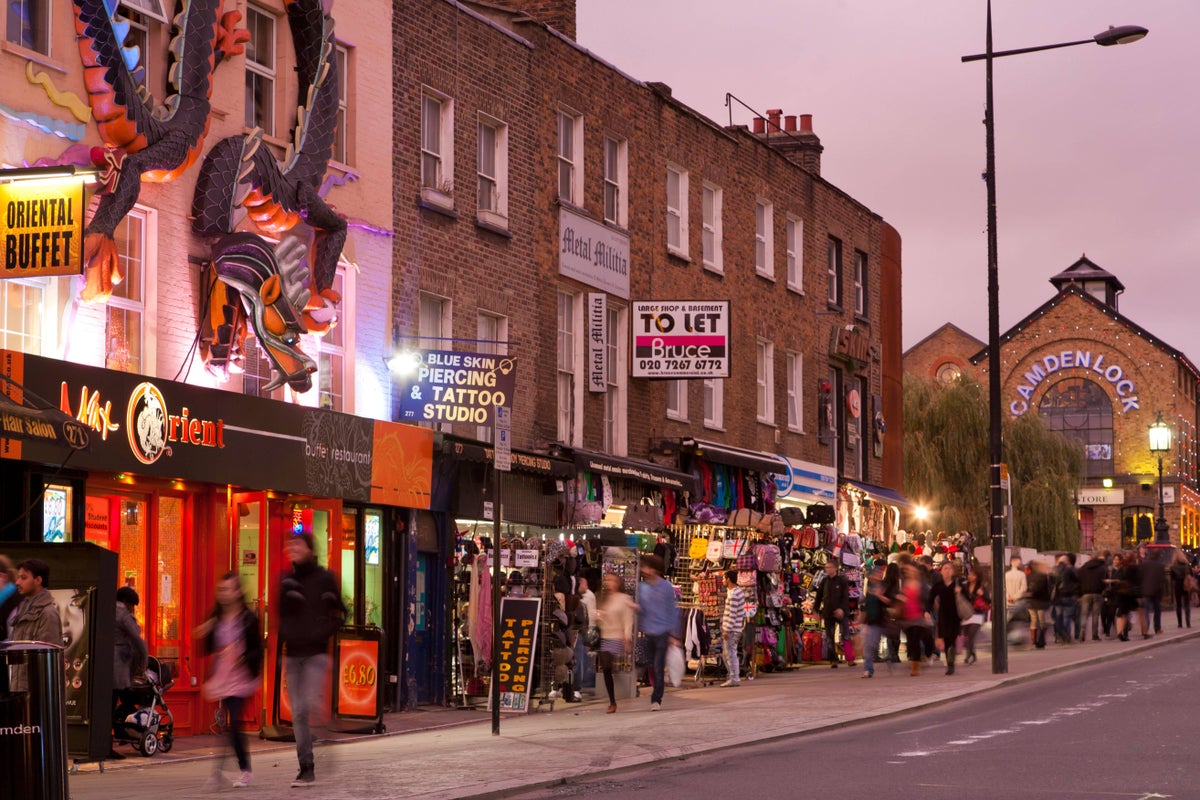
UK high streets and shopping destinations are showing signs of recovery as more than 13 retail stores opened each week over the past year, according to new figures.
However, England and Wales have still seen more than 6,000 retail premises vanish from local communities over the past five years.
Analysis of Valuation Office Agency data by tax firm Ryan, found that there were 507,810 retail premises across England and Wales at the end of 2025.
It said the figures showed that a recent contraction across the sector has appeared to stabilise, with a 723 net increase in the number of retail stores compared with a year earlier.
Property numbers increased across every region of England and Wales, with the exception of the North West, which saw a decline of 41.
It suggests that parts of the sector are now beginning to rebalance following significant structural contraction seen since the pandemic.
The creation of new retail units also comes as many retail real estate firms, such as Hammerson, have turned empty large units, often former department stores, into a greater number of smaller units.
Other retail groups, such as John Lewis, have moved away from ambitions to transform some retail property for other uses such as rental accommodation.
Nevertheless, the retail sector is still facing pressure from higher business rates for many firms, increased labour costs and concerns over consumer sentiment.
The data also shows that there has also been significant decline over the past few years, with a net reduction of 6,045 retail properties since the end of 2020.
London recorded the largest five-year regional reduction, with 1,266 retail premises disappearing over the period, followed by the South East (-1,191), North West (-719) and North East (-672).
The figures show retail premises which have permanently disappeared from communities altogether, having either been demolished or converted for alternative use.
The figures come as Ryan’s 2026 annual business rates review highlighted that the retail sector saw a 9.3% increase in rateable values at the 2026 business rates revaluation despite the major shift in the retail landscape since the pandemic.
Alex Probyn, practice leader for Europe and Asia-Pacific property tax at Ryan, said: “The pandemic accelerated structural changes that were already emerging across the retail sector, including changing consumer behaviour, hybrid working patterns and a reduced reliance on traditional retail floorspace in many locations.
“Many locations were arguably over-retailed before Covid and high streets have evolved towards more mixed-use environments, with retail space being rebalanced alongside growing demand for residential, leisure, hospitality and service-led uses.
“The revaluation outcome does suggest a large proportion of retail premises have seen bigger increases in their assessments than underlying market conditions and rental evidence would have led occupiers to expect.
“Retailers should therefore carefully review and, where appropriate, challenge their assessments.”

Indians sharply cut back on overseas travel spending in March, with remittances for foreign trips dropping by more than $212 million from the previous month, according to Reserve Bank of India data. The fall in outbound travel expenditure came amid rising oil prices linked to the Middle East conflict and persistent pressure on rupee, even as travel remained the single largest component of outward remittances under the Liberalised Remittance Scheme (LRS).In March, travel-related remittances fell to $1.09 billion from $1.3 billion in February and $1.65 billion in January. The decline came at a time when the West Asia conflict pushed oil prices higher and weakened rupee to record lows. Amid the situation, Prime Minister Narendra Modi urged citizens to cut down on foreign travel and adopt measures such as carpooling. Lower overseas travel spending could reduce foreign exchange outflows and help ease pressure on rupee.According to the RBI’s data on outward remittances by resident individuals, travel continued to account for the largest share of money sent abroad under the LRS in March. Total remittances during the month stood at $2.59 billion.The RBI tracks overseas spending across categories including travel, studies abroad, maintenance of close relatives, overseas investments, and property purchases. Under the LRS framework, resident individuals, including minors, can remit up to $250,000 in a financial year for permitted current or capital account transactions.Within the travel segment, the biggest component remained the ‘other travel’ category, which covers holiday spending and international credit card settlements. Indians spent $623.05 million under this category in March, accounting for nearly 57 per cent of total travel-related remittances during the month.Expenditure linked to education travel, including hostel and fee payments, stood at $450.16 million. Business travel, pilgrimage, and overseas medical treatment together accounted for $21.39 million.The data also showed a rise in remittances meant for the maintenance of close relatives abroad. Such transfers increased to $389.78 million in March from $266.18 million in February.At the same time, spending under the ‘studies abroad’ category declined. This category includes payments made for educational services accessed remotely without travelling overseas, such as correspondence courses. Remittances under this head stood at $151.71 million in March, compared to $175.68 million in February and $267.42 million in January.For the financial year 2024-25, Indians remitted a total of $29.56 billion under the LRS. Travel made up the largest portion of this amount at $16.96 billion.The RBI figures further showed that investments by Indians in overseas equity and debt instruments rose significantly to $440.22 million in March from $265.99 million in February.Meanwhile, outward remittances for the purchase of immovable property overseas declined to $38.68 million in March, down from $51.36 million a month earlier.


Tiruppur’s synthetic bet meets the oil wall

EU Commission sees growth slowdown as energy shock drives up inflation

Pilgrims kick off Hajj as war’s trajectory hangs in the balance

-

 Entertainment1 week ago
Where Pete Davidson, Elsie Hewitt stand after breakup: Details revealed
-

 Politics1 week ago
Rising diesel costs from Iran war strain US school budgets
-

 Tech1 week ago
Why Is Your Grill So Dumb? The Best Grills Set Temp Like an Oven
-

 Tech1 week ago
This Solar-Powered Smart Sprinkler Keeps My Lawn Watered Without Any Power Cables
-

 Fashion6 days ago
Nigeria Kwara Garment Factory, KWS Garment Production Village ink pact
-
 Fashion7 days ago
Turkiye’s current account deficit expected to widen in 2026: Minister
-

 Entertainment1 week ago
Princess of Wales praised as ‘step ahead’ of royal family
-

 Fashion1 week ago
India’s Pearl Global’s FY26 revenue crosses $521 mn milestone