

Business
FTSE 100 nudges higher but weak data dents pound

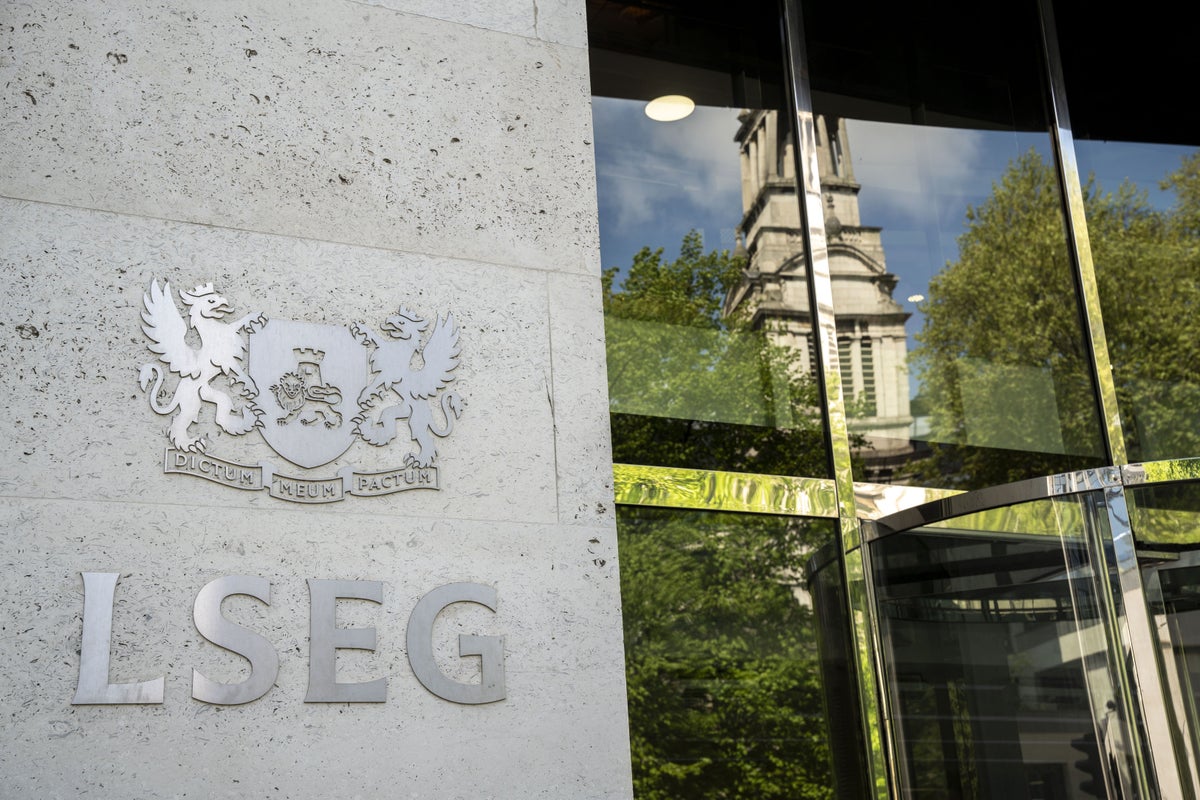
The FTSE 100 posted modest gains on Tuesday, outperforming European and US peers, while weak UK data put sterling under pressure.
The FTSE 100 index closed up 9.90 points, 0.1%, at 9,452.77. The FTSE 250 ended 36.14 points lower, 0.2%, at 22,028.18, and the AIM All-Share dropped 2.91 points, 0.4%, to 789.56.
The UK unemployment rate unexpectedly rose in the three months to August, numbers showed.
According to the Office for National Statistics, the jobless rate was 4.8% in the three months to August, rising from 4.7% in the three months to July.
It had been expected to stay at 4.7%, according to consensus cited by FXStreet.
The ONS said payrolled employees in the UK fell by 93,000 on-year in August alone but did rise by 10,000 on-month.
In the early estimate for September, which the ONS warns is likely to be revised, payrolled employees fell by 100,000 on-year and by 10,000 on-month to 30.3 million.
Annual growth in regular earnings, so excluding bonuses, was 4.7% in the three months to August, easing from 4.8% in the three months to July. The figure landed in line with consensus.
Deutsche Bank’s chief UK economist Sanjay Raja said “one thing is clear, slack continues to build in the labour market”.
“Wage pressures are easing on the back of softening labour market and hiring plans remain stalled,” he added.
“Bottom line, we continue to think that a [fourth quarter 2025] rate cut may be underpriced by markets. We hold on to our view for a December 2025 rate cut.”
Citi said the jobs and wage growth figures add to its conviction that Bank of England meetings in November and December are “live”.
“Inflation data next week will be an important test with an undershoot likely to trigger further repricing towards an additional cut this year,” the broker said.
Elsewhere, a leading policymaker at the Bank of England warned that there is a “rising” risk that the UK economy could see a “more forceful downturn” because of higher borrowing costs.
Alan Taylor, a member of the central bank’s nine-strong Monetary Policy Committee, said there was a small but growing chance that the UK will witness negative growth and “recession dynamics start to kick in”.
He cautioned that it is “increasingly likely” that the UK economy will fall into a “weakened state for a sustained period”, with inflation sliding below target levels.
He said he believes this could lead to “undue damage” to economic activity in the UK.
The pound was quoted lower at 1.3294 US dollars at the time of the London equity market close on Tuesday, compared to 1.3331 US dollars on Monday.
The euro stood at 1.1591 US dollars, higher compared to 1.1569 US dollars. Against the yen, the dollar was trading at 151.83 yen, lower compared to 152.30 yen.
In European equities on Tuesday, the CAC 40 in Paris closed down 0.2%, while the DAX 40 in Frankfurt ended 0.6% lower.
Stocks in New York were down at the time of the London close. The Dow Jones Industrial Average was down 0.2%, the S&P 500 was 0.5% lower, while the Nasdaq Composite declined 0.9%.
Wall Street’s drop came despite strong third quarter results from investment banks JPMorgan, Goldman Sachs and Citi, which all beat market expectations.
Citi climbed 1.2%, but JPMorgan fell 2.0% and Goldman Sachs dropped 2.8%.
JPMorgan chief executive Jamie Dimon cautioned: “There continues to be a heightened degree of uncertainty stemming from complex geopolitical conditions, tariffs and trade uncertainty, elevated asset prices and the risk of sticky inflation.”
The yield on the US 10-year Treasury was quoted at 4.05%, widened from 4.04% at the time of the London equities close on Monday. The yield on the US 30-year Treasury stood at 4.64%, stretched from 4.62%.
On the FTSE 100, easyJet climbed 8.0% as Italian daily Corriere della Sera reported shipping firm Mediterranean Shipping is among those mulling investing, or taking full control of the budget carrier.
MSC is working in tandem with an investment fund, Corriere said, citing three sources familiar with the matter.
EasyJet is “landing on the desks of several individuals” interested in investing in it, Corriere reported.
Bookmaker Entain climbed 1.8% as its US joint venture BetMGM reported a strong third quarter, with first-half momentum continuing and full-year guidance raised.
Owing to the strong performance full-year net revenue guidance for BetMGM was lifted to at least 2.75 billion US dollars from 2.7 billion US dollars, and Ebitda is now anticipated at approximately 200 million US dollars, from at least 150 million US dollars.
But IMI fell 0.9% as RBC Capital Markets lowered to “sector perform” from “outperform”.
The downgrade reflects “valuation, rather than a fundamental change in our view”, RBC analyst Mark Fielding explained, noting IMI is a “high quality” business.
He pointed out IMI shares are up 26% year-to-date while he also feels the firm cannot avoid some impact from wider end market uncertainties.
On the FTSE 250, Mitie jumped 14% as it upgraded operating profit guidance and launched a new £100 million share buyback, following solid first-half revenue growth and continued progress with the integration of its recent Marlowe acquisition.
Housebuilder Bellway firmed 5.3% after announcing a £150 million share buyback and reporting a 21% increase in annual pre-tax profit as revenue climbed 17%.
But Morgan Advanced Materials dropped 6.6% after its second downbeat trading update in three months, warning of increasing uncertainty in European industrial markets.
Gold traded at 4,141.29 US dollars an ounce on Tuesday, up from 4,093.56 US dollars on Monday. Brent oil traded at 61.87 US dollars a barrel, down from 63.40 US dollars late Monday.
The biggest risers on the FTSE 100 were easyJet, up 37.2p at 501.2p, Persimmon, up 30.0p at 1,199.0p, Berkeley Group, up 94.0p at 4,034.0p, Next, up 250.0p at 12,635.0p and Centrica, up 3.15p at 173.0p.
The biggest fallers on the FTSE 100 were Spirax, down 285.0p at 6,645.0p, Anglo American, down 84.0p at 2,915.0p, Croda, down 76.0p at 2,662.0p, Antofagasta, down 69.0p at 2,758.0p and Weir Group, down 54.0p at 2,794.0p.
Wednesday’s global economic diary has inflation data in China overnight, eurozone industrial production figures and the US Beige Book.
Wednesday’s UK corporate calendar has a trading statement from recruiter PageGroup and bingo and casino operator Rank.
Contributed by Alliance News
Business
Noel Tata part of 3-1 vote against Srinivasan, Singh at Tata edu trust – The Times of India

MUMBAI: Noel Tata has voted against the reappointment of Venu Srinivasan and Vijay Singh as trustees of Tata Education and Development Trust (TEDT), the largest corpus trust within Tata Trusts, in a move that widens fault lines within one of India’s most powerful philanthropic structures. It marks the first time Noel has made his opposition to the duo unequivocal.The vote, the last of four cast on the matter, added to a verdict that had already been sealed when Mehli Mistry became the first to oppose the duo’s extension, shortly after the trusteeship renewal circular was issued.Under TEDT’s governance rules, reappointments require unanimous consent among trustees – a threshold that had already been foreclosed by Mehli’s vote. Jehangir Mistry subsequently voted against both men as well. Srinivasan and Singh had each voted for the other. The tally stood at 3-1 against each of them.
Noel’s vote signals widening of Tata Trusts rift since ’25
Their tenures in an influential Tata trust that supports projects in India and abroad, formally expired on Sunday, May 10. Noel Tata voting against Srinivasan and Singh significantly curtails influence of both men within wider Tata Trusts ecosystem, even as they remain vice-chairmen of the Sir Dorabji Tata Trust (SDTT) and Sir Ratan Tata Trust (SRTT) — the two apex trusts that together hold controlling stake in Tata Sons.The rift between Noel and the duo deepened after Srinivasan and Singh publicly backed a listing of Tata Sons, a move Noel opposed. In an email to Tata Trusts CEO, Mehli said “My affidavit in response to the board composition change report for SDTT explains the reasons why I chose to take such a decision.” According to the affidavit, Noel, Srinivasan and Singh had wrongly voted against him at SDTT. He also said that Srinivasan had taken part in the vote even though his term had already ended at SDTT. TEDT, with a corpus of Rs 5,600 crore, has been among the most prominent Indian donors to Ivy League institutions, including Harvard Business School and Cornell University, and owns and operates two cancer hospitals in India while supporting 17 others through grants.Following the board changes, Noel remains chairman and perpetual trustee of TEDT. Mehli continues in his role as perpetual trustee, while Jehangir holds a fixed-term trusteeship. With Srinivasan and Singh’s departure, TEDT now sits at the minimum threshold of three trustees permitted under its deed. An email sent to Noel did not elicit a response. The vote is the latest and most visible expression of a fracture within Tata Trusts that has been widening since late 2025. Established by former Tata Trusts chairman Ratan Tata in 2008, TEDT is perhaps the only trust within Tata Trusts that can support social projects in India and abroad.

NEW DELHI: The Competition Commission has ordered a detailed probe against French spirits major Pernod Ricard and seven other entities for alleged cartelisation in the Indian-made foreign liquor market.The seven entities that have come under the watchdog’s lens are Indo Spirits, Pathway HR Solutions, Universal Distributors, Khao Gali, Bubbly Beverages, Shiv Associates and Organomix Ecosystems.Ordering the investigation, the regulator said it is of prima-facie view that Pernord Ricard’s restrictive conduct with its retailers/wholesalers, purportedly, to induce brand pushing and achieve higher market share in IMFL market in Delhi, falls within the purview of ‘exclusive dealing agreement’ under the Competition Act. Such conduct violates the Act, according to a 26-page order, dated May 5, by the Competition Commission of India (CCI). The complaint was filed before the CCI in 2024.CCI’s Director General (DG) will carry out the investigation that will also look into the role of the persons/officers who were responsible for the conduct of the activities of such entities as well as individuals whose consent or connivance was involved during the time of the contraventions.

More than half of tradespeople have seen an increase of late payments compared to a year ago, a survey finds.
Source link

Noel Tata part of 3-1 vote against Srinivasan, Singh at Tata edu trust – The Times of India
Cost of living crisis sees tradespeople having to chase debt
CCI to probe Pernod Ricard, seven others – The Times of India

-

 Politics1 week ago
Iran weighs US reply delivered via Pakistan as Trump signals opposition to deal terms
-

 Fashion1 week ago
AAFA pushes for swift US House passage of key anti-counterfeiting law
-

 Fashion1 week ago
US’ J.Jill, Inc. appoints Kimberly Wallengren as CMO
-

 Fashion1 week ago
US cotton export sales show strong recovery, Upland rise 36%
-

 Sports1 week ago
Sajid Ali Sadpara summits world’s fifth-highest peak
-

 Tech6 days ago
DHS Demanded Google Surrender Data on Canadian’s Activity, Location Over Anti-ICE Posts
-

 Fashion1 week ago
ICE cotton witnesses sharp rise on weaker dollar, strong exports
-
 Business1 week ago
Heineken to invest £44.5m in hundreds of pubs creating 850 jobs