

Business
Godalming plant-based cookery classes bring people together


Samantha Hutchison, the council’s assistant director of community services, said the classes offered “a fantastic opportunity for people to come together, share skills, experience different cultural cuisines and improve both their health and community wellbeing”.
Business
Logan Paul sold a Pokémon card for more than $16 million. Here’s why investors are watching

Pokémon cards aren’t just childhood collectibles anymore.
Some owners are increasingly treating the popular 1990s and 2000s trading cards like alternative assets, with some of the rarest cards outperforming traditional benchmarks like the S&P 500 in recent years.
During key periods like the pandemic boom and another surge in 2025, trading card indexes tracking Pokémon sales posted gains that far exceeded the S&P 500’s long-term average annual return of 10% to 12%, according to trading card valuation tool Card Ladder. The comparison isn’t perfect — stock data spans decades, while trends in trading card values are shorter and more volatile — but the outperformance in certain windows is still striking.
The jump in prices come down to scarcity, grading and a surge of deep-pocketed buyers chasing a limited supply of top-tier assets.
At the high end, that dynamic is clear. A rare Pikachu Illustrator card, owned by influencer and wrestler Logan Paul, sold for more than $16 million in February, which set a record for the most expensive trading card ever sold at auction.
“There are certain individuals trying to acquire the rarest, highest-grade cards and taking them off the market for as long as they can,” said auctioneer Ken Goldin, whose online marketplace, owned by eBay, consigned and sold Paul’s rare Pokémon card. “It’s possible you may never see that card come up for sale again in our lifetime.”
Rare Pokémon card designed by Atsuko Nishida.
Courtesy: Goldin
That supply squeeze helps explain why prices can surge and why a small slice of the market is driving most of the gains.
The condition of a card in particular, which drives its grade on a scale of up to 10, can make or break value, Goldin added.
“You can have a card graded a 10 [perfect score] and nobody cares if the underlying card isn’t important,” Goldin said. “But when you have the right card, the condition become critical — especially in Pokémon, where there’s a massive premium for a 10.”
That premium can be extreme, Goldin said. A perfect condition $100,000 card evaluated by Professional Sports Authenticator, the premier authentication and grading company, might only get 1% or 2% of that value in a much lower condition.
Outside the most rare handful of cards, retail investors and collectors are flipping back open their dusty collection books from 20 or more years ago and hoping to strike gold. The boom in card sales accelerated during the pandemic as stimulus money and interest in alternative assets surged. Spending on non-sports trading cards, including Pokémon, jumped 350% between 2020 and 2025, according to market research firm Circana. At the same time, celebrities like Post Malone, Steve Aoki and Kevin O’Leary fueled mainstream attention.
“We are seeing people use this as an alternative asset and allocation of wealth,” said Goldin. “Whether that becomes more institutional over time is still to be determined.”
But risk remains for hopeful investors in the market. The same forces driving gains also create risk. Prices are volatile, heavily influenced by hype, and card prices lack the stability and track record of traditional markets.
Still, some highly sought after Pokémon cards continue to outperform the market.
Business
Helium And India: Up, up and away: Is the world running out of Helium gas? – The Times of India
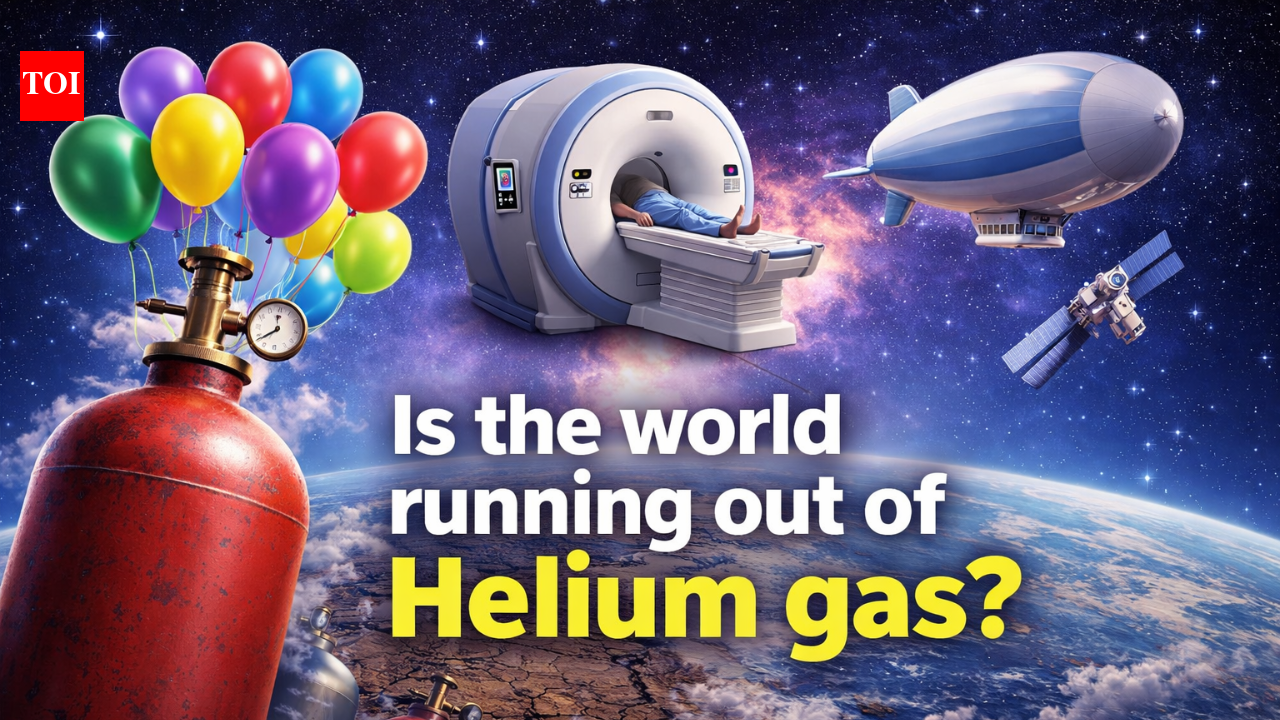
Helium isn’t something most people think about, unless you’re in a lab, running an MRI, building chips, or inhaling it for that squeaky balloon voice. But what if the world suddenly runs out of this invisible gas? As exaggerating as the question may sound, it’s exactly what’s raising concerns right now. As tensions in the Middle East shake up supply chains, helium has quietly floated into the middle of a global crisis, one that could affect everything from hospital scans to high-tech factories in ways few expected.Earlier this month, the global helium supply chain took a big hit. Iranian drone and missile strikes on Qatar’s Ras Laffan industrial city, the world’s largest hub for helium production, forced a shutdown that knocked out nearly one-third of the global supply overnight. The disruption was further compounded by Tehran’s tightened grip on the Strait of Hormuz to Western commercial shipping, forcing vessels to reroute around the Cape of Good Hope, significantly increasing transit times and losses.While this already sounds like a problem, it’s even worse for liquid helium, which has to be kept at extremely low temperatures and can’t easily survive long journeys without significant “boil-off” losses. As a result, the ongoing crisis, often referred to as “helium shortage 5.0,” has moved beyond a theoretical risk to become a systemic global supply disruption.
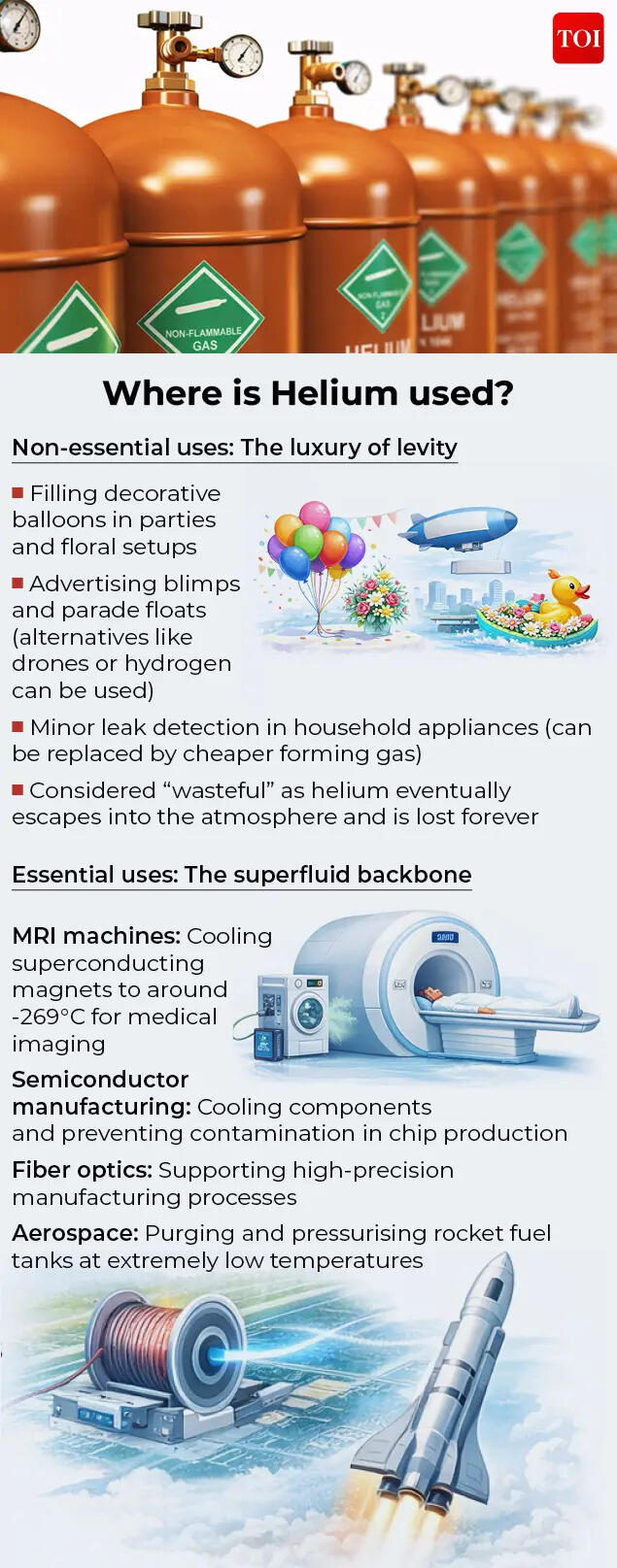
How is Helium used
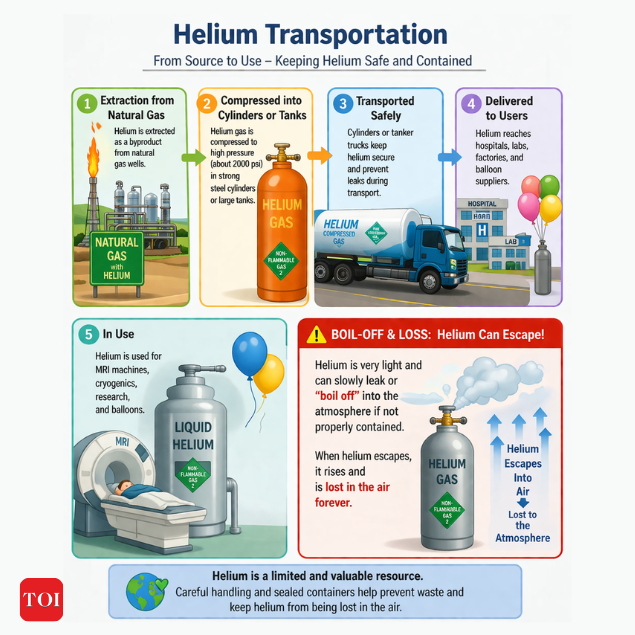
Non-essential uses: The luxury of levityThe most common non-essential use of helium is in the party and floral industry for filling decorative balloons. While culturally popular, this application is a primary source of “waste,” as the gas eventually leaks into the atmosphere and escapes into space, never to be recovered. Similarly, its use in advertising blimps and parade floats is considered non-essential because these functions can be served by alternative technologies like drone displays or, in some cases, hydrogen gas. Additionally, using helium for minor leak detection in household appliances is often deemed non-critical, as cheaper “forming gas” (nitrogen-hydrogen mixes) can often perform the same task without depleting the world’s rare helium reserves.Essential uses: The superfluid backboneHelium is indispensable in healthcare, specifically for MRI machines. It is the only element capable of cooling superconducting magnets to -269°C, a temperature required to keep the magnets operational for life-saving diagnostic scans. Beyond medicine, it is critical in semiconductor manufacturing and fiber optics. Its inert nature and high thermal conductivity allow it to cool components rapidly and prevent chemical contamination during the production of the microchips that power our global digital infrastructure. Meanwhile in aerospace, helium is used to purge and pressurize rocket fuel tanks, as it remains a gas even at the extreme cryogenic temperatures of liquid oxygen and hydrogen.This raises an important question, especially as countries rush to secure their energy supply: why can’t this element simply be replaced?
The chemistry of scarcity — Can’t we just make more Helium?
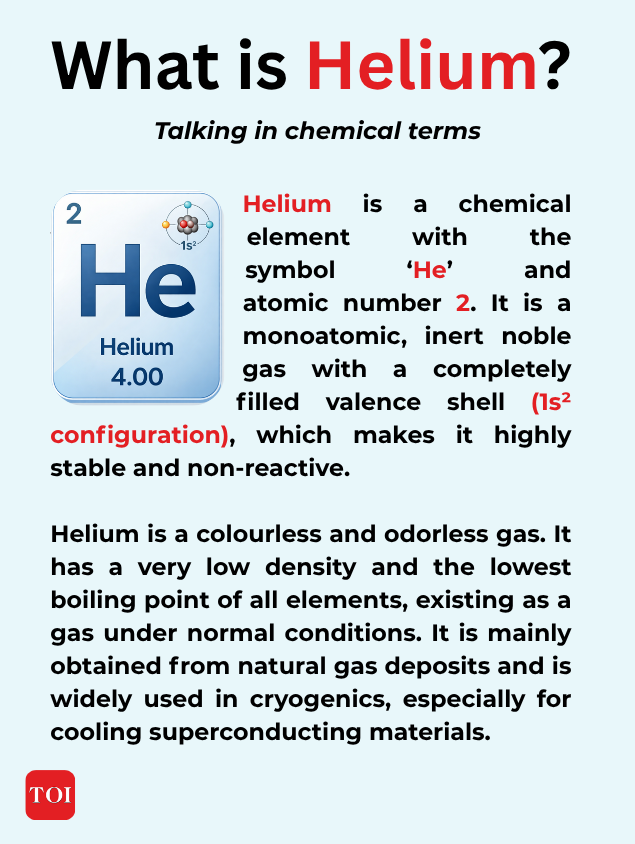
To understand why this shortage is so critical, it is essential to understand helium’s unique physical properties. Although helium is the second most abundant element in the universe, it is extremely rare on Earth. Unlike nitrogen or oxygen, it cannot be extracted from the atmosphere. Instead, helium is a non-renewable by-product formed over billions of years through radioactive decay deep within the Earth’s crust. It becomes trapped in natural gas reservoirs and is recovered during gas processing.Once released into the atmosphere, helium is effectively lost forever. Being extremely light, it escapes Earth’s gravitational pull and drifts into space. There is no known method to manufacture helium at scale, nor any viable substitute for its unique properties. Every unit consumed, whether in industrial applications or even party balloons, is permanently depleted.The impact of the helium crisis is already being felt across major economies. Countries such as South Korea, Japan, Taiwan and China, among Qatar’s largest importers of helium, are facing growing uncertainty over supplies as disruptions in the Middle East ripple through the global market. Even North American consumers, despite domestic production, remain partly dependent on Gulf helium, highlighting the truly global nature of the supply chain strain.
Hormuz trouble hits Helium bubble
This widespread impact has laid bare the structural vulnerability of the global helium market, which remains heavily concentrated in a handful of regions. Historically, supply has rested on a “tripod” of the United States, Qatar and Russia, with Qatar alone contributing around for over 30% of global production, most of it centred in the Ras Laffan industrial complex. At the same time, United States remains the largest producer globally, generating around 81 million cubic metres, over 40% of total supply.
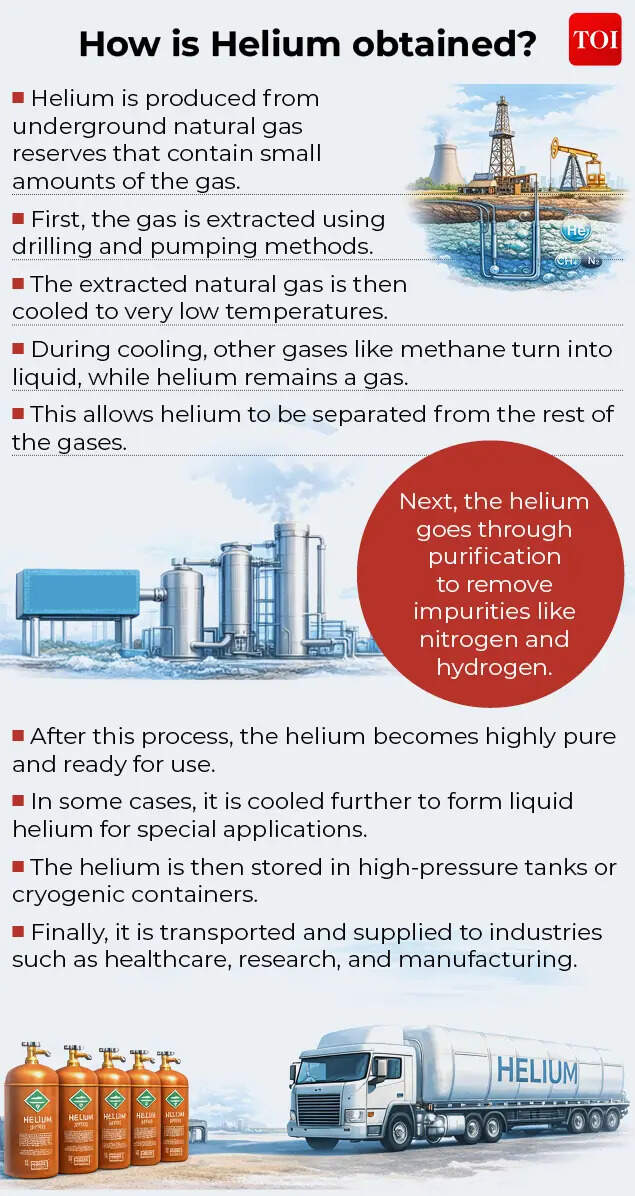
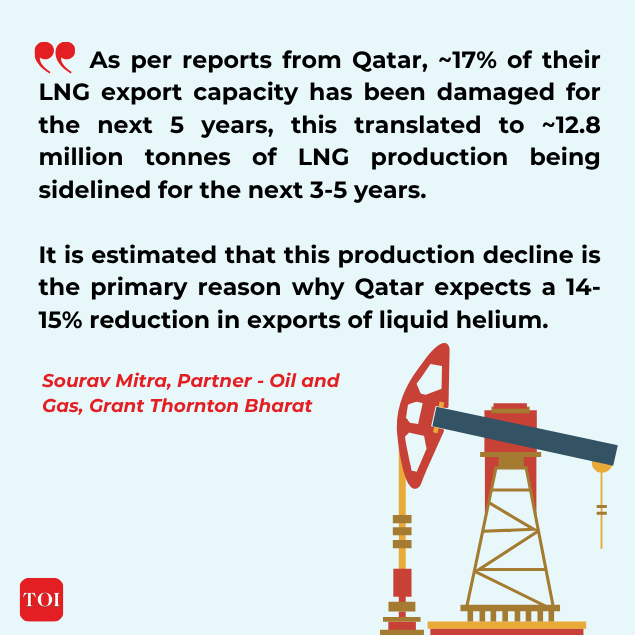
A key reason behind the crisis lies in how helium is produced. It is not extracted independently but as a by-product of liquefied natural gas (LNG) processing, making its availability directly proportional to the stability of gas infrastructure.“The global helium market has a considerable degree of exposure to the Middle East, mainly on Qatar which accounts for somewhere between 30% to 35% of global helium supply,” said Sourav Mitra, partner – oil and gas at Grant Thornton Bharat. “The majority of its output is concentrated in the Ras Laffan industrial complex,” the expert told TOI.Mitra highlighted that helium’s dependence on maritime logistics adds another layer of risk. “Considering that helium is a low-density gas that must be shipped in specialized cryogenic containers, it relies entirely on stable maritime trade routes. Any conflicts that threaten the Strait of Hormuz… create immediate global shortages,” he said. Unlike crude oil, there are no significant global strategic reserves of helium that can cushion such disruptions.The situation has been further complicated by damage to LNG infrastructure. “Helium is obtained as a by-product of gas processing… if the LNG ecosystem slows or shuts down, helium production automatically halts,” Mitra explained.Reports indicate that around 17% of Qatar’s LNG export capacity has been damaged, sidelining approximately 12.8 million tonnes of production for the next three to five years. This is expected to translate into a 14–15% reduction in liquid helium exports. Pranav Master, senior practice leader and director at Crisil Intelligence, told TOI that global helium production, estimated at around 190 million cubic metres annually, is highly concentrated, led by the United States at approximately 43% and Qatar at about 34%.“Qatar’s exports are reliant on the Strait of Hormuz, which is currently a critical chokepoint… recent disruptions in LNG infrastructure, particularly at Ras Laffan, can lead to constrained global supply,” he said, adding that sectors such as semiconductors, MRI systems and other cryogenic applications are particularly vulnerable. He also pointed to the 2017 Qatar blockade as a precedent, when similar disruptions led to production halts and price spikes.
No Helium, try replacing it?
Despite its critical role, helium has no easy substitute, which makes the current crisis even more severe.Helium is a non-renewable resource formed over billions of years through radioactive decay deep within the Earth’s crust. It is trapped in natural gas fields and released during extraction. Once it escapes into the atmosphere, it is lost forever, as its extremely light atoms drift into space.
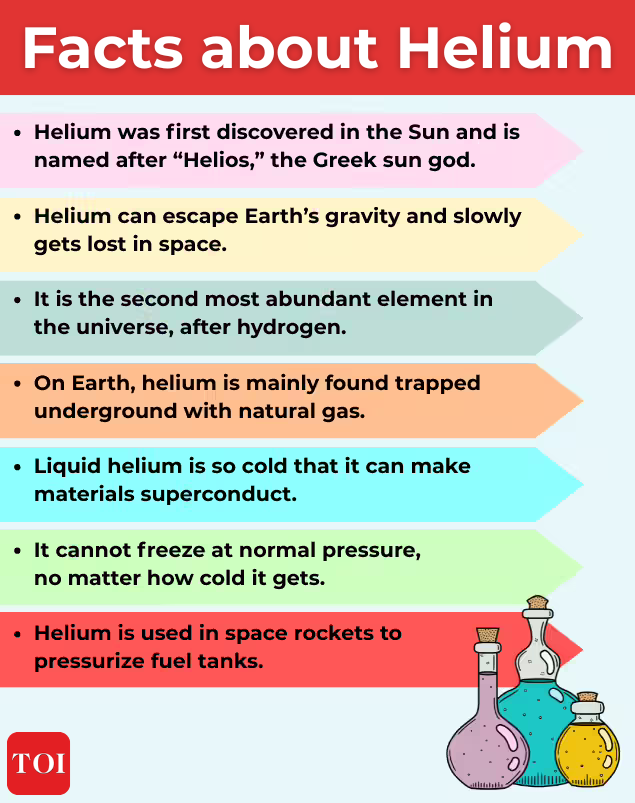
This means existing reserves are all that humanity currently has to meet demand. Unlike other industrial gases, helium cannot be manufactured in a lab at scale, nor can it be easily replaced in applications that require its unique properties, such as ultra-low temperature cooling and inert environments.The ongoing crisis has accelerated efforts to diversify helium supply and develop alternatives.New “primary helium” exploration projects are being pursued in countries such as Tanzania, Canada and the United States, where helium is extracted as the primary resource rather than as a by-product of natural gas.Russia’s Amur gas processing plant, designed to be a major global supplier, is expected to expand capacity with an additional production train by the third quarter of 2026. However, geopolitical tensions and sanctions complicate its accessibility for many countries.In India, Engineers India Limited has signed an agreement to establish the country’s first helium recovery demonstration plant in Kuthalam, Tamil Nadu. Meanwhile, researchers at NIT Durgapur are exploring helium extraction from geothermal hot springs in West Bengal and Jharkhand, where concentrations are significantly higher than typical gas fields.Technological innovation is also underway. Companies such as Siemens and Philips are developing low-helium or helium-free MRI systems using closed-loop cooling technologies. However, these systems currently account for less than 5% of the global installed base, limiting their immediate impact.
The 2026 crisis has therefore highlighted a deeper issue, not just scarcity, but the lack of alternatives. As supply chains tighten and disruptions continue, industries across healthcare, semiconductors and advanced technology are left grappling with a resource that is both essential and irreplaceable.
What Helium supply crunch could mean for India
For India, the helium crisis may result in tangible consequences. As the country heavily relies on imports from Qatar for this non-renewable gas used to cool MRI magnets, hospitals and imaging centres are preparing for tighter supplies as inventories stay low and global logistics grow increasingly uncertain. According to Master, “key downstream industries which may get affected due to restricted helium supply include semiconductors, MRI/medical, other industries requiring helium as cryogenic coolant. Consequently, geopolitical disruptions in the Middle East can affect helium supply across critical high-tech and healthcare industries.”Healthcare impact: What will happen to MRI scannings?India’s healthcare system is heavily dependent on helium for magnetic resonance imaging (MRI). Each MRI scanner requires approximately 2,000 litres of liquid helium to maintain superconducting magnets at around 4 kelvin (-269°C).As of March 2026, helium spot prices in India have surged by 70–100%, forcing diagnostic centres to reassess costs and operations. There are growing concerns about “quenched” magnets, a failure that occurs when cooling is lost, causing superconductivity to break down and resulting in expensive repairs.
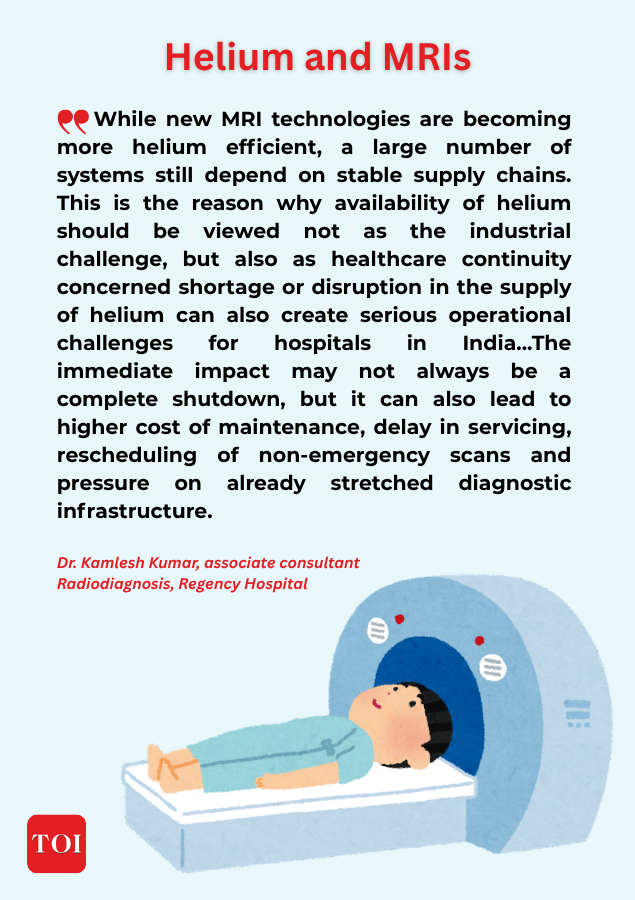
“Helium is not only a technical requirement for MRI systems; it is also important to keep the magnet superconductive and the machine functional,” Dr. Kamlesh Kumar, associate consultant, radiodiagnosis at Regency Hospital told TOI.“Any prolonged shortage or disruption… can create serious operational challenges for hospitals… leading to higher maintenance costs, delays in servicing, rescheduling of non-emergency scans and pressure on diagnostic infrastructure,” the doctor further added.He added that in India, where timely diagnosis often determines treatment outcomes, even temporary disruptions can significantly affect patient care. While newer MRI technologies are becoming more helium-efficient, a large installed base still depends on stable supply chains.India’s semiconductor sector The helium shortage also threatens India’s semiconductor ambitions at a critical juncture. Back in August 2025, the government approved four semiconductor manufacturing units with investments worth Rs 4,600 crore.Helium plays a vital role in semiconductor production. It is used for wafer cooling during high-temperature processes, maintaining inert environments to prevent contamination, and detecting microscopic leaks in high-vacuum systems due to its extremely small atomic size.Without a steady supply of ultra-high-purity helium, these processes cannot function reliably, raising concerns about delays and disruptions in the country’s efforts to become a global chip manufacturing hub.
Global tech ecosystem faces bottlenecks
The impact of the helium shortage is being felt across the global technology ecosystem.High-capacity data storage devices, particularly hard drives above 10 terabytes, rely on helium-filled enclosures to reduce internal friction and improve efficiency. Manufacturers have already indicated that production capacity for 2026 is fully allocated, leaving limited room for additional demand.Helium is also used in advanced cooling systems for large-scale data centres and high-performance computing clusters, including those used to train next-generation artificial intelligence models.In the semiconductor sector, major manufacturers such as those in South Korea depend heavily on Qatari helium supplies. With limited inventory buffers, prolonged disruptions could lead to production slowdowns, potentially affecting the global supply of consumer electronics such as smartphones and laptops.
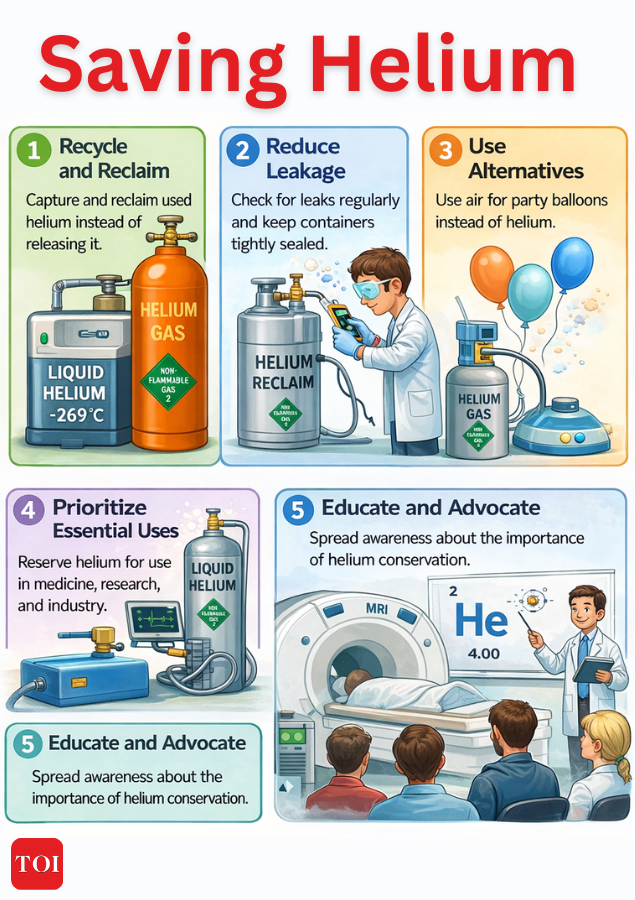
Bottom line: Is the world running out of Helium?
And the answer is no, technically. However, logistically and economically, it is almost a strong yes.It all comes down to the nature of the element itself. The Earth isn’t about to run out of helium completely. it is still being produced slowly over time through the radioactive decay of elements like uranium and thorium, which release alpha particles that form helium-4. There are also known reserves in places like Tanzania, Canada and the United States.But here’s the catch: that’s all we have. Helium cannot simply be manufactured in a lab or scaled up on demand, let alone the little element takes million of years to form. Once it’s used and released, it’s gone for good. So while a total wipeout isn’t on the cards, shortages very much are, and already happening.So the world is not really running out of Helium, but scrambling with Helium shortage. The real issue isn’t just how much helium exists, but how fragile the system is that delivers it.Helium production, liquefaction and transport run on a tightly choreographed, just-in-time setup with almost no room for error. The Middle East crisis has shown just how quickly things can fall apart when key infrastructure is hit or critical trade routes are disrupted.And unlike oil, there’s no big emergency stash to fall back on. That leaves industries, from hospitals and chipmakers to AI labs, surprisingly exposed to a tiny, invisible gas that the world can’t afford to lose.
Business
Saudi Arabia pumps 7 million bpd via east-west pipeline amid Hormuz disruption – The Times of India

Saudi Arabia has brought its East-West pipeline into full operation, pushing 7 million barrels of oil a day through the route as it works to maintain supplies following the effective shutdown of the Strait of Hormuz, a person familiar with the matter said. The pipeline, which runs across the kingdom to the Red Sea, has become central to efforts to keep exports moving. Oil shipments are now being rerouted to Yanbu, where tankers are loading crude for international markets, offering a crucial alternative at a time when the main passage has been disrupted, Bloomberg reported. According to the person cited by the agency, crude shipments from Yanbu have reached about 5 million barrels a day. In addition, between 700,000 and 900,000 barrels a day of refined products are being exported. Of the total volume transported via the pipeline, around 2 million barrels a day is directed to domestic refineries.Though, even at full capacity, the route does not fully replace the volumes previously shipped through Hormuz, which handled roughly 15 million barrels a day before the war, the availability of this alternative has helped limit the extent of price increases compared to earlier supply disruptions. Market concerns are now shifting towards the Red Sea after Yemen’s Houthis said they are entering the war. While there has been no indication of plans to target vessels passing through the Red Sea or the Bab El-Mandeb strait, the group has in the past threatened shipping in the region using drones and missiles. Saudi Arabia had long prepared for a scenario in which Hormuz could be shut. Its contingency plan was put into action within hours of the first US and Israeli strikes on Iran, with flows along the east-west pipeline increasing steadily since then. The pipeline stretches more than 1,000 kilometres (620 miles) from oil-producing regions in the east of the country to Yanbu on the Red Sea coast. It was originally developed in response to risks highlighted during the 1980s Iran-Iraq war, when tanker attacks disrupted movement through the Strait, though the current situation has led to a near-closure on a scale not seen before.


Tyrell Fortune wins UFC debut after score error reversal, years after being pronounced dead

Michael Jordan on NASCAR, life after basketball and the one title he won’t claim

PSL 11: Quetta Gladiators defeat Hyderabad Kings by 40 runs – SUCH TV

-
 Business1 week ago
Flipkart group CFO to leave co amid IPO plans – The Times of India
-

 Fashion1 week ago
China’s textile & apparel exports surge 17% to $50 bn in Jan-Feb 2026
-

 Sports1 week ago
Rating Adidas’ 2026 World Cup away shirts: Argentina, Spain, Mexico and more
-

 Sports1 week ago
American Conference Commissioner Tim Pernetti thanks Trump for Army-Navy game executive order
-

 Tech1 week ago
Gamers Hate Nvidia’s DLSS 5. Developers Aren’t Crazy About It, Either
-

 Sports1 week ago
How to watch 2026 NCAA swimming and diving championships
-
 Business5 days ago
Property Play: Home flippers see smallest profits since the Great Recession, real estate data firm says
-

 Entertainment5 days ago
UN warns migratory freshwater fish numbers are spiralling