

Business
Govt announces austerity steps, declares Friday additional weekly holiday | The Express Tribune


PM forms special committee headed by Dar to monitor progress; Friday declared weekly additional holiday
Prime Minister Shehbaz Sharif chairs a meeting to review the implementation of government-announced austerity measures in light of the current regional situation, on Tuesday. Photo: PID
Facing rising fuel costs, the federal and provincial governments have introduced a range of austerity steps — from declaring an additional weekly holiday to cutting free petrol for ministers, limiting protocol vehicles and proposing subsidised fuel for students — even as global oil prices show signs of easing after recent market volatility.
Prime Minister Shehbaz Sharif chaired a high-level meeting in Islamabad today to review the implementation of steps designed to conserve energy and curb government spending in light of shifting global economic conditions.
Following the meeting, authorities announced that Friday would be observed as an additional weekly holiday to help reduce fuel use and electricity demand.
Also Read: OGRA dismisses reports of Rs73 petrol, Rs84 diesel hike as ‘completely baseless’
Addressing participants, PM Shehbaz said the government was making every effort to maintain economic stability despite challenging international circumstances.
To oversee implementation, the government formed a special committee headed by Deputy Prime Minister and Foreign Minister Ishaq Dar to monitor progress on a daily basis and report directly to the prime minister.
وزیراعظم محمد شہباز شریف کی زیر صدارت موجودہ علاقائی صورتحال کے پیش نظر کفایت شعاری اور توانائی کی بچت کے حوالےسے حکومت کے اعلان کردہ اقدامات کے نفاذ پر جائزہ اجلاس
اجلاس میں ہفتہ وار اضافی چھٹی جمعہ کے روز کرنے کا فیصلہ
حکومت ہر ممکن کوشش کررہی ہے کہ عالمی حالات کے باوجود… pic.twitter.com/jlSwj8tWVq
— PTV News (@PTVNewsOfficial) March 10, 2026
The premier also directed that the impact of the austerity measures be assessed through a third-party audit to ensure transparency and evaluate their effectiveness. All ministries and divisions were instructed to enforce policies promoting simplicity, cost-cutting and energy conservation.
In order to ensure the proper implementation of austerity campaign, government departments must submit photographic evidence of vehicles withdrawn from official use. Ministries were also asked to provide reports to the Prime Minister’s Office outlining how work-from-home arrangements were being implemented.
Officials said at the meeting that federal ministries and divisions would submit daily and weekly reports on energy conservation efforts and workforce management to the oversight committee.
Separately, FM Dar chaired a meeting with senior officials of the Ministry of Foreign Affairs to review the implementation of austerity measures announced by the prime minister.
According to officials, the meeting assessed steps taken by the ministry to align its administrative and operational practices with the government’s broader efforts aimed at ensuring fiscal discipline and reducing public expenditure.
During the meeting, the deputy prime minister stressed the importance of prudent use of public resources and directed officials to ensure that the ministry’s activities remained consistent with the government’s commitment to economic responsibility.
Deputy Prime Minister/Foreign Minister chaired a meeting with senior officials of the Ministry of Foreign Affairs to review implementation of the austerity measures announced by the Prime Minister.
DPM/FM stressed the need for fiscal discipline, prudent use of public resources,… pic.twitter.com/HiPyWNcz4L
— Ministry of Foreign Affairs – Pakistan (@ForeignOfficePk) March 10, 2026
He emphasised the adoption of efficient administrative practices and called for limiting expenditures to essential commitments. Officials were instructed to identify areas where operational costs could be optimised without affecting Pakistan’s diplomatic outreach and the delivery of consular services.
FM Dar said the Foreign Office must continue to perform its diplomatic functions effectively while contributing to the government’s wider austerity drive.
Reaffirming full support for the government’s initiative, the deputy prime minister underscored the ministry’s commitment to responsible governance, transparency and the efficient utilisation of public funds.
Punjab introduces measures to curb fuel consumption
Meanwhile, the Punjab government also introduced parallel measures to reduce fuel consumption within the provincial administration.
Chief Minister Maryam Nawaz ordered the suspension of government-provided fuel for provincial ministers until the petroleum supply situation stabilised. Fuel allowances for official vehicles used by senior government officers were also cut by 50%.
Protocol convoys accompanying ministers and senior officials were restricted as well. Only one vehicle would be permitted for essential security purposes.
Read: Sindh announces school closure from March 16–31, govt staff to work from home on Fridays
Punjab also expanded remote work in government offices, allowing only essential staff to report to workplaces while others would perform duties from home. Officials said public services would continue through digital platforms, including the province’s “Maryam Ki Dastak” initiative.
In addition, authorities curtailed official outdoor events and postponed several public gatherings.
The provincial administration also ordered the creation of District Petroleum Monitoring Committees to oversee fuel availability and prevent hoarding or illegal distribution. The Punjab Information Technology Board was tasked with developing a digital track-and-trace system to monitor petroleum supplies across the province.
مشکل وقت، سخت فیصلے!
وزیر اعلیٰ پنجاب مریم نواز کے غیر معمولی اقدامات۔۔۔
خطے میں جنگ کے اثرات اور پٹرولیم بحران کے پیشِ نظر، وزیر اعلیٰ پنجاب نے صوبے کی بقا اور وسائل کی بچت کے لیے بڑے اور اہم فیصلے کیے ہیں۔ ان اقدامات کا مقصد عوام کو ریلیف فراہم کرنا اور سرکاری سطح پر کفایت…— Government of Punjab (@GovtofPunjabPK) March 10, 2026
Rising fuel costs also prompted proposals aimed at easing the burden on students.
Former Punjab transport minister Ibrahim Murad suggested introducing a “fuel card” programme under which students would receive 10 litres of subsidised petrol each month. He said the recent increase of Rs55 per litre in petrololeum prices had significantly raised commuting costs for students traveling to educational institutions.
Murad argued that a targeted subsidy could help students continue attending schools and universities without placing additional financial pressure on families.
The policy moves come as global oil markets remain volatile amid escalating geopolitical tensions.
Read: K-P announces two-day weekly school closure for two months amid fuel crisis
On Monday, Brent crude surged to a peak of $119.50 per barrel after Iran launched fresh strikes on energy installations in the Gulf. Prices later retreated sharply to around $82 per barrel as markets reacted to shifting signals from Washington and Tehran.
US President Donald Trump said the conflict in the Middle East could end sooner than expected, even as rallies took place in Iran backing the country’s new supreme leader, Mojtaba Khamenei.
Iranian state media broadcast images of large crowds in several cities waving national flags and holding portraits of his father, Ayatollah Ali Khamenei, who was killed in an Israeli strike on the first day of the war.
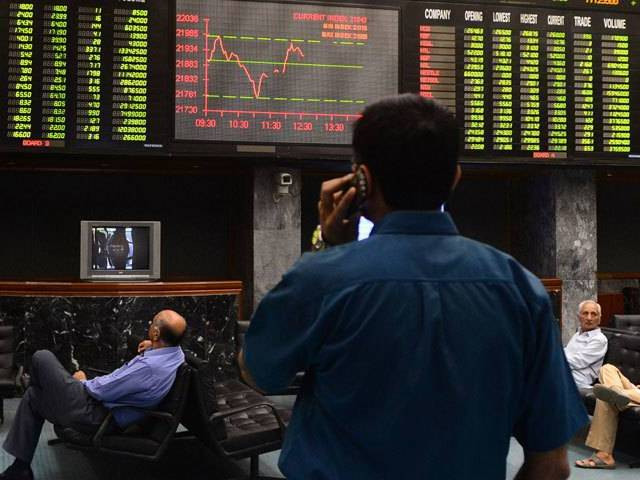
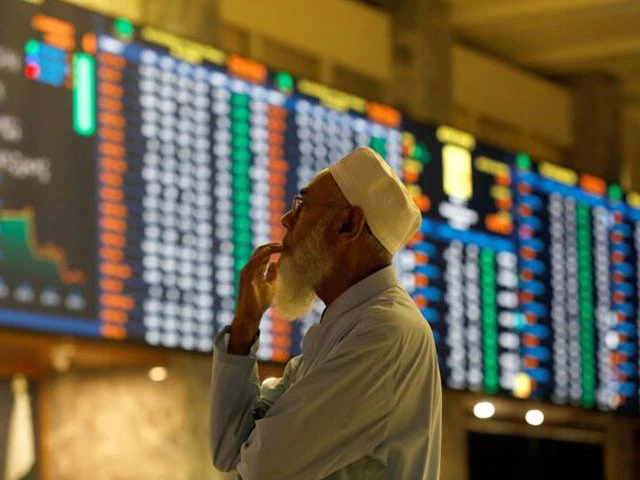
The conflicting signals from political leaders sent global markets on a rollercoaster ride. Oil prices surged while stock markets slid earlier in the day, before reversing course after Trump’s comments and reports that sanctions on Russian energy exports might be eased.
For Pakistan, which relies heavily on imported fuel, such volatility carries immediate economic implications. Higher oil prices typically push up transportation costs, contribute to inflation and increase pressure on public finances.




Europe’s largest carmaker said post-tax profits had dropped to their lowest level since 2016.
Source link
Business
Major UAE refinery shut as Saudi Aramco warns war spells catastrophe for oil | The Express Tribune
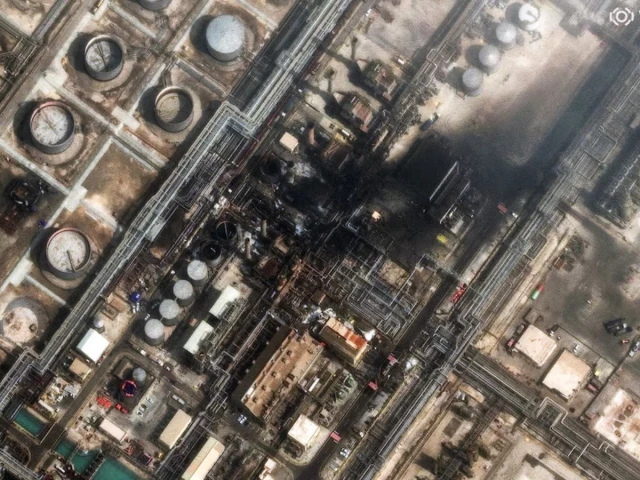
State-owned oil company Adnoc describes its Ruwais facility as ‘the world’s fourth-largest single-site refinery’
A satellite image shows smoke rising in the Ras Tanura oil refinery in Saudi Arabia after a drone attack, in Ras Tanura, Saudi Arabia, March 2 PHOTO: REUTERS
One of the world’s largest refineries in the United Arab Emirates was shut as a “precaution” after a drone attack nearby, a source said, while Saudi giant Aramco warned of the war’s devastating consequences on oil.
Aramco CEO and president Amin H. Nasser warned the war could have “catastrophic consequences” on oil markets, and called for reopening the Strait of Hormuz — which normally carries about 20% of global oil supplies but has been closed by the conflict.
Tehran appears to be attempting to knock major Gulf refineries offline as it tightens its chokehold on the Strait of Hormuz in a quest to inflict maximum pain on the global economy.
“The Ruwais refinery has halted operations out of precaution,” the source said, requesting anonymity to discuss sensitive matters.
Read More: Iran vows ‘eye for an eye’, warns Trump to ‘be careful not to be eliminated’
Earlier, the Abu Dhabi Media Office said a drone attack caused a fire in Ruwais Industrial City in the emirate of Abu Dhabi.
تتعامل الجهات المختصة في إمارة أبوظبي مع نشوب حريق في إحدى المنشآت ضمن مجمع الرويس الصناعي، ناجم عن استهداف بالطائرات المسيرة، دون تسجيل إصابات حتى الآن.
وأهابت الجهات المختصة بالجمهور استقاء المعلومات من المصادر الرسمية فقط، وتجنُّب تداول الشائعات أو المعلومات غير الموثوقة.
— مكتب أبوظبي الإعلامي (@ADMediaOffice) March 10, 2026
Neither the source nor the authorities said whether the refinery had been hit.
State-owned oil company Adnoc describes its Ruwais facility as “the world’s fourth-largest single-site refinery”.
The Middle East war has now severely destabilised supplies. Iran has fired at energy installations across the Gulf, including Aramco’s sprawling Ras Tanura facility, which halted some operations.
The massive complex on the Gulf coast is home to one of the Middle East’s largest refineries and is a cornerstone of the Saudi energy sector.
Saudi oil fields have also been targeted.
A driver working at the Ruwais industrial complex told AFP he was picking up staff who were ordered to evacuate.
“Just as we were about to leave, we saw two more bursts of fire rising from the complex, with loud sounds like explosions,” he said, requesting not to be named.
Read More: Over 10,000 Chinese citizens return from Middle East amid war
‘Chain reaction’
“The disruption has caused a severe chain reaction in not only shipping and insurance but there’s also a drastic domino effect on aviation, agriculture, automotive and other industries,” Nasser told a media call to announce Aramco’s 2025 earnings.
“There would be catastrophic consequences for the world’s oil markets the longer the disruption goes on, and the more drastic the consequences for the global economy.
The oil-rich Gulf has borne the brunt of Iran’s attacks in response to US-Israeli strikes that sparked the Middle East war, with Tehran targeting US assets but also civilian infrastructure, including energy facilities and airports.
“While we have faced disruptions in the past, this one by far is the biggest crisis the region’s oil and gas industry has faced.”
“It’s absolutely critical that shipping resumes in the Strait of Hormuz,” Nasser said.
Oil prices have swung wildly over supply disruptions, rocketing 30% on Monday before plunging again on comments from United States President Donald Trump that the war may soon end.
“The Gulf energy sector is getting whacked from multiple angles,” said Robert Mogielnicki, a non-resident scholar at the Arab Gulf States Institute.
“Energy facilities being targeted, export capability though the strait is hampered, and storage capacity filling up,” he added.
‘Dangerous precedent’
Iranian attacks have already forced state-owned QatarEnergy, one of the world’s largest producers of liquefied natural gas, to halt production last week and declare force majeure.
Energy producers in Kuwait made similar declarations, which are a warning that events beyond their control may lead them to miss export targets.
Nasser was speaking as Aramco reported a 12.1% decline in net income in 2025 after higher supply, US tariffs and other economic headwinds weighed on revenues.
The Saudi giant, which launched a record initial public offering in 2019, also announced a first-ever share buyback programme of up to $3 billion over 18 months.
Qatar’s foreign ministry spokesman Majed al-Ansari also warned today that attacks on energy facilities “on both sides, are a dangerous precedent … it will cause repercussions throughout the world”.
Throughout last year, the oil alliance OPEC+, of which Saudi Arabia is a key member, oversaw an increase in production, eroding prices.
Business
Gas supply rejig: Govt prioritises LPG, CNG and piped cooking gas amid LNG disruption – The Times of India
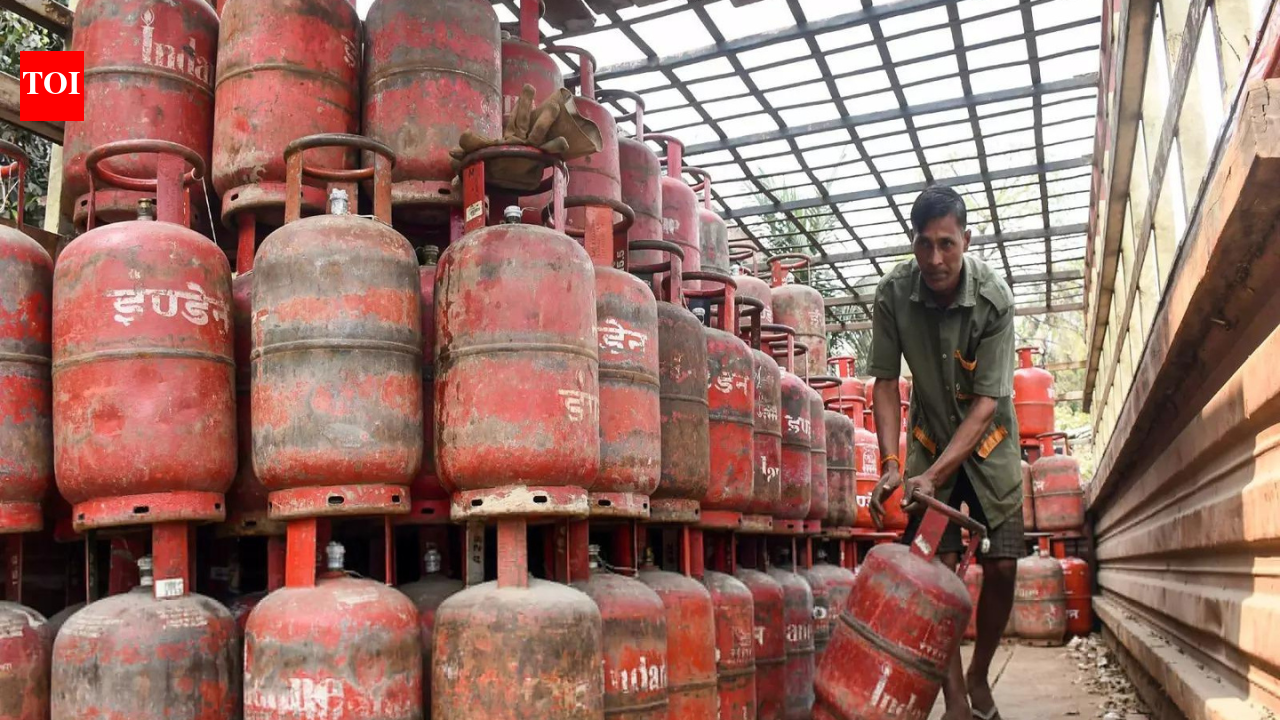
The government has revised the priority order for allocating domestically produced natural gas, placing LPG production, CNG for transport and piped cooking gas for households at the top of the list, as disruptions in imported gas supplies intensify amid the widening West Asia conflict, PTI reported.According to a gazette notification, the requirements of these sectors will be fully met first before gas is supplied to other sectors.Under the revised framework, the fertiliser sector has been placed second, with at least 70% of its past six-month average gas demand to be met, subject to availability.At the third priority level, gas supply to tea industries, manufacturing units and other industrial consumers will be maintained at 80% of their past six-month average consumption, depending on operational availability.City gas distribution (CGD) entities supplying gas to industrial and commercial consumers have been placed at fourth priority in the revised allocation order.The reshuffle means that domestically produced gas will be diverted towards priority sectors, while supplies to petrochemical plants, power plants and other high-priced gas consumers may be curtailed.The move follows supply disruptions triggered by the ongoing conflict in West Asia.Following US-Israeli strikes inside Iran and Tehran’s retaliation, maritime traffic through the Strait of Hormuz has sharply declined, while insurance premiums have surged and energy markets have turned volatile.The strait handles roughly one-fifth of global seaborne oil and nearly one-third of LNG shipments, and is a key route for India’s imports of LNG and LPG.With tanker movement slowing, the government has decided to rework the allocation of domestically available gas to ensure supplies to essential sectors such as household cooking fuel and vehicular transport.Natural gas produced in India currently meets about half of the country’s total consumption of around 191 million standard cubic metres per day.“The Central Government has assessed that the ongoing conflict in the Middle East has resulted in the disruption of liquefied natural gas (LNG) shipments through the Strait of Hormuz and suppliers have invoked force majeure clause,” the notification said.It added that the revised allocation was necessary to maintain supplies and ensure equitable distribution of natural gas to priority sectors.The notification stated that domestic piped natural gas, CNG for vehicles and LPG production — including LPG shrinkage requirements — will receive 100% of their past six-month average gas consumption.Gas required for pipeline compressor fuel and other operational needs of the pipeline network will also receive priority allocation.For fertiliser plants, gas supply will be maintained at 70% of their past six-month average consumption, and the fuel must be used strictly for fertiliser production.“The gas marketing entities shall ensure that gas supply to tea industries, manufacturing and other industrial consumers supplied through the national gas grid is maintained at 80 per cent of their past six month average gas consumption subject to operational availability,” the order said.Similarly, CGD companies will ensure industrial and commercial consumers supplied through their networks receive 80% of their past six-month average gas consumption, depending on availability.To meet these priorities, gas supplies will be curtailed first to petrochemical facilities such as ONGC Petro additions Ltd, GAIL Pata Petrochemical Complex, Reliance O2C and other high-pressure high-temperature gas consumers, followed by power plants if required, the order said.Oil refining companies have also been asked to absorb part of the LNG supply disruption by reducing gas consumption at refineries to around 65% of their past six-month average usage.State-owned GAIL has been tasked with managing the allocation and distribution of natural gas to implement the revised priority order.


Nebraska agrees to 3-year extension with coach Fred Hoiberg

Govt to absorb potential hike in fuel prices, says petroleum minister

Italy’s Prada explores layered identities for Fall/Winter 2026

-

 Politics3 days ago
India let Iran warship dock the day US sank another off Sri Lanka, say officials
-

 Sports4 days ago
Pakistan set for FIH Pro League debut | The Express Tribune
-

 Entertainment3 days ago
Harry Styles kicks off new era with ‘One Night Only’ comeback show
-
 Business3 days ago
Restaurant group changes name after bid to buys pubs across the UK
-
 Business1 week ago
Labour parliamentarians urge UK Government to oppose Rosebank oil field
-
 Business4 days ago
Home heating oil: ‘Most of my pension has gone on home heating oil’
-

 Sports4 days ago
Winners and losers of the 2026 NHL trade deadline
-

 Sports1 week ago
USA vs. Argentina (Mar 1, 2026) Live Score – ESPN