

Business
Govt imposes Rs200 levy on high-octane petrol for luxury cars to ease fuel crisis | The Express Tribune

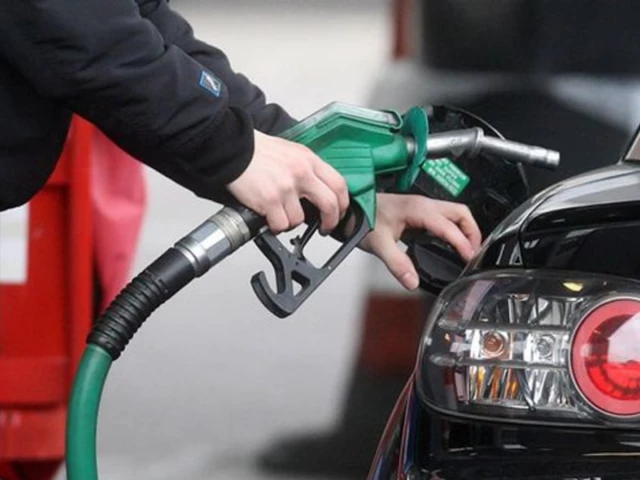
Petrol prices for ordinary vehicles, as well as fares for public transport and air travel, will remain unchanged
The government on Sunday approved a significant Rs200 per litre increase in the fuel levy on high-octane petrol used in luxury vehicles, in a move to cope with the fuel crisis amid Middle East tensions.
According to a statement issued by the Prime Minister’s Office (PMO) today, Prime Minister Shehbaz Sharif, chairing a video-link meeting, announced that the current levy of Rs100 per litre on high-octane fuel would be raised by an additional Rs200, bringing the total levy to Rs300 per litre.
لاہور: 22 مارچ 2026.
وزیرِ اعظم محمد شہباز شریف کی زیر صدارت وڈیو لنک اجلاس میں امیر ترین طبقے کے زیر استعمال پر تعیش (لگژری) گاڑیوں میں استعمال ہونے والے ہائی آکٹین فیول کے حوالےسے اہم فیصلہ کیا گیا.
وزیراعظم نے نوٹس لیا کہ مہنگی ترین گاڑیوں میں استعمال ہونے والے ہائی آکٹین…
— Prime Minister’s Office (@PakPMO) March 22, 2026
The government expects the measure to save Rs9 billion per month, with the savings earmarked to provide relief to the general public.
“This decision will reduce the economic burden on the country; the wealthiest segment will bear the cost,” the statement added.
The statement further clarified that the increase applies only to high-octane fuel used in luxury cars. Petrol prices for ordinary vehicles, as well as fares for public transport and air travel, will remain unchanged.
Read More: FinMin says targeted relief package for deserving segments on cards
The prime minister had taken notice of the rising cost of high-octane fuel and instructed the relevant ministry to devise a strategy, the statement said.
The video-link meeting was attended by Finance Minister Aurangzeb, Information Minister Attaullah Tarar, Petroleum Minister Ali Pervaiz Malik, and senior government officials.
Earlier during a press conferance in Lahore, Finance Minister Aurangzeb said that a targeted relief package was being prepared for deserving segments of society.
He invited the public to submit their suggestions for the relief package and said that all ministries, including Petroleum, IT, and Finance, were working on a joint strategy.
Aurangzeb said Prime Minister Shehbaz Sharif had discussed the country’s economic and energy challenges in detail during his address to the nation, noting that regional tensions and war-like conditions could affect energy infrastructure.
Two weeks ago, the government sharply increased diesel and petrol prices by Rs55 per litre or 20% — due to the ongoing US-Israel and Iran war, which has disrupted supply chains and pushed crude oil prices to two years’ highest level.
Also Read: PM Shehbaz says rejected advice to further raise fuel prices
The increase in petrol prices was more than the surge in the international market, as the government chose to collect more money than required from motorcyclists and car owners to subsidise the use of diesel, mostly by the public transport and the agriculture sector. However, the prime minister announced last night that the federal government had twice now absorbed the burden of the fuel price increases instead of passing it on to the public.
Both federal and provincial governments have since introduced a range of austerity steps, including an additional weekly holiday, cutting free petrol allocations for ministers, limiting protocol vehicles, and proposing subsidised fuel for students.




Containers at the Port of Oakland in Oakland, California, US, on Thursday, March 26, 2026.
David Paul Morris | Bloomberg | Getty Images
Months after the Supreme Court ruled some tariffs were unconstitutional, the first round of tariff refunds has begun flowing in.
Oshkosh Corporation CFO Matt Field confirmed to CNBC that the company has started receiving tariff refunds as of Tuesday.
“Following acceptance of our initial filing, we have begun receiving payments on our tariff refund claims, representing an initial portion of our total claims submitted,” Field said.
The company has not yet verified its total refund amount, Field added.
Basic Fun, the company behind Care Bears and Tonka trucks, also told CNBC it began receiving tariff refunds on Tuesday.
CEO Jay Foreman said the refunds so far have only represented 5% of the company’s total claim on its early invoices.
“We will utilize the refund dollars to help support our 2026 cash flow and invest in our team. This is the toughest time of the year for toy companies,” Foreman said in a statement. “We’ll also be announcing to our staff that we will be increasing salaries to help offset cost of living increase, announcing promotions and larger merit increases. We are reinvesting the funds in our business and people.”
Logistics companies UPS, FedEx and DHL have previously said that they will file for tariff refunds on behalf of their customers, requiring no further action from them. The first phase of tariff refunds only covers requests for entries that CBP finalized within the past 80 days, though that process could take months to reach customers.
The U.S. Customs and Border Protection said in a court filing that it anticipated paying refunds of $35.46 billion on 8.3 million shipments, as of Monday morning.
In February, the Supreme Court invalidated President Donald Trump‘s tariffs imposed under the International Emergency Economic Powers Act of 1977. In the months that followed, companies began filing for tariff refunds in a portal, called the Consolidated Administration and Processing of Entries.
In a radio interview with WABC on Tuesday morning, Trump called the tariff refund situation “crazy.”
“In theory, you have to pay the tariffs back. We’ll fight that,” Trump said. “We were taking in fortunes from people that hate us, countries and companies that hate us.”
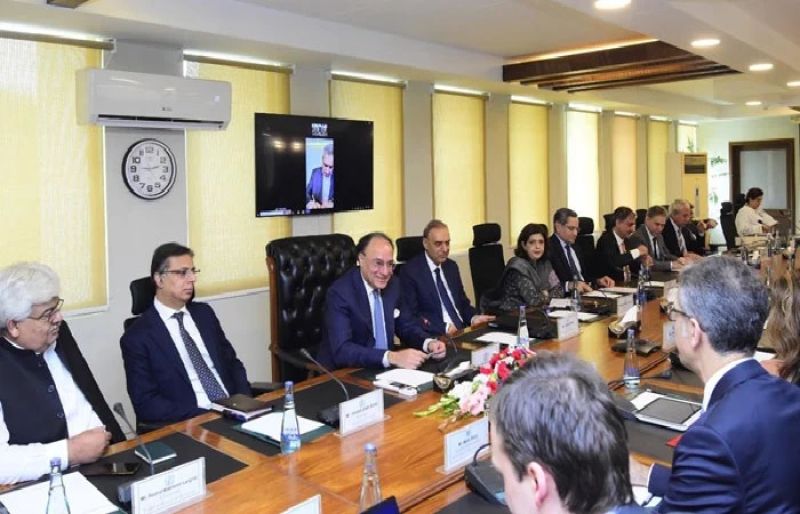
Finance Minister Muhammad Aurangzeb on Wednesday briefed the visiting International Monetary Fund (IMF) mission on the country’s macroeconomic outlook, fiscal strategy, reform priorities, and the government’s ongoing efforts to ensure sustainable economic stability and long-term growth.
The meeting with the visiting IMF mission, led by Mission Chief Iva Petrova, focused on Pakistan’s macroeconomic stabilisation efforts, preparations for the upcoming federal budget, and the broader reform agenda aimed at strengthening fiscal and external sustainability while fostering sustainable economic growth.
During the meeting, both sides exchanged views on maintaining reform momentum, preserving macroeconomic stability, and advancing structural reforms to promote investment, productivity, and export-led growth within a balanced and forward-looking policy framework.
The finance minister appreciated the IMF’s continued engagement and constructive dialogue with the government of Pakistan.
He particularly acknowledged the productive discussions initiated during the Spring Meetings held in Washington earlier this year.
Senator Aurangzeb shared encouraging developments regarding Pakistan’s external sector, highlighting positive trends in remittances and export performance.
He noted that recent data indicated improvement in exports on both a month-on-month and year-on-year basis, reflecting growing resilience in the economy and a gradual strengthening of macroeconomic fundamentals.
The minister emphasised that while economic stabilisation efforts had produced encouraging results, the government remained fully mindful of the structural challenges confronting the economy, particularly external liabilities and the need to accelerate sustainable, export-led growth.
He reiterated the government’s commitment to deepening reforms aimed at strengthening macroeconomic stability without compromising long-term growth prospects.
In this regard, he underscored the importance of moving Pakistan away from recurring boom-and-bust cycles through structural reforms, productivity enhancement, deregulation, and improved export competitiveness.
The minister further stated that the government’s reform agenda had been carefully calibrated in consultation with international experts and economists.
He emphasised that the ongoing policy measures were not driven by short-term considerations, but formed part of a broader and technically grounded economic transformation strategy endorsed at the highest level.
The IMF mission acknowledged the positive progress made by Pakistan in maintaining macroeconomic stability despite a challenging global and regional environment.
The Mission appreciated the government’s continued commitment to prudent economic management and reform implementation.
It emphasised the importance of sustaining reform momentum, maintaining fiscal discipline, and advancing structural reforms to support durable and inclusive economic growth.
Discussions during the meeting also focused on the broader macroeconomic framework, the government’s reform agenda, and priorities for the upcoming budget.
The mission reaffirmed its commitment to continued engagement and constructive cooperation with Pakistan in support of the country’s economic reform programme and long-term economic resilience.
Business
Tata Motors Q4 results: Net profit rises 34% to Rs 1,793 crore; revenue climbs on strong volume growth – The Times of India

Commercial vehicle maker Tata Motors Ltd on Wednesday reported a 33.8 per cent rise in consolidated net profit at Rs 1,793 crore for the fourth quarter ended March 31, 2026, driven by strong volume growth.The company had posted a consolidated net profit of Rs 1,340 crore in the corresponding quarter of the previous financial year, Tata Motors said in a regulatory filing, as reported PTI.Total revenue from operations in the January-March quarter rose to Rs 26,098 crore from Rs 21,863 crore in the year-ago period.Vehicle wholesales during the quarter stood at 1.32 lakh units, up 25 per cent year-on-year.Total expenses in the quarter under review stood at Rs 24,134 crore.For FY26, consolidated net profit stood at Rs 3,030 crore compared with Rs 3,195 crore in FY25. The company said annual profit was impacted by exceptional items related to the new labour code and demerger-related costs.Total revenue from operations for FY26 increased to Rs 83,855 crore from Rs 58,217 crore in the previous financial year.For the full 2025-26 fiscal, total wholesales stood at 4.28 lakh units, up 14 per cent year-on-year.Commenting on the performance, Tata Motors MD and CEO Girish Wagh said FY26 marked a “clear inflection point” for the commercial vehicles industry, with volumes surpassing the pre-FY19 peak, supported by GST 2.0 reforms and sustained infrastructure spending.“For Tata Motors Commercial Vehicles, FY26 was a landmark year as we delivered milestones of revenues and profits and reinforced industry leadership and strengthened our market position,” he said.Wagh said the underlying demand fundamentals remain resilient despite geopolitical uncertainties signalling some moderation in the near term.“With strong business fundamentals, proactive risk mitigation, disciplined execution and a refreshed portfolio offering industry-leading TCO (total cost of ownership) and smart digital solutions, we remain agile and well positioned to sustain momentum through customer-centric solutions to create long-term stakeholder value,” he added.The company’s board has recommended a final dividend of Rs 4 per fully paid-up ordinary share of Rs 2 each for FY26, subject to shareholders’ approval.


Christopher Nolan explained Travis Scott casting in ‘The Odyssey’

Trump’s Inner Circle Is Already Scrambling Over the 2028 Presidential Ticket

Geena Davis on “The Boroughs” and why she’s drawn to supernatural projects

A new frontier: Identity stack evolves for agentic systems | Computer Weekly

‘Orbs,’ ‘Saucers,’ and ‘Flashes’ on the Moon: Pentagon Drops New UFO Files
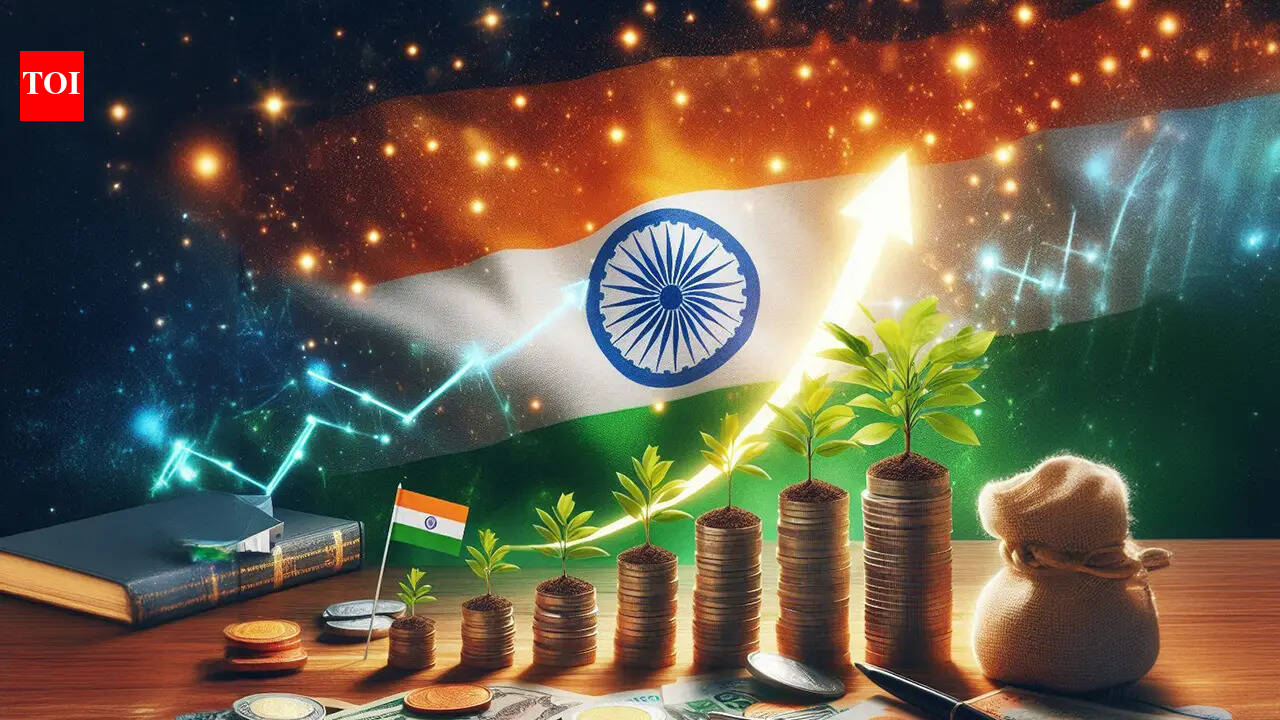
India among most resilient large EMs, better placed for future global shocks; policy reforms & strong buffers help: Moody’s – The Times of India

-
 Tech5 days ago
A new frontier: Identity stack evolves for agentic systems | Computer Weekly
-
 Tech5 days ago
‘Orbs,’ ‘Saucers,’ and ‘Flashes’ on the Moon: Pentagon Drops New UFO Files
-

 Tech6 days ago
What Microsoft Executives Really Thought About OpenAI in 2018
-

 Sports5 days ago
Shaheen Afridi achieves landmark feat during opening Test against Bangladesh
-
Business1 week ago
India among most resilient large EMs, better placed for future global shocks; policy reforms & strong buffers help: Moody’s – The Times of India
-

 Tech5 days ago
Nick Bostrom Has a Plan for Humanity’s ‘Big Retirement’
-
 Fashion5 days ago
New orders in German manufacturing up 5% MoM in Mar 2026: Destatis
-

 Tech6 days ago
The Canvas Hack Is a New Kind of Ransomware Debacle