

Business
Govt turns to ADB for $2b rail project after China funding stalls | The Express Tribune

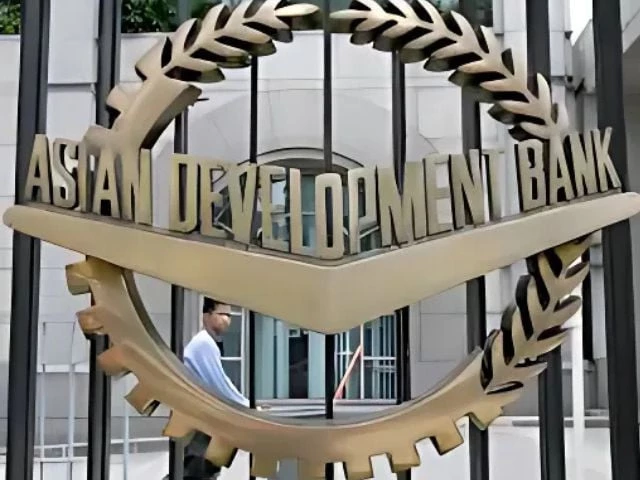
The Asian Development Bank will fund upgrades to part of Pakistan’s creaking railway system, replacing China, after prolonged delays in securing financing from Beijing threatened to put a strain on a strategic mining project, two sources said on Friday.
An extensive revamp of 1,800 km of railways has been the centrepiece of a $60 billion Chinese investment programme in Pakistan announced in 2015 as part of Beijing’s Belt and Road Initiative global infrastructure push.
A decade of negotiations, however, have yet to produce a finance package for the rail upgrades – the single biggest project under the programme with China. And Pakistan is, meanwhile, struggling to repay Chinese debt owed for other projects.
The ADB is in advanced talks to lead the financing of a $2 billion upgrade of a 500-km stretch of the railway line from Karachi to Rohri that had previously been part of the Chinese project, two sources with direct knowledge of the discussions told Reuters.
Also Read: 11th NFC formed as Centre, provinces brace for fiscal tug-of-war
The upgrade has become urgent, they said, as it is needed to transport copper ore from the Reko Diq mine currently being developed by Canada’s Barrick Mining Corp. “We will have a crisis. How will you evacuate output from Reko Diq? The exhausted line will come under even more pressure,” one of the sources, a senior government official, said.
The ADB would not confirm the finance package, which is being reported for the first time by Reuters. But it said Pakistan’s government and the regional lender “have regular discussions on railway sector development”.
“Any potential ADB assistance would be subject to comprehensive due diligence and consideration under ADB’s policies and procedures before any commitment is made,” it wrote in a statement to Reuters.
The deal, expected to be announced later this month, would see the ADB lead a consortium to finance the project and bring in an international engineering contractor to carry out the work through a competitive bidding process, the sources said. The ADB announced $410 million in financing for the Reko Diq mine itself earlier this week. And its president is due to visit Islamabad next week, the sources said.
China and Pakistan: ‘Ironclad friends’?
The sources said the plan is diplomatically tricky but has been squared with China. “We would never do anything to jeopardise that relationship,” the senior Pakistani official said.
China rolled out major power and infrastructure projects after the 2015 launch of the investment programme, known locally as the China-Pakistan Economic Corridor. But momentum has stalled, with the last big project – the Gwadar East Bay Expressway – inaugurated in 2022.
Also Read: Chinese FM Wang Yi, COAS Munir meet on regional security, counter-terrorism
Islamabad has fallen behind on payments for electricity generated by Chinese-built power plants. And following a government report looking at the cost of the power stations, Islamabad has for the past year sought to reschedule debt payments for the plants.
“China and Pakistan are ironclad friends and all-weather strategic cooperative partners,” China’s foreign ministry said on August 19, ahead of a visit by Foreign Minister Wang Yi to Islamabad this week.
In Wang’s meeting with Pakistan’s Prime Minister Shehbaz Sharif on Thursday, both sides said they sought to deepen ties and move on to the next phase of CPEC.
Pakistan’s mining ambitions
The Reko Diq copper and gold mine – at the heart of the government’s strategy to attract investment to Pakistan’s mining sector – is due to enter production in 2028 with anticipated annual output of some 200,000 metric ton of copper concentrate. One of the world’s largest untapped copper deposits, it is Pakistan’s largest foreign investment in recent years.
The ADB-financed rail upgrade would modernise the track and bridges from the commercial capital Karachi north to Rohri, close to the city of Sukkur, so that diesel trains can run faster, the sources said. In Rohri, the line will meet a branch coming from the area of the Reko Diq mine and will carry the copper concentrate to port.
Tim Cribb, Reko Diq’s project director, told Reuters that the government and Barrick would work together on securing financing for the upgrading of the branch coming from the west to Rohri. The mine also faces security concerns, as it lies in the insurgency-hit western province of Balochistan, with militants frequently targeting the rail network.
Business
Gurugram Attracts Rs 86,588 Crore In Real Estate Investments In 2025 As RERA Clears 131 Projects
Last Updated:
Alongside rising investments, Gurugram RERA strengthened regulatory oversight to safeguard homebuyer and investor interests



Gurgaon Real Estate (Representative Image)
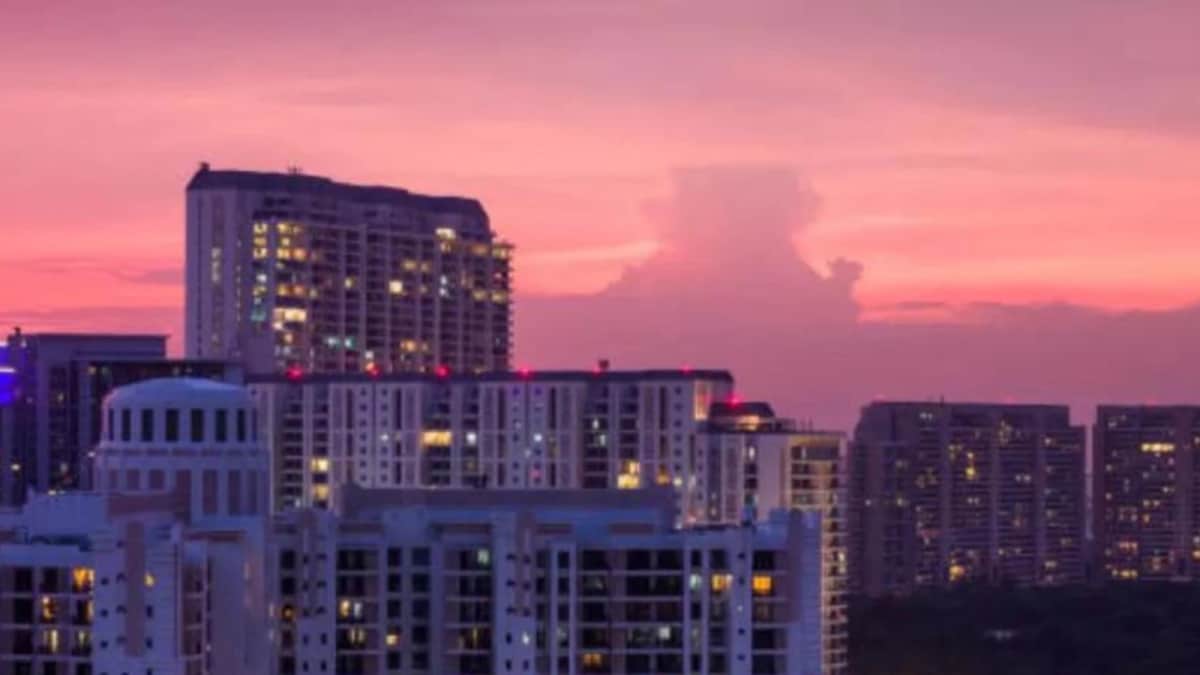
Gurugram emerged as one of India’s top real estate investment destinations in 2025, with projects worth Rs 86,588 crore receiving regulatory approvals during the year, according to data from the Gurugram Real Estate Regulatory Authority (Gurugram RERA).
Market observers said the numbers reflect strong investor confidence in the NCR’s largest commercial and residential hub.
Gurugram RERA registered 131 projects in calendar year 2025, representing development potential of 35,455 units across housing and commercial segments.
A striking feature of the data was the dominance of large-ticket projects. Just 28 major developments accounted for investments worth Rs 59,360 crore, highlighting the growing influence of institutional capital and large developers in shaping Gurugram’s property market.
Residential assets continued to attract the bulk of investment interest. Of the total units approved, 31,455 were residential, underscoring sustained end-user demand and long-term confidence in the city’s housing fundamentals.
According to Authority data, the residential mix included 17,405 group housing units, 5,720 mixed land use units, 4,040 residential floor units, 2,122 affordable group housing units, 1,954 units under the Deen Dayal housing scheme, and 214 residential plotted colony units.
Market observers said this diversified supply pipeline indicates capital deployment across both premium and mass segments, helping reduce concentration risk and deepen market resilience.
On the commercial side, Gurugram RERA approved about 4,000 commercial units, of which 168 were dedicated to IT parks, reinforcing Gurugram’s position as a preferred hub for technology firms and Global Capability Centres.
Analysts noted that the combination of office-led employment growth and residential expansion continues to make Gurugram attractive for long-term capital deployment.
Industry experts said the scale of investments approved in 2025 highlights Gurugram’s ability to attract capital despite global uncertainty, supported by infrastructure growth, a strong corporate base and an improving regulatory environment.
“With a large pipeline of approved projects and sustained interest from developers and institutional investors, Gurugram is expected to remain a key real estate investment destination in the coming years,” a Gurugram-based real estate expert said.
Tighter regulatory checks
Alongside rising investments, Gurugram RERA strengthened regulatory oversight to enhance transparency and safeguard homebuyer and investor interests.
“These steps included stricter scrutiny of developer submissions, mandatory site inspections by domain experts, and public consultation through mandatory notices before project registration,” an Authority official said.
 Click here to add News18 as your preferred news source on Google.
January 16, 2026, 07:44 IST
Read More

Last Updated:
National Startup Day highlights India’s thriving startup ecosystem, celebrating innovation, entrepreneurship and job creation driven by founders, unicorns and Startup India mission
National Startup Day 2026 honours Indian startups, entrepreneurs and innovators driving economic growth and job creation.
National Startup Day 2026: India’s startup ecosystem has evolved into one of the world’s most vibrant and promising innovation hubs. To recognise the contribution of entrepreneurs, founders and startups transforming ideas into impactful solutions, National Startup Day is observed every year on January 16 across the country.
Launched by Prime Minister Narendra Modi in 2022, the day celebrates visionary entrepreneurs who play a crucial role in economic growth, employment generation and technological advancement.
National Startup Day serves as a reminder that innovation, backed by determination and policy support, can reshape society and create global impact.
National Startup Day 2026 Theme
The official theme for National Startup Day 2026 is yet to be announced. However, the core focus areas are expected to revolve around:
- Innovation and emerging technologies
- Entrepreneurship and leadership
- Self-reliance (Atmanirbhar Bharat)
- Startup India Mission
- Youth empowerment
- Job creation
How Startups Are Shaping India’s Future
India currently ranks as the third-largest startup ecosystem globally, with over 1.59 lakh startups recognised by the Department for Promotion of Industry and Internal Trade (DPIIT) as of early 2025. Backed by 100+ unicorns, the ecosystem continues to grow rapidly.
Metro cities such as Bengaluru, Hyderabad, Mumbai and Delhi-NCR lead this expansion, while Tier-2 and Tier-3 cities are emerging as new innovation centres, adding diversity and scale to India’s entrepreneurial journey.
Startups across fintech, edtech, health-tech, e-commerce and deep-tech are addressing real-world challenges and gaining global recognition. Technologies like artificial intelligence, blockchain and IoT are increasingly driving innovation, according to Startup India ecosystem reports.
Industry-Wise Startup Impact
DPIIT-recognised startups have generated over 16.6 lakh direct jobs across sectors as of October 31, 2024, strengthening India’s employment landscape.
- IT Services: 2.04 lakh jobs
- Healthcare & Life Sciences: 1.47 lakh jobs
- Commercial & Professional Services: 94,000 jobs
Through the Startup India initiative, the government continues to focus on skill development, funding access, ecosystem collaboration and global outreach.
Key Initiatives Under Startup India
- Capacity building and mentorship
- Outreach and awareness programmes
- Ecosystem development events
- International exposure and global linkages
- Collaboration between startups, corporates and institutions.
Click here to add News18 as your preferred news source on Google.
January 16, 2026, 07:00 IST
Read More

The government on Thursday kept petrol and high-speed diesel (HSD) prices unchanged at Rs253.17 per litre and Rs257.08 per litre respectively, for the coming fortnight, starting from January 16.
This decision was notified in a press release issued by the Petroleum Division.
Earlier, it was expected that the prices of all petroleum products would go down by up to Rs4.50 per litre (over 1pc each) today in view of variation in the international market.
Petrol is primarily used in private transport, small vehicles, rickshaws, and two-wheelers, and directly impacts the budgets of the middle and lower-middle classes.
Meanwhile, most of the transport sector runs on HSD. Its price is considered inflationary, as it is mostly used in heavy transport vehicles, trains, and agricultural engines such as trucks, buses, tractors, tube wells, and threshers, and particularly adds to the prices of vegetables and other eatables.
The government is currently charging about Rs100 per litre on petrol and about Rs97 per litre on diesel.


Pamela Anderson reacts to seeing Seth Rogen at Golden Globes
Gurugram Attracts Rs 86,588 Crore In Real Estate Investments In 2025 As RERA Clears 131 Projects

‘Head coach’ vs ‘manager’: Why job title matters for Chelsea, Man United

-

 Politics1 week ago
UK says provided assistance in US-led tanker seizure
-

 Entertainment1 week ago
Does new US food pyramid put too much steak on your plate?
-

 Entertainment1 week ago
Why did Nick Reiner’s lawyer Alan Jackson withdraw from case?
-
 Business1 week ago
Trump moves to ban home purchases by institutional investors
-

 Sports5 days ago
Clock is ticking for Frank at Spurs, with dwindling evidence he deserves extra time
-

 Sports1 week ago
PGA of America CEO steps down after one year to take care of mother and mother-in-law
-

 Tech3 days ago
New Proposed Legislation Would Let Self-Driving Cars Operate in New York State
-
 Business1 week ago
Bulls dominate as KSE-100 breaks past 186,000 mark – SUCH TV