

Entertainment
Gul Plaza’s smoke signals

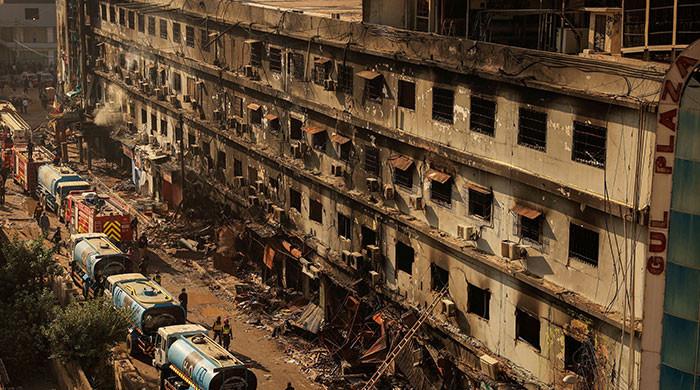
Again, I feel compelled to write about a big blaze in a big city. It is not the Gul Plaza fire, and the city I am referring to is not Karachi.
Though it is the Gul Plaza fire that has prompted me to recall another event that I think is relevant to what has happened to Karachi in the wake of a terrifying tragedy.
Also, the story I want to talk start off this week is not about the Baldia factory fire in Karachi in 2012, which was more gruesome than the Gul Plaza fire. Over 250 workers were burnt to death in the big blaze that actually was an act of arson, and the date they chose was ominous: September 11 – 9/11, as they put it in the United States.
So, what big fire in which big city?
Well, the fire became known as the Triangle Shirtwaist Factory fire and the incident occurred in March 1911, more than a century ago, in the city of New York. As many as 146 garment workers, most of them immigrant women, died when the factory, situated on the eighth floor of a building, caught fire. Many of those who lost their lives had jumped from that height.
Naturally, the entire city was shocked by an event that was unbearably heartrending. My intention here is to provide some glimpses of how the city and its people responded to their deadliest industrial disaster. Many thousands had watched the bodies lying on the road in pools of blood. It was something that the city cannot forget and commemorative events are held even now.
Let me quote some words from a Google account of the funeral procession: “In a profound display of solidarity, an estimated 350,000 to 400,000 people took part in a funeral march in the pouring rain for the unidentified victims”.
Just try to make a mental image of what that scene would look like.
A commission was created and over 30 new labour laws were promulgated. But the real response was evident in the domain of art and culture. The Triangle Shirtwaist Factory fire inspired documentary films and television productions and music and dance and literature. Even until recent years, it has figured in feature films and novels. That tragedy still touches hearts and agitates minds.
As I stated at the outset, I had invoked the fire disaster of New York of 1911 earlier in this space. Then, I compared it with the Baldia fire to underline the differences the two tragedies had evoked in their respective cities. In some ways, the Baldia fire had raised more complex issues about governance and the state’s power structure. Consequently, it called for drastic changes and readjustments at many different levels.
But what happened after the Baldia fire? A human tragedy of such great magnitude — the miserable death of over 250 workers — was, it seems, quickly forgotten. The affected families and a number of labour unions and social activists certainly took up the cause of the innocent victims and the issue was intermittently raised in the media. Still, the conscience of the city, in a collective sense, did not awaken.
The question now is: what will be the consequences of the Gul Plaza disaster? In the immediate context, the event and its gory details that have continued to unfold have been extensively covered by the media. Reports indicate widespread outrage across different sections of society. There is a steady focus on lapses on the part of the provincial and local agencies that have led to such a dreadful loss of life and property.
At the same time, it is felt that a calamity of this kind is always waiting to happen due to the poor state of the entire infrastructure and the blatant violations of relevant legal obligations across all spheres of public life. Footprints of corruption are evident on every path.
As it is, Karachi has long been teetering at a breaking point. It is generally recognised as the engine of growth for the entire country. But it cannot remain so for long if its public utilities are not repaired and improved. The city’s public institutions are visibly in a state of decay.
While the catastrophic fire in Gul Plaza has lessons that the city’s concerned administrators must address in earnest, it has also provided a new scope for divisive politics. An attempt is being made to revive old animosities and exploit popular anger for partisan purposes.
All this would suggest that the Gul Plaza fire is unlikely to become a catalyst for change in the context of how Karachi is governed. Apparently, it will be business as usual. But when I chose to cite the example of the Triangle Shirtwaist Factory fire of New York, I also had the behaviour of the general public and of the intelligentsia in mind.
Where are the concerned citizens of Karachi, and what kind of sense of belonging do they have for this city? What was their involvement with the Baldia fire in 2012 and how do they relate now to the mass bereavement caused by the Gul Plaza fire? Do the citizens of Karachi constitute, in moral and psychological terms, less of a community than, say, the New Yorkers?
I do not know what to do with these and other questions. It may be said that it is pointless to compare, for instance, New York and Karachi in terms of how they have responded to particular events. It is possible to argue that we live in separate worlds.
Let us, thus, content ourselves with the life we are living in Karachi. We have seen that the Gul Plaza fire has dominated the media this week and what is being revealed is very disturbing. At the same time, we are also exceptionally busy with our social activities, this being the season of festivals and festivities.
The writer is a senior journalist. He can be reached at: [email protected]
Disclaimer: The viewpoints expressed in this piece are the writer’s own and don’t necessarily reflect Geo.tv’s editorial policy.
Originally published in The News
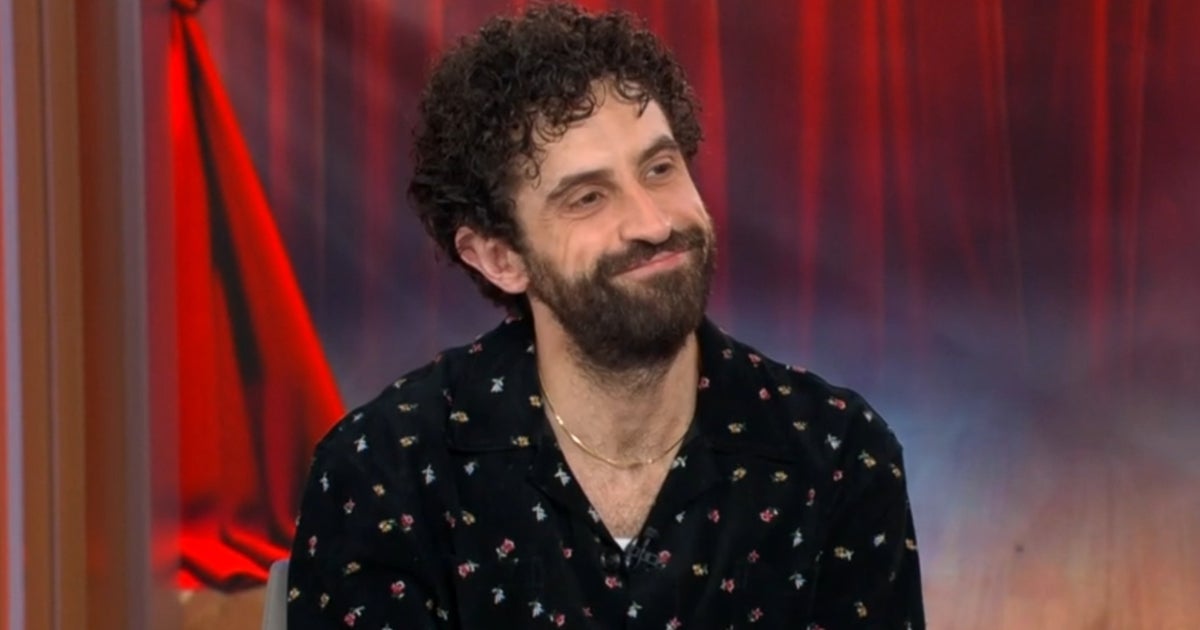

John Mayer and Kat Stickler’s relationship has come to an end after they were reportedly planning on settling down together.
The musician and the influencer sparked dating rumours in October 2025, and were frequently spotted dining together and spending time with each other in New York City.
While the Gravity hitmaker was believed to be actively pursuing the social media star, and introducing her to his friends and family, the couple suddenly broke off in March.
Mayer and Stickler quietly split ways as an insider told the celebrity gossip account DeuxMoi, which came as a surprise to people.
Following the news social media sleuths noticed that the pair stopped ‘liking’ each other’s posts in February this year.
The breakup news surfaced after an insider revealed that the New Light singer was “looking to seriously date” and settle down with Stickler.


Middle East crisis: Jubilant FoodWorks reports some Domino’s outlets affected by LPG shortage – The Times of India

Alex Vesia, Dodgers pitcher who lost infant daughter, gets standing ovation after scoreless return to mound

Men’s March Madness 2026: Ranking the remaining eight teams

-
 Business1 week ago
Flipkart group CFO to leave co amid IPO plans – The Times of India
-
 Business1 week ago
Video: The Effects of High Oil Prices
-

 Fashion1 week ago
China’s textile & apparel exports surge 17% to $50 bn in Jan-Feb 2026
-

 Sports1 week ago
Rating Adidas’ 2026 World Cup away shirts: Argentina, Spain, Mexico and more
-

 Sports1 week ago
American Conference Commissioner Tim Pernetti thanks Trump for Army-Navy game executive order
-
Tech1 week ago
The Corsair 4000D RS PC Case Keeps Your System Cool
-

 Tech1 week ago
‘Uncanny Valley’: Nvidia’s ‘Super Bowl of AI,’ Tesla Disappoints, and Meta’s VR Metaverse ‘Shutdown’
-

 Tech1 week ago
Gamers Hate Nvidia’s DLSS 5. Developers Aren’t Crazy About It, Either