

Business
How hackers forced brewing giant Asahi back to pen and paper

Suranjana TewariAsia business correspondent, Tokyo and
Peter HoskinsBusiness reporter
 Reuters
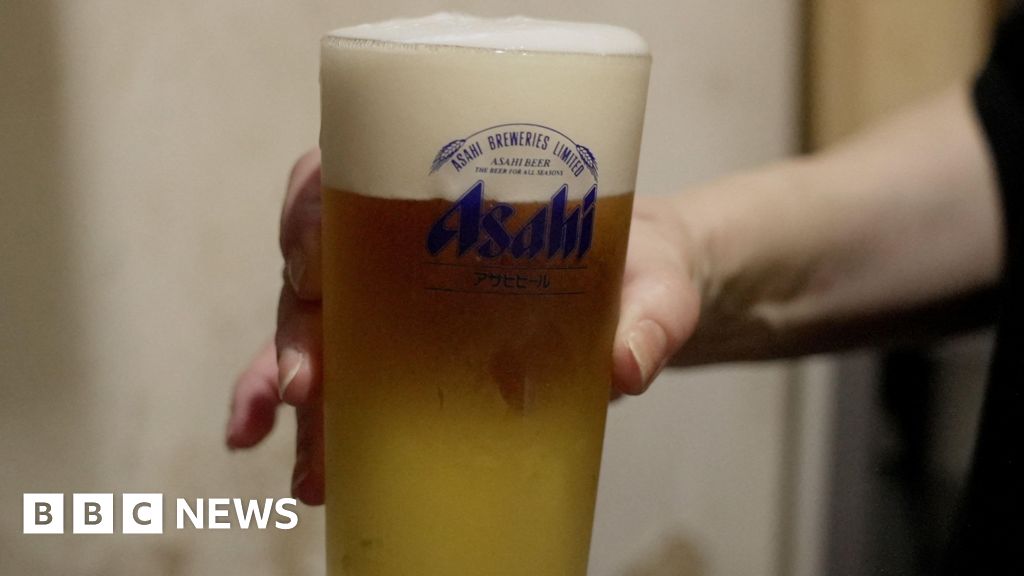
Only four bottles of Asahi Super Dry beer are left on the shelves of Ben Thai, a cosy restaurant in the Tokyo suburb of Sengawacho.
Its owner, Sakaolath Sugizaki, expects to get a few more soon, but she says her supplier is keeping the bulk of its stock for bigger customers.
That’s because Asahi, the maker of Japan’s best-selling beer, was forced to halt production at most of its 30 factories in the country at the end of last month after being hit by a cyber-attack.
While all of its facilities in Japan – including six breweries – have now partially reopened, its computer systems are still down.
That means it has to process orders and shipments manually – using pen, paper and fax machines – resulting in much fewer shipments than before the attack.
Asahi accounts for about 40% of Japan’s beer market, so its problems are having a major impact on bars, restaurants and retailers.
The company has apologised “for any difficulties caused by the recent attack” but has not yet said when it expects its operations to be fully up and running again.
The BBC visited convenience stores and supermarkets in Tokyo and Hokkaido – where workers said they were selling their current stock and hadn’t been able to place new orders for Asahi products, which also include water and food items.
Hisako Arisawa, who runs a liquor store in Tokyo, says she is worried about her customers as she can only get a few bottles of Super Dry at a time and expects the disruption to go on for at least a month.
The problem isn’t just affecting beer, she adds, there are also shortages of Asahi’s soft drinks, such as ginger beer and soda water.

 Getty Images
Last week, some of the country’s biggest convenience store chains warned their customers to expect shortages.
FamilyMart said its Famimaru range of bottled teas, which are made by Asahi, were expected to be in short supply or out of stock.
7-Eleven halted shipments in Japan of Asahi products, while Lawsons also said it expected shortages.
Mr Nakano, who didn’t want to share his first name, works for an alcohol wholesaler.
While some shipments from Asahi have resumed, he says he is only getting about 10-20% of the normal amount.
His orders are now handwritten and taken by fax. Asahi notifies him by fax when lorries are ready to leave its factory.
Asahi also owns big brands in Europe – such as Peroni, Grolsch, and the British brewer Fuller’s – but the firm has said those operations have not been affected by the cyber-attack.
Ransomware group Qilin – which has previously hacked other major organisations – has claimed responsibility for the attack on Asahi.
It operates a platform that allows users to carry out cyber-attacks in exchange for a percentage of extortion proceeds.
Asahi has not confirmed the nature of the attack on its operations but has said data suspected to have been leaked in the hack had been found on the internet.
It is the latest in a series of cyber-attacks by other hacking groups that have hit major firms around the world, including carmaker Jaguar Land Rover and retail giant Marks and Spencer.
Travellers were delayed at a number of European airports in September after a ransomware attack disrupted check-in and boarding software.
Back in Japan, a cyber-attack paralysed operations at a container terminal in the city of Nagoya for three days in 2024.
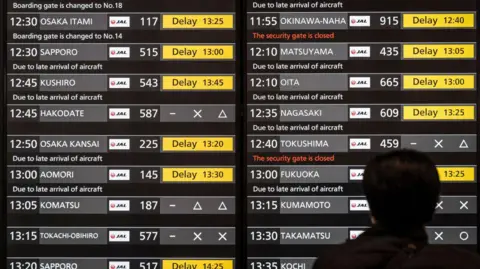
Japan Airlines was also hacked last Christmas, causing delays and cancellations to domestic flights.
 AFP via Getty Images
While Japan’s image around the world may be of a technologically advanced nation, some experts have warned it does not have enough cybersecurity professionals and has low rates of digital literacy when it comes to business software.
This issue was highlighted last year when officials finally stopped asking people to submit documents to the government using floppy disks, even though they fell out of fashion in much of the rest of the world in the 1990s.
Japan is vulnerable to cyber-attacks “given a reliance on legacy systems and a society with a high level of trust,” Cartan McLaughlin from Nihon Cyber Defence Group told the BBC.
Many organisations in the country are not prepared for attacks and are willing to pay ransoms, which makes them attractive to hackers, he added.
Speaking at a news conference this week, Japan’s Chief Cabinet Secretary Yoshimasa Hayashi said the Asahi cyber-attack was being investigated.
“We will continue to improve our cyber capabilities,” he added.
Earlier this year, the Japanese government passed a landmark law giving it more powers in the event of cyber-attacks.
Experts have praised the Active Cyber Defense Law (ACD), because it allows the government to share more information with companies, and also empowers the police and Japan’s Self-Defense Forces to mount their own attacks to neutralise attackers’ servers.
But that is little consolation to small businesses like Ben Thai restaurant and its customers.
Owner Sakaolath says she’s not sure what will happen the next time she puts in an order for Super Dry, and nor do many others across Japan.
Additional reporting by Chie Kobayashi in Tokyo
Business
India opposes China-led IFD pact’s inclusion; flags risks to WTO framework and core principles – The Times of India
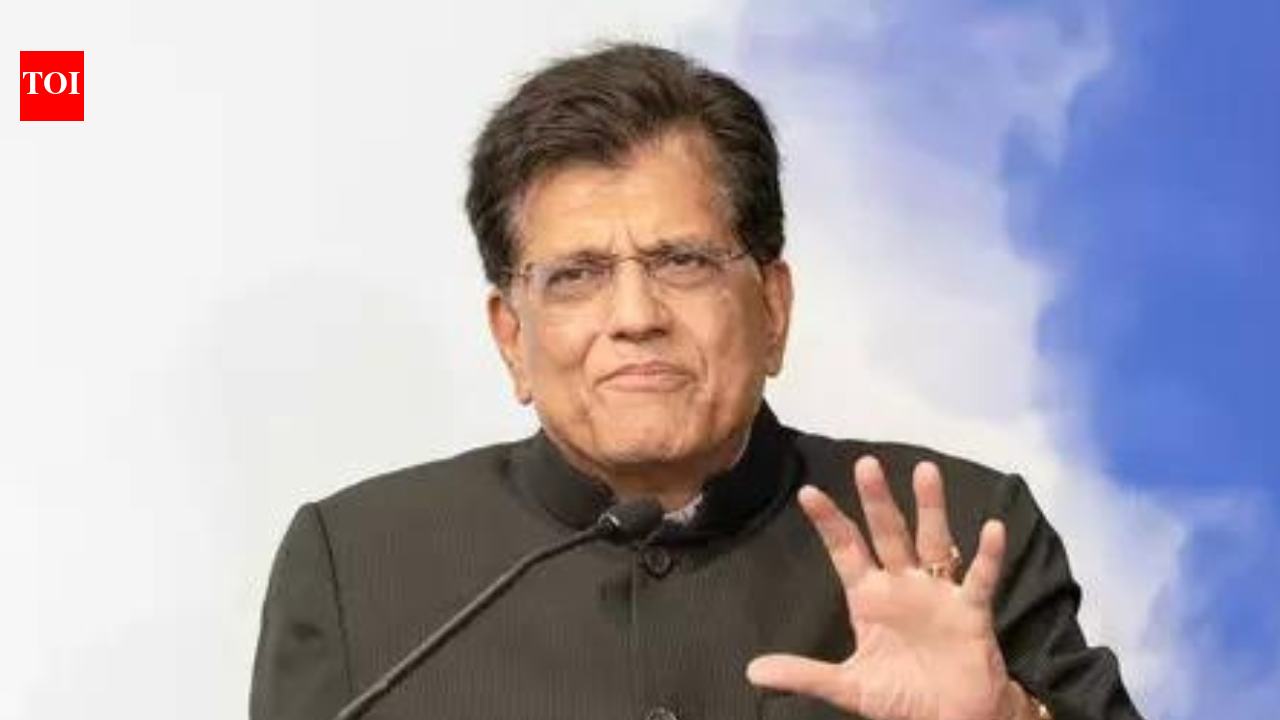
India on Saturday said it has strongly opposed the China-led Investment Facilitation for Development (IFD) Agreement being incorporated into the World Trade Organisation (WTO) framework, flagging concerns over its systemic implications, PTI reported.The issue was raised at the ongoing 14th ministerial conference (MC14) of the WTO in Yaounde, Cameroon, where Commerce and Industry Minister Piyush Goyal said such a move could weaken the institution’s foundational structure.“Incorporation of the IFD agreement risks eroding the functional limits of the WTO and undermining its foundational principles,” Goyal said in a social media post.“At #WTOMC14, drawing inspiration from Mahatma Gandhi ji’s philosophy of Truth prevailing over conformity, India showed the courage to stand alone on the contentious issue of the IFD Agreement and did not agree to its incorporation into the WTO framework as an Annex 4 Agreement,” he said.Annex 4 of the WTO Agreement contains Plurilateral Trade Agreements that are binding only on members that have accepted them, unlike multilateral agreements which apply to all members.Goyal said that as part of WTO reform discussions, members are deliberating on guardrails and legal safeguards for plurilateral agreements before integrating any such outcomes into the framework.“In view of the systemic issue at hand, India showed openness to have good faith, comprehensive discussions and constructive engagement under the WTO Reform Agenda,” he added.India had also opposed the pact during the WTO’s 13th ministerial conference (MC13) in Abu Dhabi.The Investment Facilitation for Development proposal was first mooted in 2017 by China and a group of countries that rely significantly on Chinese investments, including those with sovereign wealth funds. The agreement, if adopted, would be binding only on signatory members.

Vijaypat Singhania, former Raymond chairman, Padma Bhushan awardee and noted aviator, has passed away.He died in Mumbai at the age of 87.His son Gautam Singhania, chairman and managing director of the Raymond Group, announced the death on microblogging platform X.A company spokesperson said Singhania passed away “peacefully” and his last rites will be performed on Sunday, reported PTI.A recipient of the Padma Bhushan, Vijaypat Singhania was known not only for his leadership at Raymond but also for his passion for aviation. He held a world record for achieving the highest altitude in a hot air balloon.He led Raymond as chairman for around two decades until 2000, after which he handed over the reins of the company to Gautam Singhania. He had also transferred his entire 37 per cent stake in the company to his son.Vijaypat Singhania and Gautam Singhania were later involved in legal disputes, which were subsequently resolved.
Business
Middle East crisis: Jubilant FoodWorks reports some Domino’s outlets affected by LPG shortage – The Times of India

Jubilant FoodWorks Ltd (JFL), which operates Domino’s Pizza and Dunkin Donuts in India, has reported constraints in LPG cylinder supplies across parts of its store network due to the ongoing West Asia war, according to ET.In a filing to the BSE, the company said, “Operational impact at this stage is limited and being actively managed. The company is taking several steps to conserve LPG and working overtime to move to alternate energy sources like electricity and piped natural gas (PNG).”It added that it is in continuous touch with oil marketing companies to track developments and respond to the evolving situation. “The company is in constant engagement with oil marketing companies (OMCs) to remain apprised of the latest developments and plan operational responses accordingly, given the rapidly evolving nature of the situation,” the filing said.The company noted that it is closely monitoring the situation as supply disruptions persist.The impact is being felt across the restaurant industry, with several chains facing similar challenges due to LPG shortages.On March 10, the National Restaurant Association of India (NRAI) had advised its five lakh members to consider shorter operating hours, reduce items requiring long cooking times or deep frying, and adopt fuel-saving measures such as using lids while cooking, in view of supply constraints linked to the Gulf war.


USMNT handed reality check by Doku, Belgium ahead of World Cup

Hubert Kós leads Texas men to second straight NCAA swim title

Pakistan rejects India’s remarks on Shia community, calls them ‘cynical, diversionary’

-
 Business1 week ago
Flipkart group CFO to leave co amid IPO plans – The Times of India
-

 Fashion1 week ago
China’s textile & apparel exports surge 17% to $50 bn in Jan-Feb 2026
-

 Sports1 week ago
Rating Adidas’ 2026 World Cup away shirts: Argentina, Spain, Mexico and more
-

 Sports1 week ago
American Conference Commissioner Tim Pernetti thanks Trump for Army-Navy game executive order
-
Tech1 week ago
The Corsair 4000D RS PC Case Keeps Your System Cool
-
 Business1 week ago
‘Marriage penalty’ in Washington state’s new millionaire tax stirs debate
-

 Tech1 week ago
Gamers Hate Nvidia’s DLSS 5. Developers Aren’t Crazy About It, Either
-
 Business5 days ago
Property Play: Home flippers see smallest profits since the Great Recession, real estate data firm says