

Politics
How the Bondi Beach mass shooting unfolded

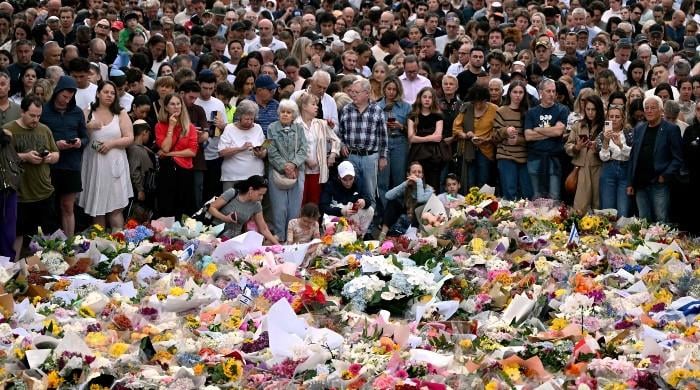
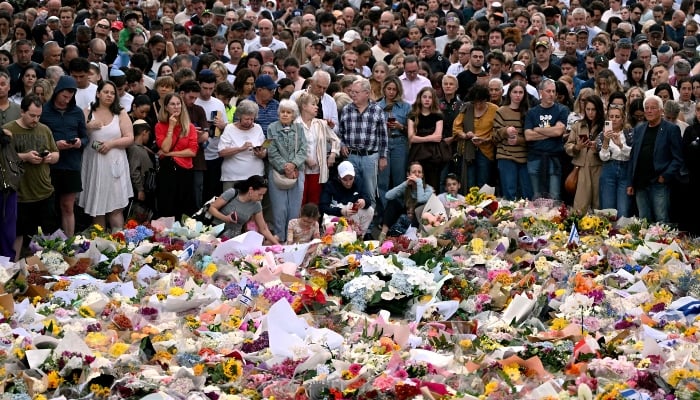
SYDNEY: Australia is reckoning with one of its deadliest mass shootings after a father and son opened fire on crowds gathered for a Jewish festival at Bondi Beach.
Using witness testimony, amateur footage and official statements, AFP pieced together a timeline of Sunday’s attack that killed 15 people and wounded dozens.
Teenage Daesh supporter
Naveed Akram, 24, first caught the eye of Australia’s intelligence agency in 2019, when he was a teenager rubbing shoulders with supporters of the Daesh group in Sydney.
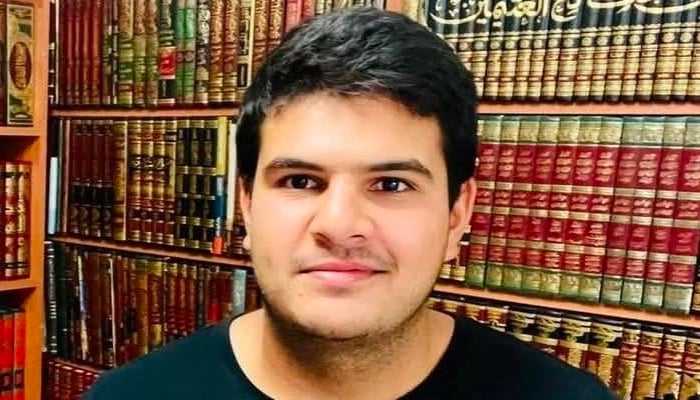
Prime Minister Anthony Albanese said on Tuesday two of Naveed’s associates were later jailed but he was not considered a serious threat and largely fell off the radar.
That was until he joined his 50-year-old father Sajid Akram in a shooting spree aimed at Jewish crowds gathered to celebrate Hanukkah.
Philippines trip
Sajid and Naveed booked a trip to the southern Philippines in the weeks before the attack but the purpose of their visit remains unclear.
Australian broadcaster ABC said they went to run military drills with extremist organisations.
They had already been radicalised by an “Daesh ideology” by that point, authorities said.
Going fishing
Naveed told family before the shooting that he was taking his father on a fishing trip to Jervis Bay, about two hours’ drive south of Sydney.

He later told his mother stories about scuba diving, what he had been eating, and how he was wilting in the oppressive heat.
“Anyone would wish to have a son like my son… he’s a good boy,” his mother Verena told local media.
However, the pair were in reality staying at a humble Airbnb in Sydney’s outer suburbs, where authorities believe they plotted the attack.
Police later seized two guns from the property.
5.15pm
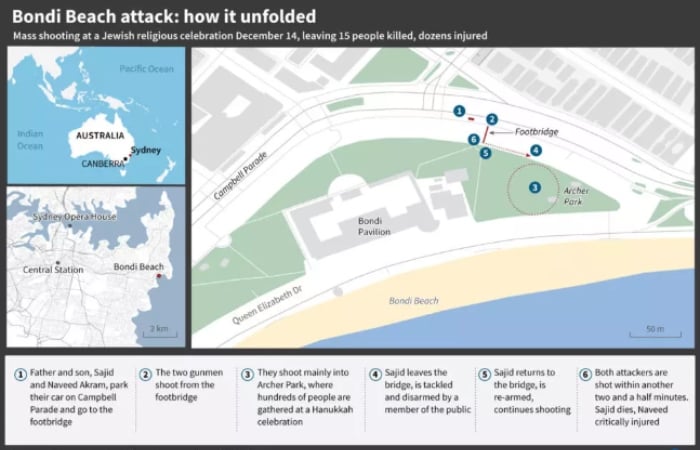
The pair left their hideout on Sunday afternoon bound for Bondi, according to CCTV footage obtained by the Sydney Morning Herald.
They drove through light Sunday traffic, and then parked their car and watched the busy beach below.
Donuts, ice cream
It was a typical sweltering summer Sunday afternoon at one of Australia’s most famous tourist hotspots.
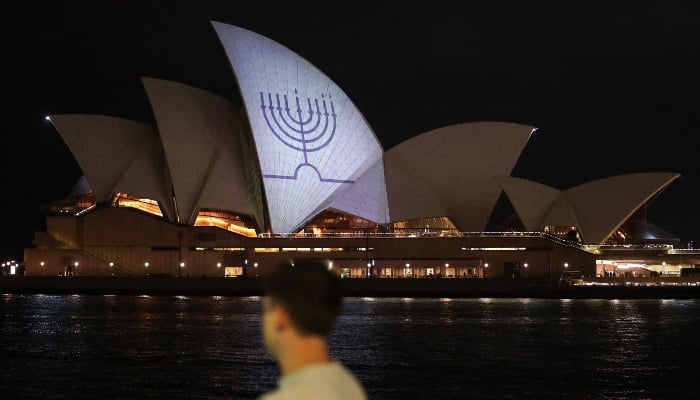
Hundreds of worshippers joined the typically bustling crowds for an event to mark the start of Hanukkah, the Jewish festival of light.
“Let’s fill Bondi with joy and light,” read flyers promising free donuts, ice cream and hot chips.
There was also a petting zoo and face painting for children.
6.47pm
Hanukkah celebrations were in full swing when Sajid and Naveed, armed with long-barrelled guns, stepped out of their car and began shooting.
“For a split second I felt sorry for him because I thought he was tripping over and picking up crutches… but it’s a gun,” witness Bridget Sarks told the ABC.
It is unclear when exactly the first bullets flew but police said they received the first reports at around 6.47pm.
The festive atmosphere delayed the realisation that something terrible was unfolding.
Many witnesses thought the first cracks of gunfire were nothing more than celebratory fireworks.
Panic
Panic quickly set in.
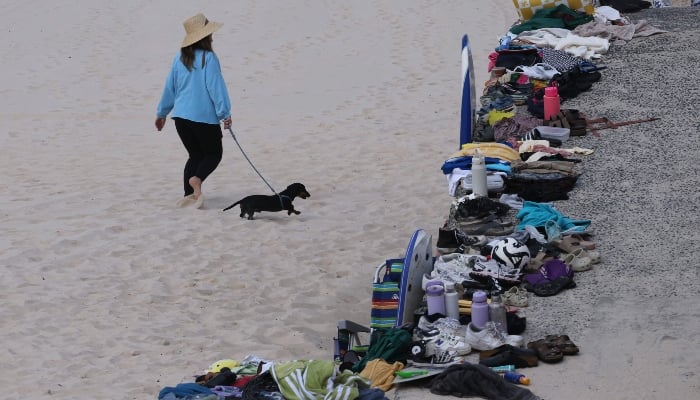
Thousands of beachgoers dropped everything and fled for their lives as the gunshots rang out.
Police gave one of the earliest indications that something truly awful had happened just after 7pm.
“We are still asking people in the area to take shelter until we can determine what is happening,” they said on social media.
A team of off-duty lifeguards sprinted across the sand to drag children to safety.
Others much closer to the gunmen sought whatever cover they could find.
Heather Nolan said she and her family sheltered behind a wooden bench and that she put “my young kids behind the bench and put myself over them”.
Holocaust survivor Alex Kleytman was killed shielding his wife from the bullets.
Reuven Morrison, 62, died as he tried to throw a brick at one of the gunmen.
Ten-year-old Matilda, described by her family as a “happy” child, was shot in front of her younger sister and died in hospital.
Taking shelter
Churches, bars and restaurants threw their doors open to shelter the panicked crowds.
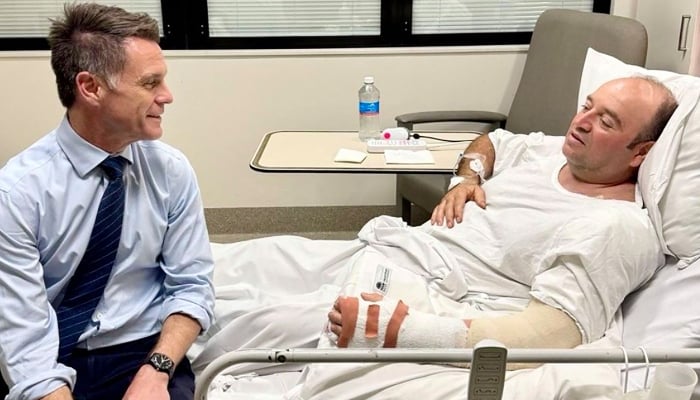
Frenchman Alban Baton, 23, hid for several hours with other customers in a grocery store cool room.
At around that time, Sajid Akram left a footbridge that offered a commanding view of the area and advanced towards the festival.
As Sajid fired into the crowd, fruit seller Ahmed Al Ahmed — who had been getting coffee with friends — approached him from behind and tackled him in a heroic act broadcast around the world.
Ahmed wrestled the gun away before pointing it at the assailant, who then backed away.
Ahmed was shot twice but it isn’t clear when or by whom.
Naveed remained on the bridge, firing round after round with cold determination.
Police arrive
Onlookers can be heard on video angrily demanding: “Where are the cops? Where are the cops, man?”
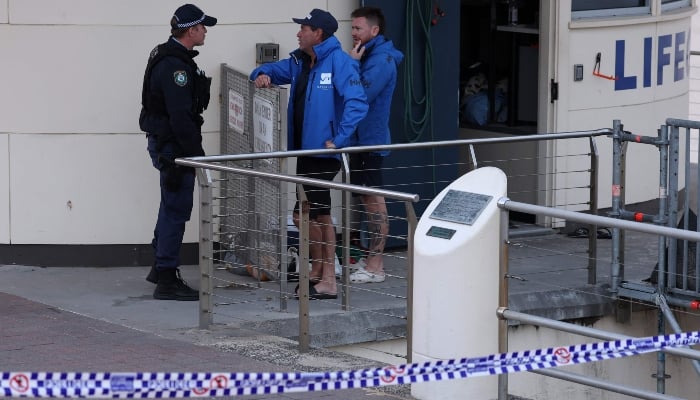
Armed police arrived about 10 minutes into the carnage, as Sajid rejoined his son on the footbridge.
Sajid was killed in an exchange of fire with police. Naveed kept shooting until he, too, was apparently shot and restrained.
Witnesses cheered as he fell to the ground.
Aftermath
Scuffles broke out as one member of the public kicked one of the gunmen, prostrate and surrounded by empty shotgun shells.
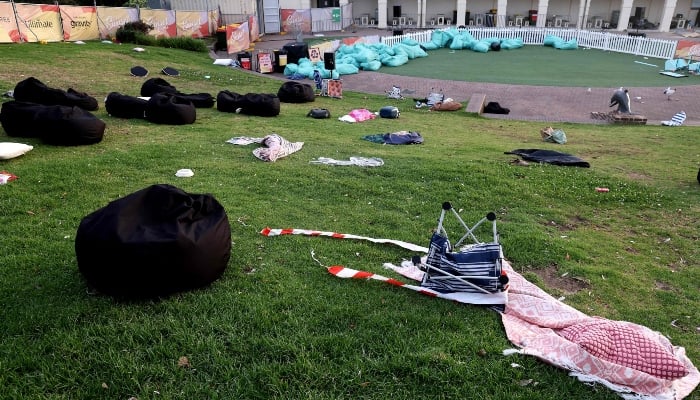
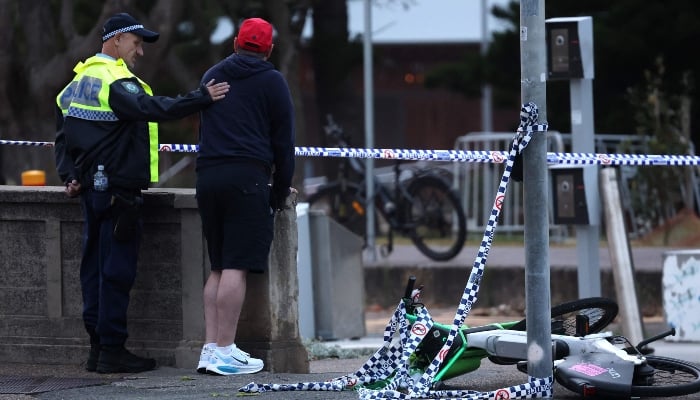
Sirens blared as CPR was frantically administered to the bodies strewn across the beachfront.
One witness described it as a “war zone”.
Bleeding victims were carried across the beach on surfboards used as makeshift stretchers.
Dozens of wounded were rushed to hospital.
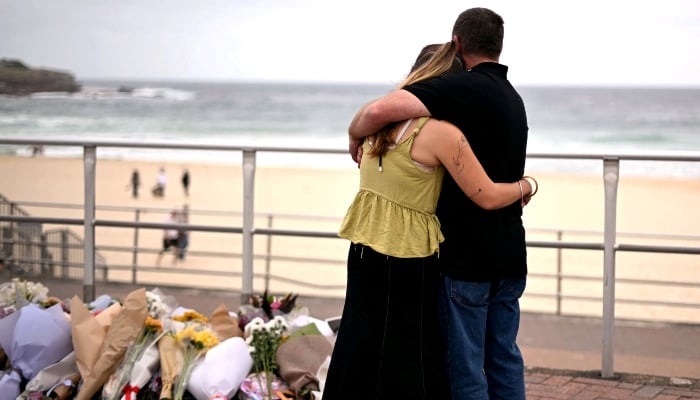
At around 9.36pm, New South Wales Premier Chris Minns declared the mass shooting a terrorist attack.
Authorities confirmed next morning that 15 people were killed.
Sajid was also killed, and his son remains in a coma.
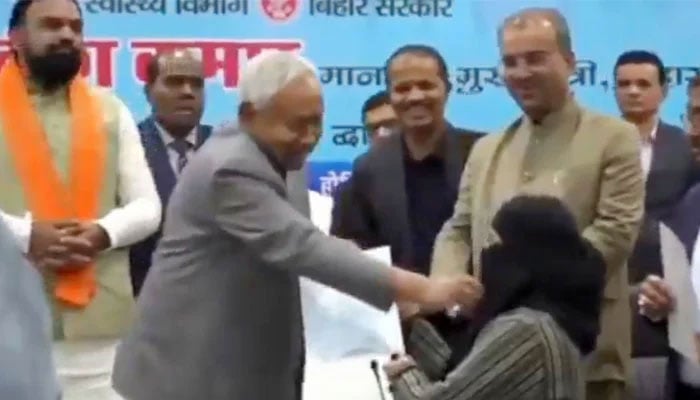
- Amnesty terms CM’s act “assault” woman’s dignity.
- Says no one has right to police woman’s faith or clothing.
- Mehbooba Mufti says CM should resign immediately.
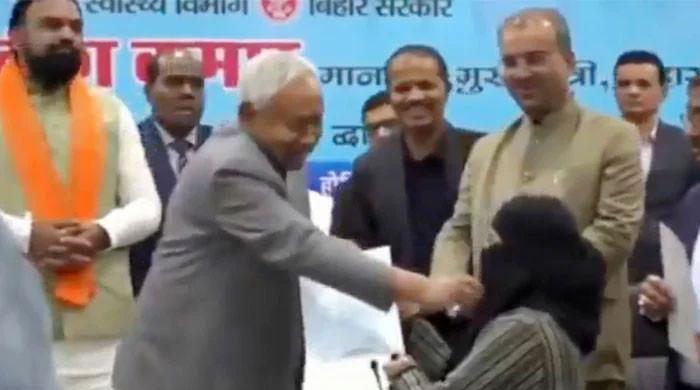
Amnesty International, Indian politicians and other rights groups have strongly condemned Chief Minister Nitish Kumar for pulling down the hijab (veil) of Nusrat Parveen, a newly recruited Muslim doctor, during an official event.
The Bihar CM, a day earlier, had removed the hijab of the Muslim doctor at “Samvad”, the CM’s secretariat, where appointment letters were being handed over to newly recruited doctors.
In a statement, Aakar Patel, Chair of the Board at Amnesty International India, said: “This act was an assault on this woman’s dignity, autonomy and identity.”
“When a public official forcibly pulls down a woman’s hijab, it sends a message to the general public that this behaviour is acceptable,” he added.
Patel said that no one has the right to police a woman’s faith or clothing.
Such actions deepen fear, normalise discrimination and erode the very foundations of equality and freedom of religion, he added.
Patel said that this violation demands unequivocal condemnation and accountability and sought urgent steps to ensure that no woman is subjected to such degrading treatment.
The shocking incident triggered a wave of anguish among minorities in the country and drew strong criticism from home and abroad.
In India, demands are growing to file a harassment case against the Bihar chief minister over the humiliation of a Muslim doctor.
Political leaders, journalists, and human rights organisations called the incident “shameful”.
Opposition party Congress assailed the CM and said that his act is “unforgivable”.
Indian Illegally Occupied Jammu and Kashmir’s (IIOJK) former chief minister Mehbooba Mufti said that the CM should resign immediately.
Samajwadi Party’s Akhilesh Yadav said that the CM’s move was “shameful”, while Indian journalist Mohammad Zubair said that if he had been in his senses, CM Kumar would not have done this.
Academic Ashok Swain wrote on social media that Prime Minister Narendra Modi’s rudeness and Islamophobia in India have received official approval.
Human rights activist Deepika Pushkar Nath called it a serious incident of “sexual harassment”.
In India, hate crimes against religious minorities have alarmingly increased during the tenure of PM Modi.
Last month, a US report recommended designating India as a country of “special concern” due to religious prejudice and serious violations of religious freedom.
US Commission on International Religious Freedom, in its report, exposed religious discrimination in India and extremist policies of the RSS and the BJP’s Hindutva agenda.
The report revealed that Modi and the BJP had implemented discriminatory policies against minorities in line with the Hindutva ideology.
It added that the BJP, as the political wing of the RSS, promotes Hindu nationalism.
The RSS has been involved for decades in violent acts against minorities, particularly Muslims and Sikhs.
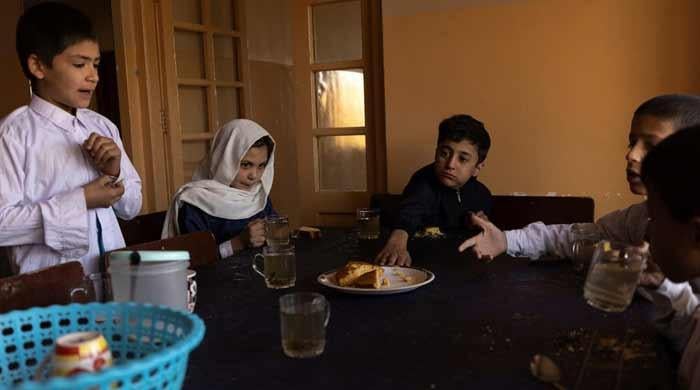
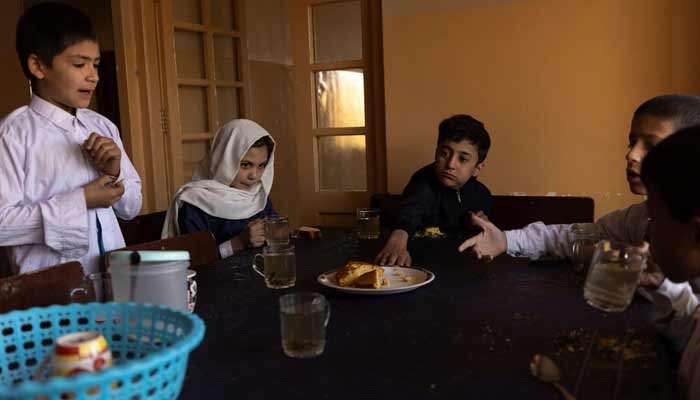
The number of people facing acute food insecurity in Afghanistan this winter is on the rise, and now stands at more than 17 million, the United Nations warned Tuesday.
“The situation is getting worse, and we need to act now as Afghanistan is entering the winter period where needs are highest,” said Jean-Martin Bauer, director of food security and nutrition analysis at the UN’s World Food Programme.
More than 17 million people are facing acute food insecurity: “three million more than last year”, he told a press briefing in Geneva.
Furthermore, “there are almost four million children in a situation of acute malnutrition”, he said.
Speaking from WFP’s Rome headquarters, Bauer said the situation was down to a combination of factors, including drought affecting crops and livestock, earthquakes that have plunged many families into poverty, and cuts in international aid.
Added to this, the return of more than 2.5 million Afghans from Iran and Pakistan this year “is putting stress on very limited resources” and the “very limited infrastructure in the country”.
WFP expects a similar number of people to return to Afghanistan in 2026.
The organisation currently has only 12% of the funds needed for its programmes in the country.
Bauer indicated that due to lack of money, WFP is unable to undertake its usual winter preparations, such as pre-positioning food resources in vulnerable communities.
He urged donors to step forward to avert “the most extreme impact” in Afghanistan.
“What we need is $570 million over the next six months to provide essential assistance to about six million people in Afghanistan,” he said.
“We need to make sure that the country remains in the headlines […] because of the very high levels of vulnerability,” he added.
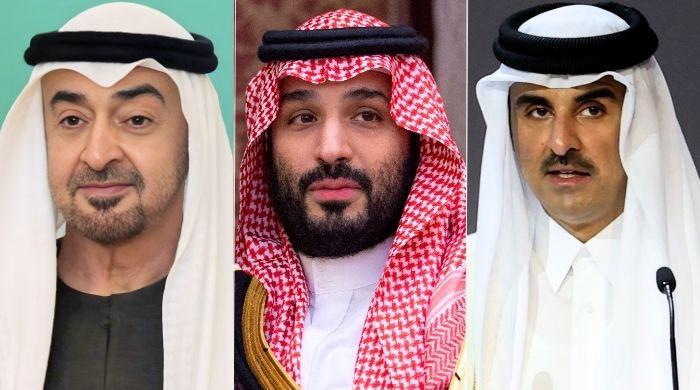
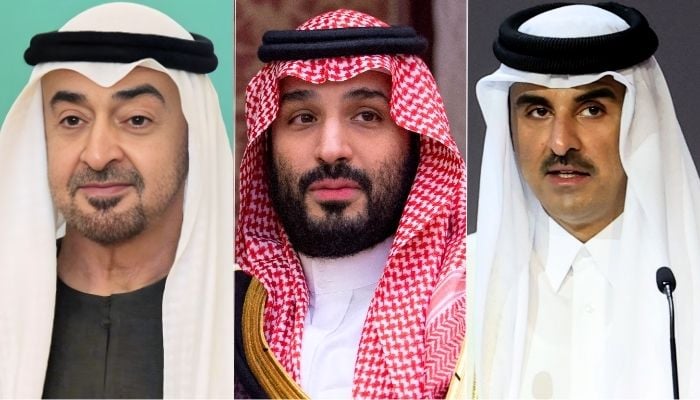
The Arab world is home to some of the wealthiest families in history. Many Arab families, known for their immense fortunes, luxurious lifestyles, and deep cultural roots, have emerged as global symbols of power and influence.
Their fortunes, however, extend far beyond the modern oil boom, rooted instead in centuries of trade, entrepreneurship, and innovation that shaped the region’s economic foundations.
Bloomberg has issued an annual report on the World’s Richest Families 2025, stating that the 25 richest families are collectively $358.7 billion richer than a year ago, with a combined fortune totalling $2.9 trillion.
Their wealth surged due to rising stock prices and demand for goods like metals and pet food, the report stated.
The report mentions three of the wealthiest families in the Arab world: the UAE’s Al Nayhan, Saudi Arabia’s Al Saud, and Qatar’s Al Thani.
Al Nahyan family
The ruling Al Nahyan of Abu Dhabi, one of seven emirates that make up the United Arab Emirates, is ranked the second-wealthiest family in the world with a net worth of $335.9 billion, the report stated.
Abu Dhabi ruler Sheikh Mohamed bin Zayed Al Nahyan is also the country’s president. The family has presided over the area for decades, even before oil transformed the economy and the royals’ finances, the report stated.
National security adviser Sheikh Tahnoon oversees personal and sovereign assets worth a combined $1.5 trillion and has invested heavily in artificial intelligence.
Al Saud family
The Al Saud family of Saudi Arabia has been ranked third on Bloomberg’s World’s Richest Families 2025 list, with an estimated net worth of $213.6 billion.
The 93-year-old ruling dynasty has built its vast collective fortune largely on the kingdom’s massive oil reserves. Bloomberg noted that the higher valuation this year reflects revised estimates of historical inflows as well as reduced spending by family members.
With around 15,000 extended relatives, the total wealth under the family’s influence is believed to be even greater. Many royals have generated income by brokering government contracts and land deals or by establishing businesses that provide services to state-owned entities, including Saudi Aramco.
Saudi Arabia’s sovereign wealth fund, the Public Investment Fund (PIF), now manages assets worth about $1 trillion, while Crown Prince Mohammed bin Salman is reported to control assets exceeding $1 billion personally.
Al Thani
The Al Thani family, which has ruled Qatar since the mid-19th century, is ranked fourth in Bloomberg’s World’s Richest Families 2025 list, with an estimated net worth of $199.5 billion.
While oil was discovered around 1940, it was the strategic development of Qatar’s vast offshore gas reserves that fundamentally transformed the country’s economy and propelled the ruling family into the top tier of global wealth.
Members of the Al Thani family occupy key political positions and wield extensive influence over Qatar’s domestic economy, with business interests spanning hotels, insurance firms and construction companies.
They also own high-value foreign assets, including luxury properties in London’s Mayfair, stud farms, private banks and the fashion house Valentino.


Grindr Goes ‘AI-First’ as It Strives to Be an ‘Everything App for the Gay Guy’

From Diddy to Kardashians the biggest celebrity legal battles of 2025

Princess Anne’s red lip steals the show as royals sparkle at Buckingham Palace

-
 Politics1 week ago
Thailand launches air strikes against Cambodian military: army
-
 Politics6 days ago
Trump launches gold card programme for expedited visas with a $1m price tag
-

 Politics1 week ago
Zelenskiy says Ukraine’s peace talks with US constructive but not easy
-
 Fashion1 week ago
Germany’s LuxExperience appoints Francis Belin as new CEO of Mytheresa
-

 Tech7 days ago
Jennifer Lewis ScD ’91: “Can we make tissues that are made from you, for you?”
-
 Business6 days ago
Rivian turns to AI, autonomy to woo investors as EV sales stall
-
 Entertainment1 week ago
Too big to fail? IndiGo crisis exposes risks in Indian aviation
-
 Business3 days ago
Hitting The ‘High Notes’ In Ties: Nepal Set To Lift Ban On Indian Bills Above ₹100