

Business
Hybrid oilseed spreads fragrance across Pakistan | The Express Tribune

WUHAN:
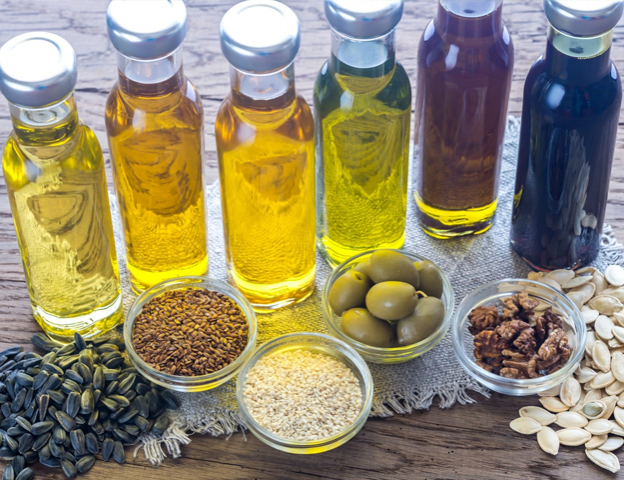
With the switch on, the rapeseed spun rapidly in the press. Soon, a strong aroma filled the air. Watching the bright golden oil flow into a barrel, Pakistani farmers all smiled with satisfaction.
Sayima Rizwan, a housewife from Gujranwala, praised the edible oil made from Chinese seed. “Now my family can’t live without it. With a reasonable price, this oil makes my dishes more fragrant.”
Wuhan Qingfa Hesheng Seed Co Ltd and Evyol Group, a Pakistani agricultural enterprise, recently signed a memorandum of understanding (MoU) on cooperation in rapeseed industrialisation. The two parties will further develop a comprehensive seed industry chain in Pakistan.
As one of the earliest Chinese seed companies to expand internationally, Qingfa Hesheng has been deeply engaged in the Pakistani market for 21 years. They discovered that Pakistan, a major consumer of edible oil, has an annual demand for 5 million tons, of which 89% is imported and the annual cost is about $4 billion, resulting in an extremely low self-sufficiency rate.
“HC-021C, our low erucic acid and low glucosinolate hybrid rapeseed variety, boasts an oil content exceeding 42% and an unsaturated fatty acid content exceeding 76%. Compared to local varieties, this represents an 8% increase in yield and a 6-8% increase in oil content,” said Zhou Xusheng, Director of Overseas Business at Qingfa Hesheng.
“Low erucic acid means it’s more in line with modern healthy dietary needs. At the same time, the rapeseed meal byproduct after extraction has low glucosinolate content and higher-quality feed, improving the overall benefits of local animal husbandry.”
In recent years, Qingfa Hesheng has adopted an order-based production cooperation model to promote the planting of HC-021C on approximately 100,000 hectares in the South Asian country, harvesting 250,000 tons of high-quality seed, equivalent to around 95,000 tons of edible oil, with a value of $220 million.
“As Pakistan’s largest hybrid variety, HC-021C is expected to be promoted on an area of about 66,667 hectares in 2025-26,” Zhou Zhanwang said.
“Our partnership with the Chinese company ensures a stable supply of high-quality seed, which not only significantly reduces raw material and logistics costs, but also effectively increases the added value of end-products. We’re going to undoubtedly plan to further expand our procurement scale in the future,” said Bashir, General Manager of a Pakistani cooperative enterprise.
This article originally appeared on China Economic Net





Business
Eli Lilly’s next-generation obesity drug retatrutide clears first late-stage diabetes trial

Eli Lilly on Thursday said its next-generation obesity drug retatrutide cleared its first late-stage trial on Type 2 diabetes patients, helping them manage their blood sugar levels and lose weight.
The drug lowered hemoglobin A1c — a key measure of blood sugar levels — by an average of 1.7% to 2% across different doses at 40 weeks compared to placebo, meeting the study’s main goal. Patients started the trial with an A1c in the range of 7% to 9.5%, and were not taking other diabetes medications.
Retatrutide also met the study’s second goal, helping patients at the highest dose lose an average of 16.8% of their weight, or 36.6 pounds, at 40 weeks, when evaluating only patients who stayed on the drug. When analyzing all participants, including those who discontinued treatment, the highest dose of the drug helped patients lose 15.3% of their weight.
Patients with Type 2 diabetes historically struggle to lose weight, so Lilly is “very excited” to see that the drug led to both a competitive drop in blood sugar levels and significant weight loss, Ken Custer, president of Lilly Cardiometabolic Health, said in an interview.
The company was also “very pleased” with the relatively low discontinuation rates due to side effects, which were up to 5%, he added.
They are the second late-stage results to date on retatrutide, which works differently from existing injections and appears to be more effective, at least for weight loss. Lilly is betting big on retatrutide as the next pillar of its obesity portfolio after its blockbuster weight loss injection Zepbound and its upcoming pill, orforglipron.
But Lilly has yet to file for approval for the drug for obesity or diabetes. The company expects to report findings from seven additional phase three trials on the drug by the end of the year.
There are no head-to-head trials of retatrutide against other drugs, making it difficult to directly compare efficacy.
Still, retatrutide’s A1C reduction doesn’t appear to be the greatest Lilly has seen within its portfolio: The highest dose of Zepbound lowered the measure by more than 2% at 40 weeks in two separate trials on diabetes patients.
But Custer said retatrutide’s A1C reduction is still “very, very strong” compared to other diabetes medications that don’t target gut hormones.
He also said that having options in the obesity and diabetes space will be important because “not everybody is going to be helped with or satisfied with the same treatment.” Choosing which drug to take will depend on “individualized tailoring of solutions and patients,” particularly earlier in their diabetes treatment, he added.
For example, Custer said patients who want to regulate their blood sugar could benefit from either Zepbound or retatrutide. But if they are looking to lose more weight, the latter might be a better option, he said.
In the two separate diabetes trials, Zepbound helped patients lose slightly less weight than retatrutide did. In one study called SURPASS-2, the highest dose of Zepbound helped patients lose an average of 13.1% of their weight at 40 weeks. In the other study, SURPASS-1, the highest dose helped patients lose an average of 11% of their weight at the 40-week mark.
Retatrutide’s safety profile was similar to other injectable diabetes and obesity drugs, primarily causing gastrointestinal side effects. Around 26.5% of patients on the highest dose experienced nausea, while roughly 22.8% and 17.6% had diarrhea and vomiting, respectively.
Low rates of patients experienced dysesthesia, which is an unpleasant nerve sensation.
Dubbed the “triple G” drug, retatrutide works by mimicking three hunger-regulating hormones – GLP-1, GIP and glucagon – rather than just one or two like existing treatments. That appears to have more potent effects on a person’s appetite and satisfaction with food than other treatments.
Tirzepatide, the active ingredient in Zepbound, mimics GLP-1 and GIP. Novo Nordisk’s semaglutide, the active ingredient in Wegovy, mimics only GLP-1.
As retatrutide inches closer to the market, Novo is racing to catch up to Lilly. In March 2025, Novo said it agreed to pay up to $2 billion for the rights to an early experimental drug from the Chinese pharmaceutical company United Laboratories International.
Novo’s newly acquired drug is a clear potential competitor to retatrutide because it similarly uses a three-pronged approach to promoting weight loss and regulating blood sugar. But Novo’s treatment is much earlier in development, meaning it will take several years before it reaches patients.

Annual earnings grew at an annual rate of 3.8% in the November to January period, the Office for National Statistics says.
Source link

The scheme provides £500 to support low-income families welcoming a new baby in the London borough.
Source link


Boots or Trail Runners? Depends if You Want Speed, Durability, or Ankle Support

Germany’s ZEW index falls to -0.5 in March amid Middle East tensions

Ryan Gosling reacts to viral NFL meme that won’t die

Stock market crash today (March 12, 2026): Nifty50 opens below 23,600; BSE Sensex down over 900 points on continuing US-Iran war – The Times of India

UK’s Topshop unveils Tolu Coker capsule collection

India’s textile recycling market may reach $3.5 bn by 2030: Report

-
Business1 week ago
Stock market crash today (March 12, 2026): Nifty50 opens below 23,600; BSE Sensex down over 900 points on continuing US-Iran war – The Times of India
-
 Fashion1 week ago
UK’s Topshop unveils Tolu Coker capsule collection
-
 Fashion1 week ago
India’s textile recycling market may reach $3.5 bn by 2030: Report
-

 Tech1 week ago
Meta Developed 4 New Chips to Power Its AI and Recommendation Systems
-
 Business1 week ago
US ignites Iran war, but Gulf Arab states pay the price | The Express Tribune
-

 Sports1 week ago
Bangladesh crush Pakistan in ODI series opener | The Express Tribune
-

 Entertainment1 week ago
Ed Sheeran makes surprising Benny Blanco confession after hygiene uproar
-

 Tech1 week ago
Labour scarcity is forcing IT leaders to rethink automation economics | Computer Weekly