

Entertainment
‘I was looking for it’


Valerie Bertinelli is back on screen after nearly five years away from acting, and she chose a role that required her to strip away every defence she had.
The actress, 65, spoke to PEOPLE at Lifetime’s screening and panel for Love, Again at the Television Academy in North Hollywood on Thursday, 30 April, opening up about what drew her to the project and what it took to deliver it.
It started with the script.
“Nancy Silvers wrote a ridiculously beautiful, human, humorous, heartbreaking script. And it was something that I’ve been looking for but I didn’t realize I was looking for it,” she said.
In the film, Bertinelli plays Caroline, a woman navigating the devastating reality of her husband Henry’s early-onset Alzheimer’s diagnosis, and eventually facing the possibility of love again after loss.
It is a role that demanded a great deal.
“I could really be that vulnerable and really let down every single guard that I have as an actor, as a human being, and just be there and just do it,” she said.
“It was scary because I hadn’t done any acting within four, almost five years… I just really wanted to do the role justice.”
Her preparation was less about technique and more about honesty.
“I just worked really hard at taking down my walls and all the barriers that I have developed over the many decades… and all of the grief and all of the life experiences that I’ve had. I just wanted to have them all right there on the surface and just be raw.”
The story also resonated personally.
Bertinelli, who has been open about her own journey of self-discovery in recent years, saw something of herself in Caroline, and found an unexpected connection between the role and the book she was writing at the same time.
“I don’t know that I would ever want to go through what Caroline went through… but I think because I was writing my book during the middle of this, it really helped me open up and be a little bit more brave.”
Her costar Eric McCormack, who plays Leo, a figure of connection and comfort for Caroline, praised Bertinelli’s presence on set without hesitation.
“She’s a leader. We talk in the business about number one on the call sheet, and being a good one… someone that sets the tone and sets the standard. And that’s what she does. She’s a pro.”
Love, Again premieres on Lifetime on Saturday, 9 May at 8pm ET.

Elon Musk’s space technology company SpaceX has spent around $15 billion on developing its Starship, a towering two-stage rocket designed to take humans to the Moon and Mars.
According to the company’s IPO registration reviewed by Reuters, the investment in Starship is significantly higher compared to the cost of its Falcon 9 rocket, which remains the most frequently reused launch vehicle globally. SpaceX spent around $400 million on the development of Falcon 9.
SpaceX wants to reduce launch costs and increase mission frequency via Starship, which appears to be central to the company’s future plans.
Starship is being developed to carry heavier payloads and support a broader range of missions, including deploying larger batches of next-generation Starlink satellites.
This capability is expected to strengthen SpaceX’s satellite internet business while improving efficiency in orbit.
The company is also working toward an “airline-like” model for space launches, where rockets can be launched, recovered, and reused at a much higher frequency than current industry standards.
However, the program continues to face technical and operational challenges, including perfecting heat shield systems for safe re-entry, developing in-orbit refueling technology and building the infrastructure required to support rapid and repeated launches.
Starship is also expected to play a key role in NASA’s Artemis program, which aims to return humans to the Moon in the coming years.
Earlier, it was reported that SpaceX was competing with Billionaire Jeff Bezos’ Blue Origin to build a moon lander for the National Aeronautics and Space Administration.
The SpaceX board has earlier tied CEO Elon Musk’s perks, in addition to his nominal salary of $54,000, to the colonisation of Mars.

The Pentagon revealed that it has finalised artificial intelligence (AI) agreements with seven major technology companies on May 1, 2026.
The technology company has decided to deploy their AI tools on classified military networks, notably excluding Anthropic, which was blacklisted over a dispute about AI safety guardrails.
The seven AI partners are:
- Microsoft
- Amazon Web Services
- Nvidia
- OpenAI
- SpaceX
- Reflection AI
The involvement of seven tech companies instead of one major AI giant indicates that the Pentagon avoids overreliance on a single AI provider.
Anthropic’s Claude was the lone AI model previously accessible to the department through the classified network.
However, relations deteriorated further when Anthropic demanded guardrails be set in place, preventing the military from weaponising their technology to develop autonomous arms or conduct mass surveillance.
In March, the Pentagon labelled Anthropic as a “supply chain risk,” citing that it is typically reserved for foreign adversaries, banning its use across the Defense Department and its contractors.
President Trump also announced that the administration would sever ties with the company.
As a result, Anthropic filed suit, and a federal judge recently halted the government’s attempt.
Although on the blacklist, Pentagon personnel have been unwilling to move away from Anthropic’s programs because they perceive them as superior. Officials have six months to get rid of them.
Avid Reader Press
We may receive an affiliate commission from anything you buy from this article.
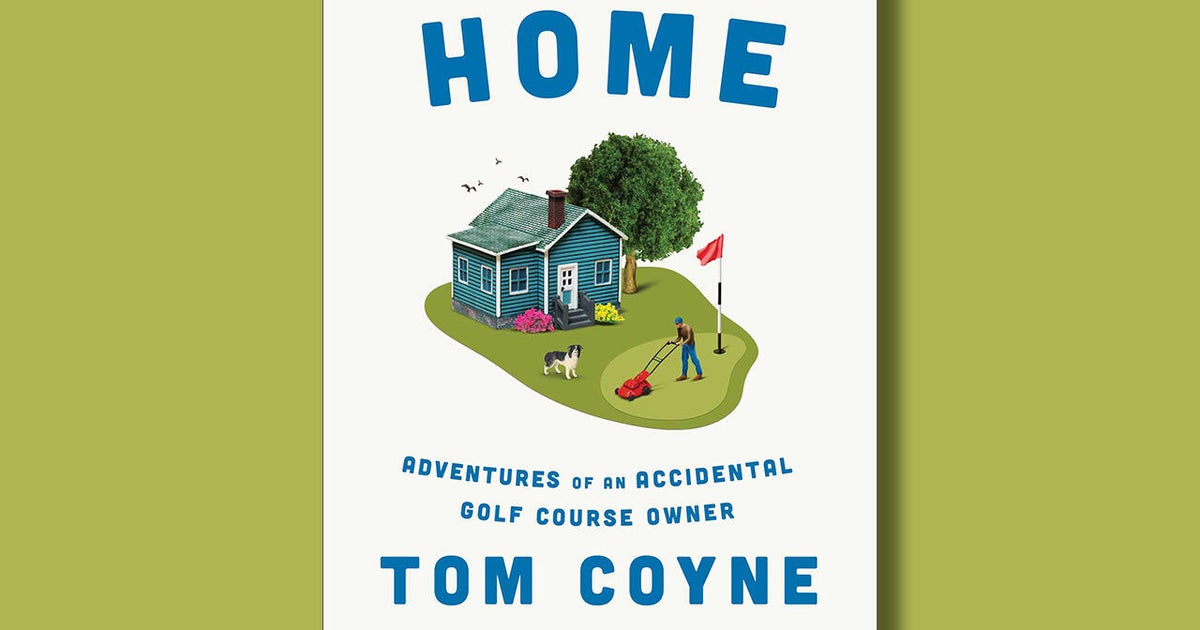
Tom Coyne, the editor of The Golfer’s Journal, teed up for a challenge: taking over operations of a failing nine-hole community golf course in New York’s Catskill Mountains. He writes of his experience, and the tribulations that were par for the course, in “A Course Called Home: Adventures of an Accidental Golf Course Owner” (to be published May 5 by Avid Reader Press).
Read an excerpt below, and don’t miss Lee Cowan’s interview with Tom Coyne on “CBS Sunday Morning” May 3!
“A Course Called Home” by Tom Coyne
Prefer to listen? Audible has a 30-day free trial available right now.
Hands caked with mud, fingertips diced by a thousand tiny cuts, and my wheels were spinning again.
It had been the wettest Catskills summer in memory, and Shaun had warned me to throttle down as I drew closer to the green. I killed the engine and slid out of the seat, got back down on my knees, and ripped clumps of soggy grass from the reels—right, middle, left, then the rear units beneath the chassis that I struggled to reach. If we had the money or time to sharpen our bed knives, I’d have lost a digit by now; instead, I shaved away my fingerprints as I felt for jams and tore chunks of wet earth, pulling hair from a clogged drain, until I could turn each cylinder by hand. This was the ninth time I’d had to clear the reels on this run, eight piles of discharged mud lined up in the rough behind me, and my favorite morning job looked like it would become that afternoon’s job, too.
I’ve come to believe that golfers should know what it’s like to ride a mower or cut a hole or water a green before they play. Not as punishment, but to better know our playing grounds and appreciate the big and small things—like freeing wads of vegetation from an undercarriage—that turn a field into a stage. We’d not only understand our good fortune as golfers, but we’d earn the answers to questions we may have long pondered. We’d know why our tees and fairways have rounded corners (because the mowers turn on a certain radius) and why someone let the rough grow on that hillside (because the mower tips over up there) and why we can’t have those vertical bunker faces we see on TV (because trimming them costs a day’s worth of manpower, fuel, and gear we don’t possess and can’t afford).
We’d know why tall fescue is fashionable (no cut, no work), why we should pick up our tees (they dull mower blades, and resharpening robs hours), and why benches, cart signs, and tee markers are a blight (cut the engine, hop off, move them, restart, mow, move them back—if your legs are as stiff as mine, you daydream about blowing them out the back of your machine). We’d know that nobody asked a greenskeeper whether wall-to-wall fairways was a trend worth pursuing, and we’d learn how a course’s maintenance budget can be halved if the course has been designed for simpler upkeep, or if its players accepted brown as a firmer shade of green. We’d likely never leave a pitch mark or bare divot again, understanding that those banal scorecard requests aren’t about manners or even playing conditions—they’re about simple respect for the people whose job it is to grow grass, and a gentle nod to their existence. And if you’re like me, you’d enjoy the art of upkeep. Maybe even more than your golf.
It’s hard and early work, and at places like ours, it doesn’t pay that well, either. I used to wonder why they do it, the greenskeepers who might get thanked once a year at the member-guest, but who mostly pass by in hooded sweatshirts and heavy brown boots, working through a checklist that started before dawn. They’re a unique breed, the turf types, but those who get it in their blood tend to stick with it, and after a few months among them, I now had some understanding of why. Getting up and going to work for most people is coffee and a commute, shaving or some makeup, dressing appropriately so you can stare at your phone for an hour. Asking and answering questions in as few words as possible, creating tasks and passing them along, and maybe noticing whether the sun is shining or not.
In the work out here, the weather is all you notice—your day is dictated by sun and seasons and a rain gauge that’s inspected every morning. The forecast tells you when to fire up the mowers and where to take them, and each morning is a chance to know satisfaction before most people have finished deleting their overnight emails. It’s just you atop a humming red rig, tracing lines into a field shining with dew, the fog still spinning in your blades, and your only company a few deer who hardly look up when they see you anymore, and soon every tuft is trimmed and you’ve got the mow lines to prove it and can look back and see what you’ve done—it’s a kind of work I’d never known before this summer, work that gives you clear beginnings and endings and doesn’t ping you after dinner, the sort of job you still feel that evening as you fall asleep, bones sore with effort but your mind clear for having answered what the day asked.
This day’s aches and scrapes might last a little longer. We typically welcome the rain because we lack a working irrigation system for our fairways, and our method for dousing the greens is something we try not to discuss, let alone use. We have nine garden hoses wrapped around hubcaps on posts that stand guard beside each green, but the pump meant to send them water from the pond is old and irritable, and the pipes that run to each hose are a patchwork of red iron and PVC held together by putty and tape, and only half of them remain buried anymore. Where they cross streams or change grade in the woods, we built tiny rock towers to support their weight and keep them from snapping, and with so many leaks, they deliver a mere trickle to those hoses. After a bone-dry May and June, we were praying for rain, forgetting that Noah probably prayed for a drizzle, too.
Not only do we lack the pipes to spray water on the golf course, we don’t have pipes to drain water off it, either. Occasionally I’d spot a rusty drain buried in a fairway, relics from our course’s heyday, but when the water comes now, puddles form in all our low spots (at a course beside a mountain, we have plenty of those). Rain pushes the weeds higher, then shelters them on turf too soft for the machines meant to clip them.
We often tried when we shouldn’t have, and that’s when we felt the agony of tires lurching and spinning, stuck dead in a wet patch. Ever try to slide a piece of old furniture and feel a nail gash your wooden floor? It’s close to that, and then it gets worse when you hit the gas hard because your only way out is forward as platter-sized pieces of fairway come loose beneath your wheels. On your next pass, you see the mess you’ve made and wonder what kind of a****** would do that to a golf course.
Sometimes you can’t motor through it, and that’s where I found myself on number eight, my twice-a-week nemesis. Not only is it big—a runway par-five of almost all fairway—but its approach is an awkward cut, where your lines squeeze into a tight funnel as you approach a narrow, raised plateau with a collar that’s tough to trim without dropping clippings all over the green. It sits beside a hidden spring in the greenside rough, and today I’d found the heart of it. I looked around, hoping to find one of my comrades, but it was just me and the deer. They’d been watching me stall out all morning, happy to nibble the grass I was failing to shorten.
Bearded Chris was responsible for trimming the rough on his Ventrac, an eight-wheeled beast that could handle our most unreasonable slopes. Shaun mowed the greens, sometimes pushing by hand or, when the triplex was working, atop his riding mower. Fairways were my job, but maybe not much longer, I thought—I’d cleaned my reels, but the tires were buried in three inches of soup. I rocked from forward to reverse with no luck. Shut it down, started it back up. The ignition was shot so we had to hotwire our fairway unit, pressing a wire against the battery with a wrench we kept in the cupholder. No joy. I pulled out my phone and called Shaun, who was cutting greens on the other side of the property. I don’t know how he heard or felt his phone vibrating while his machine was roaring, but when I was working the course, he never failed to pick up. He knew his staff (all two of us) and probably suspected that his fairway might be calling.
“I’m stuck. In the spring on eight.”
He laughed a tired chuckle. “On my way.”
I knew the water was there and should have been more careful, but I was so damn close to done—three hundred yards of fairway cut back-and-forth in perpendicular passes. Cut, loop around, drop the blades, cut, lift again, loop back—and rather than steer my way around the spring, I rolled the dice on turning here and lost.
We varied our fairway cuts to keep the grass from getting too comfortable lying in one direction. On the chalkboard in the maintenance shed, Shaun would draw the design he wanted me to follow that day. Start with a stripe down the middle, then mow in a figure eight to get that half-dark, half-light tuxedo look, or, my preferred method, loop around like a Zamboni until you’re done. Shaun didn’t love it, but it was easier than trying to set a perfect center stripe the way he could—miss the middle, and you left yourself with more grass left or right, circling back and hunting for ribbons until you lost all sense of where you’d been. The short, perpendicular paths I was tracing today (the dark track is what you just hit; keep it close) ensured a good cut, even if it meant less blade time with all the turnarounds, and what I liked best about this job was that I now used terms like “blade time” and phrases like “That was a good cut” and felt like I had earned them.
As I waited for Shaun to finish up whatever green he was working, I licked the dirt from my fingertips, rubbed my thumb against them, and felt the razor rash from brushing my fingers over bed knives.
Stuck in the mud atop a lawnmower three times the size of anything they sold at Home Depot, waiting beside a green in the Sullivan County Catskills, for a moment, I felt like a fake from afar. I was not a greenskeeper. My new role as course operator had not been earned; I was a measure of last resort. It would be a daydream sort of fun to play my own golf holes, sure, but there was no bucket list in my drawer with Run a Golf Club or Mow a Fairway or Raise Money and Buy a Golf Course scribbled upon it. So how had I landed here? I was a writer and a spoiled golfer—my career had taken me to first tees at some of the world’s most wonderous places, where I played golf, jotted down a few paragraphs, bought a shirt, and went looking for the next.
But this place didn’t sell shirts. It didn’t even have a logo. And wondrous wasn’t a word a visitor might have used to describe this nine-holer. Sporty and charming with views for days, but not a destination you’d come to write about. This was rural, local, community golf, and as with most golf courses fitting that description, it was failing. If we didn’t find a way to turn that around this summer and plot a new path, the course would be sold for land and closed two years shy of reaching its one hundredth anniversary. And from my viewpoint, my wheels still spinning in the slop, that new path was anything but clear.
Excerpted from “A Course Called Home: Adventures of an Accidental Golf Course Owner” by Tom Coyne. Published by Avid Reader Press/Simon and Schuster. Copyright © 2026. All rights reserved.
Get the book here:
“A Course Called Home” by Tom Coyne
Buy locally from Bookshop.org
For more info:


Waymo Is Trying to Crack Down on Solo Kids in Driverless Cars

Trump says he’s raising EU auto tariffs to 25%
‘I was looking for it’

-
 Business1 week ago
Gold prices in Pakistan Today – April 23, 2026 | The Express Tribune
-

 Entertainment1 week ago
Mike Vrabel to miss Patriots’ final NFL draft day —here’s why
-

 Fashion1 week ago
Canada forms new advisory committee to strengthen US trade relations
-
 Business1 week ago
France Ends Airport Transit Visa Requirement for Indian Travellers | Business – The Times of India
-
 Business1 week ago
Oil surges past 4% as Iran keeps Hormuz locked – SUCH TV
-

 Fashion1 week ago
Bangladesh revises gas policy to improve service amid rising demand
-

 Fashion1 week ago
India’s T&A exports fall 14% in March, FY26 down 2.21%
-

 Tech1 week ago
They Wanted to Join Raya. They’ve Been on the Waiting List for Years