

Business
IMF reaches staff-level deal with Pakistan for $1.2bn tranche after third EFF review | The Express Tribune

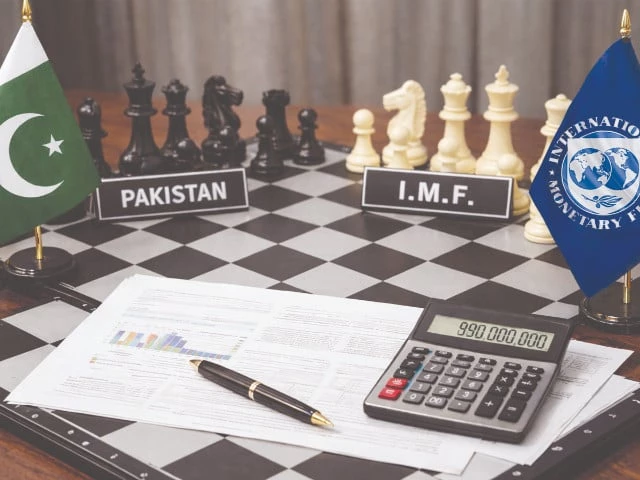
Fund warns Middle East war risks inflation and growth as Pakistan secures $1.2bn tranche deal
IMF objects to Rs1tr power subsidy. Design: Mohsin Alam
ISLAMBAD:
The International Monetary Fund (IMF) on Saturday announced a staff-level agreement with Pakistan for the release of about $1.2 billion under two loan tranches, while warning that the ongoing Middle East war could cloud the country’s economic outlook by pressuring growth, inflation and external sector stability.
The IMF said it reached the agreement only after seeking assurances that the government would strictly adhere to pre-war fiscal targets, while the central bank would raise interest rates if inflation exceeds the target range and allow exchange rate flexibility to absorb external shocks arising from the conflict.
The Fund’s assessment contrasts with projections by Pakistan’s Ministry of Finance, which has said the war would have no major economic implications.
IMF Reaches Staff-Level Agreement on the Third Review for the 37-month Extended Arrangement under the Extended Fund Facility (EFF) and the Second Review for 28-month Arrangement Under the Resilience and Sustainability Facility (RSF) – Pakistan https://t.co/hYPsALIpbn
— Ministry of Finance, Government of Pakistan (@Financegovpk) March 28, 2026
Read: IMF blocks move to control SOE chiefs
IMF Mission Chief to Pakistan Iva Petrova said the Fund had reached a staff-level agreement with Pakistani authorities on the third review under the Extended Fund Facility (EFF) and the second review under the Resilience and Sustainability Facility (RSF).
The IMF team held discussions in Karachi and Islamabad from February 25 to March 2, 2026, followed by virtual meetings. The agreement is subject to approval by the IMF Executive Board.
Upon approval, Pakistan will gain access to about $1 billion under the EFF and $210 million under the RSF, bringing total disbursements under the two arrangements to approximately $4.5 billion.
Petrova said ongoing policies had continued to strengthen the economy and rebuild market confidence.
“The conflict in the Middle East, however, casts a cloud over the outlook as volatile energy prices and tighter global financial conditions risk putting upward pressure on inflation and weigh on growth and the current account,” the IMF said. In contrast, Pakistan’s Finance Ministry has projected inflation would rise only marginally by 0.3%, remain within the target, economic growth would stay around 4%, and the current account deficit would remain within $2 billion despite global oil price shocks.
Petrova said Pakistan authorities “remain committed to pursuing sound and prudent macroeconomic policies to preserve the recent gains in macro-financial stabilization, while deepening structural reforms to accelerate growth and strengthening social protection to mitigate the impact of volatile energy prices on the most vulnerable.”
No relaxation in targets
The IMF did not ease the pre-war primary budget surplus target of 1.6% of GDP despite the State Bank of Pakistan previously indicating the goal might be difficult to achieve due to weak tax collection performance by the Federal Board of Revenue (FBR). The Fund also maintained stringent fiscal targets for the next financial year.
Petrova said authorities remained committed to ensuring a sustainable fiscal position and reducing the still high public debt burden over the medium term.
“Efforts are ongoing to meeting the FY26 budget primary surplus of 1.6% of GDP and to target an underlying primary balance of 2% of GDP in FY27, supported by measures to broaden the tax base and strengthen expenditure discipline,” she said.
She also pointed to efforts to enhance expenditure sharing between the federal and provincial governments, as Islamabad has requested provinces to share the burden of fuel subsidies, which had already risen to Rs125 billion by April 3.
Read More: IMF cuts Pakistan visit short
“Efforts are underway to enhance fiscal burden sharing between federal and provincial governments and to strengthen public financial management,” Petrova said.
The IMF stressed that steadfast implementation of fiscal reforms remains critical to achieving programme objectives. To shield vulnerable households from volatile food and fuel prices, authorities are strengthening the Benazir Income Support Programme (BISP) through inflation-adjusted cash transfers, expanded beneficiary coverage and improved payment systems.
Petrova said the State Bank of Pakistan remains committed to maintaining inflation within its target range and stands ready to raise interest rates if price pressures intensify, including due to passthrough effects from global food and fuel price volatility. Pakistan has set an inflation target of 7.5%, which the Finance Ministry believes remains achievable despite fuel price shocks.
The IMF said exchange rate flexibility should continue to serve as the primary shock absorber against spillovers from the Middle East conflict, while ensuring banks can finance imports and external payments amid potential balance-of-payments pressures. The Fund reiterated that Pakistan must achieve energy sector viability and prevent a recurrence of circular debt.
Also Read: FY27 budgeting in uncertain times
“It is critical that sustainability is maintained through timely tariff adjustments that ensure cost recovery,” Petrova said, adding that energy price subsidies should be avoided due to their high fiscal cost and distortionary effects.
The IMF also highlighted structural reforms, saying progress on state-owned enterprise reforms and the privatisation agenda remains central to reducing the state’s economic footprint and improving service delivery.
Authorities are also strengthening institutional capacity and intensifying anti-corruption efforts to promote inclusive growth and ensure a level playing field for businesses and investors.
Petrova said revenue mobilisation efforts were beginning to yield results under the FBR’s transformation plan, including stronger taxpayer audits, expanded digital invoicing and production monitoring, and improved internal governance.
The IMF is now also focusing on weaknesses in the FBR’s internal governance, signalling concerns that government efforts to strengthen the tax machinery have yet to produce fully effective results.





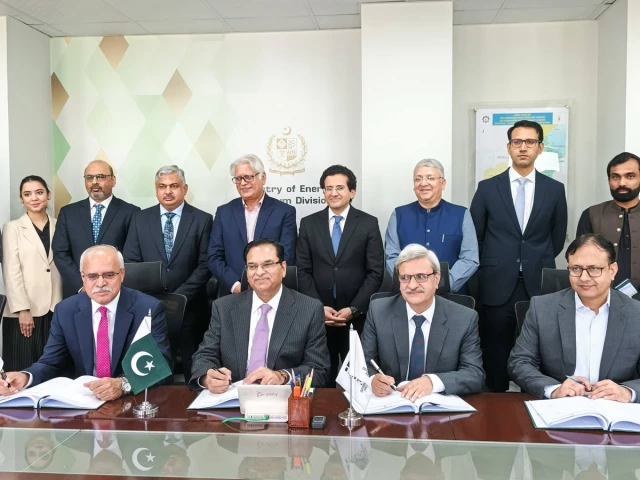


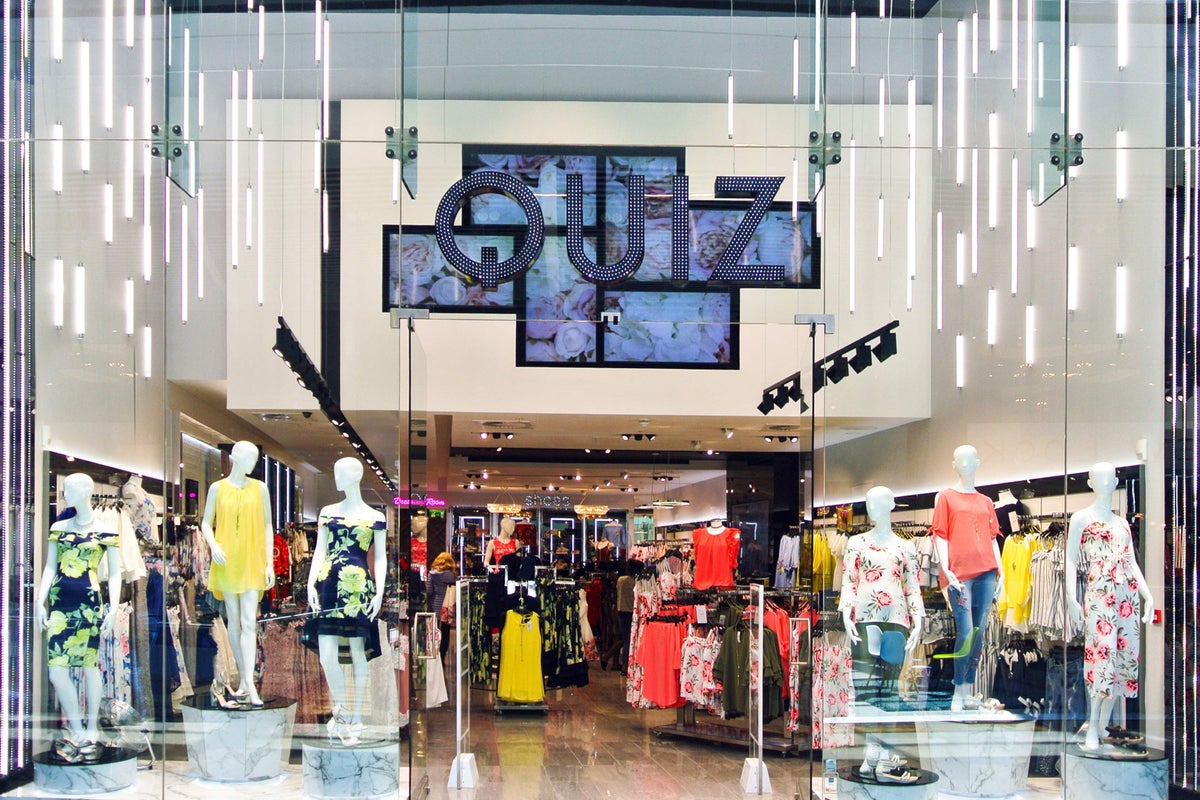
Fashion retailer Quiz is set to close its remaining 37 stores by the end of June, administrators have confirmed.
The high street chain appointed Interpath in February after a “tough start” to 2026.
Insolvency specialists announced on Thursday that a closure plan for its final outlets will be implemented over the coming weeks.
Three other stores, in Castlecourt, Belfast, Leeds, and Romford, recently shut permanently.
The precise timing for these remaining closures, and the number of staff affected, is yet to be confirmed.
Over 100 head office and warehouse jobs were put at risk when Quiz first entered administration.
It is the second time Quiz had fallen into administration in just over a year, having collapsed in February 2025 before immediately being bought in a so-called pre-pack deal by a subsidiary of the founding Ramzan family.
Quiz concessions in New Look and Matalan stores in the UK are not included in the administration and remain unaffected.
Remaining stock is being delivered to its stores, with heavy discounts of at least 60% as administrators seek to sell off as much as possible to help pay the collapsed firm’s outstanding debts.
Alistair McAlinden, head of Interpath in Scotland and joint administrator, said: “As we head into the May bank holiday weekend, we would encourage shoppers to visit their local store as we commence our final closing down sale.”
Geoff Jacobs, managing director at Interpath and fellow joint administrator, said: “We’d once again like to say a huge thank you to Quiz staff who have shown such dedication and professionalism under difficult circumstances.”
Here are the locations of the stores facing closure:
-Aberdeen, Scotland
-Basingstoke, Hampshire
-Bracknell, Berkshire
-Cardiff, Wales
-Carlisle, Cumbria
-Castleford, West Yorkshire
-Clydebank, Scotland
-Craigavon, Northern Ireland
-Derby, Derbyshire
-Dunfermline, Scotland
-Eastbourne, East Sussex
-Gateshead Metro, Tyne and Wear
-Glasgow Braehead, Scotland
-Glasgow Buchanan Galleries, Scotland
-Glasgow Fort, Scotland
-Glasgow St Enoch, Scotland
-Hanley, Staffordshire
-Hull, East Yorkshire
-Inverness, Scotland
-Irvine, Scotland
-Leicester, Leicestershire
-Livingston, Scotland
-Manchester Arndale, Greater Manchester
-Manchester Trafford Centre, Greater Manchester
-Mansfield, Nottinghamshire
-Merryhill, West Midlands
-Newry, Northern Ireland
-Newtownabbey, Northern Ireland
-Northampton, Northamptonshire
-Norwich, Norfolk
-Portsmouth, Hampshire
-Sheffield Meadowhall, South Yorkshire
-Stirling, Scotland
-Telford, Shropshire
-Thurrock Lakeside, Essex
-Warrington, Cheshire
-Watford, Hertfordshire
Business
Trump administration says new EPA rules will save you money at the supermarket. It’s not clear they will

U.S. President Donald Trump speaks during an announcement with U.S. Environmental Protection Agency (EPA) Administrator Lee Zeldin (not pictured) in the Oval Office at the White House, in Washington, D.C., U.S., May 21, 2026.
Kevin Lamarque | Reuters
President Donald Trump announced on Thursday a delay to two Biden-era EPA refrigerant rules, arguing the move will cut costs for companies and save consumers money at the grocery store.
The administration estimated that American families and businesses will save more than $2.4 billion under the new rules.
“Our actions allow businesses to choose the refrigeration systems that work best for them, saving them billions of dollars,” said EPA Administrator Lee Zeldin in a statement.
He added, “This will be felt directly by American families in lower grocery prices.”
But it was unclear Thursday whether or how companies like grocers would use those savings to make it more affordable for shoppers to fill their carts. The changes would not require grocers to take any steps to cut prices at a time when many households see their budgets stretched by soaring gas prices and years of elevated inflation.
The rules target hydrofluorocarbons, or HFCs, potent greenhouse gases commonly used in refrigeration and air conditioning systems that are widely accepted as contributors to global warming. Under the Biden administration, the EPA in 2023 finalized regulations aimed at cutting leaks and emissions from those systems, affecting industries ranging from grocery stores and food distribution to semiconductor manufacturing.
Now, the EPA is delaying compliance by revising the 2023 rule and another regulation from 2024.
The administration’s messaging appears aimed squarely at inflation-weary consumers, especially as food prices remain politically sensitive ahead of the midterm elections this fall. Grocery retailers rely heavily on refrigeration infrastructure, and compliance with the EPA rules would have required upgrades, leak detection systems and new refrigerants in some cases.
At the time the rules were put in place, the EPA argued they would ultimately save businesses and consumers $4.5 billion over time through energy efficiency and lower-cost refrigerants. Grocery and food industry groups warned the transition could cost the industry billions in upfront equipment and compliance expenses.
Large chains such as Walmart, Kroger, and Costco have already been investing in “natural refrigerant” systems for years, so the biggest operators were generally better positioned to absorb the transition. Smaller regional grocers and independent stores may feel the cost burden more acutely.
“An orderly transition of equipment reduces both capital costs and operating costs, and at the end of the day that’s good for consumers because we’re able to take that and put that into lowering prices,” said Kroger CEO Greg Foran at an event at the White House.
Still, it remains unclear how grocers would pass on cost savings to consumers. When asked at the signing, Foran said the company is “right in the middle” of passing savings on to the consumer and making sure they’re “paying the right price.”
Earlier Thursday before Trump’s policy announcement, Bloomberg News reported that Foran planned price cuts at Kroger to allow the grocer to better compete with Walmart and Costco.
Food inflation is driven by a wide range of factors, including labor, transportation, feed costs and commodity prices, and some of those expenses have risen in recent months due to the war in Iran. Refrigeration compliance costs represent a small slice of overall grocery operating expenses.

AUBURN HILLS, Mich. — Stellantis said Thursday it plans to invest 60 billion euros ($69.7 billion) under a new five-year strategic plan by CEO Antonio Filosa that also targets annual cost savings of 6 billion euros by 2028.
The plan includes putting 36 billion euros toward the company’s massive portfolio of automotive brands, with 60% of the investment expected for North America. The company expects to introduce more than 60 new vehicles and conduct major refreshes of 50 models, including all-electric vehicles, hybrids and traditional internal combustion engines.
The other 24 billion euros will be put toward global vehicle platforms and new technologies for the automaker and its products, according to the company.
Stellantis also said it plans to achieve positive free cash flow by 2028 after losing 22.3 billion euros last year with a 22 billion euro restructuring pulling back from all-electric vehicles.
The company is targeting revenue growth across its major global operations through 2030. Most notably, it’s aiming for North American revenue growth of 25%, with adjusted operating income, or AOI, of between 8% and 10% in that period. It’s also targeting 15% revenue growth and AOI of between 3% and 5% for enlarged Europe. It expects double-digit revenue increases in South America, the Middle East and Africa, with an AOI of between 4% and 6% in Asia-Pacific.
Under the plan, Stellantis will not eliminate any of its 14 automotive brands, but it will fold operations of its DS and Lancia European units into Citroen and Fiat, respectively, according to the company.
Fiat is one of four designated “global brands” alongside Jeep, Ram Trucks and Peugot. That division also includes the Pro One commercial operations. Its regional brands will include Chrysler, Dodge, Citroen, Opel and Alfa Romeo. It also owns luxury brand Maserati.

Shares of Stellantis listed in the U.S., Italy and France.
To assist in reducing costs, Stellantis plans to launch a new “STLA One” vehicle platform in 2027. The new platform is designed to bring together five different platforms into “one scalable architecture, reducing complexity and expanding coverage.” It targets achieving 20% cost efficiency, the company said.
By 2030, Stellantis targets 50% of its volume will be produced on three global platforms, with up to 70% component reuse.
Filosa — who began leading the automaker less than a year ago — and other executives are set to lay out details of the “FaSTLAne 2030” plan throughout the day Thursday during his first investor day as CEO at the company’s North American headquarters near Detroit.
Stellantis Chairman John Elkann, a scion of Fiat’s Agnelli family and CEO of Europe’s prominent holding company Exor, on Thursday called the plan “ambitious, but realistic” while outlining industry challenges as well as opportunities for the company under Filosa and his new plan.
The plan’s core pillars are “sharper management” of the brand portfolio, new investments, enhanced partnerships, an optimized manufacturing footprint, “excellence in execution” and empowerment of the company’s regions and local teams.
“What we want you to take away from today is that Stellantis, with all its assets, its capabilities, and its new strategic plan, is well positioned to succeed,” Filosa said to open the event. “You will hear from us today how we leverage our regional roots, our global scale, our partnerships and the new technologies in our journey going forward.”
Antonio Filosa, CEO of Stellantis, speaking with CNBC on May 21st, 2026.
CNBC
The company this week announced several new or expanded tie-ups that included Jaguar Land Rover for the U.S. as well as with Chinese automakers Leapmotor and Dongfeng Group, primarily for Europe and China.
As Stellantis partners with Chinese automakers, it’s also competing against them as many of the companies increase sales in Europe.
Amid such competition, Stellantis said it expects to cut European capacity by more than 800,000 units, while repurposing plants and leveraging partnerships. Filosa said the company plans to reduce production without any plant closures.
In both Europe and the U.S., Stellantis said it targets 80% plant utilization in 2030.
Filling those plants will be a variety, or a “freedom of choice,” of products, according to Stellantis. The company’s new or refreshened products are expected to include 29 battery-electric vehicles, 15 plug-in hybrid or extended-range electric vehicles, 24 hybrids and 39 mild hybrids or traditional vehicles with internal combustion engines.
“The interest of consumers around hybrids is growing, also pushed by the oil prices, and range-extended [vehicles] actually is a more customer-centric idea,” Filosa told CNBC’s Phil LeBeau.


‘Emily in Paris’ to end with season 6: Lilly Collins reacts

Meta Is in Crisis, Google Search’s Makeover, and AI Gets Booed by Graduates

All 24 "Survivor 50" castaways reflect on eliminations, historic season

-

 Entertainment1 week ago
Conan O’Brien hat tricks as Oscar host
-

 Fashion1 week ago
Italy’s Zegna Group’s Q1 growth boosted by strong organic performance
-

 Entertainment5 days ago
Where Pete Davidson, Elsie Hewitt stand after breakup: Details revealed
-
 Business1 week ago
Tui issues update on summer jet fuel shortage fears
-
 Business1 week ago
Jersey Election 2026: Cost of living concern in St Helier Central
-

 Entertainment7 days ago
Emilia Clarke recalls near-death incident while filming ‘Game of Thrones’
-
 Fashion1 week ago
Global cotton production, stocks to fall; consumption to rise: WASDE
-

 Politics5 days ago
Rising diesel costs from Iran war strain US school budgets