Connect with us

Business

Indian equities outlook: ICICI Prudential flags stable macro backdrop; warns valuations already price in optimism – The Times of India


Published

on

Indian equities outlook: ICICI Prudential flags stable macro backdrop; warns valuations already price in optimism – The Times of India


The broader macro backdrop for Indian equities remains stable heading into 2026, supported by healthier corporate balance sheets and early signs of an earnings recovery across sectors, according to ICICI Prudential Alternate Investments. However, after a long market upcycle and widespread rerating, much of the optimism on growth and profits is already reflected in stock valuations, the report cautioned.In its report titled “Outlook 2026: Beyond Narratives”, ICICI Prudential said that while the opportunity set in Indian equities continues to look attractive, market returns are likely to be more moderate going forward.It added that broad, index-led gains may give way to outcomes driven by selective stock picking rather than sweeping macro narratives.“After an extended market cycle and a rerating across many parts of the market, much of this macro and earnings optimism is already reflected in valuations,” the report said, adding that execution and company-specific fundamentals are expected to matter more than themes. “We believe going ahead, execution is likely to trump narratives, and disciplined micro research is likely to outweigh broad macro views,” it noted.Looking at the wider economy, the report said India appears to be in “good shape” as it moves deeper into the 21st century. A favourable demographic profile, with a large working-age population entering the labour force, places India in a stronger position compared with economies grappling with ageing populations.While foreign capital inflows have been lower than historical levels, the report said India’s growth prospects could still attract overseas investors over time. It also pointed out that the government’s fiscal position is on a consolidation path.Corporate financials have strengthened notably, with operating cash flows, profit after tax and investing cash flows growing at compound annual rates of 18 per cent, 15 per cent and 14 per cent respectively between FY19 and FY25, compared with single-digit growth in the earlier period, as per news agency ANI.The report also sees scope for faster economic growth alongside a normalisation in inflation. It added that improvements in geopolitics and trade ties with major partners such as the US, China and Europe could act as catalysts, potentially boosting sentiment and positioning India favourably in emerging global supply chains.


Source link

Continue Reading
Click to comment

Leave a Reply

Your email address will not be published. Required fields are marked *

Business

Slovakia threatens to cut Ukraine electricity | The Express Tribune

Published

on

Slovakia threatens to cut Ukraine electricity | The Express Tribune


Slovakia’s Prime Minister and leader of Smer party Robert Fico. PHOTO: REUTERS


BENGALURU:

Slovakia’s Prime Minister Robert Fico threatened on Saturday to cut off emergency electricity supplies to Ukraine unless Kyiv acts within two days to resume the pumping of Russian oil to Slovakia over Ukraine’s territory, cut off for nearly a month.

Slovakia, along with Hungary, is one of just two EU countries that still rely on significant amounts of Russian oil shipped via the Soviet-era Druzhba pipeline over Ukraine. Both also have leaders that have maintained close relations with Moscow, bucking a largely pro-Ukrainian European consensus.

Russian oil through the main Druzhba pipe has been cut off since January 27, when Kyiv says a Russian drone strike hit pipeline equipment in Western Ukraine. Slovakia and Hungary have become increasingly vocal this week in demanding it resume.

Slovakia, meanwhile, is also a major source of European electricity for Ukraine, needed as Russian attacks have damaged its grid. Energy sector experts say Slovakia provided 18% of record-setting Ukrainian electricity imports last month.

“If oil supplies to Slovakia are not resumed on Monday, I will ask SEPS, the state-owned joint-stock company, to stop emergency electricity supplies to Ukraine,” Fico said in a post on X.

Ukraine has proposed alternative transit routes to ship oil to Europe while emergency pipeline repair works are under way. In a letter seen by Reuters, the Ukrainian mission to the EU proposed shipments through Ukraine’s oil transportation system or a maritime route, potentially including the Odesa-Brody pipeline linking Ukraine’s main Black Sea port to the EU.


Source link

Continue Reading

Business

US Supreme Court tariff ruling adds uncertainty to global trade outlook, offers limited relief: Analysts – The Times of India

Published

on

US Supreme Court tariff ruling adds uncertainty to global trade outlook, offers limited relief: Analysts – The Times of India


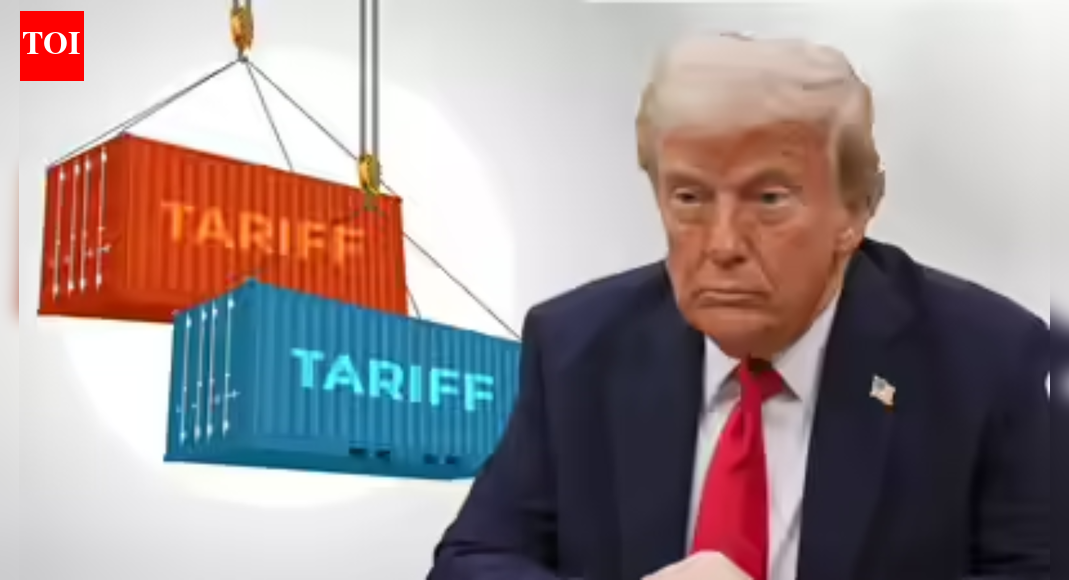
The US Supreme Court’s decision striking down tariffs imposed by President Donald Trump has done little to ease pressures on the global economy, with analysts warning that uncertainty over future trade policy may instead intensify. Economists said the ruling, while limiting Trump’s use of tariffs under emergency powers, is unlikely to change the broader trajectory of global trade tensions as Washington explores alternative ways to impose duties, reported Reuters.

Trump Raises Worldwide Tariffs From 10% To 15% A Day After Supreme Court Ruling

“In general, I think it will just bring in a new period of high uncertainty in world trade, as everybody tries to figure out what the U.S. tariff policy will be going forward,” said Varg Folkman, analyst at the European Policy Centre think tank. “In the end it’s going to look pretty much the same.”Following the judgment, Trump announced new global tariffs of 10 per cent for an initial 150-day period and acknowledged uncertainty over whether funds collected under the annulled levies would be refunded.Analysts said multiple questions remain unresolved, including what new tariffs could emerge and whether countries that negotiated agreements with the US to soften tariff impacts may reopen those arrangements.Economists at ING bank said, as quoted Reuters, the ruling does not mark an end to tariff-driven trade policy. “The scaffolding has come down, but the building remains under construction. No matter how today’s ruling reads, tariffs are here to stay.”The court’s decision applies only to tariffs introduced under the International Emergency Economic Powers Act (IEEPA), legislation designed for national emergencies. Those levies are estimated to have generated more than $175 billion in revenue.According to Global Trade Alert, the ruling reduces the trade-weighted average US tariff rate from 15.4 per cent to 8.3 per cent. Countries facing higher tariffs — including China, Brazil and India — could see double-digit percentage-point reductions, though duties remain elevated.Countries that struck bilateral deals with Washington to mitigate tariff impacts are now expected to assess whether the ruling offers grounds to renegotiate terms.Bernd Lange, chair of the European Parliament’s trade committee, said lawmakers would evaluate the implications while moving toward ratification of the EU-US trade pact.“The era of unlimited, arbitrary tariffs … might now be coming to an end,” Lange said on X. “We must now carefully evaluate the ruling and its consequences.”Britain, meanwhile, said it expects its preferential trading arrangement with the United States — including a baseline 10 per cent tariff — to remain unchanged.Despite years of tariff disruptions, the global economy has broadly held up. A Federal Reserve Bank of New York report indicated that much of the tariff burden has been absorbed by US consumers.The International Monetary Fund projected global growth at a “resilient” 3.3 per cent in 2026 in its latest World Economic Outlook update.China reported a record trade surplus of nearly $1.2 trillion in 2025, supported by stronger exports to markets outside the United States as producers adapted to tariff pressures.Some countries may therefore opt to retain existing bilateral deals rather than risk renewed instability, Folkman said, referring to the uncertainty triggered by Trump’s “reciprocal” tariffs in 2025.However, Niclas Poitiers, research fellow at economic think tank Bruegel, told Reuters political uncertainties surrounding the EU-US trade agreement remain significant.“There could be circumstances in which the deal unravels,” he noted.


Source link

Continue Reading

Business

Donald Trump ups tariffs day after Supreme Court ruling against him

Published

on

Donald Trump ups tariffs day after Supreme Court ruling against him


The president will increase import taxes to 15% on most products coming into the US from Tuesday.


Source link

Continue Reading

Trending