

Politics
Iran still reviewing US war-end proposal, dismisses American deadline pressure

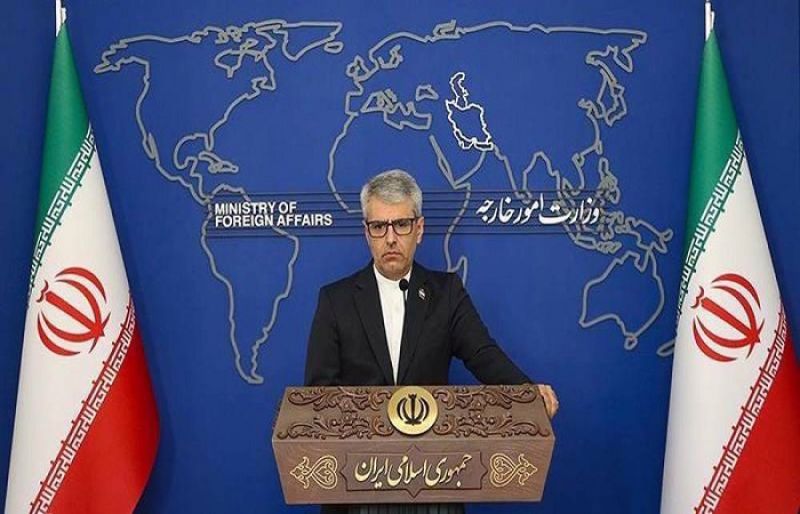
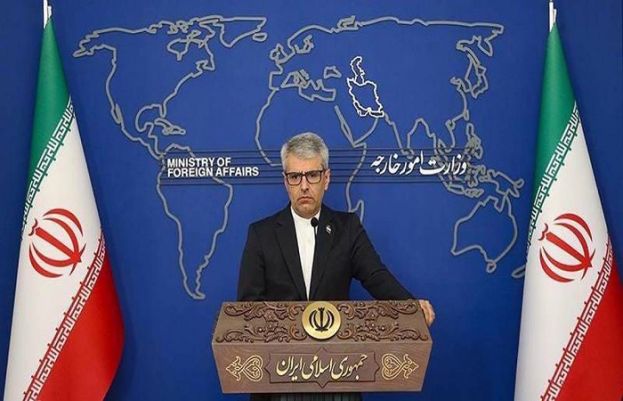
The spokesperson for Iran’s Foreign Ministry says Tehran’s response to a proposal by the United States to end the war against the Islamic Republic is still under review, paying no heed to the Americans’ deadlines.
“The [US] proposal is still being reviewed, and once we reach a conclusion, we will announce it,” Esmaeil Baghaei told reporters on Friday.
Regarding some reports that the Americans have set a deadline for Iran to respond to the plan, he once again affirmed that the matter is still being examined.
“We are doing our own job and pay no attention to such deadlines,” Baghaei emphasized.
The Iranian spokesperson’s remarks came after US Secretary of State Marco Rubio said on Friday that Washington expected to receive Iran’s response to a US proposal later in the day.
The US and Israel initiated an unprovoked war of aggression against Iran since February 28 after assassinating Leader of the Islamic Revolution Ayatollah Seyyed Ali Khamenei and several high-ranking military commanders.
A Pakistani-mediated ceasefire was brokered on April 8, but subsequent talks failed to turn into an agreement due to Washington’s excessive demands.
Iranian officials have repeatedly criticized the United States for its approach to talks as the White House seeks to impose conditions rather than engage in genuine give-and-take.
In a Wednesday post on X, Baghaei elaborated on Tehran’s understanding of what negotiations entail, citing international law.
The concept of talks “needs ‘good faith’, then, meaning that ‘negotiations’ is not ‘disputation’; nor is it ‘dictation’, ‘deception’, ‘extortion’ or ‘coercion’,” he explained.
On the same day, Iran’s Parliament Speaker Mohammad Baqer Qalibaf dismissed certain reports about a supposed impending arrangement between Tehran and Washington, describing them as misleading and part of recurring fake media narratives originating in the United States.
In a post on X, Qalibaf referred to allegations published by the US-based outlet Axios regarding such an arrangement, ironically describing them as “Operation Fauxios.”
He suggested that the circulation of such reports reflected a routine pattern in US media coverage, particularly stories attributed to unnamed sources that Iranian officials have repeatedly rejected as unfounded and have later been proven invariably wrong.


Airlines must not charge customers extra fuel fees after they have already bought tickets, the EU warned on Friday, as the aviation sector feels the pain from high energy prices because of the Middle East war.
“Airlines may adapt their published fares to the situation, but adding a fuel surcharge to a ticket after it has been bought cannot be justified,” EU spokesperson Anna-Kaisa Itkonen told reporters in Brussels.
Any changes post-booking can “raise issues under the EU’s unfair commercial practices”, she added.
In a document published on Friday on the energy crisis affecting the aviation sector, the EU said “any retroactive change of the price is excluded”.
“Airlines may not include terms and conditions which would allow them to increase the price of the ticket above what is advertised at the time of purchase simply because fuel was more expensive than they had accounted for,” the European Commission said.
The only exception is for package holidays if the seller has made it clear in the contract there could be a possibility of fuel-related changes to the costs.
In such cases, an increase of up to 8% is allowed, but if it is higher, the customer can accept or they have the right to cancel their booking.
Spanish low-cost carrier Volotea has been criticised in France where it is under investigation after demanding fuel surcharges from customers because of the energy shock from the war.
Gilles Gosselin, the airline’s France director, has defended the measure.
“The legality of our system has been confirmed by three independent law firms specialising in air transport and consumer law. The measure is transparent, it is temporary, and it works both ways”, up and down, Gosselin told AFP in France.
Politics
US destroyers flee Strait of Hormuz after massive Iranian missile and drone barrage: IRGC Navy
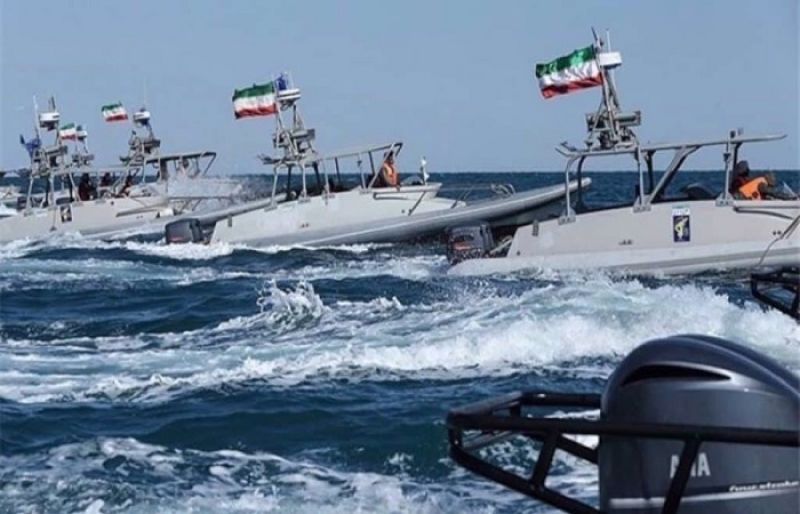
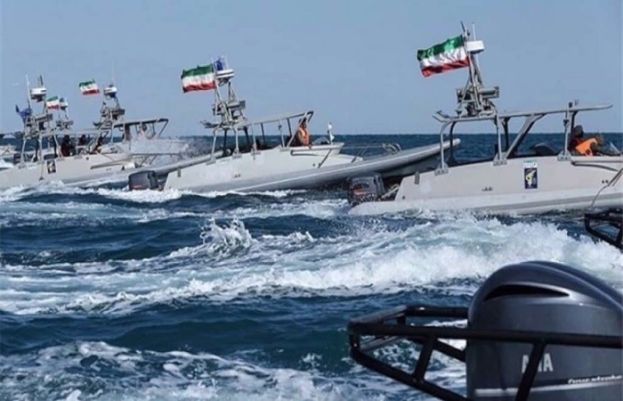
The Islamic Revolution Guards Corps (IRGC) Navy says its forces inflicted significant damage on US naval assets in a large-scale combined operation on Thursday evening, forcing three American destroyers to flee the Strait of Hormuz.
In a statement, the commander of the IRGC Navy noted that the operation was launched in response to two provocative actions by the US military.
The first was a violation of the ceasefire involving an attack on an Iranian oil tanker near the port of Jask, which was followed by the approach of US Navy destroyers toward the strategic Strait of Hormuz despite clear warnings against it.
According to the commander, Iranian forces responded to the US military adventurism with “highly extensive and precise combined operation.”
The retaliatory operation involved a variety of advanced weaponry, including anti-ship ballistic missiles, anti-ship cruise missiles, and destructive drones.
He added that the weapons were equipped with high-explosive warheads and were fired directly at the enemy destroyers.
The commander stated that intelligence monitoring conducted by Iranian forces has since confirmed “significant damage” to the American military assets as a result of the strike.
Facing the devastating and precise Iranian firepower, the IRGC Navy commander said, three aggressor enemy vessels “fled the Strait of Hormuz area immediately.”
In a separate statement, a spokesperson for the Khatam al-Anbiya Central Headquarters said on Thursday that Iranian forces gave an immediate response to a series of US military aggressions in the strategic waters of the Strait of Hormuz.
Ebrahim Zolfaghari noted that the “aggressive, terrorist, and outlaw” US military, in violation of a ceasefire, targeted an Iranian oil tanker.
The spokesperson warned that the “criminal and aggressive” US and its allies must recognize that the Islamic Republic of Iran will, as it has in the past, deliver a crushing response to any act of aggression or violation “powerfully and without the slightest hesitation.”
These developments come amid continued US maritime banditry and piracy in the strategic waterway that remains closed to US and allied vessels.
Politics
Iran says oil output uninterrupted as tankers crush US blockade, Tehran eyes new revenue from Hormuz
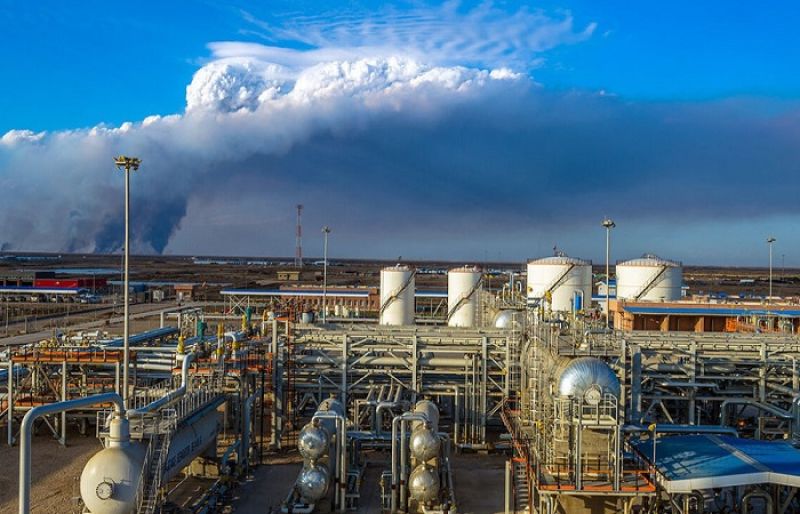
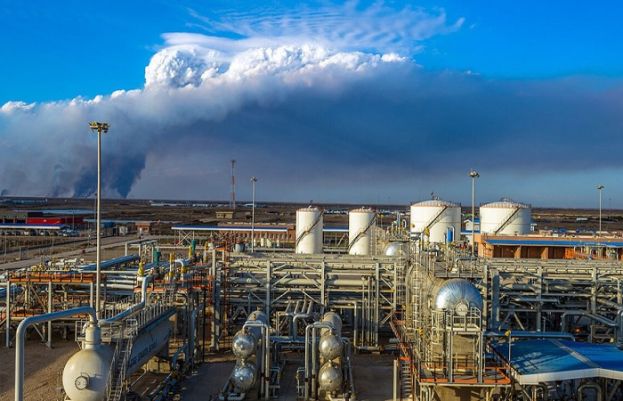
Iran says its oil production and exports continued without disruption during the 40 days of the US-Israeli aggression, while officials explore new revenue streams tied to tighter control of the Strait of Hormuz.
Iran’s oil minister said the country maintained steady crude production throughout the recent 40‑day war, which began on February 28, even as some energy facilities came under attack and tensions escalated around the strategic Strait of Hormuz.
Petroleum Minister Mohsen Paknejad said the sector continued operating despite the war. “During the 40 days of war, we practically had no reduction in crude oil production and our exports continued properly and there was no problem in this regard,” he said.
Paknejad praised workers across the industry, calling their performance “very brilliant” during the period.
He acknowledged that several facilities sustained damage from strikes by the American‑Zionist enemy, but said repair work was launched immediately.
According to the minister, reconstruction is progressing quickly so that the affected infrastructure can return to service on schedule and ensure the continuation of energy supplies.
The comments come amid heightened tensions in the Strait of Hormuz, a critical maritime corridor through which a significant share of the world’s energy trade passes.
Iran shut down the strait to its enemies and their allies after the unprovoked US‑Israeli aggression. Iranian authorities began enforcing much stricter controls last month following US President Donald Trump’s announcement of a blockade targeting Iranian vessels and ports.
Tehran says the measures violate the terms of a Pakistan‑brokered ceasefire that took effect on April 8 and was later extended unilaterally by Washington.
Despite the blockade, shipping activity linked to Iranian crude appears to be continuing.
Tanker tracking service TankerTrackers reported on Friday that three cargo‑empty tankers belonging to the National Iranian Tanker Company had crossed the US Navy blockade line after returning to Iran through Pakistan’s Exclusive Economic Zone.
Combined, the vessels have the capacity to transport roughly five million barrels of Iranian crude oil, it added.
Meanwhile, Iranian officials are examining ways to generate new income from the strategic waterway.
According to Ali Khezrian, a member of parliament’s National Security and Foreign Policy Commission, the economy minister recently briefed the cabinet on projected revenue streams from managing traffic in the Strait of Hormuz.
The report examined the economic potential of the corridor, one of the region’s most important geopolitical and commercial chokepoints.
Although no formal details have been released, domestic speculation has focused on possible earnings from transit fees, maritime services and traffic management.
Analysts cited by Iranian media say that, with new legal and operational mechanisms, Tehran could convert part of the strait’s economic capacity into stable foreign‑currency income.
Iran maintains that the waterway will remain closed to its adversaries as long as the US blockade of Iranian ports continues, describing the restrictions as maritime piracy and a war crime.


US’ Unifi improves Q3 profitability despite lower sales

London stocks drift lower as Middle East tension simmers

NBA Draft prospect says he thought he was going to die from cramping caused by creatine

-
 Politics5 days ago
Iran weighs US reply delivered via Pakistan as Trump signals opposition to deal terms
-
 Business1 week ago
PSX plunges over 4,800 points | The Express Tribune
-

 Fashion7 days ago
US’ J.Jill, Inc. appoints Kimberly Wallengren as CMO
-

 Tech1 week ago
Almost half of UK businesses hit by cyber attacks | Computer Weekly
-

 Tech1 week ago
This Indigenous Language Survived Russian Occupation. Can It Survive YouTube?
-
 Business1 week ago
Government hikes jet fuel prices by 5% for international airlines – The Times of India
-

 Fashion1 week ago
Canada’s Lululemon appoints Esi Eggleston Bracey to board of directors
-

 Entertainment1 week ago
David Allan Coe, country singer who wrote “Take This Job and Shove It,” dies at age 86