

Business
Iranian currency Rial hits 1.58 million per US dollar: Economy in freefall after war, civilian sector collapses – The Times of India

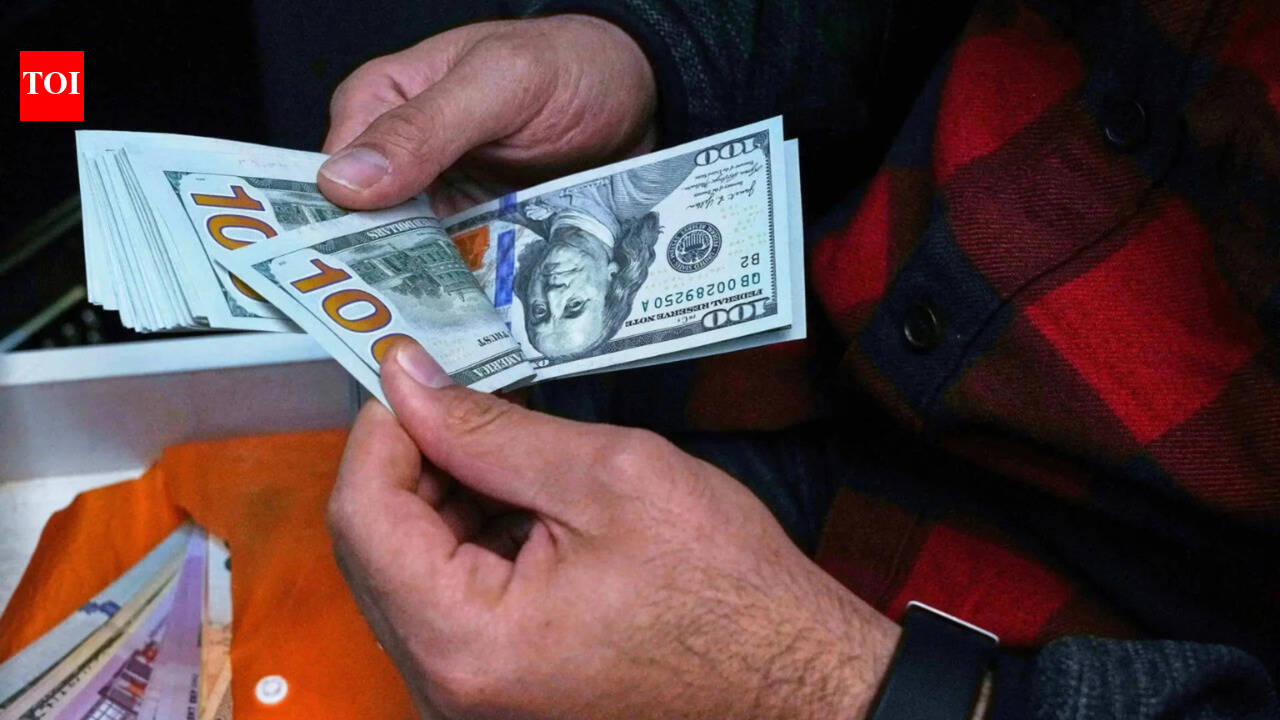
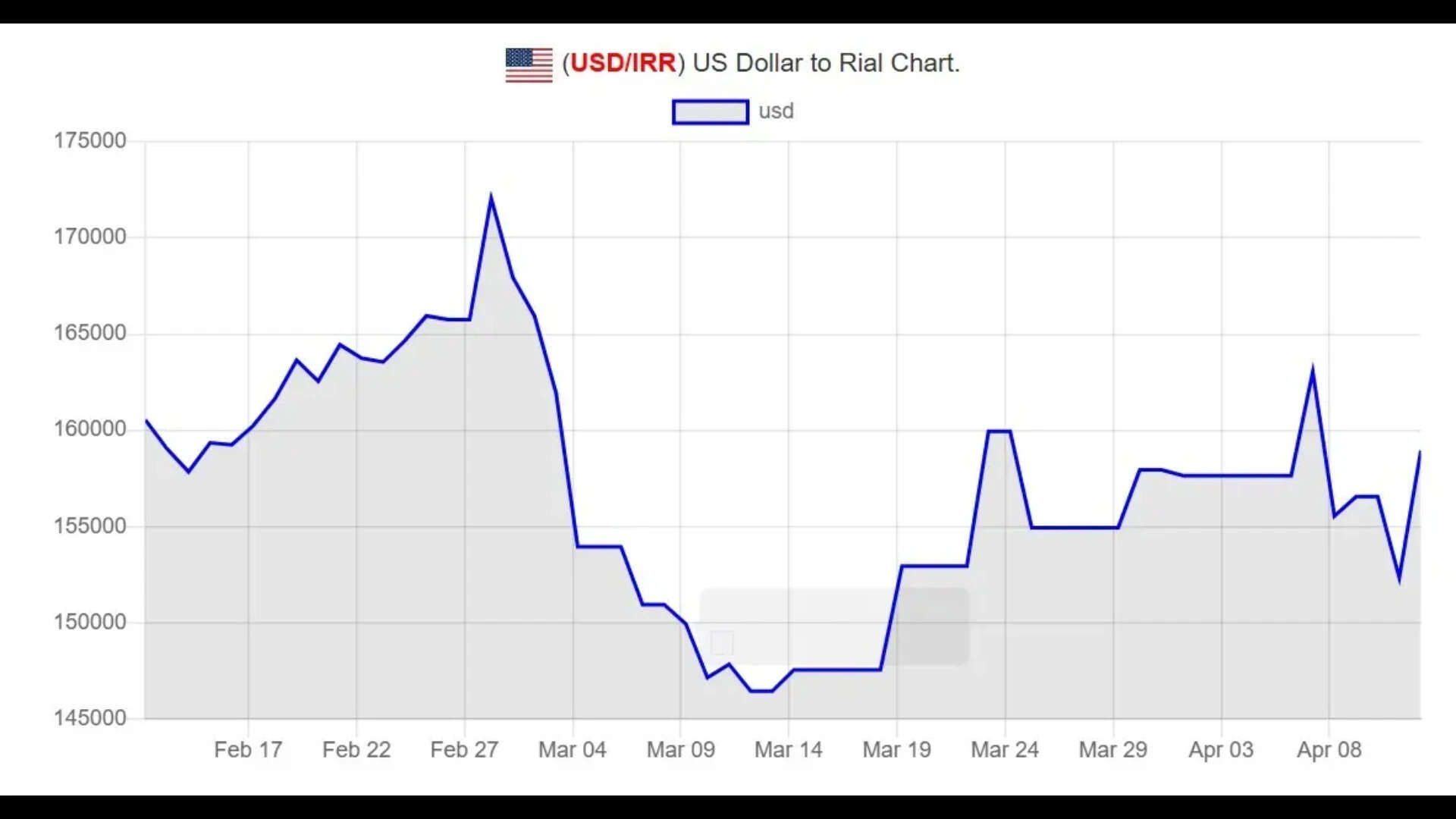
Iran’s currency has plunged sharply in the free market, with rates hovering around 15,69,410–15,80,000 Rial per US dollar, underlining deepening stress in an economy battered by war, sanctions and internal disruption, according to Bonbast data.Average rates stood at 156,9410 (sell) and 15,68,410 (buy), with extremes ranging between 14, 64,500 and 17,20,500 Rial, signalling heightened volatility in the parallel market.
–
Blockade threat deepens uncertainty
The economic strain is intensifying alongside fresh geopolitical escalation. The US military said it would begin a blockade of all Iranian ports after talks between the warring sides in Pakistan collapsed, even as Iran warned it would treat such action as piracy, AFP reported.US President Donald Trump said the blockade would target the strategic Strait of Hormuz after Vice President JD Vance left negotiations in Islamabad without a deal. The US military said the move would apply to all ships entering or leaving Iranian ports from 1400 GMT, though it remained unclear how it would be enforced.
Economy hit despite ‘strategic victory’ narrative
Iranian authorities have portrayed the truce with the US and Israel as a strategic success, but the country has emerged battered, with widespread job losses, surging prices and large-scale infrastructure damage, Reuters reported.Factories, power plants, railways, airports and bridges have been hit, while trade ties with Gulf states — a key economic channel — have been severed, possibly for years.Even as Iran appears emboldened regionally after asserting control over energy flows, it faces mounting internal pressures that could prove more destabilising than external military action.
Sanctions relief seen as critical
Interviews with political insiders, business owners and analysts point to an economy nearing collapse, with leaders increasingly concerned about a poorer and uncertain future, Reuters reported.Officials regard the economy as the country’s “Achilles heel”, a political insider was quoted as saying, amid fears that worsening conditions could trigger fresh nationwide protests similar to those earlier this year.Any comprehensive peace agreement would need to lift sanctions and release frozen funds, without which authorities may struggle to meet payroll obligations or rebuild damaged infrastructure, an insider told Reuters.“We can’t really see the extent of damage and blowback inside Iran. But on any metric it’s a fiasco for Iran – there’s no money and the infrastructure is shot,” said Ali Ansari, a professor of history at St Andrews University.“Closing Hormuz was the option of last resort… the cost for Iran in the medium to long term is going to be absolutely enormous,” he added.
Industries crippled, supply chains disrupted
The scale of damage suggests major industrial facilities could take months or years to repair, with officials warning the country “will face a disaster” if sanctions are not lifted, Reuters reported.Strikes have hit key production centres including the South Pars gas field and petrochemical units, while steel plants in Khuzestan and Isfahan have faced shutdowns affecting thousands of workers, Iranian press reports indicated.The disruption has cascaded across supply chains, forcing dependent industries to halt operations and pushing unemployment higher, an official said.Economic ties with Gulf countries– particularly the UAE–have also been strained, with one official saying the conflict had created “a huge trust gap” that could last for decades.
Prices surge, jobs vanish
On the ground, inflation has accelerated sharply, with some prices rising by as much as 40% since the war began, Reuters reported.Amir, a resident of Tehran, said the price of a basic food item jumped from 700,000 rials to 1,000,000, while a cancer treatment tablet that earlier cost three million rials surged to 180 million rials, AFP reported.Businesses across sectors have been forced to shut. Arash, a clothing factory owner in Tabriz, said he halted production, leaving 12 employees without work.“Even now I don’t know when I’ll be able to reopen. It all depends on when this really comes to an end,” he said.Mass layoffs have hit construction, retail and services, while communication restrictions have disrupted e-commerce and digital businesses, AFP reported.“I’m honestly really scared about our future, especially economically… Things are a disaster right now,” a finance professional in Isfahan said, describing the situation.
Banking stress, inflation risks mount
Iran’s banking system, already fragile before the conflict, faces further strain as borrowers struggle to repay loans, AFP reported.Adnan Mazarei, a former IMF official, warned the sector may require additional rescues, which could force the central bank to print money, adding to inflationary pressures.Annual inflation stood at 47.5% in February, with currency depreciation, sanctions and economic mismanagement compounding the impact of war damage.Some estimates suggest the conflict could shrink the economy by as much as 10% this year, with any gains from higher oil prices likely to benefit state-linked entities rather than the wider population, analysts noted.Despite the turmoil, essential goods remain available and businesses continue to function in many areas, though consumers are cutting spending amid uncertainty, Reuters reported.The government has increased spending to support displaced populations and repair infrastructure, but officials caution that public patience could erode once the immediate conflict subsides.With currency volatility, inflation, job losses and geopolitical risks converging, Iran’s economy faces a prolonged and uncertain recovery path.
Business
UP hikes minimum wages across categories amid Noida protest: What workers will now earn – The Times of India
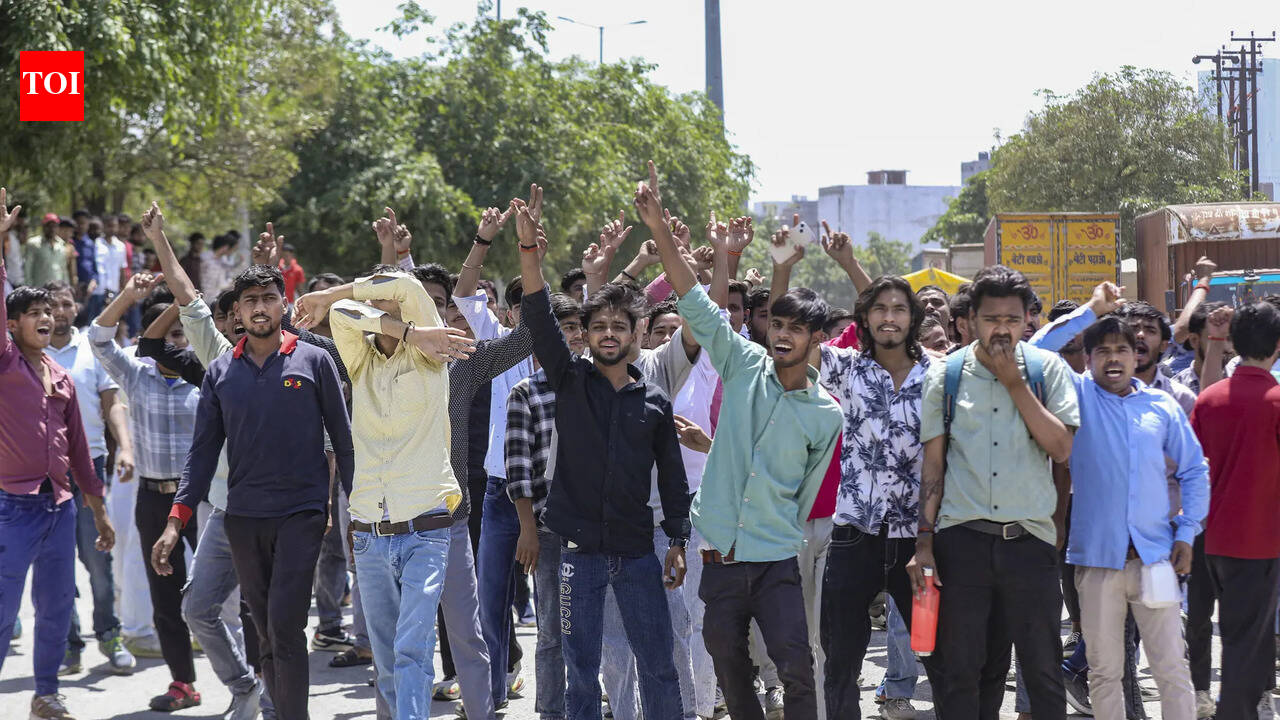
The Uttar Pradesh government on Tuesday approved an interim hike of around 21% in minimum wages for workers in Gautam Buddh Nagar and Ghaziabad, following large-scale protests by thousands of factory workers in Noida. The fresh minimum wage structure introduced across worker categories, will be taking effect retrospectively from April 1. The agitation, which had been intensifying over several days, saw an estimated 40,000 to 45,000 workers assemble at nearly 80 to 83 locations across the Gautam Buddh Nagar commissionerate, including key industrial hubs such as Sector 62, Phase-2, Sector 63, Sector 60, Sector 84 and parts of Greater Noida. The revised wages were finalised by the high-powered committee and received approval late on Monday night. Gautam Buddh Nagar District Magistrate Medha Roopam said, “The wage increase has been done by the high-powered committee… The decision was approved by CM UP late last night.”
Breakdown: Who gets what
Gautam Buddh Nagar and GhaziabadThese regions have seen the sharpest revision:
- Unskilled workers will now be paid Rs 13,690 per month, up from Rs 11,313.
- Semi-skilled workers will receive Rs 15,059.
- Skilled workers will earn Rs 16,868 per month.
Other municipal corporation areas
- The new monthly wages stand at Rs 13,006 for unskilled workers.
- Semi-skilled workers will now earn Rs 14,306 every month.
- Skilled workers will be paid Rs 16,025.
In other districts
- Unskilled workers will now get Rs 12,356 per month.
- Semi-skilled workers will earn Rs 13,591.
- Skilled workers will see Rs 15,224 per month.
Additionally, Uttar Pradesh CM Yogi Adityanath has urged employers to ensure timely wage payments, provide appropriate overtime compensation, and guarantee weekly offs, bonuses and social security benefits, while also maintaining safe working conditions, especially for female workersThe wage revision comes after widespread protests by factory workers in Noida on Monday, where thousands raised demands for better pay and working conditions. Clashes broke out in parts of the district during the demonstrations, after which the government set up a committee to step in and facilitate discussions between workers and employers.The government said that it had assessed all feedback and objections before finalising the revision, aiming for the “balanced and practical” outcome.As per the official statement, the committee is working to resolve the issue through dialogue and coordination while considering measures to address industries dealing with global headwinds, including rising input costs and falling exports, even as workers’ demands on wages, overtime, safety and working conditions remain “relevant and important.”It further added that an interim wage revision linked to indexation is under consideration, and that the process for final wage determination will be taken up based on recommendations of a wage board to be formed soon.At the same time, the government rejected as “fake and misleading” social media claims suggesting a uniform minimum wage of Rs 20,000 per month, clarifying that no such order has been issued and that work on fixing a national “floor wage” is still underway at the central level.

Crude prices fall back below $100 a barrel as markets hope an agreement can be reached between the two sides.
Source link
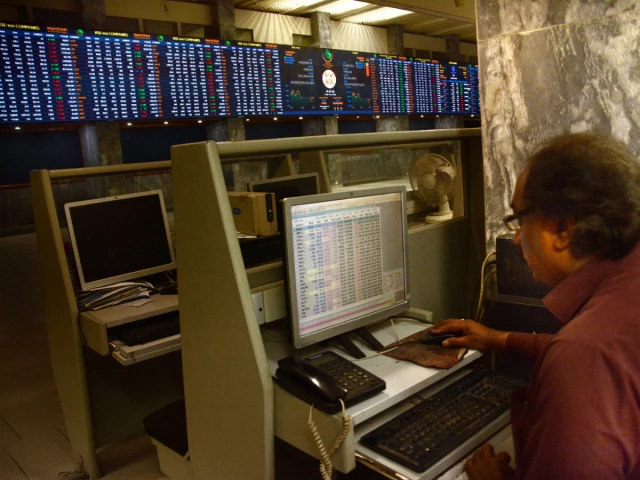
Broad-based rally fuelled by de-escalation hopes as investors turn optimistic about global peace
KARACHI:
The Pakistan Stock Exchange (PSX) opened on a distinctly bullish note as a renewed whisper of global calm set the tone for trading on Tuesday. The benchmark KSE-100 Index surged sharply in early hours, reflecting a wave of optimism among investors. At 9:39am, the index was hovering around 164,322.07, with gains of 3,730.74 points or 2.32%. It was then trading at 164,782.58, advancing with 4,191.25 points, or 2.61% at 12:34pm.
The rally follows growing expectations of a possible resumption of diplomatic talks between the United States and Iran, reviving hopes of de-escalation in a conflict that has shaken global financial markets.
The shift in sentiment comes in stark contrast to the previous session, where the market endured heavy losses amid failed negotiations and a spike in oil prices, triggering widespread panic selling across sectors.
Today, however, investors appear to be pricing in a different narrative – one where diplomacy may yet prevail. The prospect of renewed dialogue has eased concerns over supply disruptions and runaway energy prices, both critical variables for Pakistan’s import-heavy economy.
Read: PSX plunges over 6,600 points as US-Iran talks end without deal
Early gains were broad-based, led by index-heavy sectors such as automobile assemblers, cement, commercial banks, fertiliser, oil and gas exploration companies, OMCs, power generation and refinery, as participants moved to rebuild positions after the recent sell-off.
The sharp rebound underscores the market’s sensitivity to geopolitical signals, where even tentative progress towards peace can ignite strong bullish momentum.
Despite the upbeat start, analysts caution that volatility may persist, with much depending on whether diplomatic efforts translate into concrete outcomes. “Investors are optimistic about the likely resumption of talks between the US and Iran,” AKD Securities Director Research Mohammed Awais Ashraf told The Express Tribune.
Timely affirmation from Saudi Arabia and Qatar to bridge the gap in external financing to be created by the payment of UAE $3.5 billion this month and higher imports due to elevated oil prices have also helped to uplift the sentiment, he added. This is also likely to help in the timely approval of a $1.2 billion disbursement from the International Monetary Fund (IMF) after the approval of its executive board, Ashraf predicted.


North India cotton yarn prices steady amid slow demand
UP hikes minimum wages across categories amid Noida protest: What workers will now earn – The Times of India

Blessing Muzarabani banned for two editions of PSL

-

 Fashion7 days ago
India’s exports face reset as EU links trade to carbon metrics: EY
-

 Entertainment6 days ago
Queen Elizabeth II emotional message for Archie, Lilibet sparks speculation
-

 Tech6 days ago
As the Strait of Hormuz Reopens, Global Shipping Will Take Months to Recover
-

 Tech6 days ago
Azure customers up in arms over ‘full’ UK South region | Computer Weekly
-

 Entertainment1 week ago
Lamar Odom shocking response to Khloé Kardashian account of his overdose
-

 Sports1 week ago
With Messi goal, Inter Miami open new stadium with dream moment
-

 Tech5 days ago
This AI Button Wearable From Ex-Apple Engineers Looks Like an iPod Shuffle
-

 Fashion6 days ago
CII submits 20-pt agenda to Indian govt to back firms hit by Iran war