

Tech
Is your ultra-HD TV worth it? Scientists measure the resolution limit of the human eye


Is your ultra-high-definition television really worth it? Do you need a 4K or an 8K screen to get the best viewing experience at home?
According to researchers at the University of Cambridge and Meta Reality Labs, the human eye has a resolution limit: in other words, there are only so many pixels the eye can see. Above this limit, a screen is giving our eyes more information than they can detect.
To calculate the resolution limit, the researchers conducted a study that measured participants’ ability to detect specific features in color and grayscale images on a screen, whether looking at the images straight on or through their peripheral vision, and when the screen was close to them or further away.
The precise resolution limit depends on a number of variables, including the size of the screen, the darkness of the room, and the distance between the viewer and the screen. However, for an average-size UK living room, with 2.5 meters between the TV and the sofa, a 44-inch 4K or 8K TV would not provide any additional benefit over a lower resolution Quad HD (QHD) TV of the same size.
The researchers have also developed a free online calculator where users can enter the size of their room and the dimensions and resolution of their TV to determine the most suitable screen for their home.
Their results are reported in the journal Nature Communications.
Any consumer buying a new TV is bombarded with technical information from manufacturers, all trying to persuade them that the display resolution of their screens—whether Full HD, 4K or 8K—offers them the best viewing experience.
And display resolution is considered equally important for the many other screens we use, on our phones or computers, whether we’re using them to take pictures, watch films or play video games, including games in virtual or augmented reality. Even car manufacturers are offering higher and higher resolutions for in-car information displays and satnav screens.
“As large engineering efforts go towards improving the resolution of mobile, AR and VR displays, it’s important to know the maximum resolution at which further improvements bring no noticeable benefit,” said first author Dr. Maliha Ashraf from Cambridge’s Department of Computer Science and Technology.
“But there have been no studies that actually measure what it is that the human eye can see, and what the limitations of its perception are.”
“If you have more pixels in your display, it’s less efficient, it costs more and it requires more processing power to drive it,” said co-author Professor Rafał Mantiuk, also from Cambridge’s Department of Computer Science and Technology.
“So we wanted to know the point at which it makes no sense to further improve the resolution of the display.”
The researchers created an experimental set-up with a sliding display that allowed them to measure exactly what the human eye can see when looking at patterns on a screen. Instead of measuring the specifications of a particular screen, they measured pixels per degree (PPD): a measurement of how many individual pixels can fit into a one-degree slice of your field of vision.
Measuring PPD helps answer a more useful question than “how high is the resolution of this screen?” Instead, it answers the question “how does this screen look from where I’m sitting?”
The widely accepted 20/20 vision standard, based on the Snellen chart that will be familiar to anyone who has ever had their vision checked, suggests that the human eye can resolve detail at 60 pixels per degree.
“This measurement has been widely accepted, but no one had actually sat down and measured it for modern displays, rather than a wall chart of letters that was first developed in the 19th century,” said Ashraf.
Participants in the study looked at patterns with very fine gradations, in shades of gray and in color, and were asked whether they were able to see the lines in the image. The screen was moved towards and away from the viewer to measure PPD at different distances. PPD was also measured for central and peripheral vision.
The researchers discovered that the eye’s resolution limit is higher than previously believed, but that there are important differences in resolution limits between color and black-and-white. For grayscale images viewed straight on, the average was 94 PPD. For red and green patterns, the number was 89 PPD, and for yellow and violet, it was 53 PPD.
“Our brain doesn’t actually have the capacity to sense details in color very well, which is why we saw a big drop-off for color images, especially when viewed in peripheral vision,” said Mantiuk.
“Our eyes are essentially sensors that aren’t all that great, but our brain processes that data into what it thinks we should be seeing.”
The researchers modeled their results to calculate how the resolution limit varies across the population, which will help manufacturers make decisions that are relevant for the majority of the population: for example, designing a display which has retinal resolution for 95% of people rather than an average observer.
Based on this modeling, the researchers developed their online calculator, which enables people to test their own screens or help inform future buying decisions.
“Our results set the north star for display development, with implications for future imaging, rendering and video coding technologies,” said co-author Dr. Alex Chapiro from Meta Reality Labs.
More information:
Resolution limit of the eye: how many pixels can we see?, Nature Communications (2025). DOI: 10.1038/s41467-025-64679-2
Citation:
Is your ultra-HD TV worth it? Scientists measure the resolution limit of the human eye (2025, October 27)
retrieved 27 October 2025
from https://techxplore.com/news/2025-10-ultra-hd-tv-worth-scientists.html
This document is subject to copyright. Apart from any fair dealing for the purpose of private study or research, no
part may be reproduced without the written permission. The content is provided for information purposes only.












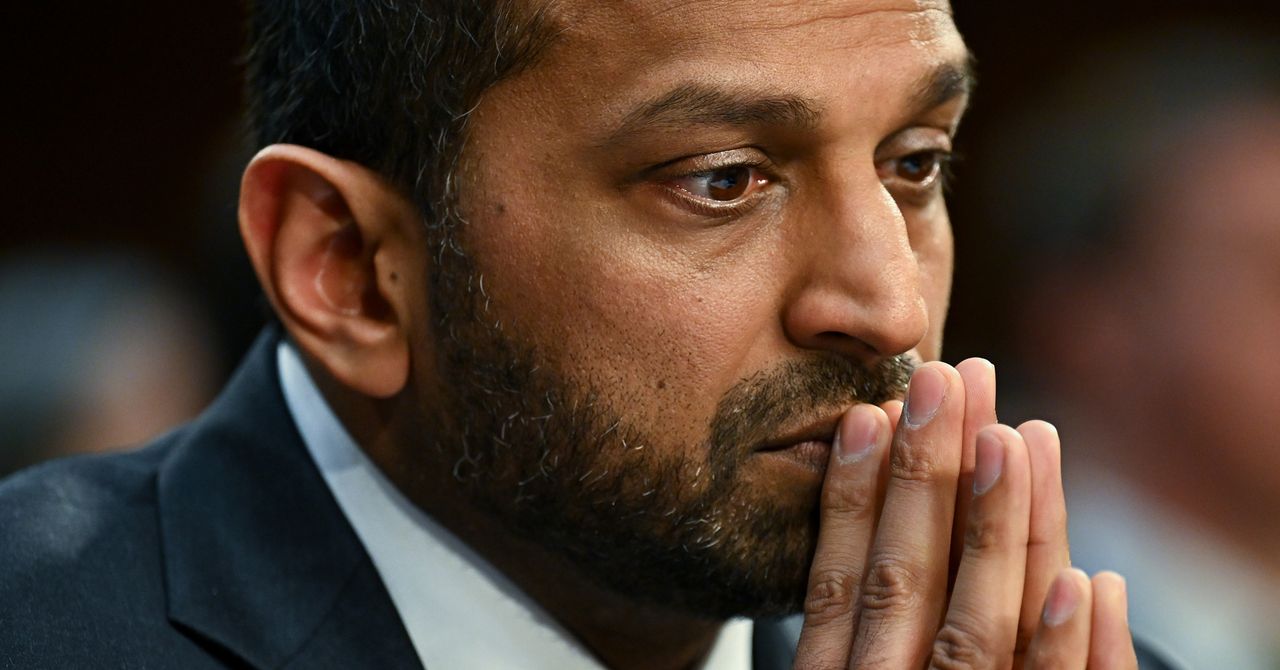
Handala’s second claim, however—that it hacked the FBI—seems, for now, to be fiction. All evidence points to Handala having breached Patel’s older, personal Gmail account. Widely believed to be a “hacktivist” front for Iran’s intelligence agency the MOIS, Handala suggested on its website that the emails contained classified information, but the messages initially reviewed by WIRED didn’t appear to be related to any government work. TechCrunch did find, however, that Patel appears to have forwarded some emails from his Justice Department email account to his Gmail account in 2014.
Handala, which cybersecurity experts have described to WIRED as an “opportunistic” hacker group whose cyberattacks and breaches are often calculated more for their propaganda value than their tactical impacts, has nonetheless made the most of Patel’s embarrassing breach. “To the whole world, we declare: the FBI is just a name, and behind this name, there is no real security,” the group wrote in its statement. “If your director can be compromised this easily, what do you expect from your lower-level employees?”
Handala Hackers Put $50 Million Bounty on Trump and Netanyahu’s Heads
For further evidence of Handala’s bombastic rhetoric, look no further than another post on its website earlier this week (we’re intentionally not linking to it) that offered a $50 million bounty to anyone who could “eliminate” US president Donald Trump and Israeli prime minister Benjamin Netanyahu. “This substantial prize will be awarded, directly and securely, to any individual or group bold enough to show true action against tyranny,” the hackers’ statement read, along with an invitation to any would-be assassins to reach out via the encrypted messaging app Session. “All our communication and payment channels utilize the latest encryption and anonymization technologies, your safety and confidentiality are fully guaranteed.”
That bounty, Handala explained, was posted in answer to a statement about Handala published on the US Department of Justice website last week that offered $10 million for information leading to the identity or location of anyone who carries out “malicious cyber activities against US critical infrastructure” on behalf of a foreign government.
“Our message is clear: If you truly have the will and the power, come and find us!” Handala wrote in its response. “We fear no challenge and are prepared to respond to every attack with even greater force.”
In yet another post on its website this week, Handala also claimed to have doxed 28 engineers at military contractor Lockheed Martin working in Israel and threatened them with personal harm if they didn’t leave the country within 48 hours. When WIRED tried calling the phone numbers included in Handala’s leaked data, however, most of them didn’t work.
Apple says no device with its Lockdown Mode security feature enabled has ever been successfully compromised by mercenary spyware in the nearly four years since its launch. Amnesty International’s security lab head, Donncha Ó Cearbhaill, also says his team has seen no evidence of a successful attack against a Lockdown Mode–enabled iPhone. And Citizen Lab, which has documented several successful spyware attacks against iPhones, says none involve a Lockdown Mode bypass, while in two cases its researchers found the feature actively blocked attacks against NSO Group’s Pegasus and Intellexa’s Predator. Google researchers, meanwhile, found one spyware strain that simply abandons infection attempts when it detects the feature is enabled.
Lockdown Mode works by disabling commonly exploited iPhone features, such as most message attachment types and features like links and link previews. Incoming FaceTime calls are blocked unless the user has previously called that person within the past 30 days. When the iPhone is locked, it blocks connections with computers and accessories. The device will not automatically join nonsecure Wi-Fi networks, and 2G and 3G support is disabled. Apple has also doubled bounties for researchers who detect any Lockdown Mode bypass, with payouts up to $2 million.

Looking for an all-in-one soundbar that sounds as big as it looks? Sennheiser’s Ambeo Max uses its oversized body to produce beefy, enveloping sound, and right now you can grab it for just $2,000 at Best Buy, a sizable $1,000 markdown from the usual list price. It’s one of our favorite standalone premium soundbars, particularly if you don’t want to deal with an exterior subwoofer but still want bigger bass than you’re likely to find on smaller options.
While it might be a bit larger than your average soundbar, Sennheiser uses the space well, packing a ton of functionality and drivers into the less-than-compact body. There are both full-range and 1-inch tweeters combined in every conceivable direction, and the result is an impressive reproduction of true spatial audio, something few other standalone bars can claim. As a result, it also has an impressive low-end, with bass that doesn’t rival dedicated subwoofers, but comes really close for how much simpler the setup process will be.
The larger footprint also allows for a huge number of inputs, more than you’re likely to find on those tiny soundbars that slide under your screen. In addition to an HDMI 2.1 output with eARC, you’ll get three HDMI inputs with 4K pass-through at 60Hz, USB, Ethernet, and optical audio. There are even RCA ports in case you want to hook this up to your turntable. There’s also a dedicated subwoofer output, in case you decide you want to add one to your setup down the road, giving you a ton of options should you decide to put the Ambeo Max at the center of your home audio setup.
Ready to make the move to a bigger, better soundbar? Swing on over to Best Buy to grab this hefty discount on the Sennheiser Ambeo Max, or check out our guide to the best premium soundbars for some of our other favorite picks. If you’re just out looking for a great deal in general, the Amazon Big Spring Sale is underway, and we’ve got a dedicated post with all the best discounts on everything from smartwatches to water bottles.
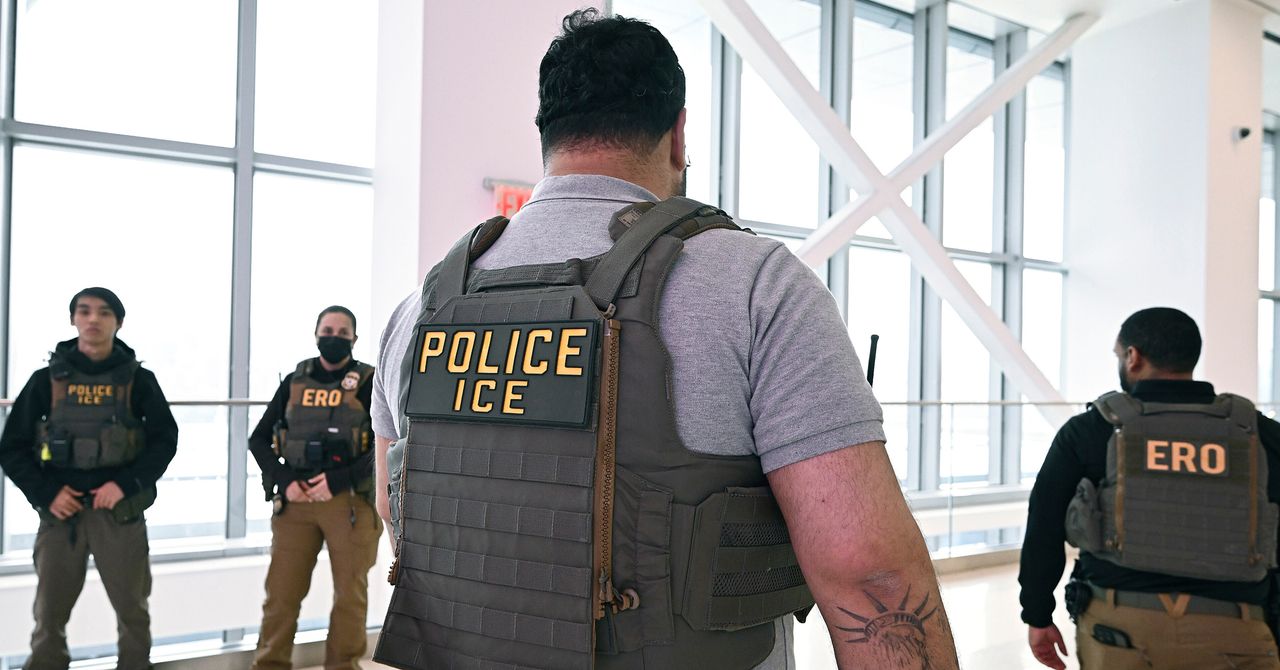
On Thursday, hours-long security lines snaked through New York City’s LaGuardia Airport. The wait was far from the longest in the country—George Bush International Airport in Houston reported three and a half hour lines. Over a month into a partial government shutdown that has left some Department of Homeland Security (DHS) employees working without pay, Transportation Security Administration (TSA) agents are calling in sick or leaving work en masse, leading to travel chaos around the US. The Trump administration’s solution? Send Immigration and Customs Enforcement (ICE) agents in.
ICE agents were deployed to at least 14 airports on Monday, ostensibly in an effort to speed up security lines—and five days into ICE’s incursion, airport employees are infuriated. The ICE agents, Transportation Security Officers (TSOs) who work for the TSA tell WIRED, don’t have the proper certification and training to perform many of tasks that might truly speed up security lines. The TSA employees say they’re frustrated by the situation—and worried about what it might mean for their future.
ICE agents have been spotted walking in packs, patrolling security lines and baggage areas. They have been seen giving directions to lost passengers, photographed distributing mini water bottles to those waiting in line, and, more often than not, standing around and appearing to do very little. “ICE are here and they’re doing literally nothing to help,” passengers in a security line overheard one airline worker complain on Wednesday at John F. Kennedy airport in New York.
The Atlanta Journal-Constitution reported that some passengers stuck in line spotted ICE agents being trained to check passenger IDs and boarding passes. In a hearing in front of the US House Committee on Homeland Security on Wednesday, TSA acting head Ha Nguyen McNeill said that “the travel document checker function is one of the nonspecialized screen functions of the TSA,” and said ICE agents are being trained to conduct checks.
TSOs say ICE’s presence is frustrating to those working without pay—especially because ICE agents are being paid. “If you want to bring a tactical force into an environment where it’s required to have customer service and a mindset where you know what you’re doing, how to identify something that might be suspicious—they don’t have that training,” says Hydrick Thomas, a security officer and the president of AFGE Local 2222, which covers New York and New Jersey airports.
Security officers say they’re concerned for their coworkers, who, thanks to last fall’s government shutdown, haven’t received a steady paycheck for half of the fiscal year. Agents are worried about paying for rent, mortgages, gas, and childcare. Food banks have stood up drives in several airports, including those in Houston, North Carolina, and San Diego. In Knoxville, Tennessee, airport authorities are accepting donations for employees at a Delta Airlines counter. Eleven percent of airport checkpoint employees called out on Tuesday, compared to four percent pre-shutdown, a federal official testified to Congress on Wednesday morning. Some airports, including those in Houston, Atlanta, New Orleans, and New York’s John F. Kennedy, have seen daily callout rates higher than 35 percent. More than 480 TSA screeners have quit since the shutdown began in February, the agency says.
Long term, security officers say they’re concerned that the federal government plans to replace them with other federal agents, including ICE agents, or private sector employees. One mentioned Project 2025, a blueprint for the second Trump administration published by the conservative Heritage Foundation, which advocates for privatizing TSA altogether.
“A part of the American dream that I was sold was that working for the government was honorable and stable,” Carlos Rodriguez, a security officer and a AFGE TSA Council 100 vice president representing airports Northeastern airports from New Jersey to Vermont. “But this is not honorable or stable at this moment.”


FIFA clears Fulham’s Diop, Ajax’s Bounida to play for Morocco

Iranian Hackers Breached Kash Patel’s Email—but Not the FBI’s

Tiger Woods involved in rollover crash in Florida less than 2 weeks before Masters: reports

-
 Business7 days ago
Flipkart group CFO to leave co amid IPO plans – The Times of India
-

 Fashion7 days ago
China’s textile & apparel exports surge 17% to $50 bn in Jan-Feb 2026
-
 Business1 week ago
Video: The Effects of High Oil Prices
-

 Sports1 week ago
Rating Adidas’ 2026 World Cup away shirts: Argentina, Spain, Mexico and more
-

 Fashion1 week ago
The hidden $1.62 war tax now embedded in every garment you source
-

 Sports7 days ago
American Conference Commissioner Tim Pernetti thanks Trump for Army-Navy game executive order
-
Tech1 week ago
The Corsair 4000D RS PC Case Keeps Your System Cool
-

 Tech1 week ago
‘Uncanny Valley’: Nvidia’s ‘Super Bowl of AI,’ Tesla Disappoints, and Meta’s VR Metaverse ‘Shutdown’