

Politics
Israel launches attack on Iran – says defence minister

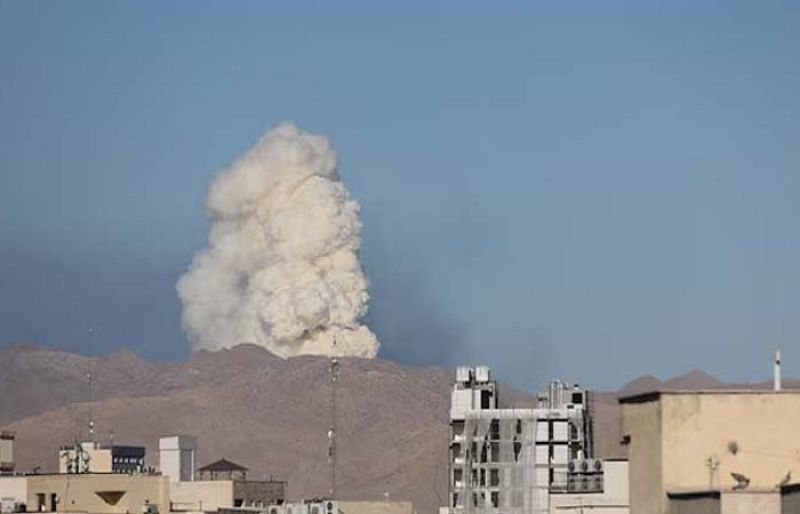

Israel has launched what it has called “pre-emptive attack” against Iran. In a statement this morning, Israeli Defence Minister Israel Katz has declared a “special and permanent state of emergency” across Israel.
Three explosions have been heard in downtown Tehran, according to Iranian media.
The Fars News Agency says it has received reports that several missiles have hit the Republic area of the Iranian capital.
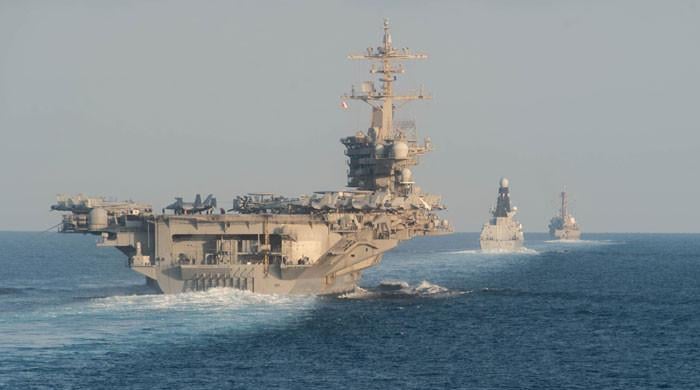
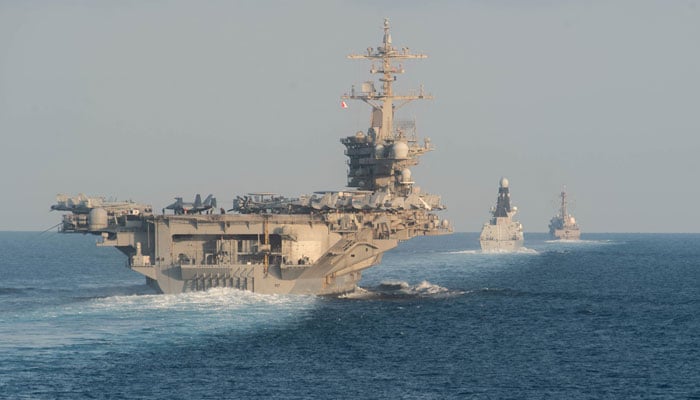
The Strait of Hormuz is a strategic route for seaborne oil that has long been used by Iran as a geopolitical bargaining chip, with Tehran repeatedly threatening to close it during times of crisis.
A senior naval commander of Iran’s Revolutionary Guards in late January again threatened its closure in the event of an attack, as US President Donald Trump warned of military action should the Islamic republic fail to cut a deal to curb its nuclear programme.
Despite its frequent warnings of a blockade, Tehran has never acted on them, though it closed part of the strait briefly for “safety” reasons during recent military drills.
Here are the key points to know about the waterway.
Gateway to the Gulf
The Strait of Hormuz links the Gulf to the Indian Ocean and is situated between Iran and Oman’s Musandam exclave, situated at the tip of a peninsula.
Its narrowness, at around 50 kilometres (30 miles), and shallow waters, at no more than 60 metres (200 feet) deep, make it vulnerable to being sealed off militarily.
The strait is dotted with sparsely inhabited or desert islands, which are strategically important, notably the Iranian islands of Hormuz, Qeshm and Larak.
Also among them are the disputed islands of Greater Tunb, Lesser Tunb and Abu Mussa, which lie between the UAE and Iran and provide a vantage point over the Gulf, and have been under Iranian control since 1971.
Oil transit hotspot
The strait is a vital corridor connecting the oil-rich Gulf with markets in Asia, Europe, North America and elsewhere.
According to the US Energy Information Administration (EIA), the Strait of Hormuz is “one of the world’s most important oil chokepoints”.
About one-fifth of global oil and petroleum product consumption flows through the strait, averaging 20 million barrels per day in 2024, according to the EIA.
Around one-fifth of global liquefied natural gas trade also transited the Strait of Hormuz in 2024, primarily from Qatar, it said.
Saudi Arabia and the UAE have infrastructure to bypass the strait, potentially mitigating disruption, but their transit capacity remains very limited — around 2.6 million barrels a day.
“Large volumes of oil flow through the strait, and very few alternative options exist to move oil out of the strait if it is closed,” the EIA warned.
More than 80% of the oil and gas moving through the strait is destined for markets in Asia, according to the EIA.
China, a key backer of Tehran, buys more than 90% of Iran’s oil exports, according to the analysis firm Kpler.
Military presence
Iran’s Revolutionary Guard, the ideological arm of the Islamic republic’s military, controls naval operations in the Gulf and the Strait of Hormuz.
Tehran has repeatedly criticised the presence of foreign powers in the region — home to the US Fifth Fleet in Bahrain and the Middle East’s largest US base in Qatar.
In 2023, Western naval forces operating in the Gulf warned ships sailing in the strait against approaching Iranian waters to avoid the risk of seizure.
There have been a series of such incidents since 2018, when US president Donald Trump pulled out of a landmark nuclear deal with Iran and reimposed crippling sanctions on the Islamic republic, sending tensions soaring.
Oil transit was disrupted in 1984 during the Iran-Iraq War when both sides attacked each other’s shipping, damaging or destroying more than 500 vessels in the so-called “Tanker War”.
And after Tehran laid mines in the strait, the frigate USS Samuel B. Roberts struck one in April of 1988 and nearly sank.
In July of that year, an Iran Air Airbus A300 flying the Bandar Abbas-Dubai route was shot down by two missiles fired from a US frigate, killing 290 people.
The crew of the USS Vincennes said it had mistaken the airliner for an Iranian fighter jet with hostile intent.
Maritime incidents
The Strait of Hormuz is frequently the scene of ship seizures and attacks.
Incidents multiplied after the United States withdrew in 2018 from the international agreement on Iran’s nuclear programme.
In 2019, unclaimed attacks on ships in the Gulf region, a downed drone and seized tankers raised fears of an escalation between Tehran and Washington.
On July 29, 2021, an attack in the Gulf of Oman on a tanker operated by a company owned by an Israeli billionaire killed two people. Israel, the United States, Britain and Romania accused Tehran, which denied any involvement.
In April 2024, the Revolutionary Guards seized the Portuguese-flagged container ship MSC Aries, accusing its owner of being “linked to Israel”.
In early February, a US-flagged tanker was approached and challenged by Iranian gunboats in the strait, before continuing on its way, US Central Command said.
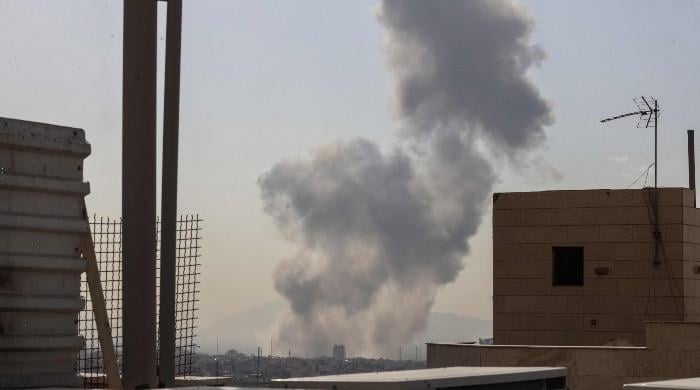
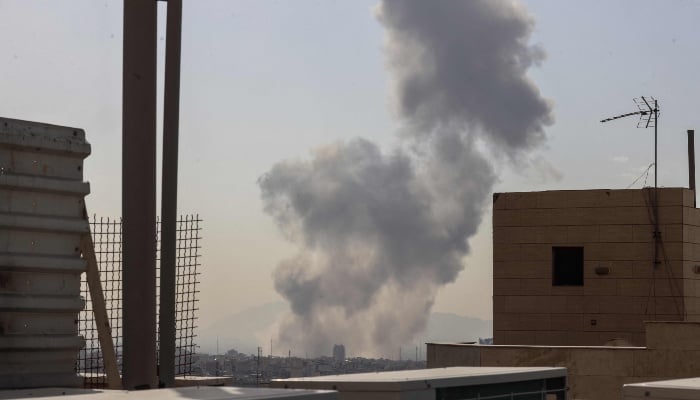
Israel and the United States launched strikes on Iran on Saturday, plunging the Middle East into a renewed military confrontation as President Donald Trump vowed to destroy Tehran’s missile arsenal and prevent it from developing a nuclear weapon.
Below is international reaction to the attacks:
Deputy chairman of Russia’s Security Council
“The peacemaker once again showed his face,” Medvedev, a former Russian president, said. “All negotiations with Iran are a cover operation. No one doubted it. No one really wanted to negotiate anything.”
“The question is who has more patience to wait for the inglorious end of their enemy. The USA is only 249 years old. The Persian Empire was founded more than 2,500 years ago. Let’s see in 100 years…”
Labanese Prime Minister Nawaf Salam
“I reiterate that we will not accept anyone dragging the country into adventures that threaten its security and unity.”
Norwegian Foreign Minister Espen Barth Eide
“The attack is described by Israel as a preventive strike, but it is not in line with international law. Preventive attacks require an immediately imminent threat.”
European Union Foreign Policy Chief Kaja Kallas
European Union foreign policy chief Kaja Kallas said on Saturday that “the latest developments across the Middle East are perilous” and that the bloc was coordinating with Arab partners to explore diplomatic paths.
Kallas also said she has spoken with Israel’s Foreign Minister Gideon Saar and that Europe’s consular network is engaged in facilitating departures for EU citizens.
“Non-essential EU personnel are being withdrawn from the region”, she said.
Ukraine’s foreign ministry
“The cause of the current events is precisely the violence and impunity of the Iranian regime, in particular the killings and repression of peaceful protesters, which have become particularly widespread in recent months,” the foreign ministry said.
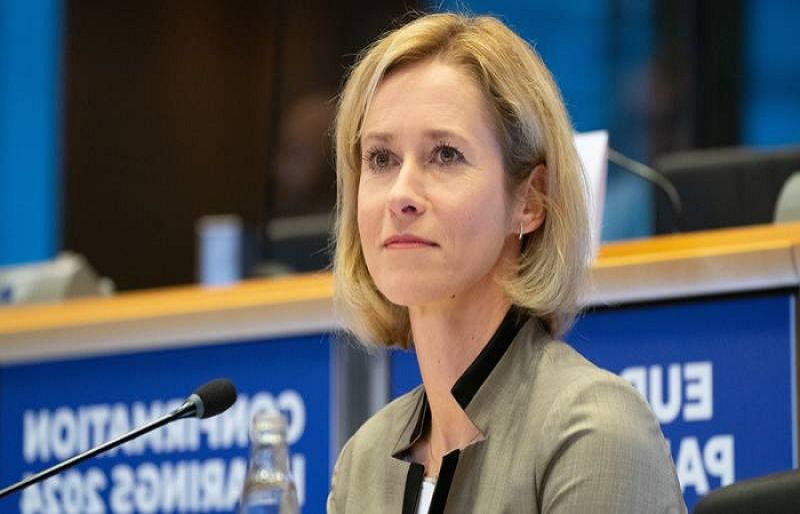

The European Union called on Saturday for an “immediate de-escalation” between Afghanistan and Pakistan, as Islamabad launched air strikes in a flare-up of fighting.
“We call on all actors for immediate de-escalation and a halt of hostilities following the sharp increase of violence in Afghanistan and Pakistan, including cross-border attacks and reported strikes over the past 24 hours, which could have serious implications for the region,” the EU’s foreign policy chief, Kaja Kallas, said in a statement.
“The EU reiterates that Afghan territory must not be used to threaten or attack other countries and calls on the Afghan de facto authorities to take effective action against all terrorist groups operating in or from Afghanistan.”


NASA Is Making Big Changes to Speed Up the Artemis Program

Meghan Markle’s £14 bookmark breaks the internet

European soccer live updates: Liverpool host West Ham United

-

 Tech1 week ago
A $10K Bounty Awaits Anyone Who Can Hack Ring Cameras to Stop Sharing Data With Amazon
-
 Business1 week ago
US Top Court Blocks Trump’s Tariff Orders: Does It Mean Zero Duties For Indian Goods?
-

 Fashion1 week ago
ICE cotton ticks higher on crude oil rally
-

 Entertainment1 week ago
The White Lotus” creator Mike White reflects on his time on “Survivor
-
 Politics7 days ago
Pakistan carries out precision strikes on seven militant hideouts in Afghanistan
-

 Tech1 week ago
Donald Trump Jr.’s Private DC Club Has Mysterious Ties to an Ex-Cop With a Controversial Past
-

 Sports1 week ago
Brett Favre blasts NFL for no longer appealing to ‘true’ fans: ‘There’s been a slight shift’
-
 Business1 week ago
Eye-popping rise in one year: Betting on just gold and silver for long-term wealth creation? Think again! – The Times of India