

Politics
Jamaica’s strongest-ever storm, Hurricane Melissa, turns to Cuba

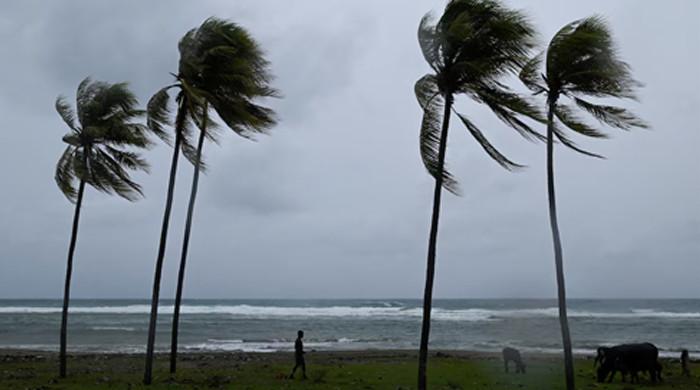
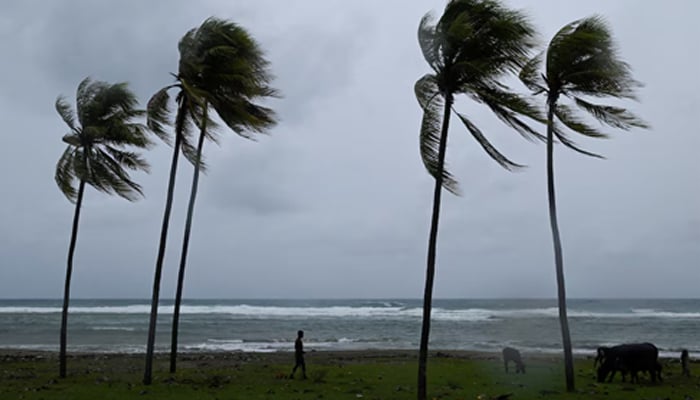
- Storm leaves hundreds of thousands of Jamaicans without power.
- Parts of western Jamaica come ‘underwater,’ says minister.
- Hurricane Melissa comes after Beryl battered Jamaica last year.
Hurricane Melissa churned toward Cuba’s second-largest city with the force of a powerful Category 4 storm on Tuesday, hours after making landfall in neighboring Jamaica as the strongest-ever cyclone on record to hit that Caribbean island nation.
Melissa roared ashore near Jamaica’s southwestern town of New Hope, packing sustained winds of up to 185 mph (295 kph), according to the US National Hurricane Center, well above the minimum 157 mph (252 kph) wind speed of a Category 5 storm, the highest level on the Saffir-Simpson wind scale.
In southwestern Jamaica, the parish of St Elizabeth was left “underwater,” an official said, with more than 500,000 residents without power.
“The reports that we have had so far would include damage to hospitals, significant damage to residential property, housing and commercial property as well, and damage to our road infrastructure,” Jamaica’s Prime Minister Andrew Holness said on CNN after the storm had passed.
Holness said the government had not received any confirmed storm-related fatalities, but given the strength of the hurricane and the extent of the damage, “we are expecting that there would be some loss of life.”
Melissa’s winds subsided to 145mph (233kph), the NHC said, as the storm drifted past the mountainous island, lashing highland communities vulnerable to landslides and flooding.
The hurricane was forecast to curve to the northeast on a trajectory toward Santiago de Cuba, Cuba’s second-most populous city.
“We should already be feeling its main influence this afternoon and evening,” Cuban President Miguel Diaz-Canel said in a message published in state newspaper Granma, calling on citizens to heed evacuation orders.
“There will be a lot of work to do. We know that this cyclone will cause significant damage.”
Cuban authorities said some 500,000 people were ordered to move to higher ground. In the Bahamas, next in Melissa’s path to the northeast, the government ordered evacuations of residents in southern portions of that archipelago.
Farther to the east, the island shared by Haiti and the Dominican Republic had faced days of torrential downpours leading to at least four deaths, authorities there said.
Local media reported at least three deaths in Jamaica during storm preparations, and a disaster coordinator suffered a stroke in the onset of the storm and was rushed to hospital. Late Tuesday, many areas remained cut off.
Jamaica’s ‘storm of the century’
No stranger to hurricanes, Jamaica had never before been known to take a direct hit from a Category 4 or 5 storm, and the government called for foreign aid even as it prepared for Melissa’s arrival.
Meteorologists at AccuWeather said Melissa ranked as the third most intense hurricane observed in the Caribbean after Wilma in 2005 and Gilbert in 1988 – the last major storm to make landfall in Jamaica.
“It’s a catastrophic situation,” the World Meteorological Organisation’s tropical cyclone specialist Anne-Claire Fontan told a press briefing, warning of storm surges up to 4 meters high. “For Jamaica, it will be the storm of the century for sure.”
Colin Bogle, an adviser to aid group Mercy Corps in Portmore, near Jamaica’s capital of Kingston, said he had heard a loud explosion in the morning before everything went dark. Sheltering with his grandmother, he heard relentless noise and saw trees violently tossed in the wind.
“People are scared. Memories of Hurricane Gilbert run deep, and there is frustration that Jamaica continues to face the worst consequences of a climate crisis we did not cause,” he said.
Scientists warn that storms are intensifying faster with greater frequency as a result of warming ocean waters. Many Caribbean leaders have called on wealthy, heavy-polluting nations to provide reparations in the form of aid or debt relief to tropical island countries.
Melissa’s size and strength ballooned as it churned over unusually tepid Caribbean waters, but forecasters warned that its slow movement could prove particularly destructive.
Food aid will be critical, Bogle said, as well as tools, vehicle parts and seeds for farmers. Like last year’s devastating Hurricane Beryl, Melissa crossed over some of Jamaica’s most productive agricultural zones.
On Monday, Holness said the government had an emergency budget of $33 million and insurance and credit provisions for damage a little greater than Beryl.
‘Like a roaring lion’
Melissa made landfall in southwestern Jamaica, near the parish border between Westmoreland and St Elizabeth, one of the areas hardest-hit by Beryl.
St Elizabeth was submerged by flooding, local government minister Desmond McKenzie told a press briefing. Its only public hospital lost power and reported severe damage to one of its buildings.
Several families were known to have been stranded in their homes, but rescue teams managed to reach one group that included four babies, McKenzie said.
In Portland Cottage, some 150 km (94 miles) away from where Melissa made landfall, Collin Henry McDonald, 64, a retiree, told Reuters as the storm advanced that his community was seeing strong rain and winds, but his concrete roof was holding steady.
“It’s like a roaring lion. It’s mad. Really mad,” he said.
Around 15,000 Jamaicans were in temporary shelters by late Tuesday, McKenzie said. The government had issued mandatory evacuation orders for 28,000 people, but many were reluctant to leave their homes.
The International Federation of the Red Cross said up to 1.5 million people in Jamaica were expected to be directly affected by the storm.
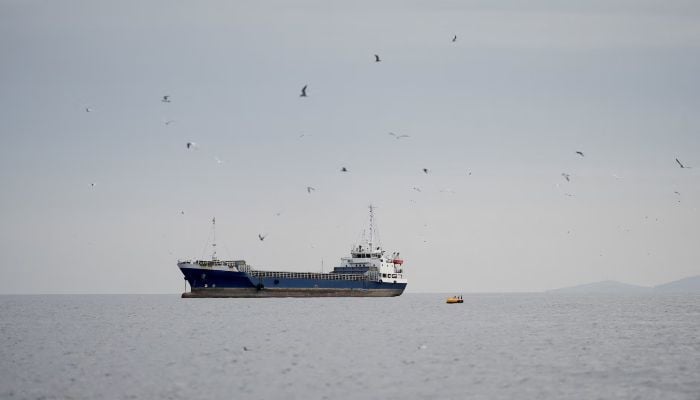
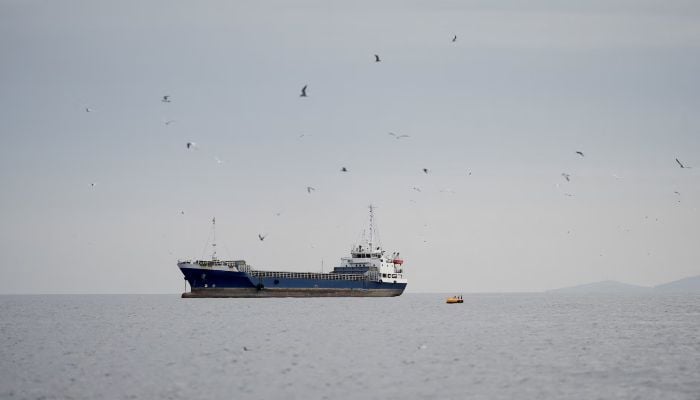
ATHENS: Fraudulent messages promising safe passage through the Strait of Hormuz in exchange for cryptocurrency have been sent to some shipping companies whose vessels are stranded west of the waterway, Greek maritime risk management firm MARISKS has warned.
The US has maintained its blockade of Iranian ports, while Iran has lifted and then re-imposed its blockade of the Strait of Hormuz, through which roughly a fifth of the world’s oil and liquefied natural gas passed before war broke out in the Middle East.
Amid ceasefire talks, Tehran, which controls the chokepoint, has proposed tolls on vessels to safely transit.
MARISKS on Monday issued an alert warning shipowners that unknown actors, claiming to represent Iranian authorities, had sent some shipping companies a message demanding transit fees in cryptocurrencies, Bitcoin or Tether, for “clearance”.
“These specific messages are a scam,” the firm said, adding the message was not sent by Iranian authorities.
There was no immediate comment from Tehran.
Hundreds of ships and about 20,000 seafarers remain stranded in the Gulf.
On April 18, when Iran briefly opened the strait subject to checks, ships tried to pass but at least two of them, including a tanker, reported that Iranian boats had fired shots at them, forcing the vessels to turn around.
MARISKS said that it believed that at least one of the vessels, which tried to exit the strait on Saturday and was hit by gunfire, was a victim of the fraud.
Reuters was not able to verify the information or track companies that had received the message.
“After providing the documents and assessing your eligibility by the Iranian Security Services, we will be able to determine the fee to be paid in cryptocurrency (BTC or USDT). Only then will your vessel be able to transit the strait unimpeded at the pre-agreed time,” said the message cited by MARISKS.
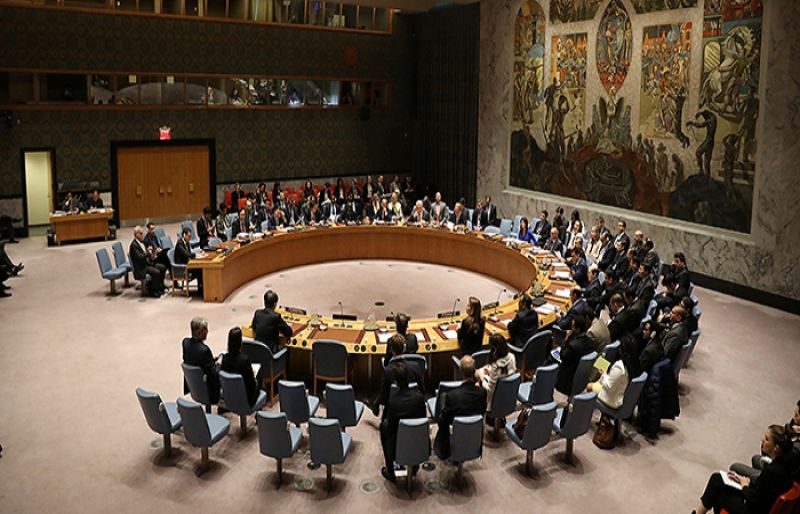
The UN Security Council on Monday condemned the recent killing of a French peacekeeper in Lebanon, whose death France has blamed on Hezbollah.
The Frenchman was killed and three others wounded when their unit was ambushed on Saturday as it headed to a UN Interim Force in Lebanon (UNIFIL) outpost cut off from the fighting between Hezbollah and Israel.
“The members of the Security Council condemned in the strongest terms the attack…(and) reaffirmed their full support for UNIFIL” a statement from the UN body said.
TOKYO: At least six people were reported injured on Tuesday, a day after a powerful quake rattled northern Japan, but there appeared to be no major damage from the tremor that also triggered tsunami waves up to 80 centimetres (31 inches).
However, the Japan Meteorological Agency (JMA) also warned of an increased risk of a megaquake — a tremor with a magnitude of 8.0 or stronger — hours after Monday’s 7.7 magnitude quake in Pacific waters off northern Iwate prefecture.
The jolt was so intense that it shook large buildings in the capital Tokyo, hundreds of kilometres from the epicentre.
Six people were reported injured by 8am (2300 GMT Monday), two seriously, the Fire and Disaster Management Agency (FDMA) said in a statement.
There were no reported fire outbreaks or damage to important facilities, it said.
Japan issued a warning for tsunami waves of up to three metres (10 feet) but it was lifted hours after an 80-centimetre (31-inch) wave hit a port in Kuji in Iwate, one among a series of small waves that hit elsewhere in northern Japan.
The JMA said that “the likelihood of a new, huge earthquake occurring is relatively higher than during normal times”.
Municipalities in the affected region issued non-compulsory evacuation directives to more than 182,000 residents, the FDMA said.
Japan is one of the world’s most seismically active countries, sitting on top of four major tectonic plates along the western edge of the Pacific “Ring of Fire”.
The archipelago, home to around 125 million people, typically experiences around 1,500 jolts every year and accounts for about 18 percent of the world´s earthquakes.
The vast majority are mild, although the damage they cause varies according to their location and the depth below the Earth´s surface at which they strike.
Japan is haunted by the memory of a massive 9.0 magnitude undersea quake in 2011, which triggered a tsunami that killed or left missing around 18,500 people and caused a devastating meltdown at the Fukushima nuclear plant.


War-linked energy shock pushing inflation higher in Europe: IMF expert

Scam messages offering ships safe transit through Hormuz, warns security firm

Billions to be paid! US starts refund process for Trump tariffs: Can Indian exporters claim? – The Times of India

-

 Fashion5 days ago
France’s LVMH Q1 revenue falls 6%, shows resilience amid Iran war
-

 Sports1 week ago
The case for Man United’s Fernandes as Premier League’s best
-

 Entertainment1 week ago
Palace left in shock as Prince William cancels grand ceremony
-
 Business1 week ago
UK could adopt EU single market rules under new legislation
-

 Entertainment6 days ago
Is Claude down? Here’s why users are seeing errors
-

 Fashion1 week ago
Energy emerges as biggest cost driver in textile margins
-
 Business1 week ago
Delta Air Lines unveils first new Delta One suite in premium cabin arms race
-

 Tech1 week ago
A Lot of Shops Won’t Fix Electric Bikes. Here’s Why