

Entertainment
Jennifer Hudson says Grammy nomination coincided with this family occasion


Jennifer Hudson’s latest Grammy nomination arrived on a day of deep personal significance.
The 44-year-old singer and actress received her ninth career nomination on Friday for The Gift of Love, her first holiday record and first entry in the pop album category.
The album was nominated for Best Traditional Pop Vocal Album at the upcoming 68th Annual Grammy Awards.
Speaking in the press room at the Rock & Roll Hall of Fame Induction Ceremony on November 8, Hudson reflected on the timing of the honour.
“I’m still living a dream, it’s blessed me,” she said. “I’m a holiday fanatic, so to be able to be acknowledged in that way with the album that is so dear to my heart is beyond a dream. And it was on my late mother’s birthday as well, which made it even more special.”
Describing The Gift of Love as “a project that was done with heart,” Hudson said the record, released in October 2024, represents her return to the studio after a decade-long break.
At Saturday’s Rock & Roll Hall of Fame ceremony, Hudson also performed as part of the tribute lineup. “It’s always an honour to be here, to sing and to pay tribute to all the greats and the legends,” she said. “My life is like a whole dream to be able to do that.”
The singer has won two Grammy Awards over her career. In 2009, she earned Best R&B Album for her self-titled debut. Eight years later, she shared the Grammy for Best Musical Theater Album with the original Broadway revival cast of The Color Purple, in which she starred as Shug Avery.
Hudson’s mother, Darnell Donerson, was killed in October 2008 along with Hudson’s brother Jason and her 7-year-old nephew Julian. The gunman, Hudson’s former brother-in-law William Balfour, is serving a life sentence for the murders.

Tori Spelling shared a heartfelt remembrance of her former boyfriend, actor Patrick Muldoon, who died suddenly on April 19 at the age of 57.
Spelling dated Muldoon in the 1990s while starring on Beverly Hills, 90210 and he was appearing on Melrose Place.
She took to Instagram to pen an emotional tribute late Tuesday.
“This post took me a couple days. I wasn’t ready to write because then it felt real. And, this shouldn’t be real,” she wrote.
Reflecting on their relationship, Spelling recalled their playful bond and shared memories of singing Grease together at her 22nd birthday party.
“We shared a love of Broncos, guitars, goofing off, playing tag, and Grease! Loved to belt out Grease. I was Sandy to his Danny!” she said.
She praised Muldoon’s warmth and humour.
Spelling revealed they affectionately called each other “f— face.”
“He was special and one of a kind. The kindest most caring human w/ raddest weird sense of humor. We got each other! Laughed a lot! I laughed w/him and at him and he loved it… We called each other F—face ????. That was us!”
Spelling also highlighted his support during her divorce, remembering how he would check in and send her “the worst jokes” to make her laugh.
“He always showed up. And, was a true hype man 4 those he cared about. He was a huge part of my formative 20’s. We went on to be good friends! Still laughing & always caring,” she wrote.
Muldoon’s passing has prompted tributes from many including Denise Richards, who described him as her “best friend & my family.”
Richards’ daughter Lola Sheen also wrote, “When I think of my childhood I think of you Pat. And it’s gonna be so weird to go on without you in our lives.”
Muldoon will be remembered for roles on Days of Our Lives, Melrose Place, and Saved by the Bell.

The royal family gathered at Buckingham Palace to mark a historic milestone together in a show of unity in the times of crisis.
King Charles and Queen Camilla were joined by Prince William, Princess Kate and all other senior members of the family. They attended the reception to honour the Queen Elizabeth’s 100th birthday.
However, in a surprise turn of events, Prince Harry had joined the important celebration all the way from across the pond, as he remembered his beloved late grandmother.
Even though the Duke of Sussex remained in Montecito, he quietly sent flowers to St George’s Chapel at Windsor Castle, which is the final resting place for the longest reigning monarch in British royal history, confirmed by Town & Country magazine.
Elizabeth II was laid to rest in September 2022. The late Queen is buried in the King George VI Memorial Chapel alongside her parents, King George VI and Queen Elizabeth, the Queen Mother; her husband, Prince Philip; and her sister, Princess Margaret.
The news comes after King Charles’s office shared the highlights from the reception where they welcomed “representatives of The late Queen’s former charities and patronages, as well as some very special centenarians, who are celebrating their 100th birthday” on Tuesday.
Even though there had been talks about a possible reconcilation between King Charles and his younger son, the situation appears to be at a pause given the turbulent times the royals have faced recently.
There are quiet debates and discussion being held at the Palace on the matter, according to royal sources, although it remains to be seen how things pan out.
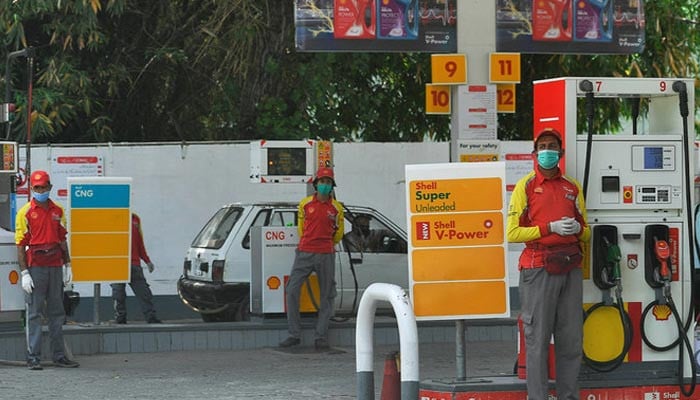
Pakistan’s fuel crisis is often framed as global oil prices and question of subsidies, but in reality it is more consequential as a question of strategic foresight, structure fragility and weak statecraft. This results in domestic inflation, external deficits, currency depreciation and social stress with almost no absorption capacity.
Earlier this month, in a single adjustment cycle, the petrol hit Rs450 and diesel Rs500 per litre, headlines blamed Middle East crisis, but in reality, it is a predictable consequence of deferred investment, policy fragmentation, and institutional inertia.
Pakistan consumes approximately 500,000 barrels of oil per day whereas the country’s domestic production is around 70,000 to 80,000. We import 20% crude oil and 80% refined oil, and that 80% of supply depends on imports denominated in US dollars. And whenever rupee depreciation even slightly, this translates directly into additional costs of billions of dollars.
Earlier when crude prices went up above $110 per barrel, the effect was predictable and compounded, and resulted in 40% to 50% single-cycle domestic price increase. Although, unprecedented but it is the eventual outcome of a system incapable of absorbing shocks, reflecting weak governance, underutilised infrastructure, therefore, fiscal designs consider energy as an instrument for revenue rather than a strategic asset.
Scale always strengthens the resilience as India processes 5.5 million barrels daily across its 23 refineries whereas Chinese exceeds 12 million barrels a day across 30 facilities. The UK is refining 1.1 million barrels daily despite diminishing domestic output. Pakistan operates with five refineries with the capacity of 450,000 barrels combined but refine only 60,000 barrels a day.
In 2007, the government announced an expansion plan to upgrades these refineries and their storage capacity but even after 15 years, it remains largely unimplemented. On papers and meetings in the official circles, there is so much movement but in reality, there has been a minimal progress. Our five refineries (Parco, Cnergyico, NRL, ARL and PRL) do not lack refining capacity but lack modern refining capability, as four out of five refineries are very basic (hydroskimming) with low complexity. Thus structural failure is compounded by investment delays, moreover, these refineries are underutilised because the configurations misalign with domestic petrol and diesel demand.
This underutilisation leads to an import of 80% to 85% refined fuel at a premium cost of $10–15 per barrel, thus, further inflating the annual oil bills to $10–20 billion, with crude alone exceeding $5 billion in peak years. This operational and structural weakness exacerbates macroeconomic stress, thus depleting foreign exchange reserves, worsening the current account deficits and unfortunately due to this, circular debt now running into trillions of rupees. Subsidies briefly soften the crises but defer inevitable corrections, concentrating shocks and compounding fiscal risk.
Then there is so-called petroleum levy (PL), embedded in this dynamic and become a de facto tax collection instrument. For government, it is easy to collect, bypasses provincial revenue sharing, and faces little resistance compared to taxing entrenched interests. Through this levy, government collected Rs1.22 trillion (around $4.7 billion) in FY2024-25. The PL represents 35% to 40% of retail petrol prices.
In current FY2025-26, government has already collected more than Rs1,000 billion through the petroleum levy and will exceed the target in this regard. This is roughly more than 100 billion a month tax collection avenue without any efforts towards documenting and structuring the informal economy.
Ordinary citizens, especially the working and lower middle class are struggling in their daily lives due to this dual burden of energy cost and actual taxation embedded in transport, goods and services. Supervision gaps further corrode prospective revenue, with oil marketing companies occasionally failing to remit full PL collections, while subsidies exceeding Rs100 billion provide insignificant relief.
Pakistan must prioritise building modern, export-oriented oil refineries with strong jet fuel (100,000 bpd) output to offset crude imports into USD-generating export.
As global fuel demand evolves, the aviation fuel remains structurally resilient as there is no medium-term EV kind of threat there. Modern-day oil refinery needs a capital of $5-10 billion and will take 4-5 years’ time for development. Instead of relying on FDI, CPEC or Saudi support (as this has been the case, it’s ideal but has delayed the progress of this initiative for more than two decades).
Under the SIFC, a sovereign-led model finance by provincial participation (an annual five per cent share from their NFC Award), 2% from strategic foreign reserves and 20% allocation of a portion of petroleum levy revenues can anchor this initiative and will be a considerable step towards our sustainability and self-sufficiency in fuel consumption and production. National strategic assets are always developed without reliance on foreign funding or investment. Our nuclear programme is a clear example of this.
This initiative will not only strengthen our foreign exchange reserves and safeguard our energy security, but also help us in transforming from consumption-driven policy to long-term, investment-led national resilience strategy. Pakistan should have prioritised this initiative long before proliferating its domestic market with oil marketing companies.
They are low-barrier capital-flow retail and marketing segments producing visible growth while stagnating the primary resilience – this expanded the consumer access but critically constrained the production capacity and shock absorption.
India set up theJamnagar refinery in 2000 with a 1,000,000 bpd capacity. During Ukraine war it benefited from cheap crude oil from Russia, refined at the Jamnagar refinery and exported refined gasoline and jet fuel to Europe. This initiative under their 1990s economic reforms earned them significant levels of foreign exchange.
For Pakistan, case for structural reform is financially compelling and viable. A greenfield refinery of 200,000 barrels per day, costing $5 billion, this will reduce imports and generate $1.2-1.5 billion in annual savings, recovering investment in six to seven years.
Even a 15% global price drop extends ROI only to eight or nine years; a 20% rupee depreciation raises savings to $1.7 billion, shortening the payback period to five or six years. Sensitivity analysis confirms that investing in resilience is not a luxury but a fiscal and strategic responsibility.
The implications are far-reaching and go beyond energy as highlighted in my previous article regarding reforms in Pakistan Railways. The Railways handles less than 5% of the cargo, over 90% is by road transport. This reliance increases fuel consumption, import bills and economic inefficiency.
Even promising policies of EV electric vehicle adoption remain largely symbolic. Without $1 billion investment in charging infrastructure, grid modernisation and tariff rationalisation, EVs in Pakistan cannot significantly decrease fuel demand.
A synchronised five-year investment package could produce 12% to 15% returns through import substitution and foreign exchange savings, but without systemic alignment, these initiatives remain conjectural.
Pakistan’s frequent fuel crises have similar recurrences – reactive and politically driven energy policy intensifies instability. We are a firefighting nation, addressing symptoms like price adjustments, subsidies and levy collections will never let us focus on the causes.
Decades of deferred investment, governance failures, bureaucratic fragmentation and electoral short-termism for political mileage have left our energy sector far from a platform for progress and development into a cyclical vulnerability.
To get out of this diurnal round we need decisive leadership, must stabilise the Pak rupee, segregate energy policy from political rhetoric, streamline regulatory approvals and fully committed medium-term infrastructure expansion. We can further harmonise Institutional credibility through the SIFC platform together with policy continuity and strategic vision. These are prerequisites for initiating or attracting investment in any sector.
Paying for expensive petrol for our vehicles is not an accident. It is due to a structural inevitability facilitated and coordinated by a system that merges revenue extraction with energy provision. Developed and civilised countries absorb global fuel shocks with their robust governance and infrastructure mechanism. Our system transfers them directly to the citizens. Unless we reform and priorities resilience over relief, every international fuel crisis will translate into domestic hardship on us. Energy reforms are no longer optional but a test of leadership, as they are the only solution to energy sovereignty.
The writer is a political economist, public policy commentator and advocate for principled leadership and regional cooperation across the Muslim world.
Disclaimer: The viewpoints expressed in this piece are the writer’s own and don’t necessarily reflect Geo.tv’s editorial policy.
Originally published in The News


Burkina Faso fully nationalises leading cotton firm Sofitex

Marcus Smart’s breakout game helps Lakers go up 2-0 on Rockets

Why Guardiola’s legacy could exceed Ferguson’s, Wenger’s, Klopp’s

-

 Fashion6 days ago
France’s LVMH Q1 revenue falls 6%, shows resilience amid Iran war
-

 Sports1 week ago
The case for Man United’s Fernandes as Premier League’s best
-

 Entertainment7 days ago
Is Claude down? Here’s why users are seeing errors
-
 Business1 week ago
UK could adopt EU single market rules under new legislation
-
 Business1 week ago
Delta Air Lines unveils first new Delta One suite in premium cabin arms race
-
 Fashion1 week ago
Asia claims largest share of markets on Kearney FDI Confidence Index
-

 Sports7 days ago
PSL 11: Peshawar Zalmi win toss, opt to field first against Quetta Gladiators
-

 Tech7 days ago
The Deepfake Nudes Crisis in Schools Is Much Worse Than You Thought