

Tech
JPMorgan CEO urges slowdown of AI roll-out to ‘save society’ | Computer Weekly


JPMorgan CEO Jamie Dimon warns that the rapid roll-out of artificial intelligence (AI) throughout society will cause “civil unrest” unless governments and companies work together to mitigate its effect on job markets.
Speaking at the World Economic Forum (WEF) in Davos, Dimon said that although AI can deliver “a more productive society… [and] cure a lot of cancers”, the roll-out needs to be phased to stave off the potential for massive social unrest.
“My view is, ‘Don’t put your head in the sand.’ It is what it is. We’re going to deploy it. Will it eliminate jobs? Yes. Will it change jobs? Yes. Will it add some jobs? Probably. It is what it is,” said Dimon. “However, I do think it may go too fast for society. And if it goes too fast for society, that’s where government and business in a collaborative [need to] way step in together and come up with a way to retrain people or move it over time.”
Highlighting the example of the two million commercial truck drivers in the US, Dimon said that if AI is imposed on them in one fell swoop when effective driverless vehicles hit the road, all those people could potentially go from making $150,000 a year to $25,000 in their next jobs: “Should you do it all at once?… No, you will have civil unrest, so phase it in.”
Acknowledging that even JPMorgan will likely have fewer employees in five years due to its use of AI, Dimon went on to urge governments to plan for these eventualities now, by developing retraining, wage support and relocation programmes to support workers displaced by the technology. He added that governments would also need to develop new incentives for companies to slow their deployments of AI and ensure they provide income assistance.
“If a town loses a factory and they lose jobs, you have income assistance, relocation, early retirement, retraining. We may have to do that…to save society,” he said.
When interviewer Zanny Minton Beddoes, editor-in-chief at The Economist, pointed out that previous Trade Adjustment Assistance programmes in the US were “incredibly poorly done”, Dimon agreed, saying: “We need to be prepared to have something that works this time.”
Commenting further on JPMorgan’s own use of AI, Dimon said the Wall Street lender has so far developed around 500 use cases for the technology across its business units, noting while there are clear efficiency benefits to be gained from AI, it could also fundamentally change the business as it develops further.
“If you take it to the next step, agents, that could change your business, the speed at which things happen, how people access our systems,” he said, adding that companies will need to develop their AI capabilities to remain competitive, particularly in the financial sector given the explosion of fintech companies in recent years.
“If you put your head in the sand, you will lose. I think that was true 30 years ago, but it’s probably more true today. And the brain power and money that’s going to this [AI] thing is extraordinary. And so, if we don’t do our job faster, quicker, we’ll lose soon.”
Job losses have already begun hitting the tech sector itself, with firms globally cutting their workforces as they look to increase spending on and investment in AI tools. In October 2025, for example, Amazon laid off 14,000 employees, a decision that was specifically prompted and enabled by the firm’s AI investments.
In August 2025, the UK Trades Union Congress (TUC) warned that AI-fuelled economic growth is leaving workers behind and highlighted the importance of collective bargaining as the technology becomes more embedded in the workplace.
Noting that AI may be used by some employers to cut costs and automate existing processes, rather than invest, expand and innovate, it said in a report: “Such decisions will more likely displace or deskill workers rather than augment, expand or retrain the workforce as part of technological upgrading.”
The paper’s authors noted that if machines do more tasks and reduce the demand for skilled workers or for labour overall, workers could become less able to command a fair share, with the surplus increasingly captured by employers and AI companies.
In November 2023, the Autonomy think tank in the UK argued that while automating jobs with large language models (LLMs) could lead to significant reductions in working time without a loss of pay or productivity, realising the benefits of AI-driven productivity gains in this way will require concerted political action.
The think tank added that this was because it is clear that productivity gains are not always shared evenly between employers and employees, and depend on “geographic, demographics, economic cycle and other intrinsic job market factors” such as workers’ access to collective bargaining.
To deliver positive AI-led changes for workers and not just employers, Autonomy recommended setting up “automation hubs”, underpinned by trade union and industry agreements, to boost the adoption of LLMs in ways that are equitable.
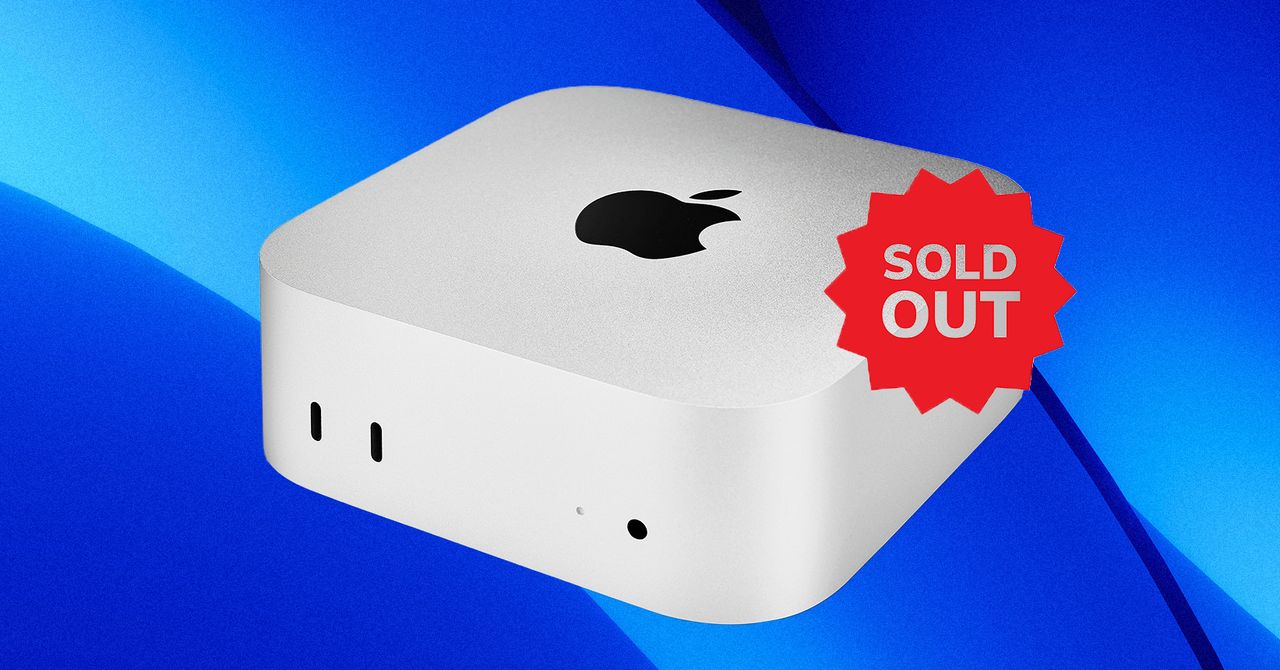
Apple CEO Tim Cook said on the company’s earnings call on Thursday that it could take “several months” to meet skyrocketing demand for the Mac Mini, the company’s compact but mighty, screen-free desktop computer. Cook’s remarks come after coders determined in recent months that the Mac Mini was the perfect machine for agentic AI tasks.
“On the Mac Mini and Mac Studio, both of these are amazing platforms for AI and agentic tools,” Cook said on the earnings call, in response to analyst questions. “And customer adoption of that is happening faster than we expected.”
The news comes amid another record-setting quarter for the company. iPhone sales came up shorter than expected, though demand for the iPhone 17 has been super high and Apple’s subscription services business has continued to grow.
Apple faced supply constraints on both the iPhone and the Mac product line this quarter. iPhone shortages are being driven mostly by a limited supply of the advanced chips that power the phones. But as Cook made clear, at least two different factors are driving shortages in Apple’s Mac business: The rapid adoption of generative AI, and unexpected demand for the company’s new, colorful, and more affordable MacBook Neo laptop.
Mac sales are typically a fraction of what iPhone sales are—$8.4 billion this quarter, compared to nearly $57 billion in sales of the iPhone—and the Mac Mini, specifically, is a fraction of that. But with the launch of OpenClaw earlier this year, an open-source AI tool, Mac Minis began flying off the shelves because they offer both enough power and a dedicated computing environment for agentic AI tasks.
Some eager customers have already been waiting for months for their Mac Minis. MacRumors reported last month that Apple had stopped selling a configuration of the computer that included 512 GB of memory. As of last week, the base model of Mac Mini was entirely sold out.
Cook, and his soon-to-be-successor John Ternus, also addressed Cook’s transition out of the CEO role later this year. Cook said on the earnings call that it’s the “right moment” to step into the executive chairman role for a “number of reasons,” including that Apple is well-positioned financially and that its upcoming product roadmap is “incredible.” He called Ternus a “person of remarkable character and a born leader.”
Ternus then joined the call for a minute to vouch for Cook as a business leader, and assure investors he’d take a similarly deliberate and thoughtful approach in leading the company. He, too, mentioned the company’s roadmap.
Both men were scant on details around this supposedly very exciting product roadmap, but hopefully, it includes more … road Macs.

In this episode of Uncanny Valley, we get into how the Elon Musk-Sam Altman trial goes way beyond their rivalry and could have major implications both for OpenAI and also the AI industry at large.
Source link

The general cyber security threat to UK organisations remains “widespread and significant” with 43% of businesses, 28% of charities and 69% of large firms having suffered either a data breach or cyber attack in the past year, and 29% of respondents saying they were experiencing incidents at least once every week.
This is according to the UK government’s latest Cyber Security Breaches Survey for 2025-26, which comes at the tail-end of a 12 month period that saw a series of high-profile incidents targeting the likes of Marks & Spencer, Co-op Group, and Jaguar Land Rover, as well as amid elevated concern over the impact of offensive artificial intelligence (AI) – which was the subject of a warning from government ministers earlier in April.
“These figures are a stark reminder of the importance of having robust cyber security measures. All business leaders should be gripping this issue and taking action now, especially as AI is making the threat more acute. Quite simply, firms cannot afford not to take these steps,” said cyber security minister Liz Lloyd.
Lloyd has today written to the CEOs and chairs of over 180 of Britain’s largest businesses to urge as many as possible to sign on to the government’s Cyber Resilience Pledge, which was announced at the National Cyber Security Centre’s (NCSC’s) annual CyberUK conference in April and is set to launch later in the year.
Organisations signing up to the Cyber Resilience Pledge will have to take three firm actions to improve their security:
- Make cyber security a board-level responsibility;
- Sign on to the NCSC’s Early Warning service, which is free;
- Obtain the NCSC’s Cyber Essentials certifications across their supply chains.
Lloyd said that doing so would help businesses significantly strengthen their defences and keep themselves, their customers, and the wider economy, safe. “Businesses are not powerless,” she said.
An improving picture?
While the headline statistics give Westminster good reason to keep banging the drum for cyber security, digging deeper, the data show evidence of an improving picture in some regards. The percentage of businesses affected by cyber incidents was roughly in line with the 2024-25 survey period, and down from a high of 50% in 2023-24.
Ransomware attacks against businesses also seem to have dropped a little, with 1% of respondents saying they had been affected by ransomware, down from 3% a year ago, while the prevalence of phishing attacks – although not significantly down on 2024-25 – is way down on 2023-24, affecting 38% this year compared to 42% 24 months ago. And impersonation breaches or attacks affected 12% in 2025-26, down from 17% in 2023-24. Charities – which the government accounts for separately in the report – have also seen significant drops in impersonation attacks or breaches.
This said, phishing attack volumes remain high and are still the most prevalent form of cyber incident, experienced by 38% of businesses and 25% of charities, as well as the most disruptive. Those who took part in qualitative interviews for the report tended to agree that phishing attacks had gotten easier to commit, and were becoming more sophisticated, which was contributing to the increase.
The number of businesses reporting that cyber attacks or breaches led to loss of revenues – or impact to share values – has risen from 2% last year to 5% this year, while the number reporting they experienced reputational damage is also up, from 1% last year to 3% now.
The M&S effect
Picking apart its data, the government said that recent high-profile incidents – like the M&S attack – did not seem to be feeding through in terms of causing a wider shift in resilience. It said that while one might have expected such incidents to spur an increase in vigilance, prioritisation and action on cyber issues has not moved substantially, and long-standing issues such as the resilience gap between large firms and SMEs persists.
Indeed, SME cyber hygiene has been declining on a number of measures after improving in the previous report – the number undertaking risk assessments or putting cyber risk policies or business continuity plans in place seems to be dropping.
TrendAI cyber strategy director, Jonathan Lee, said: “This highlights how awareness of cyber risks still hasn’t fully converted into mitigating action, with no overall reduction in the level of successful cyber attacks year on year.
“While boards report taking more responsibility for cyber risk, it’s worrying to see a year-on-year rise in the proportion of organisations that report seeing government advice and initiatives about cyber security but go on to do nothing in response. This isn’t just on UK businesses and charities. Government needs to do a better job with streamlining schemes, brands and channels to make for a single, coherent national voice on cyber literacy that’s accessible – not just geared towards CIOs,” said Lee.
Lee warned that the UK’s fast-digitising society is being built on “fragile foundations”, particularly with so many business leaders seemingly in awe of AI to the exclusion of the risks it poses.
“While that’s good news for the government’s stated aim of making the UK the fastest country in the G7 to roll out AI, it’s a clear risk as long as complacency about cyber risks is commonplace,” he noted.


Will AI lead to more accurate opinion polls?

Good Luck Getting a Mac Mini for the Next ‘Several Months’

Rivian renegotiates DOE loan down to $4.5 billion, adjusts capacity plans for Georgia plant

PSL 11: Hyderabad Kingsmen opt to field after winning toss against Multan Sultans

Trump administration in advanced talks for a rescue package for Spirit Airlines, source says
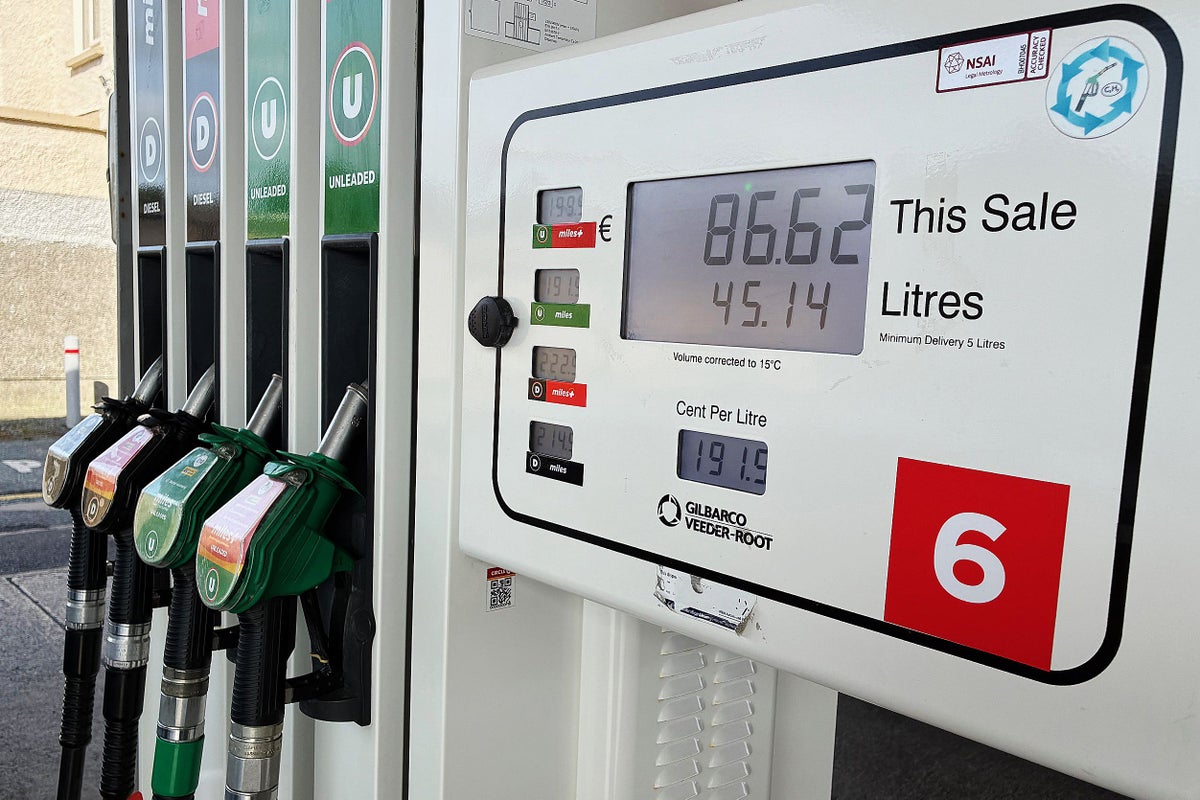
UK inflation accelerates after Iran war drives sharp rise in fuel prices

-
 Sports1 week ago
PSL 11: Hyderabad Kingsmen opt to field after winning toss against Multan Sultans
-
Business1 week ago
Trump administration in advanced talks for a rescue package for Spirit Airlines, source says
-
Business1 week ago
UK inflation accelerates after Iran war drives sharp rise in fuel prices
-

 Entertainment1 week ago
Anne Hathaway shares major news about ‘Princess Diaries 3’
-

 Tech1 week ago
Microsoft faces court battle in £2bn Windows Server class action | Computer Weekly
-
 Business1 week ago
Gold prices in Pakistan Today – April 23, 2026 | The Express Tribune
-

 Tech1 week ago
Blackbox replaces two racks of HPE storage with 8U of Everpure | Computer Weekly
-

 Fashion1 week ago
Bangladesh RMG units call for allowing local FOC raw material sourcing