

Politics
Khamenei insists ‘won’t back down’ in face of Iran protests

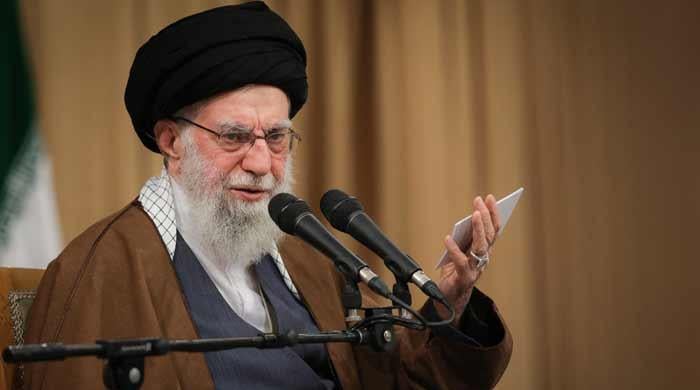
- Trump to be “overthrown” like Iran’s imperial dynasty in 1979: Khamenei.
- Rights groups accuse authorities of opening fire on protesters.
- Pahlavi says rallies show how “massive crowd forces LEAs to retreat”.
Iran’s supreme leader Ayatollah Ali Khamenei on Friday insisted that the government would “not back down” in the face of protests after the biggest rallies yet in an almost two-week movement sparked by anger over the rising cost of living.
Chanting slogans including “death to the dictator” and setting fire to official buildings, crowds of people opposed to the establishment marched through major cities late on Thursday.
Internet monitor Netblocks said authorities had imposed a total connectivity blackout late on Thursday and added early on Friday that the country has “now been offline for 12 hours […] in an attempt to suppress sweeping protests”.
The demonstrations represent one of the biggest challenges yet to the nation in its over four-and-a-half decades of existence, with protesters openly calling for an end to its theocratic rule.
But Khamenei struck a defiant tone in his first comments on the protests that have been escalating since January 3, calling the demonstrators “vandals” and “saboteurs”, in a speech broadcast on state TV.
Khamenei said US President Donald Trump’s hands “are stained with the blood of more than a thousand Iranians”, in apparent reference to Israel’s June war against the Islamic republic which the US supported and joined with strikes of its own.
He predicted the “arrogant” US leader would be “overthrown” like the imperial dynasty that ruled Iran up to the 1979 revolution.
“Last night in Tehran, a bunch of vandals came and destroyed a building that belongs to them to please the US president,” he said in an address to supporters, as men and women in the audience chanted the mantra of “death to America”.
“Everyone knows the Islamic republic came to power with the blood of hundreds of thousands of honourable people, it will not back down in the face of saboteurs,” he added.
Trump said late on Thursday that “enthusiasm to overturn that regime is incredible” and warned that if the Iranian authorities responded by killing protesters, “we’re going to hit them very hard. We’re ready to do it.”
Even larger
AFP has verified videos showing crowds of people, as well as vehicles honking in support, filling a part of the vast Ayatollah Kashani Boulevard late on Thursday.
The crowd could be heard chanting “death to the dictator” in reference to Khamenei, 86, who has ruled the republic since 1989.
Other videos showed significant protests in other cities, including Tabriz in the north and the holy city of Mashhad in the east, as well as the Kurdish-populated west of the country, including the regional hub Kermanshah.
Several videos showed protesters setting fire to the entrance to the regional branch of state television in the central city of Isfahan. It was not immediately possible to verify the images.
Flames were also seen in the governor’s building in Shazand, the capital of Markazi province in central Iran, after protesters gathered outside, other videos showed.
The protests late on Thursday were the biggest in Iran since 2022-2023 rallies nationwide sparked by the death in custody of Mahsa Amini, who had been arrested for allegedly violating the Islamic republic’s strict dress code.
Rights groups have accused authorities of firing on protesters in the current demonstrations, killing dozens. However, the latest videos from Tehran did not show intervention by security forces.
The son of the shah of Iran ousted by the 1979 Islamic Revolution, US-based Reza Pahlavi, who had called for major protests on Thursday, urged a new show of force in the streets on Friday.
Pahlavi, in a new video message early on Friday, said Thursday’s rallies showed how “a massive crowd forces the repressive forces to retreat”.
He called for bigger protests on Friday “to make the crowd even larger so that the regime’s repressive power becomes even weaker”.
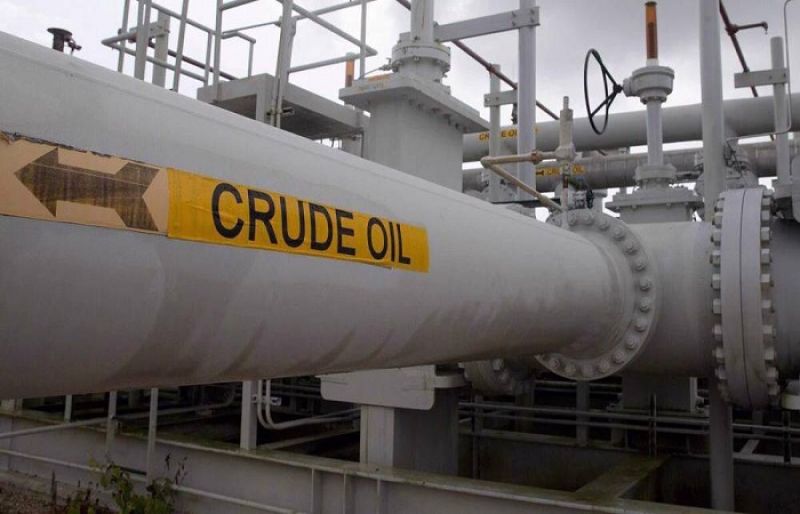
Crude oil prices have soared past $100 a barrel amid a large-scale and unprovoked US-Israeli war on Iran.
The international benchmark of Brent crude jumped more than 20 percent on Sunday, and at one point hit $115 as concerns increased over prolonged disruptions to global energy supplies.
The benchmark was being traded at around $107.50 as of 0230 GMT on Monday following a slight moderation. The uptick marked the first time oil prices climbed over $100 per barrel since the onset of Russia’s operations in Ukraine in 2022.
US President Donald Trump, who campaigned heavily on cost-of-living concerns in the 2024 vote, sought to downplay the rise in prices.
“Short term oil prices, which will drop rapidly when the destruction of the Iran nuclear threat is over, is a very small price to pay for the USA, and World, Safety and Peace,” Trump asserted in a post on Truth Social.
US Secretary of Energy Chris Wright also tried to brush off the prospect of soaring energy prices earlier on Sunday.
He told CBS News’ Face the Nation program that any increase in prices at the petrol pump would be “temporary.”Crude oil prices have spiked by about 50 percent since the US and Israel launched joint strikes on Iran on February 28.
Iran, in retaliation, has effectively brought shipping in the Strait of Hormuz to halt.
Iraq, the United Arab Emirates and Kuwait — three of the major producers in the Organization of the Petroleum Exporting Countries (OPEC) — have slashed production amid an accumulating backlog of barrels with no destination to go due to the effective closure of the strategic waterway.
Meanwhile, stocks in Asia tumbled drastically on Monday morning, as investors prepared for the fallout of soaring energy prices.
Japan’s 225 index fell more than 7 percent in early trading, while South Korea’s KOSPI plunged more than 8 percent.The Hang Seng Index in Hong Kong also fell by nearly 3 percent.
US stocks futures, which are regularly traded outside of usual market hours, also experienced significant losses.
Futures tied to Wall Street’s benchmark S&P 500 fell by 1.7 percent, while those for the tech-heavy Nasdaq Composite dropped by 1.90 percent.
The International Monetary Fund (IMF) has predicted that energy sustained 10 percent rise in oil prices brings about a 0.5 rise in inflation and a 0.15 percent reduction in global economic growth.
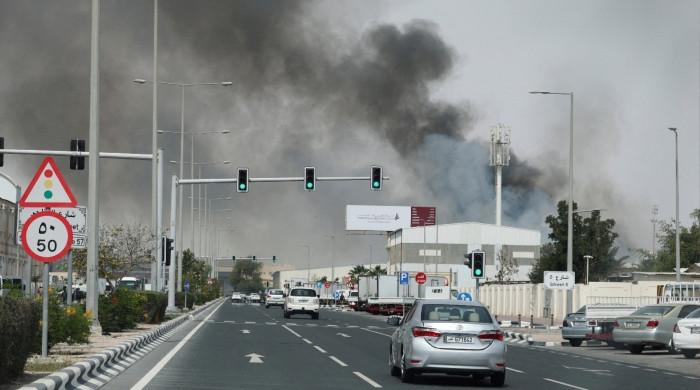
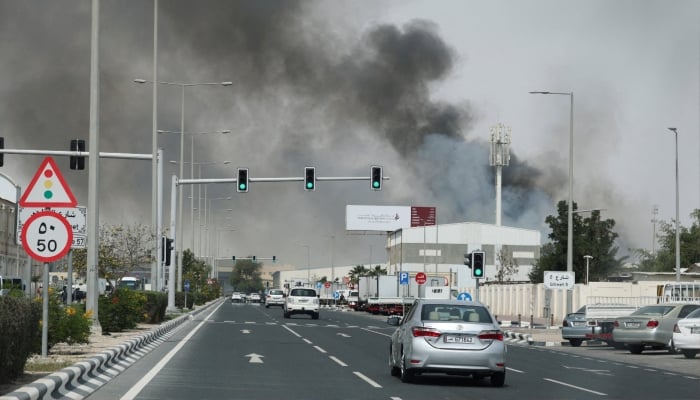
Qatari authorities have arrested more than 300 people for sharing images and what they described as “misleading information” during days of attacks by Iran, the interior ministry said on Monday.
The arrests echo measures across the Gulf as Iran targets airports, military bases, energy installations and residential areas with daily drones and missiles.
Those arrested “filmed and circulated video clips and published misleading information and rumours that could stir public opinion”, a statement said.
The people of “various nationalities” were held by the Department for Combating Economic and Cyber Crimes at the ministry´s General Directorate of Criminal Investigations.
The announcement follows a spate of arrests elsewhere in the region.
In Bahrain, four people were arrested for “filming and broadcasting clips about the effects of Iranian attacks and spreading false news”, the interior ministry said on Friday.
And in Kuwait, authorities on Saturday said three people had been arrested over a video showing them mocking the situation in the country.
Residents in the United Arab Emirates have received text messages warning of possible legal action for sharing sensitive images or “reposting unreliable information”.
The UAE attorney general’s office also warned against “filming, publishing, or circulating images and videos documenting incident sites or damage caused by falling projectiles or shrapnel”, the Emirates News Agency said.
Saudi Arabia has issued similar warnings.
Despite the warnings, images of missiles, drones and the fallout of the war continue to circulate on social media and in group chats.
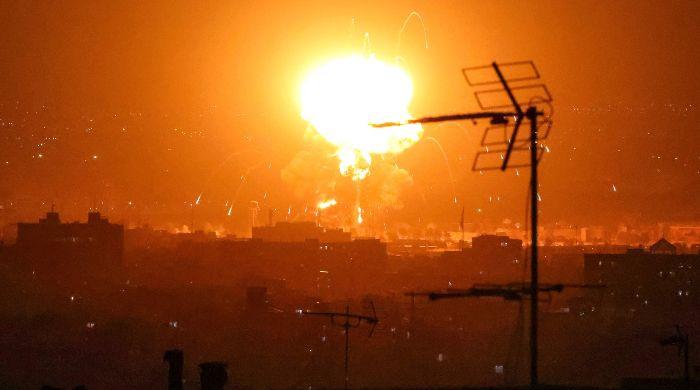
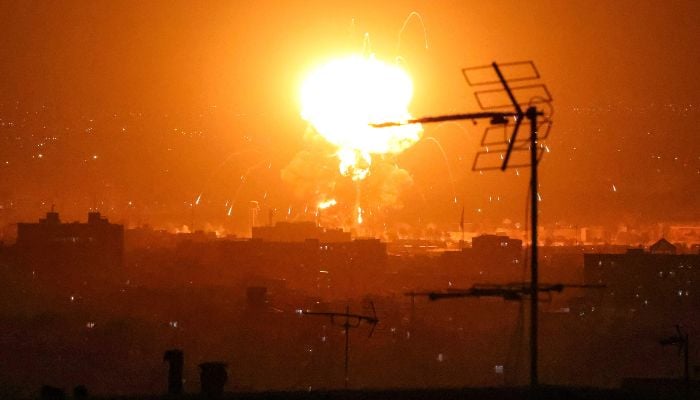
The first week of the US military campaign against Iran has cost around $6 billion, including about $4 billion spent on munitions and advanced missile interceptors, as Pentagon officials told Congress additional funding will likely be needed to sustain operations and replenish stockpiles.
The figures were disclosed during congressional discussions this week.
According to a report in The New York Times, about 4,000 Iranian targets have been struck, including missile launchers, naval vessels and air defence systems, significantly weakening Tehran’s ability to retaliate.
Gen Brad Cooper, head of US Central Command, said Iran’s ballistic missile launches have dropped by about 90% since the start of the conflict, while drone attacks have declined by roughly 83%.
Despite the losses, Iran still retains significant military capability, including an estimated half of its missile arsenal, he added.
Lawmakers in Washington are preparing for a possible supplemental funding request from the administration in the coming weeks as the rapid spending comes under scrutiny from both Democrats and Republicans.
Critics have warned that expensive interceptor missiles — some costing millions of dollars each — are being used at a pace that could strain the US defence industrial base and create shortages in other strategic theatres.
The conflict began on February 28 when the United States and Israel launched large-scale strikes on Iran, reportedly martyring more than 1,200 people, including Iran’s Supreme Leader Ali Khamenei and several senior military officials.
Iran has retaliated with missile and drone attacks targeting Gulf countries, US bases, diplomatic facilities and military personnel across the region, as well as multiple Israeli cities.
The escalation has also raised concerns about global energy supplies as maritime traffic through the Strait of Hormuz, a key route carrying about 20 million barrels of oil per day, has declined sharply.


Adidas salutes USMNT’s 1994 World Cup run with denim jersey

Oil surges past $100 a barrel as stocks tumble amid US-Israeli aggression against Iran
Espresso Machines Are Like Guitars: The Rich Don’t Win

-
 Politics2 days ago
India let Iran warship dock the day US sank another off Sri Lanka, say officials
-

 Sports3 days ago
Pakistan set for FIH Pro League debut | The Express Tribune
-

 Sports1 week ago
College basketball star suspended by team for spitting toward opposing fan
-

 Entertainment1 week ago
Al Jazeera broadcast interrupted by emergency missile alert in Qatar
-

 Entertainment2 days ago
Harry Styles kicks off new era with ‘One Night Only’ comeback show
-
 Business1 week ago
Labour parliamentarians urge UK Government to oppose Rosebank oil field
-

 Sports1 week ago
Michigan loses L.J. Cason for rest of season with torn ACL
-
 Business3 days ago
Home heating oil: ‘Most of my pension has gone on home heating oil’