

Tech
Latam-GPT: The Free, Open Source, and Collaborative AI of Latin America

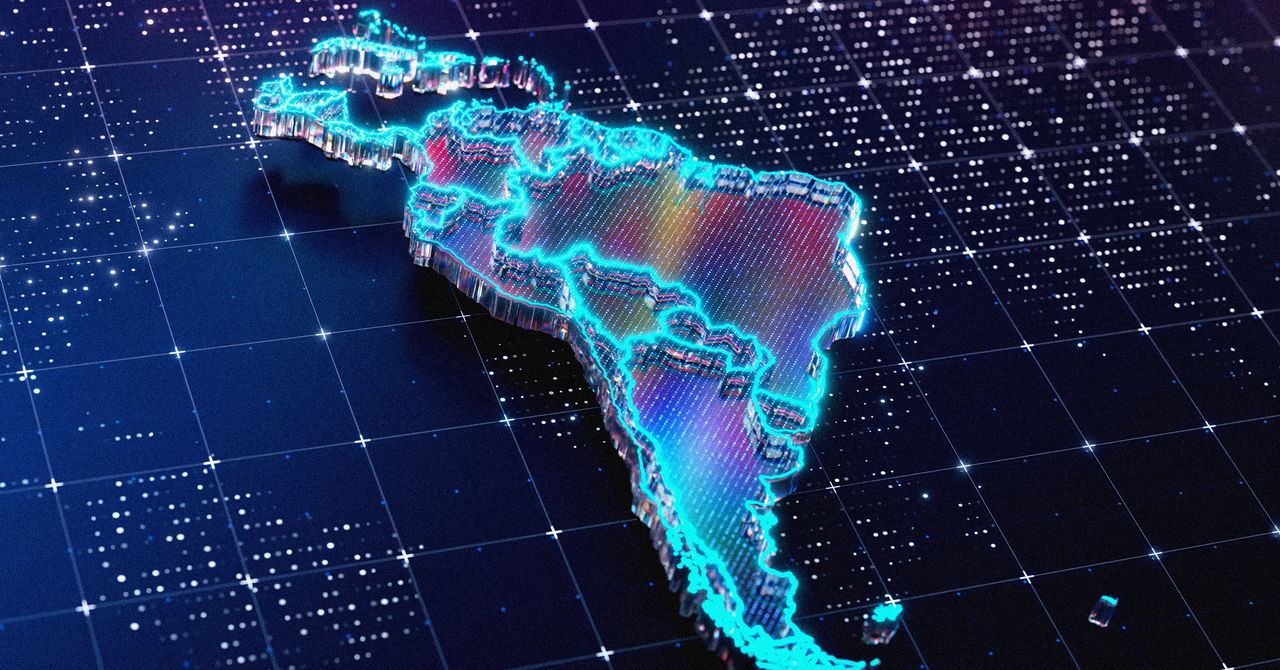
Latam-GPT is new large language model being developed in and for Latin America. The project, led by the nonprofit Chilean National Center for Artificial Intelligence (CENIA), aims to help the region achieve technological independence by developing an open source AI model trained on Latin American languages and contexts.
“This work cannot be undertaken by just one group or one country in Latin America: It is a challenge that requires everyone’s participation,” says Álvaro Soto, director of CENIA, in an interview with WIRED en Español. “Latam-GPT is a project that seeks to create an open, free, and, above all, collaborative AI model. We’ve been working for two years with a very bottom-up process, bringing together citizens from different countries who want to collaborate. Recently, it has also seen some more top-down initiatives, with governments taking an interest and beginning to participate in the project.”
The project stands out for its collaborative spirit. “We’re not looking to compete with OpenAI, DeepSeek, or Google. We want a model specific to Latin America and the Caribbean, aware of the cultural requirements and challenges that this entails, such as understanding different dialects, the region’s history, and unique cultural aspects,” explains Soto.
Thanks to 33 strategic partnerships with institutions in Latin America and the Caribbean, the project has gathered a corpus of data exceeding eight terabytes of text, the equivalent of millions of books. This information base has enabled the development of a language model with 50 billion parameters, a scale that makes it comparable to GPT-3.5 and gives it a medium to high capacity to perform complex tasks such as reasoning, translation, and associations.
Latam-GPT is being trained on a regional database that compiles information from 20 Latin American countries and Spain, with an impressive total of 2,645,500 documents. The distribution of data shows a significant concentration in the largest countries in the region, with Brazil the leader with 685,000 documents, followed by Mexico with 385,000, Spain with 325,000, Colombia with 220,000, and Argentina with 210,000 documents. The numbers reflect the size of these markets, their digital development, and the availability of structured content.
“Initially, we’ll launch a language model. We expect its performance in general tasks to be close to that of large commercial models, but with superior performance in topics specific to Latin America. The idea is that, if we ask it about topics relevant to our region, its knowledge will be much deeper,” Soto explains.
The first model is the starting point for developing a family of more advanced technologies in the future, including ones with image and video, and for scaling up to larger models. “As this is an open project, we want other institutions to be able to use it. A group in Colombia could adapt it for the school education system or one in Brazil could adapt it for the health sector. The idea is to open the door for different organizations to generate specific models for particular areas like agriculture, culture, and others,” explains the CENIA director.








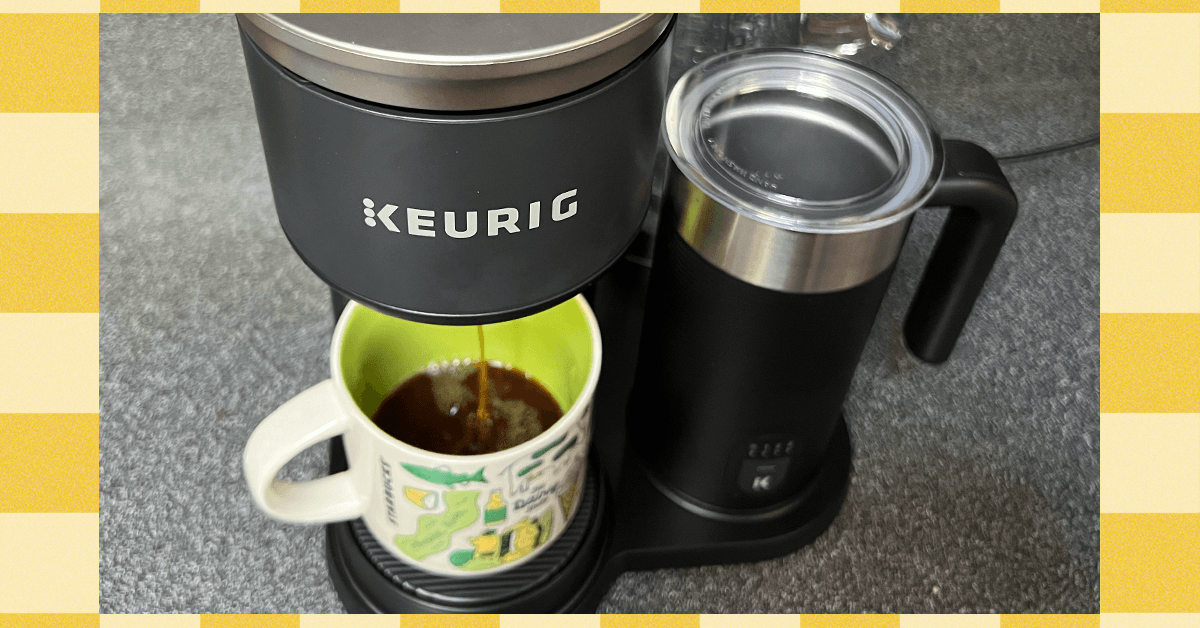
It can be tricky to figure out how to clean your Keurig, but it’s important work. If your household is like mine, your pod coffee maker runs anywhere from three to seven times per day. All of that use can cause buildup and gunk, which can affect the taste of your coffee and the lifespan of your machine. But with proper maintenance and a dedicated routine, cleaning is a breeze. Here’s everything you need to know about light daily cleaning as well as deeper cleans.
Be sure to check out our related buying guides, including the Best Pod Coffee Makers, the Best Coffee Machines, the Best Coffee Subscriptions, and the Best Milk Frothers.
Daily Maintenance
To clean the housing of your Keurig coffee maker or other pod machine, just take a damp cloth and wipe down the outside. You can clean the K-Cup holder and needle by brushing or vacuuming away any loose debris like coffee grounds—be careful near the needle part since, obviously, it’s sharp.
Some machines come with a needle cleaning tool that you insert into the top and bottom of the needle, and a few people on various forums have used a paper clip instead. Some machines have removable pod holders that can be soaked in hot water. It’s always a good idea to refer to your specific model’s user guide, and you’ll probably want to unplug your machine beforehand.
To clean your drip tray and water reservoir, remove them and wash them by hand with hot, soapy water (though avoid using too much dish soap to prevent buildup). If your machine came with a carafe, wash it by hand or pop it in the dishwasher if it’s dishwasher-safe. Let them air dry or wipe them down with a lint-free towel after rinsing them off. You should be replacing the fresh water in your reservoir often, especially if it’s been sitting for a while. If your machine has a water filter in its reservoir, replace it every two to three months. Most machines with these types of filters have maintenance reminders—heed them!
For cleaning out the internal bits and pieces, you can use something like a Keurig Rinse Pod, which helps to flush out any excess oils or flavors that might be lingering. They are especially handy after brewing with flavored K-Cups like hot cocoa or some coffee varieties. You can also just run a hot water cycle every so often, which is a particularly good idea if you haven’t used your machine for a few days.
Deeper Cleaning and Descaling
Some manufacturers recommend using filtered water or distilled water instead of tap water in your reservoirs, but I’ve always used tap water with the knowledge that I might have to clean my machine more frequently. You should deep-clean or descale your pod coffee maker every three to six months, or possibly more often if you notice hard water stains, calcium deposits, or mineral buildup, or your machine prompts you to deep-clean it.
You can do this a few ways. For the DIY method, fill your water tank with white vinegar and water (about half and half) and run large-capacity brew cycles until the reservoir is empty; Halfway through, consider letting the vinegar solution soak for a while, around 20 to 30 minutes. Follow up with a few rinsing cycles using clean water until the vinegar smell is gone. Alternatively, you can use a dedicated Keurig descaling solution according to the instructions on the bottle. That solution can be used on non-Keurig machines too. Make sure your machine is fully rinsed out before brewing your next cup of coffee.
It’s important to perform these deeper cleaning cycles on a regular basis to ensure your machine lasts as long as possible. And that your coffee tastes good, of course.
Power up with unlimited access to WIRED. Get best-in-class reporting and exclusive subscriber content that’s too important to ignore. Subscribe Today.

The mass roll-out of fibre networks is seen as the key to the expansion of digital services across major economies, but research from Kearney is warning that a €174bn funding shortfall facing Europe’s telecoms sector is putting 2030 gigabit and 5G connectivity targets at risk, meaning around 45 million Europeans could remain without adequate high-speed connectivity by the end of the decade.
In the European telecom health index, Kearney surveyed 20,000 consumers across 21 European countries using consumer research and commercial performance data.
Topline findings showed customer behaviour was a major barrier to monetisation, with weaker markets seeing higher switching, lower satisfaction and weaker bundling. Looking at successful territories, the survey showed that the leading countries are achieving take-up of up to 84% while fibre investments struggle in slow-adopter markets.
Kearney’s research shows Europe’s healthiest telecom markets are concentrated in the north, with Norway (82), Sweden (81) and Switzerland (76) leading the rankings. These countries typically combined strong fibre adoption, higher customer satisfaction and stronger commercial outcomes.
Specifically, in slow-adopter markets – Italy, the Netherlands, Poland, Ireland and Denmark – returns on capital employed have dropped to 6%, with fibre take-up closer to 45%. By contrast, high-performing markets such as Sweden, Norway, France, Spain and Portugal are achieving fibre take-up of up to 84%, supporting significantly stronger returns of 11%.
Assessing the reasons for lack of uptake in the laggard countries, Kearney’s report found that demand-side behaviour was the main barrier to fibre monetisation. In the bottom-five markets, including the UK, customers were 7% more likely to switch providers, 10% more likely to demand faster speeds, and 6% more likely to demand better customer service compared with those in stronger markets.
By contrast, the top-five countries – Sweden, Norway, France, Spain and Portugal – record significantly higher sentiment. Customers are 11% more satisfied with their mobile provider, 13% more satisfied with fixed broadband, and 13% more likely to hold multiple mobile subscriptions with the same provider. Stronger customer relationships also deliver better financial outcomes. In top-performing markets, operators typically saw average revenue per user rise by up to 15%, while customer turnover drops by 10-15%.
The UK ranked 18th out of 20 European markets, despite fibre reaching nearly 80% of homes across the nation. The report stressed that the UK still struggles with slow adoption and weaker customer sentiment, reflected in lower bundling levels of just 28%. The UK joins Belgium and Italy in the lowest-performing group – markets where fibre availability was growing, but commercial performance is failing to keep pace.
Kearney partner Christophe Firth noted that while there was no shortage of fibre in the ground, the returns for providers weren’t adding up, and that the challenge now would be to convert homes passed into paying customers, improving service experiences and rethinking how operators go to market.
“In some countries, operators have passed 90% of homes but connected fewer than 40% – that’s a massive commercial gap that needs to be addressed,” he said.
“Instead of chasing roll-out targets, operators need to focus on actually getting more consumers to sign up to the service. That means improving how they cross-sell fixed and mobile, creating bundles that genuinely appeal to households, making digital sign-up simpler, and targeting the right customers with the right offers. The infrastructure is already there – now, it’s about turning it into a consistent revenue stream.”

Against that backdrop, Europe’s reliance on American-made AI begins to look more and more like a liability. In a worst case scenario, though experts consider the possibility remote, the US could choose to withhold access to AI services and crucial digital infrastructure. More plausibly, the Trump administration could use Europe’s dependence as leverage as the two sides continue to iron out a trade deal. “That dependency is a liability in any negotiation—and we are going to be negotiating increasingly with the US,” says Taddeo.
The European Commission, White House, and UK Department for Science, Innovation and Technology did not respond to requests for comment.
To hedge against those risks, European nations have attempted to bring the production of AI onshore, through funding programs, targeted deregulation, and partnerships with academic institutions. Some efforts have focused on building competitive large language models for native European languages, like Apertus and GPT-NL.
For as long as ChatGPT or Claude continues to outperform Europe-made chatbots, though, America’s lead in AI will only grow. “These domains are very often winner-takes-all. When you have a very good platform, everybody goes there,” says Nejdl. “Not being able to produce state-of-the-art technology in this field means you will not catch up. You will always just feed the bigger players with your input, so they will get even better and you will be more behind.”
Mind the Gap
It is unclear precisely how far the UK or EU intends to take the push for “digital sovereignty,” lobbyists claim. Does sovereignty require total self-sufficiency across the sprawling AI supply chain, or only an improved capability in a narrow set of disciplines? Does it demand the exclusion of US-based providers, or only the availability of domestic alternatives? “It’s quite vague,” says Boniface de Champris, senior policy manager at the Computer & Communications Industry Association, a membership organization for technology companies. “It seems to be more of a narrative at this stage.”
Neither is there broad agreement as to which policy levers to pull to create the conditions for Europe to become self-sufficient. Some European suppliers advocate for a strategy whereby European businesses would be required, or at least incentivized, to buy from homegrown AI firms—similar to China’s reported approach to its domestic processor market. Unlike grants and subsidies, such an approach would help to seed demand, argues Ying Cao, CTO at Magics Technologies, a Belgium-based outfit developing AI-specific processors for use in space. “That’s more important than simply access to capital,” says Cao. “The most important thing is that you can sell your products.” But those who advocate for open markets and deregulation claim that trying to cut out US-based AI companies risks putting domestic businesses at a disadvantage to global peers, left to choose whichever AI products suit them best. “From our perspective, sovereignty means having choice,” says de Champris.
But for all the disagreement over policy minutiae, there is a broad belief that bridging the performance gap to the American leaders remains eminently possible for even budget- and resource-constrained labs, as DeepSeek illustrated. “If I would already think we will not catch up, I would not [try],” says Nejdl. SOOFI, the open source model development project in which Nejdl is involved, intends to put out a competitive general purpose language model with roughly 100 billion parameters within the next year.
“Progress in this field will not to the larger part depend anymore on the biggest GPU clusters,” claims Nejdl. “We will be the European DeepSeek.”


The LYCRA Company reveals legwear innovation concepts for 2026/27

Treasury, opposition agree on Nasir Abbas as Senate opposition leader

Texans’ Azeez Al-Shaair talks fine for pro-Palestinian message on eye tape: ‘It’s bigger than me’

-

 Tech7 days ago
New Proposed Legislation Would Let Self-Driving Cars Operate in New York State
-

 Sports1 week ago
Clock is ticking for Frank at Spurs, with dwindling evidence he deserves extra time
-

 Entertainment6 days ago
X (formerly Twitter) recovers after brief global outage affects thousands
-

 Fashion1 week ago
South India cotton yarn gains but market unease over US tariff fears
-

 Fashion1 week ago
China’s central bank conducts $157-bn outright reverse repo operation
-

 Sports1 week ago
US figure skating power couple makes history with record breaking seventh national championship
-

 Sports4 days ago
Pak-Australia T20 series tickets sale to begin tomorrow – SUCH TV
-

 Entertainment1 week ago
Five killed in road accident in Khyber