

Tech
Lloyds banking app ‘glitch’ shows transactions of strangers | Computer Weekly

Customers of Lloyds Banking Group have reported being able to see transactions made by other customers on their banking apps.
Users of the group’s banking apps, which include customers of Halifax, Bank of Scotland and Lloyds Bank, reported the problems this morning (Thursday 12 March 2026).
The bank gave little information in a statement: “We’re sorry that some customers experienced an issue viewing transactions in the app for a short time this morning. The issue was quickly resolved and we’re looking into what happened,” it said.
But MoneySavingExpert.com (MSE) founder Martin Lewis posted on X to seek information about the extent of the issue.
Lewis wrote: “Do you use the Lloyds, Bank of Scotland or Halifax apps? People have been messaging me this morning of being shown other people’s transactions. I want to see how widespread this is. Has it happened to you?”
One user responding to Lewis wrote: “My dad opened the Lloyds Bank app with facial recognition. It showed all details for a lady from incomings, outgoings & account number. Having worked in a building society, this is not just a ‘simple glitch’ as they are trying to tell everyone. This is a bit more serious!”
Another said: “Lloyds app this morning. Saw transactions I didn’t recognise – incoming/outgoing with shop names and recipient/sender names, card transaction locations, amounts, last 4 digits of the card used, direct debits and their reference numbers. No account holder name though.”
As mobile apps become the most used banking channel, glitches are magnified by immediate public reaction. As a result, MPs are watching closely. Following a major outage at Barclays Bank in January 2025, MPs on the Treasury Committee demanded that banks come clean about access issues.
MPs set questions for the UK’s nine biggest banks, including Lloyds. Bank bosses were asked to provide an overview of the number of instances and the amount of time in total that services have been unavailable to customers due to IT failure over the past two years; how many customers have been affected; the amount of compensation that has been paid to their customers; and a description of the reason for the failures. You can read the letters to the bank CEOs here.
Data received from banks by MPs on the Treasury Committee revealed at least 158 banking IT failures between January 2023 and February 2025, equating to more than 800 hours of service unavailability. Barclays Bank reported the most incidents, at 33, followed by Allied Irish Bank, HSBC and Santander, with 32 each. Nationwide Building Society reported 18 outages, NatWest 13 and Lloyds Bank 12. In single figures were Allied Irish Bank, with nine, Danske, with five, and Bank of Ireland, with four.
Treasury Committee chair Meg Hillier MP said the closure of high street branches in favour of online banking meant bank crashes hit customers harder. “The rapidly declining number of high street bank branches makes the impact of IT outages even more painful. That’s why I’ve decided to write to some of our biggest banks and building societies,” said Hillier.
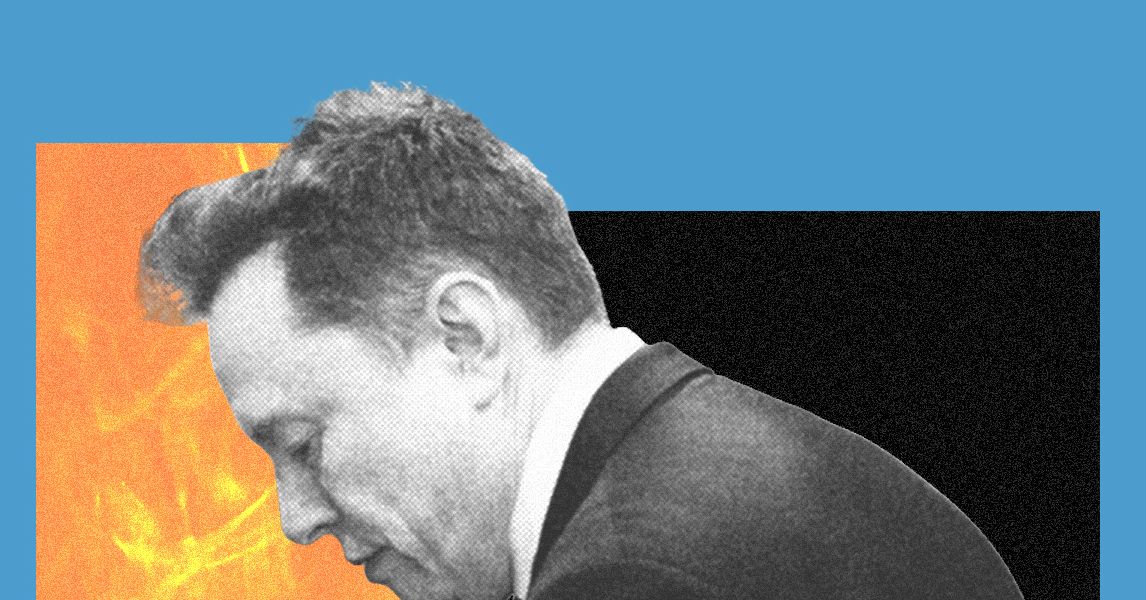
Elon Musk returned to the witness stand on Wednesday to continue telling his side of the story in his legal battle against OpenAI and its CEO Sam Altman. Under cross-examination from OpenAI’s lawyers, Musk was pressed on all the ways he tried to squeeze the organization over a 2017 power struggle that he ultimately lost. Around this time, Musk tried to hire away OpenAI researchers and stopped sending it funding he had previously promised, according to emails presented as evidence in the case.
As the cross-examination began, tension rippled through the courtroom. Judge Yvonne Gonzalez Rogers started the day by reprimanding someone in the gallery for taking a picture of Musk. OpenAI president and cofounder Greg Brockman sat behind his lawyers with a yellow legal pad in his lap, giving Musk a cold stare as he testified. Musk grew visibly frustrated on the witness stand, pausing frequently to tell OpenAI’s lawyer, William Savitt, that he saw his questions as misleading. Meanwhile, Savitt’s cross-examination was derailed by objections, technical issues, and Musk continuously claiming he doesn’t recall key details of OpenAI’s history.
Savitt showed the courtroom emails from September 2017 between Musk, Brockman, and researcher Ilya Sutskever discussing the formation of what would become OpenAI’s for-profit arm. In the thread, Musk demanded the right to choose four members of its board of directors, giving him more voting power than his cofounders, who would be left with three in total. “I would unequivocally have initial control of the company, but this will change quickly,” said Musk in one message. Sutskever wrote back rejecting the idea because he said he feared it would give Musk too much power.
Months before these negotiations started, Musk had halted payments to OpenAI, which was particularly difficult for the organization because he was then its main source of funding. Since 2016, Musk had been sending $5 million payments to OpenAI quarterly as part of a broader $1 billion pledge he made at the organization’s launch. But in the spring of 2017, he stopped sending the money. In another email from August 2017, the head of Musk’s family office, Jared Birchall, asked Musk if he should continue withholding it. Musk responded simply, “Yes.”
Around the time Musk lost the power struggle, emails show that he held discussions with executives at Tesla and Neuralink, his brain-computer interface company, about hiring OpenAI employees. At the time, Musk was still a board member of OpenAI.
Musk sent an email to a Tesla vice president in June 2017 about hiring an early OpenAI researcher, Andrej Karpathy. “Just talked to Andrej and he accepted as joining as director of Tesla Vision,” Musk wrote. “Andrej is arguably the #2 guy in the world in computer vision … The openai guys are gonna want to kill me, but it had to be done.”
On the stand, Musk argued that Karpathy was already interested in leaving OpenAI when he tried to recruit him to Tesla. “Andrej had made his decision. If he’s going to leave OpenAI, he might as well work at Tesla,” Musk said.
In October 2017, Musk also wrote to Ben Rapoport, a cofounder of Neuralink. “Hire independently or directly from OpenAI,” said Musk. “I have no problem if you pitch people at OpenAI to work at Neuralink.”
When pressed about this by Savitt, Musk argued that it would have been illegal for him not to allow Tesla and Neuralink to hire from OpenAI. “It’s illegal to restrict employment. It would be illegal to say you can’t employ people from OpenAI. You can’t have some cabal that stops people from working at the company they want to work at,” Musk said.
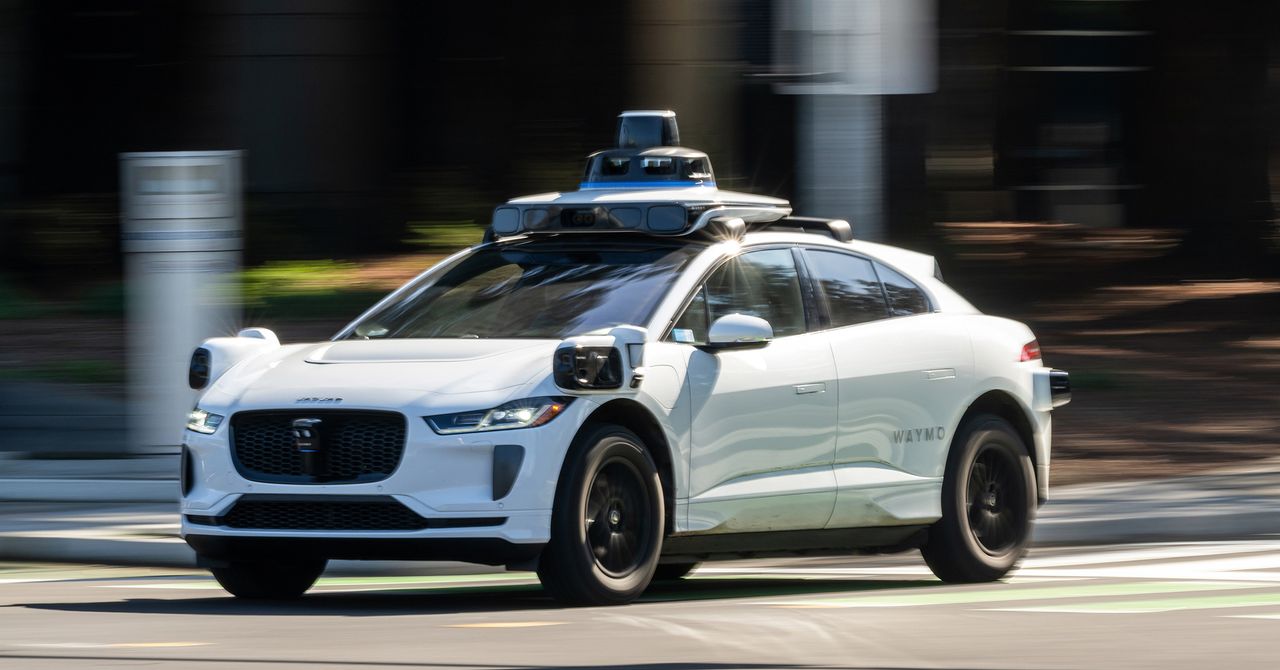
Emergency first-responder leaders told federal regulators in a private meeting last month that they were frustrated with the performance of autonomous vehicles on their streets—that city firefighters, police officers, EMTs, and paramedics are forced to spend time during emergencies resolving issues with frozen or stuck cars. One fire official called them “a safety issue for our crews as well as the victims.” WIRED obtained an audio recording of the meeting.
Officials from San Francisco and Austin, where Waymo has been ferrying passengers without drivers for more than a year, said the vehicles’ performance is getting worse. “We are actually seeing something interesting: backsliding of some things that had improved upon,” Mary Ellen Carroll, the executive director of San Francisco’s Department of Emergency Management, told officials with the National Highway Traffic Safety Administration (NHTSA), which oversees self-driving vehicle safety in the US. “They are committing more traffic violations.”
“We’ve seen some behavior we haven’t seen in a few years … Waymo is frequently now blocking our fire stations from access,” added Chief Patrick Rabbitt, the head of the San Francisco Fire Department. “Their default is to freeze.” The situation can prevent firetrucks from responding to emergencies in a “timely and appropriate” way, he said.
In Austin, first responders have been frequently stymied by Waymos “freezing up,” said Lieutenant William White, head of Highway Enforcement Command at the Austin Police Department. White said that, contrary to what Waymo had told first responders, the vehicles often fail to recognize or respond to officers’ hand signals, which can lead to cascading delays during emergencies or unusual road incidents.
“I believe the technology was deployed too quickly in too vast amounts, with hundreds of vehicles, when it wasn’t really ready,” White said. NHTSA did not respond to WIRED’s request for comment.
The complaints come as Waymo embarks on an ambitious expansion across the US and the world. Today, the company offers driverless rides in parts of 10 US cities, with plans to launch service in 10 more before the end of the year, including London. Waymo said last month that it’s now providing 500,000 paid rides weekly—a figure that’s still dwarfed by human-powered ride-hail services (Uber provides some 400 times that number weekly) but has grown tenfold since last year.
But these comments from cities where the service is already operating threaten to slow the rollout of driverless technology, which, according to Waymo’s data, reduces serious crashes compared to human-driven cars. Waymo is already facing political opposition, especially from organized labor, in several dense, blue, and potentially lucrative cities, including Boston, New York City, Seattle, and Washington, DC.
In a statement, Waymo spokesperson Julia Ilina wrote: “We deeply value our partnership with first responders and our shared commitment to safety. Their ongoing feedback has been instrumental in driving impactful improvements to the Waymo service.” The company says it has conducted in-person training for more than 35,000 emergency responders across the country.
Public Comment Periods
The comments made in the private meeting are blunter than what government officials have generally said in public. But they reflect long-simmering and sometimes vocal frustrations expressed by city leaders since at least late last year. Since autonomous vehicle operations are regulated in California and Texas by state rather than city officials, local first-responder departments and those who represent them can generally only request that developers like Waymo make specific changes to their operations.
On Wednesday, Austin first responders appeared before the City Council to discuss Waymo’s response to an incident last month in which a driverless vehicle blocked an ambulance for two minutes that was responding to a shooting in the city’s downtown, which killed three people and injured at least 14. Though officers were able to connect quickly with Waymo operators to move the vehicle, they reported that it had taken up to three minutes to connect with a remote agent in the past. They reiterated that Waymos don’t always respond well to hand signals, especially ones from police mounted on motorcycles.
Waymo declined to attend the meeting, and two front-row chairs labeled “RESERVED FOR: WAYMO” remained empty throughout the two-hour session.
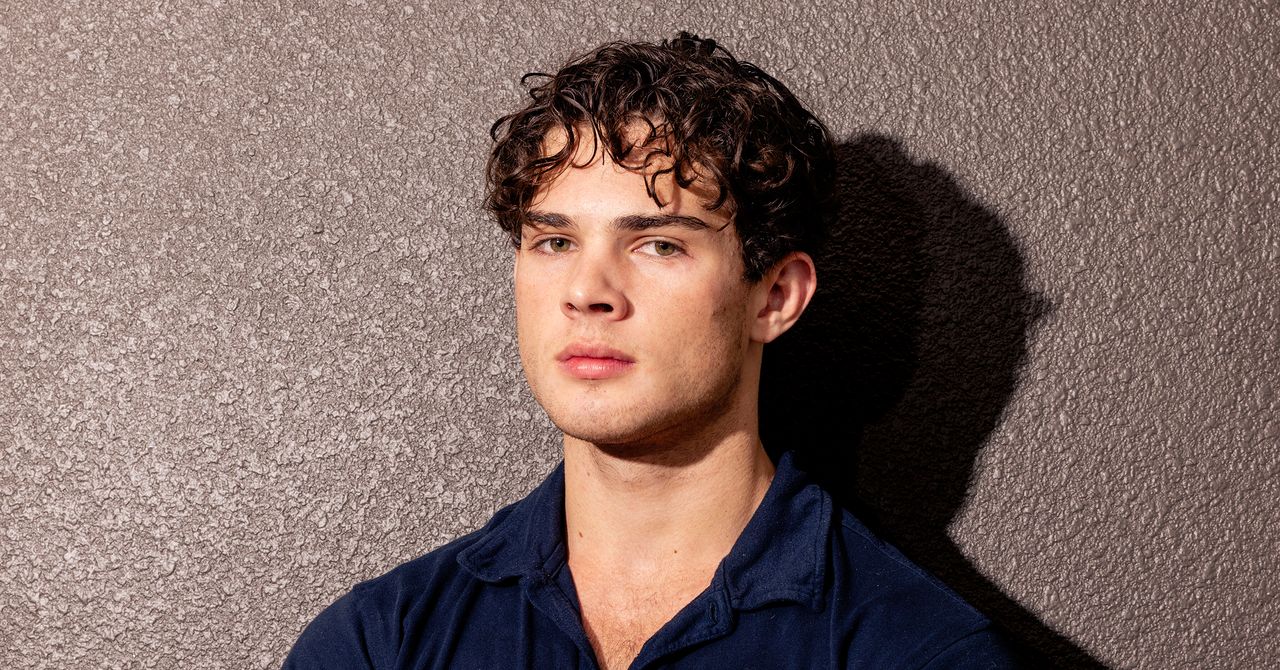
An 18-year-old woman who promotes herself as the “#1 female looksmaxxer” is suing the highly controversial streamer Braden Eric Peters, aka Clavicular, for fraud, battery, and alleged sexual assault.
In the suit, which was filed in Miami-Dade County court and obtained by WIRED, Aleksandra Mendoza, who goes by the name @zahloria, or Alorah Ziva, on Instagram, alleges that she first encountered Peters in May 2025, when she was just 16 years old. According to the complaint, Peters promised Mendoza he could make her “the female face of looksmaxxing,” the online trend of using surgery or drugs to enhance one’s facial features.
Eager to grow her social media following, Mendoza agreed to make four looksmaxxing videos for Peters in exchange for a $1,000 payment, court documents say. The two allegedly began a text-based relationship, with Peters offering to pay for an Uber ride for Mendoza to visit him and his family in Cape Cod.
Upon her arrival, Mendoza alleges, Peters plied her with alcohol and “had sex with Mendoza while she was knowingly intoxicated, to the point where she was unable to give consent,” the complaint says.
Mendoza goes on to accuse Peters of nonconsensually having sex with her again the following morning while she was sleeping. The suit notes that Peters was aware of Mendoza’s age, referring to her as a “minor” in an online comment. (The age of consent in Florida is 18, but the state’s “Romeo and Juliet” law provides an exception for those who are older than their 14-to-17-year-old partners by four years or less.)
According to the suit, Mendoza bumped into Peters in Miami a few months later. He allegedly invited her to his house to livestream with him, promising that he could help her grow her following. During the livestream, he then allegedly injected her in the cheeks with Aqualyx, an injectable used to reduce fat in the chin, thighs, or stomach.
According to the US Food and Drug Administration website, Aqualyx is not approved by the FDA and can result in “permanent scars, serious infections, skin deformities, cysts, and deep, painful knots” in the skin if it is administered by a non-professional. Mendoza contends that her right cheek became “perforated” after she was injected by Peters.
Though Peters and Mendoza continued to have sporadic contact with each other, the suit alleges, their relationship soured in early 2026, when Mendoza signed a contract to promote an online trading platform. She alleges that she lost this sponsorship after Peters “began a campaign to discredit [her],” which the suit contends was due to Peters’ concerns over her exposing him.
Mendoza is suing Peters for battery, fraud, and emotional distress, and is seeking at least $50,000 in damages. In a post on X, Peters appeared to deny the allegations, writing, “The consistent theme of girls trying to use me for money is brutal for a young guy trying to navigate a complex society. Hopefully I can find a good girl whos [sic] intent is to not to screw me over and take my money.”
This is not the first time Peters has faced legal action. In 2026, he was arrested by Fort Lauderdale police for allegedly instigating a physical fight between two women and livestreaming it on the platform Kick. He is also reportedly being investigated by Florida state wildlife authorities for shooting a dead alligator on livestream.
Through her attorney Andrew Moss, Mendoza declined to comment. “She will tell her story through the legal process,” Moss said. “We do look forward to hearing from Mr. Peters and his lawyers.” A representative for Peters did not immediately return WIRED’s request for comment.


India-New Zealand FTA to open new avenues for growth: T&A industry

Why did Goldie Hawn go on an acting hiatus?

War causes production loss, serious stress for Indian textile industry

-

 Politics1 week ago
UK’s Starmer seeks to deflect blame over Mandelson appointment
-
 Business1 week ago
Us-India Trade Talks: US–India trade deal: Where do talks stand & what to expect – explained – The Times of India
-
 Fashion1 week ago
Global energy growth slows to 1.3% in 2025: Report
-
 Business1 week ago
UK inflation accelerates after Iran war drives sharp rise in fuel prices
-

 Tech1 week ago
Nation states responsible for ‘nationally significant’ cyber attacks against UK, says NCSC chief | Computer Weekly
-

 Tech1 week ago
Microsoft faces court battle in £2bn Windows Server class action | Computer Weekly
-

 Sports1 week ago
PSL 11: Hyderabad Kingsmen opt to field after winning toss against Multan Sultans
-
 Business1 week ago
Trump administration in advanced talks for a rescue package for Spirit Airlines, source says