

Fashion
LYCRA x EUROJERSEY bring innovation to men’s fashion


Garments designed to meet the needs of those who live each day to the fullest, transitioning seamlessly from office hours and business trips to more informal social moments. Perfectly aligned with the contemporary lifestyle, these garments help the wearer feel confident and impeccably dressed, even when facing small daily challenges, thanks to innovative benefits such as quick drying and wrinkle resistance.
EUROJERSEY and The LYCRA Company unveil “Upgrade Your Life”, redefining men’s formalwear with Sensitive Fabrics powered by LYCRA fibre.
Designed for the modern lifestyle, the garments combine elegance, comfort, and performance—offering wrinkle resistance, breathability, and durability.
The collection bridges sportswear functionality with refined everyday style.
At the heart of the project are Sensitive Fabrics powered by LYCRA fibre, developed to express a new aesthetic of comfort and elegance, from day to night. A way of dressing that fits every occasion, where versatility is key and where sportswear functionality meets the refined appeal of formalwear.
The result is a smart yet essential wardrobe, ideal for keeping pace with the dynamic rhythm of city life, from morning to night.
Made with patented technology, Sensitive Fabrics powered by LYCRA fibre stand out for their comfort, breathability, durability, and exceptional shape memory. EUROJERSEY’s expertise merges with the advanced properties of LYCRA fibre, which further enhances the fit and performance of Sensitive Fabrics. The result is garments that move naturally with the body, maintaining their shape and flawless appearance even after hours of wear or time spent packed in a suitcase.
Upgrade Your Life is an invitation to embrace a new lifestyle – one where clothing is no longer a constraint, but an ally. Where aesthetics and functionality, technology and comfort, come together to redefine the rules of everyday elegance, 24 hours a day.
Note: The headline, insights, and image of this press release may have been refined by the Fibre2Fashion staff; the rest of the content remains unchanged.
Fibre2Fashion News Desk (MS)
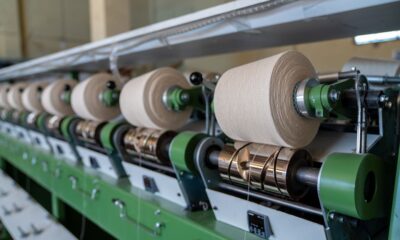











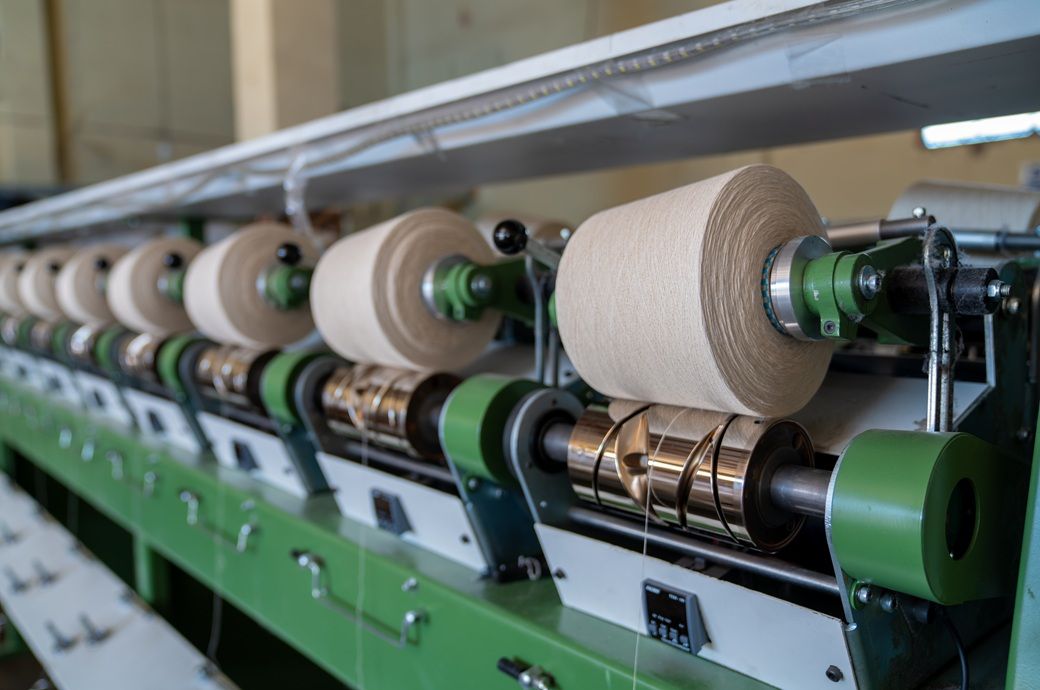
Italy confirms its position among the world leaders in the textile machinery sector, thanks to a solid and highly specialized production system. The industry stands out for its strong international vocation, with a predominant share of production destined for foreign markets (86% of its sales) and a consolidated presence in over 130 countries. This places the country among the top global exporters of textile technology, renowned for its quality, innovation, and reliability.
In the first eleven months of 2025, sales in Germany have already reached 81 million euros. Among the most requested technologies, accessories stand out (36%), followed by finishing machinery (33%)—the latter being essential for the production processes of the most innovative textile sectors.
Italy’s textile machinery sector will showcase advanced, customised technologies at Techtextil 2026 in Frankfurt, reinforcing its global leadership.
With 86 per cent exports across 130+ countries and €81 million (~$93.71 million) sales in Germany, innovation-driven SMEs and strong demand for accessories and finishing machinery continue to drive growth in technical textiles.
The strength of Italian textile machinery lies in its dynamic structure, composed of small-to-medium-sized companies that are heavily oriented toward Research & Development. This flexibility allows Italian manufacturers to collaborate closely with end-users, transforming customer needs into highly personalized and versatile technological solutions.
“The growing demand for innovative textiles across various industrial fields is further consolidating our manufacturers’ position,” emphasizes Marco Salvadè, President of ACIMIT. “At Techtextil 2026, the Italian offering will once again demonstrate how the combination of high technology and customization capabilities is the key to meeting the challenges of the technical textiles sector.”
Italian expertise, rooted in historic districts such as Bergamo, Biella, Brescia, Como, Milan, Prato, and Vicenza, continues to guarantee standards of quality and reliability that make Made in Italy a point of reference for the entire global industry.
Note: The headline, insights, and image of this press release may have been refined by the Fibre2Fashion staff; the rest of the content remains unchanged.
Fibre2Fashion News Desk (MS)

Cold-chain infrastructure remains limited, with around 8,815 storage facilities and a capacity of 40.21 million metric tonnes, the March 2026 report, titled ‘Transforming India’s logistics ecosystem’, noted.
Despite India’s national average logistics cost being down to 7.97 per cent of GDP from 14 per cent earlier, several regions face significantly higher logistics costs due to uneven infrastructure and connectivity, a FICCI-Grant Thornton report said.
Cold-chain infrastructure remains limited.
Non-standard warehousing causes delays, higher costs and inconsistent supply-chain performance, it noted.
As planning was historically fragmented across departments, deep alignment gaps remain.
Non-standard warehousing causes delays, higher costs and inconsistent supply-chain performance, it remarked.
Due to cold chain imbalance and reefer underuse, state-level demand mismatches persist, while refrigerated transport remains significantly underutilised nationwide.
Persistent structural challenges include fragmented infrastructure and limited multimodal integration; continued dependence on road-based freight due to coordination gaps across transport modes; limited adoption of automation; and labour-intensive warehousing and logistics operations, resulting in higher error rates, longer turnaround times and limited scalability, according to the report.
Technology is becoming central to logistics planning and execution, with artificial intelligence-driven demand forecasting and routing, digital twins for warehouse and network design, and IoT-enabled visibility across storage and transport improving decision making, the report added.
Control tower models are enabling real-time coordination and faster response to disruptions, while platforms like ULIP provide the digital backbone for interoperable, multimodal logistics, the report mentioned.
Fibre2Fashion News Desk (DS)

ICE cotton futures recovered due to technical buying and short covering on yesterday. Although, gains were capped by stronger US dollar and persistent inflation worries driven by rising global energy prices which continued to weigh on market sentiment throughout the session. US dollar also made US cotton purchase expensive for overseas buyers.
The most traded May 2026 contract settled at 67.62 cents per pound, up 0.44 cent. The market indicated recovery despite underlying macroeconomic pressure. During the session, the contract touched an intraday low of 66.65 cents, marking its lowest level since March 16, reflecting early weakness before recovery.
The strengthening US dollar index added further pressure, as it makes US cotton more expensive for international buyers, thereby reducing export competitiveness.
The trading session remained highly volatile and mixed, with prices dipping initially and then recovering due to technical buying and short covering.
Technically, the market is showing signs of stabilisation as the May contract has managed to close above its 200-day moving average in 5 out of the last 7 sessions, which is considered a supportive signal for trend recovery.
Trading activity remained subdued with total volume at 52,002 contracts, the lowest in nearly one month, indicating reduced participation and lack of strong conviction among traders. As per ICE data released on March 23, the certified stock of deliverable No.2 cotton remained unchanged at 115,640 bales, indicating a neutral supply-side factor with no fresh pressure from inventories.
Market direction was influenced by uncertain geopolitical developments, particularly conflicting signals around US–Iran diplomacy and fluctuations in crude oil prices, which impacted broader commodity sentiment.
Rising crude oil and energy prices are increasing concerns that inflation will remain elevated, which could spread across commodities and impact cotton pricing dynamics.
According to market analysts, the inflation is unlikely to decline significantly, and sustained higher costs may start affecting cotton demand globally.
Elevated energy prices are expected to increase costs across the entire cotton supply chain, including production, processing, and transportation, which may reduce mill buying interest.
Financial markets have shifted expectations, now indicating no interest rate cuts by the US Federal Reserve in 2026, whereas earlier there were expectations of at least two rate cuts before escalation of Middle East tensions.
Although US President Donald Trump postponed planned strikes on Iranian energy infrastructure, market participants remained sceptical about any quick resolution to Middle East tensions, keeping uncertainty elevated.
The recent upward movement in cotton prices towards 68–69 cents followed by a pullback is being viewed as a normal technical correction, after a sharp rally over the past few weeks.
This morning (Indian Standard Time), ICE cotton for May 2026 was traded at 68.26 cents per pound (up 0.64 cent), cash cotton at 65.62 cents (up 0.44 cents), the July 2026 contract at 70.31 cents (up 0.54 cent), the October 2026 contract at 71.77 cents (up 0.46 cent), the December 2026 at 72.61 cents (up 0.33 cent) and the March 2027 contract at 73.60 cents (up 0.25 cent)). A few contracts remained at their previous closing levels, with no trading recorded so far today.
ICE cotton futures rebounded on technical buying and short covering, with the May 2026 contract settling at 67.62 cents/lb.
However, gains were capped by a stronger US dollar and inflation concerns linked to rising energy prices.
Low trading volumes and geopolitical uncertainty kept sentiment cautious despite signs of technical stabilisation.
Fibre2Fashion News Desk (KUL)


Co-op boss quits after ‘toxic culture’ claims reported by BBC

‘She’s Never Going to Age’: Porn Stars Are Embracing AI Clones to Stay Forever Young

How Arbeloa has won over doubters and given Real Madrid hope

-

 Fashion1 week ago
Sales at US apparel, clothing accessories stores up 4% YoY in Jan 2026
-

 Tech1 week ago
Justice Department Says Anthropic Can’t Be Trusted With Warfighting Systems
-

 Sports1 week ago
March Madness 2026 – How to watch in SA, start time, schedule, TV channel for NCAA championship basketball tournament
-

 Entertainment1 week ago
Val Kilmer revived 1 year after death through AI
-
 Business1 week ago
Stocks and pound rise as US rate call approaches
-
 Business1 week ago
Brits cashing in jewellery as gold price hits record high
-

 Politics1 week ago
Iran strikes Tel Aviv with cluster-warhead missiles in retaliation of Larijani’s martyrdom
-

 Fashion1 week ago
Spain’s Inditex FY25 sales rise 3.2% to $46.28 bn amid strong demand