

Business
Mining merger talks see FTSE 100 end week on high

The FTSE 100 ended a record-breaking week in fine style, pushing back towards record levels, boosted by a possible mega-mining deal and a rebound in the oil price.
The FTSE 100 index closed up 79.91 points, 0.8%, at 10,124.60.
The FTSE 250 index ended up 144.50 points, 0.6%, at 23,036.80, and the AIM All-Share was up 5.57 points, 0.7%, at 790.42.
For the week, the FTSE 100 rose 1.7%, the FTSE 250 firmed 2.8% and the AIM All-Share advanced 3.1%.
Renewed merger talks between Rio Tinto and Glencore sparked gains across listed miners, with M&A seen as key to sector growth.
The discussions, confirmed by Glencore late Thursday, will likely take the form of an all-share merger, structured as Rio Tinto acquiring Glencore via a court-sanctioned scheme of arrangement.
Under UK takeover rules, Rio has until February 5 to announce a firm intention to make an offer.
Glencore jumped 9.6% on the news, leading the FTSE 100 risers, but Rio Tinto fell 3.0%. Other miners gained, with Antofagasta up 4.1%, and Anglo American, which has merged with Canada’s Teck Resources, up 2.7%.
Bank of America said it was “not surprised” by the talks, saying the sector has reached a point where organic growth and portfolio pivots are increasingly difficult for miners of Rio and Glencore’s scale.
“M&A, while not without its risks, mitigates other risks such as project delays, capex overruns and technical issues in ramp-up,” the broker said.
The discussions are the second round of talks in just over a year between the two companies, after Glencore approached Rio Tinto in late 2024, but a deal did not proceed.
RBC Capital Markets said the logic of a Rio–Glencore combination rests almost entirely on copper.
“Glencore offers immediate scale, operating cash flow and a deep copper pipeline, while Rio brings balance-sheet strength,” RBC said.
Elsewhere, BP and Shell rallied 2.4% and 3.0% respectively as the oil price bounced.
Brent oil traded at 63.42 US dollars a barrel at the time of the London equities close on Friday, up from 61.12 US dollars late Thursday.
David Morrison, senior market analyst at Trade Nation, said the oil rebound follows heightened geopolitical risk, including renewed US threats toward Iran and continued efforts by the Trump administration to exert control over Venezuela’s energy sector.
Markets are also factoring in the potential impact of new sanctions targeting buyers of Russian oil, alongside expectations that commodity index rebalancing could bring fresh inflows into crude, he said.
“Despite the recent rally, sentiment remains cautious, with expectations for a sizeable surplus of crude oil later in the year continuing to hang over the market,” he added.
In European equities on Friday, the CAC 40 in Paris closed up 1.4% while the DAX 40 ended 0.5% in Frankfurt, after hitting an all-time high.
In Paris, L’Oreal climbed 6.3% as UBS upgraded to “buy” while BNP Paribas firmed 5.7% as JPMorgan upgraded to “overweight”.
Stocks in New York were higher at the time of the London close on Friday.
The Dow Jones Industrial Average was up 0.4%, heading towards 50,000, the S&P 500 was 0.5% higher and the Nasdaq Composite advanced 0.7%.
US markets were weighing mixed US jobs data and news that the US Supreme Court decided not to release a ruling on the legality of Donald Trump’s tariffs.
The keenly awaited US jobs figures showed total nonfarm payroll employment increased by 50,000 in December, down from a revised 56,000 in November and below the FXStreet-cited consensus of 60,000.
November’s total was revised down from 64,000, while October was revised down by 68,000, from minus 105,000 to minus 173,000, meaning employment in October and November combined is 76,000 lower than previously reported.
But the weak payroll data was offset by news that the unemployment rate edged down to 4.4% from a revised 4.5% in November and below the FXStreet-cited consensus of 4.5%.
Wells Fargo analysts commented: “On balance, we do not believe today’s employment report meaningfully changes the outlook for US monetary policy. The cooling in the labour market still appears to be proceeding at an orderly and gradual pace, which likely will leave the FOMC on hold at its upcoming meeting on January 28.”
Nonetheless, with the unemployment rate “still above our estimate of full employment, underlying inflation slowly cooling and the policy rate setting above neutral, we remain of the view that a couple more rate cuts this year is a reasonable base case,” the broker added.
Morgan Stanley now looks for 25 basis rate cuts from the Fed in June and September, as opposed to its earlier call for cuts in January and April.
“Given the improved economic momentum and the decline in the unemployment rate, we see less need for near-term cuts to stabilise the labour market,” the broker said.
“Instead, we now think the Fed will cut rates as it becomes clear tariff pass-through is complete and inflation is decelerating toward the 2.0% target,” Morgan Stanley added.
The yield on the US 10-year Treasury was quoted at 4.17% on Friday, trimmed from 4.18% on Thursday. The yield on the US 30-year Treasury was at 4.83%, narrowed from 4.85%.
The pound was quoted at 1.3407 US dollars at the time of the London equities close on Friday, down from 1.3431 US dollars on Thursday.
The euro was lower at 1.1631 US dollars from 1.1657 US dollars. Against the yen, the dollar was trading at 158.06 yen, up from 156.93 yen.
Back in London, J Sainsbury endured another tricky day, down 5.8% after mixed third-quarter trading.
The food retailer, which fell on Thursday after rival Tesco’s trading update, slid again after weak non-food sales offset a strong food showing.
Sales at Argos and in clothing and general merchandise fell short of hopes, leaving some analysts questioning whether Sainsbury should ditch Argos altogether.
Dan Coatsworth, head of markets at AJ Bell, said: “Sainsbury’s clearly had a bumper Christmas for grocery sales, enjoying notable success with its premium range. However, Argos continues to be the thorn in its side with another period of weakness.”
The persistent underperformance only “strengthens the argument for Sainsbury’s to get shot of Argos as fast as it can”, he added.
Elsewhere, Fresnillo rose 1.9% after the latest gains in the gold price, while Marks & Spencer gained a further 2.4% on upbeat commentary following Thursday’s well received trading news.
Gold traded at 4,504.56 US dollars an ounce at Friday’s close, up against 4,457.01 US dollars on Thursday.
The biggest risers on the FTSE 100 were Glencore, up 39.6 pence at 452.6p, Antofagasta, up 137.0p at 3,473.0p, Auto Trader, up 21.8p at 593.6p, Shell, up 78.0p at 2,640.0p and Anglo American, up 84.0p at 3,126.0p.
The biggest fallers on the FTSE 100 were J Sainsbury, down 17.40p at 311.60p, Endeavour Mining, down 204.0p at 3,894.0p, Rio Tinto, down 188.0p at 6,006.0p, IAG, down 11.80p at 424.10p, and Vodafone, down 2.45p at 101.20p.
Monday’s local corporate calendar has a trading statement from Oxford Nanopore Technologies.
Later in the week, trading updates are due from housebuilder Persimmon and Premier Inn owner, Whitbread.
Next week’s global economic calendar has US inflation data, eurozone industrial production figures and a UK GDP print.
– Contributed by Alliance News
Business
Indian electronic firms seek PLI 2.0, eye 30–35% share in global mobile production by FY31 – The Times of India

With the production-linked incentive (PLI) scheme now over, India’s electronics industry has pitched a fresh expansion plan, seeking continued government support as it eyes a strong jump in manufacturing and exports over the next five years. During discussions with the ministry of electronics and IT (MeitY), the industry said that by FY31, India could capture 30–35% of global mobile production. This would take annual output to $110–130 billion, with exports estimated at $55–70 billion. At present, according to ET, India accounts for about 15% of global mobile phone production, with manufacturing output exceeding $64 billion. Industry executives said the current production-linked incentive (PLI) scheme has played a key role in this growth. With the scheme set to end on March 31, companies are pushing for a new version to keep the momentum going. Talks are underway on a proposed PLI 2.0 scheme, which is likely to run from 2026 to 2031. Government officials said a new incentive programme is being considered, though details have not yet been finalised. The industry has also shared a roadmap with the government to meet production and export targets by FY31. “With a strong foundation, we have an opportunity to achieve 30-35% of global mobile production in the next five years,” Pankaj Mohindroo, chairman of India Cellular and Electronics Association (ICEA), told ET. “To realise this ambition, it is critical to sustain the current momentum and continue investments. We are actively engaging with the government to shape the next phase of this growth journey.” Industry players said increasing India’s global share would help strengthen the supply chain, deepen the manufacturing ecosystem and support research and development at scale. One executive said scale is more important than value addition alone for long-term sustainability. The government is also examining how much domestic value addition should be required for incentives and how exports can be increased without breaching World Trade Organization norms. Experts said the growth in production will depend largely on exports, as domestic demand is expected to weaken. India’s smartphone market could shrink by more than 13% this year due to rising memory costs, which may push device prices up by 15–40%, according to an earlier report. Data from the commerce ministry showed smartphone exports rose 47.4%, from $20.44 billion in 2024 to $30.13 billion in 2025. The United States accounted for $19.7 billion, or 65% of total exports. Meanwhile, China’s smartphone exports fell from $132.6 billion to $120.6 billion during the same period, with shipments to the US declining sharply due to fentanyl-related tariffs. India’s tariff advantage in the US market has narrowed after the US Supreme Court struck down sweeping global tariffs imposed by the Trump administration. China continues to have an advantage due to its strong supply chain and advanced manufacturing capabilities, while India is still developing these.
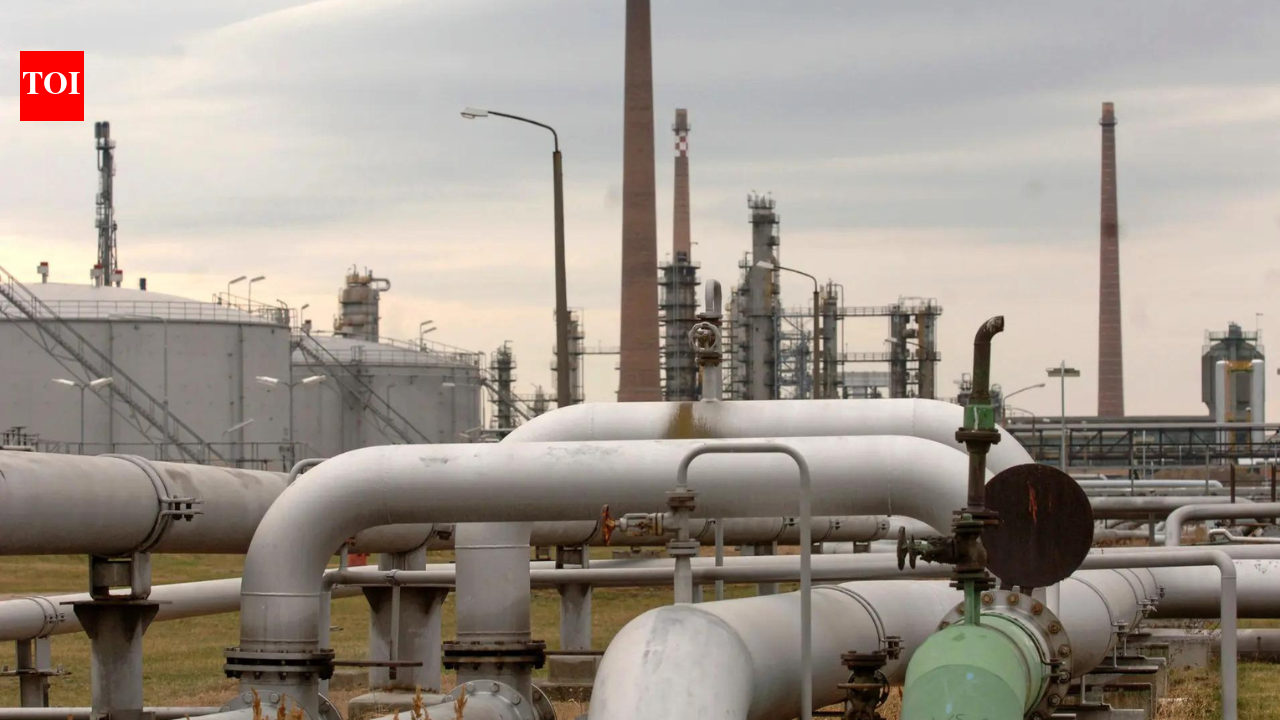
NEW DELHI: Govt on Saturday significantly increased export duties on diesel and aviation turbine fuel to dissuade oil refiners from exporting these fuels and to ensure adequate availability in the domestic market amid ongoing tensions in West Asia. The ministry of finance issued a series of notifications hiking the export duty on diesel by more than 150% – from Rs 21.5 per litre to Rs 55.5 per litre – with immediate effect. The levy on ATF, or jet fuel, was increased from Rs 29.5 per litre to Rs 42 per litre. The export duty on petrol continues to be nil. Under the revised structure, the special additional excise duty on high-speed diesel has been raised to Rs 24 per litre, while the road and infrastructure cess now stands at Rs 36 per litre, which means a large chunk will now flow to the Centre. Govt said these duties are not meant to boost revenue, but to stop fuel exporters from taking undue advantage of price differences. The Centre had, on March 27, imposed an export duty of Rs 21.5 per litre on diesel and Rs 29.5 per litre on ATF in a bid to check windfall gains, as fuel was in short supply in international markets due to a squeeze on energy supplies amid the military conflict and export curbs imposed by China. It had also slashed excise duty on diesel and petrol to shield consumers and oil companies from the impact of high crude prices. Retail prices of automobile fuels in India have not increased despite high volatility in the international crude market, while only a small part of the international price pressure has been passed on to domestic flights. The windfall tax on exports of diesel and ATF helps the Centre partly offset the impact of the excise duty cut. On March 27, govt had estimated revenue gains from export duties at around Rs 1,500 crore in a fortnight. The further hike in export duties is likely to lead to higher revenue gains. In a statement, the ministry of petroleum had said, “At a time when international diesel prices have surged sharply, the levy is designed to disincentivise exports and ensure that refinery output is directed first tow-ards meeting domestic demand.“

A convoy of vans, lorries, tractors, and even a limousine took part in a slow moving protest around the town centre on Saturday afternoon.
Source link


IRGC Navy warns military vessels of ‘firm response’ to attempts at crossing Strait of Hormuz
[CinePlex360] Please moderate: “Meta’s lat
Indian electronic firms seek PLI 2.0, eye 30–35% share in global mobile production by FY31 – The Times of India

-

 Entertainment1 week ago
Joe Jonas shares candid glimpse into parenthood with Sophie Turner
-

 Tech1 week ago
Our Favorite iPad Is $50 Off
-

 Sports1 week ago
UConn Final Four run could trigger a $50M furniture giveaway for Massachusetts-based Jordan’s Furniture
-

 Fashion5 days ago
India’s exports face reset as EU links trade to carbon metrics: EY
-

 Entertainment1 week ago
Blake Lively reacts to harassment claims dismissal against Justin Baldoni
-
 Business1 week ago
Video: Why Is the Labor Market Stuck?
-

 Politics1 week ago
Iran can sustain Strait of Hormuz closure for years, will cut US military logistics: Official
-

 Entertainment1 week ago
Barbie Ferreira reveals where she stands with ‘Euphoria’ girls after exit