

Tech
Morocco tests floating solar panels to save water, generate power

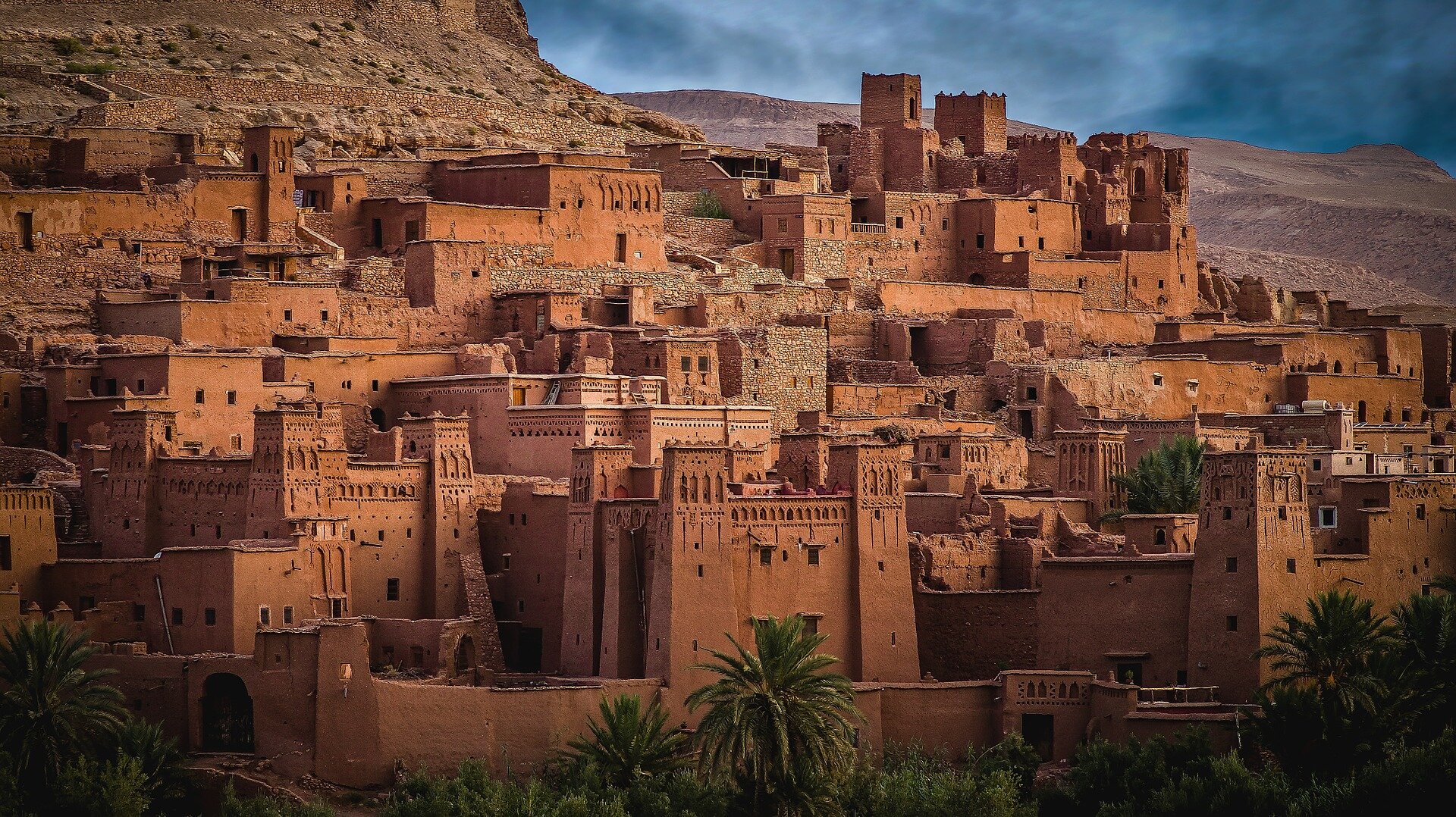
Sun-baked Morocco, grappling with its worst drought in decades, has launched a pilot project aimed at slowing water evaporation while simultaneously generating green energy using floating solar panels.
At a major reservoir near the northern city of Tangier, thousands of so-called “floatovoltaic” panels protect the water’s surface from the blazing sun and absorb its light to generate electricity.
Authorities plan to power the neighboring Tanger Med port complex with the resulting energy, and if it proves a success, the technology could have far wider implications for the North African kingdom.
According to official figures, Morocco’s water reserves lost the equivalent of more than 600 Olympic-sized swimming pools every day to evaporation between October 2022 and September 2023.
Over that same period, temperatures averaged 1.8C higher than normal, meaning water evaporated at a higher rate.
Alongside other factors like declining rainfall, this has reduced reservoirs nationwide to about one-third of their capacity.
Water ministry official Yassine Wahbi said the Tangier reservoir loses around 3,000 cubic meters a day to evaporation, but that figure more than doubles in the hot summer months.
The floating photovoltaic panels can help cut evaporation by about 30%, he said.
The water ministry has said the floating panels represent “an important gain in a context of increasingly scarce water resources”, even if the evaporation they stop is, for now, relatively marginal.
Assessment studies are underway for another two similar projects in Oued El Makhazine, at one of Morocco’s largest dams in the north, and in Lalla Takerkoust near Marrakesh.
Similar technology is being tested in France, Indonesia and Thailand, while China already operates some of the world’s largest floating solar farms.
‘Pioneering’
Since the Moroccan pilot program began late last year, more than 400 floating platforms supporting several thousand panels have been installed.
The government wants more, planning to reach 22,000 panels that would cover about 10 hectares at the 123-hectare Tangier reservoir.
Once completed, the system would generate roughly 13 megawatts of electricity—enough to power the Tanger Med complex.
Authorities also have plans to plant trees along the banks of the reservoir to reduce winds, believed to exacerbate evaporation.
Climate science professor Mohammed-Said Karrouk called it a “pioneering” project.
He noted, however, that the reservoir is too large and its surface too irregular to cover completely with floating panels, which could be damaged with fluctuating water levels.
Official data shows water reserves fed by rainfall have fallen by nearly 75% in the past decade compared with the 1980s, dropping from an annual average of 18 billion cubic meters to only five.
Morocco has so far mainly relied on desalination to combat shortages, producing about 320 million cubic meters of potable water a year.
Authorities aim to expand production to 1.7 billion cubic meters yearly by 2030.
Karrouk said an urgent priority should be transferring surplus water from northern dams to regions in central and southern Morocco that are more impacted by the years-long drought.
The kingdom already has a system dubbed the “water highway”—a 67-kilometer canal linking the Sebou basin to the capital Rabat—with plans to expand the network to other dams.
© 2025 AFP
Citation:
Morocco tests floating solar panels to save water, generate power (2025, August 30)
retrieved 30 August 2025
from https://techxplore.com/news/2025-08-morocco-solar-panels-generate-power.html
This document is subject to copyright. Apart from any fair dealing for the purpose of private study or research, no
part may be reproduced without the written permission. The content is provided for information purposes only.











The main job of Google Chrome is to give you a window to the web. With so much engaging content out there on the internet, you may not have given much thought to the browser framework that serves as the container for the sites you visit.
You’d be forgiven for still using the default toolbar configuration that was in place when you first installed Chrome. But if you take a few minutes to customize it, it can make a significant difference to your browsing. You can get quicker access to the key features you need, and you may even discover features you didn’t know about.
If you’re reading this in Chrome on the desktop, you can experiment with a few customizations right now—all it takes is a few clicks. Here’s how the toolbar in Chrome is put together, and all the different changes you can make.
The Default Layout
Take a look up at the top right corner of your Chrome browser tab and you’ll see two key buttons: One reveals your browser extensions (the jigsaw piece), and the other opens up your bookmarks (the double-star icon). There should also be a button showing a downward arrow, which gives you access to recently downloaded files.
Right away, you can start customizing. If you click the jigsaw piece icon to show your browser extensions, you can also click the pin button next to any one of these extensions to make it permanently visible on the toolbar. While you don’t want your toolbar to become too cluttered, it means you can put your most-used add-ons within easy reach.
For the extension icons you choose to have on the toolbar, you can choose the way they’re arranged, too: Click and drag on any of the icons to change its position (though the extensions panel itself has to stay in the same place). To remove an extension icon (without uninstalling the extension), right-click on it and choose Unpin.
Making Changes

Click the three dots up in the top right corner of any browser window and then Settings > Appearance > Customize your toolbar to get to the main toolbar customization panel, which has recently been revamped. Straight away you’ll see toggle switches that let you show or hide certain buttons on the toolbar.

“The trade-off isn’t only ethical or economic,” Andreaux adds. “It’s also about reliability, privacy and personal security.”
Abed Kataya, digital content manager at SMEX, a Beirut-based digital rights organization focused on internet policy in the Middle East and North Africa, says piracy in the region is shaped less by culture than by structural barriers.
“I see that piracy in MENA is not a cultural choice; rather, it has multiple layers,” Kataya tells WIRED Middle East.
“First, when the internet spread across the region, as in many other regions, people thought everything on it was free,” Kataya says. “This perception was based on the nature of Web 1.0 and 2.0, and how the internet was presented to people.”
Today, he says, structural barriers still lead many users towards illegal platforms. “Users began to watch online on unofficial streaming platforms for many reasons: lack of local platforms, inability to pay, bypassing censorship and, of course, to watch for free or at lower prices.”
Payment access also remains a major factor. “Not to mention that many are unbanked, do not have bank accounts, lack access to online payments, or do not trust paying with their cards and have a general distrust of online payments,” Kataya adds.
Algerian students also share external hard drives loaded with television series, while in Lebanon streaming passwords are frequently shared across households. In Egypt, large Telegram channels distribute content across different genres, including Korean dramas, classic Arab films and underground music.
“We grew up solving problems online,” says Mira. “When something is blocked, you find a way around it. It’s … a fundamental human instinct.”
Streaming Platforms Adapting
Andreaux says StarzPlay has tried to address some of the payment barriers that limit streaming adoption in the region. “StarzPlay recognized early that payment friction was a regional barrier to adoption,” he says. “That’s why we invested in flexible subscription models and alternative payment methods, including telecom-led billing options that make access easier across different markets.”
At the same time, international media companies are working together to combat piracy through the Alliance for Creativity and Entertainment (ACE), a coalition of film studios, television networks and streaming platforms that targets illegal distribution of films, television and sports content. Its members include global companies such as Netflix as well as regional players like OSN Group, which operates the streaming service OSN+ across the Middle East and North Africa.
Kataya notes that legitimate streaming platforms are still expanding across the region. “The user base of official streaming platforms has been growing in the region,” he says. “For example, Shahid, the Saudi platform, is expanding and Netflix has dedicated packages for the region.”
“Other players, like StarzPlay and local platforms in Egypt, are also finding their place,” Kataya adds. “Social media also plays a huge role, especially when a film is widely discussed or controversial.”
Piracy carries legal and security risks, Andreaux says. “Rather than just ‘free streaming’, piracy exposes consumers to malware and insecure payment channels,” he says. “It also weakens investment in local content by depriving creators of revenue and reducing jobs.”
But the structural barriers described by users across the region remain. For many viewers in North Africa and the Levant, the challenge is not choosing between piracy and legality—it is whether legitimate access exists at all.
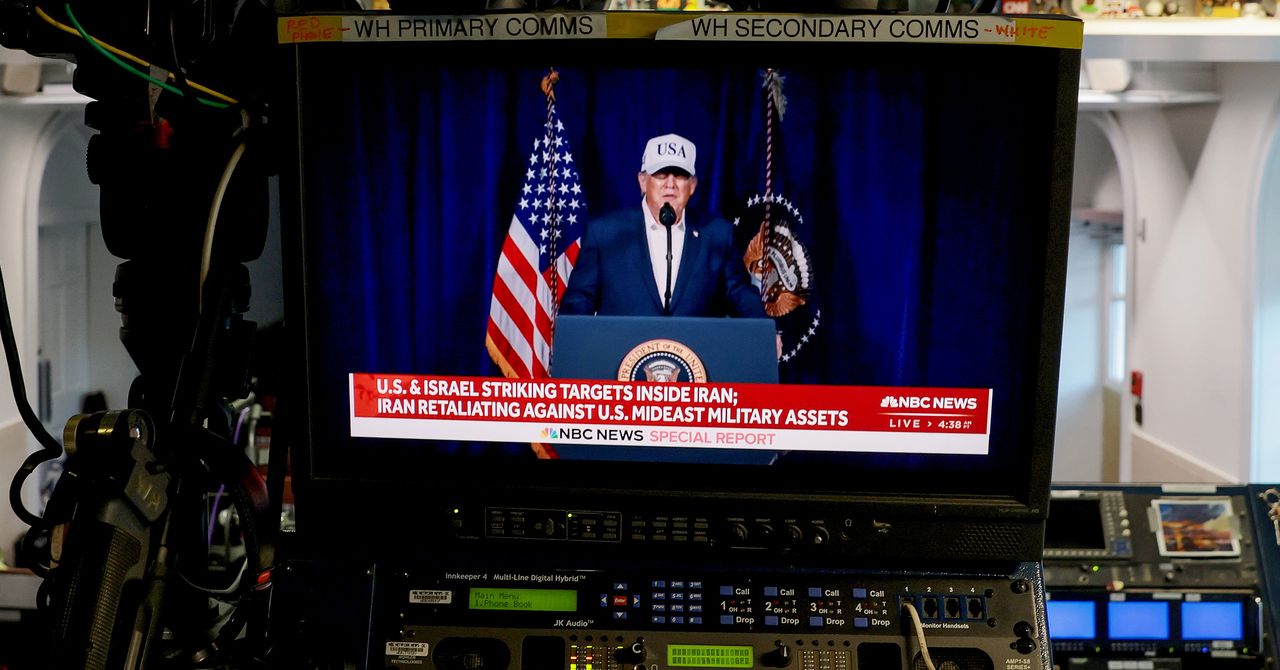
Minutes after Donald Trump announced that the US and Israeli governments had launched a “major combat operation” against Iran in the early hours of Saturday morning, disinformation about the attack and Tehran’s response flooded X.
WIRED has reviewed hundreds of posts on X, some of which have racked up millions of views, that promote misleading claims about the locations and scale of the attack.
Elon Musk’s social media platform is a verifiable mess: In some cases, alleged video footage of the attack shared in posts on X are actually months or years old. In several posts, video footage of apparent attacks have been attributed to incorrect locations. A number of images shared on X appear to be altered or generated with AI. Other posts attempt to pass off video game footage as scenes from the conflict.
X did not respond to a request for comment. Under Musk’s stewardship, X has become a haven for disinformation, especially during major global breaking news events. At the beginning of the Israel-Hamas war, and more recently during anti-immigration enforcement protests in LA, the platform has drowned in inaccurate and faulty posts.
Almost all of the most viral posts reviewed by WIRED on Saturday came from accounts with blue check marks, meaning they pay X for its premium service and could be eligible to earn money based on how much engagement their posts generate, even if the content is false. While some posts with disinformation have a community note appended beneath them to correct the record, they remain up on the site, and it’s unclear how many people viewed them before the notes appeared.
One video posted by a blue check mark account claimed to show ballistic missiles over Dubai; the clip actually showed Iranian ballistic missiles fired at Tel Aviv in October 2024. The post has been viewed over 4.4 million times.
One of the most viral clips shared on X in the hours after the attack claims to show an Israeli fighter jet being shot down by Iranian air defense systems. The video has been shared by dozens of accounts, including one post which has been viewed more than 3.5 million times. The provenance of the video is unclear, but there have been no credible reports of any Israeli jets being shot down over Iran on Saturday.
Another account that claims to be an expert in open source intelligence posted a video showing explosions, alongside the caption: “6 Iranian Hypersonic Missiles hit the Indian-invested Israeli Haifa port. Massive damages reported.” The video has been viewed 64,000 times, but the footage was actually captured last July and shows an Israeli attack on the defense ministry in Damascus, Syria.
In a number of cases, pro-Iranian accounts have been using images and footage from Saturday’s attacks to falsely claim successful strikes against Israel. “IRANIAN MISSILE IMPACT IN TEL AVIV RIGHT NOW,” the Iran Observer account wrote in a post featuring an image of Dubai. The post had been viewed over 200,000 times before it was deleted, but dozens of other posts sharing the same image and making the same claims remain on X.
Tehran Times, a news outlet aligned with the Iranian government, posted what appears to be an AI-generated image on X which claims to show that “an American radar in Qatar was completely destroyed today in an Iranian drone strike.” The use of AI generated images was flagged on X by Tal Hagin, a senior analyst with open source intelligence company Golden Owl. While there are reports that drone and missile attacks targeted the US Navy’s 5th Fleet headquarters in Bahrain, there are no reports yet of similar successful attacks in Qatar.
A pro-Trump account, which also features a blue check mark, posted images claiming to show the before and after pictures of the palace of Iranian Supreme Leader Ali Khamenei, which was targeted during Saturday’s missile attacks. (In a post on Truth Social, Trump claimed Khamenei was killed in an attack.) While the after picture appears to accurately show the palace after the attack, the before picture shows the Mausoleum of Ruhollah Khomeini, which is located on the other side of Tehran. The post has been viewed 365,000 times.


Anna Cathcart teases big changes in ‘XO, Kitty’ season 3

Transfer rumors, news: MLS an option for Liverpool’s Salah

Make the Most of Chrome’s Toolbar by Customizing It to Your Liking

-
 Business1 week ago
US Top Court Blocks Trump’s Tariff Orders: Does It Mean Zero Duties For Indian Goods?
-

 Fashion1 week ago
ICE cotton ticks higher on crude oil rally
-

 Entertainment1 week ago
The White Lotus” creator Mike White reflects on his time on “Survivor
-
 Business1 week ago
Eye-popping rise in one year: Betting on just gold and silver for long-term wealth creation? Think again! – The Times of India
-

 Politics1 week ago
Pakistan carries out precision strikes on seven militant hideouts in Afghanistan
-

 Sports1 week ago
Brett Favre blasts NFL for no longer appealing to ‘true’ fans: ‘There’s been a slight shift’
-

 Entertainment1 week ago
Saturday Sessions: Say She She performs "Under the Sun"
-

 Entertainment1 week ago
Viral monkey Punch makes IKEA toy global sensation: Here’s what it costs