

Business
Most of Elon Musk’s fortune now comes from his private companies


Tesla and SpaceX CEO Elon Musk arrives to the inauguration of U.S. President-elect Donald Trump in the Rotunda of the U.S. Capitol on Jan. 20, 2025 in Washington, DC.
Chip Somodevilla | Via Reuters
A version of this article appeared in CNBC’s Inside Wealth newsletter with Robert Frank, a weekly guide to the high-net-worth investor and consumer. Sign up to receive future editions, straight to your inbox.
Tesla said it needed to incentivize CEO Elon Musk with a record-breaking pay package in order to compete with his private companies, according to a proxy the company filed last week.
The filing outlines a share award that could be worth $1 trillion if it all pays out. Tesla also said Musk’s other companies — mainly SpaceX and xAI Holdings — now account for most of his wealth and therefore will command most of his attention unless Tesla pays him more.
“A majority of Mr. Musk’s wealth is now derived from other business ventures outside of Tesla, and he has more attractive options today than ever before,” the proxy said. The pay package of up to 423 million shares is necessary, it added, to prevent Musk from “prioritizing other ventures.”
It will be up to shareholders to approve the package, of course. But the proxy highlights the surging valuations of Musk’s private companies and the competing interests of xAI, SpaceX and Tesla.
Until last year, the vast majority of Musk’s wealth came from his Tesla stock. The Bloomberg Billionaires Index pegs Musk’s wealth at about $385 billion, while Forbes estimates his wealth is at $436 billion. The difference is likely tied to his 2018 pay package, which is still in dispute and is valued at between $60 billion and $100 billion. If the compensation plan is restored, and/or he receives an interim comp package proposed in the proxy, Musk’s net worth is closer to $436 billion.
Today, less than half of that fortune comes from Tesla stock.
Based on his current ownership of 13% of the company, Musk’s Tesla shares are worth about $140 billion. Musk has argued that he needs at least 25% of voting control of Tesla to prevent the company from being taken over as it develops highly sensitive and powerful artificial intelligence technology and robots.
At SpaceX and xAI, he has more voting control, with 42% of SpaceX and a majority stake in xAI. SpaceX is planning an insider share sale that would reportedly value the company at $400 billion, nearly double its valuation last year. At the $400 billion valuation, Musk’s stake would be worth about $170 billion — more than the value of his current Tesla stake.
xAI’s valuation has grown even faster, from $80 billion at the start of the year to a potential $200 billion in a new fundraising round. Musk owns more than 50% of the company, putting his stake well over $100 billion.
Together, Musk’s stake in xAI and SpaceX are now worth nearly twice as much as his Tesla shares. Added to his stakes in Neuralink — valued at around $9 billion — and his other companies, his private company wealth eclipses his Tesla wealth.
Of course, that may not be for long. If he is awarded the 423.7 million shares of restricted stock in the new 2025 compensation plan, and if Tesla hits its target valuation of $8.5 trillion, Musk’s Tesla shares would be worth over $2 trillion.


UK inflation lifted to its highest since December after a sharp jump in diesel and petrol prices caused by the conflict in the Middle East, according to official figures.
Chancellor Rachel Reeves said the Iran crisis was “not our war, but it is pushing up bills for families and businesses” as a result.
The rate of Consumer Prices Index (CPI) inflation increased to 3.3% in March from 3% in February, the Office for National Statistics said.
The increase was in line with predictions from economists.
Higher motor fuel was the main driver of the acceleration in inflation, increasing by 8.7% month-on-month – the largest increase since June 2022, shortly after the Russian invasion of Ukraine.
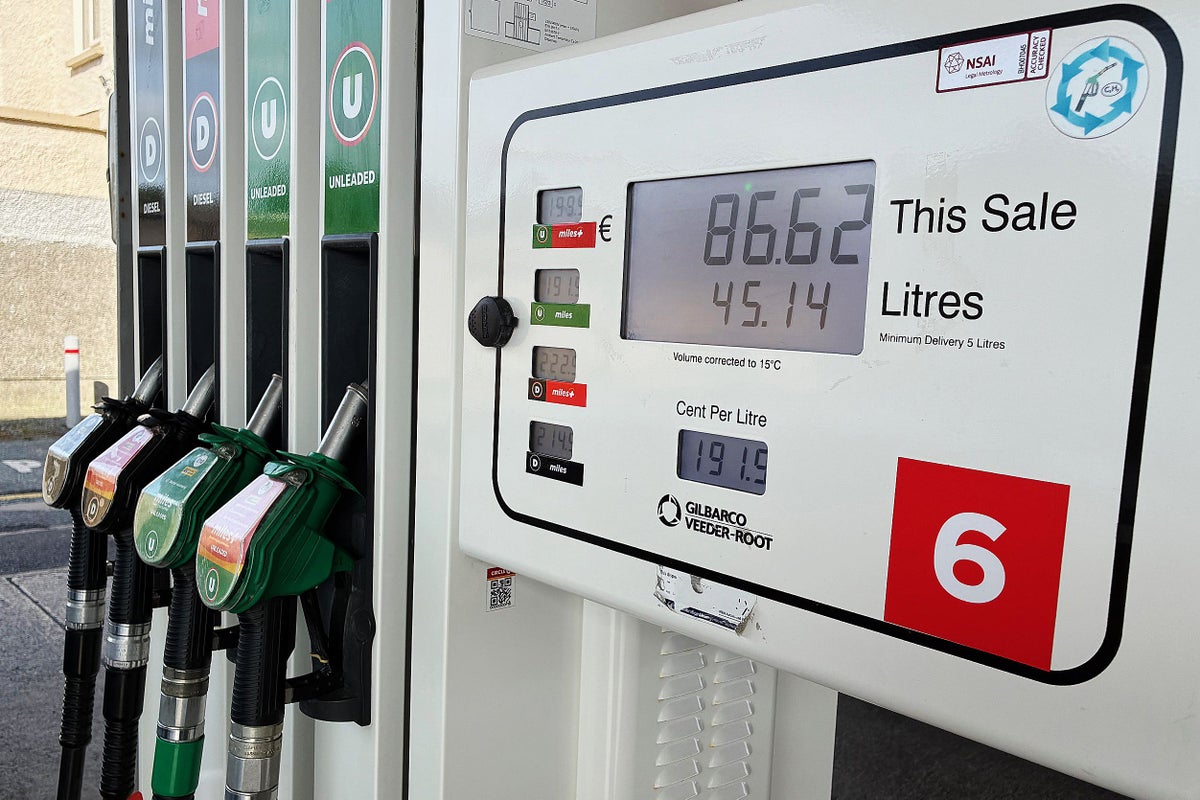
The ONS found that the average price of petrol rose by 8.6p per litre between February and March to 140.2p per litre. This marked the highest price since August 2024.
Diesel prices meanwhile increased by 17.6p per litre in March to an average of 158.7p per litre, the highest price since November 2023.
Office for National Statistics chief economist Grant Fitzner said: “Inflation climbed in March, largely due to increased fuel prices, which saw their largest increase for over three years.
“Air fares were another upward driver this month, alongside rising food prices.
“The only significant offset came from clothing costs, where prices rose by less than this time last year.”
The data revealed that the cost of air travel also increased significantly, with inflation of 14.5% compared with the same month last year.
The rise in air fares, which analysts have partly linked to the early timing of the Easter holidays, was the highest since July last year.
Meanwhile, food and non-alcoholic drink prices were up 3.7% year-on-year in March, accelerating from 3.3% inflation in the previous month.
This included another acceleration in the price of sweets and chocolates, which were up 10.6% year-on-year.
Elsewhere, clothing and footwear had a downward pressure on inflation, as prices dipped 0.8% for the month.
Sales and discounting activity pulled inflation in the category to its lowest level since March 2021.
The rise in the overall rate of inflation drives the UK further away from the 2% inflation target set by the Government and the Bank of England.
Ms Reeves said: “We’re acting to protect people from unfair price rises if they occur to bring down food prices at the till, and are boosting long-term energy security — building a stronger, more secure economy.”
James Smith, developed markets economist at ING, said: “The latest rise in UK headline CPI tells us virtually nothing about the scale and duration of the inflation wave to come.
“The Bank of England is still flying blind, with the conflict unresolved, but the limited amount of survey data available so far suggests little cause for alarm on inflation.”
Anna Leach, chief economist at the Institute of Directors, said: “As inflation has come in in line with revised expectations, and given yesterday’s labour market data which showed a fall in vacancies and further downward progress in wage growth, interest rates should hold at next week’s MPC (Monetary Policy Committee) meeting.
“But there remains tremendous uncertainty over the outlook for energy supply and prices.”
The Manx treasury says plans are in place to protect essential services in the wake of the Iran war.
Source link

Malaysia-based Karex produces more than five billion condoms a year and supplies global brands like Durex and Trojan.
Source link


Transfer rumors, news: Arsenal ramp up interest in Williams

Bangladesh RMG units call for allowing local FOC raw material sourcing
UK inflation accelerates after Iran war drives sharp rise in fuel prices

-

 Fashion6 days ago
France’s LVMH Q1 revenue falls 6%, shows resilience amid Iran war
-

 Sports1 week ago
The case for Man United’s Fernandes as Premier League’s best
-
 Business1 week ago
UK could adopt EU single market rules under new legislation
-

 Entertainment7 days ago
Is Claude down? Here’s why users are seeing errors
-

 Fashion1 week ago
Energy emerges as biggest cost driver in textile margins
-
 Business1 week ago
Delta Air Lines unveils first new Delta One suite in premium cabin arms race
-

 Fashion1 week ago
Asia claims largest share of markets on Kearney FDI Confidence Index
-

 Sports7 days ago
PSL 11: Peshawar Zalmi win toss, opt to field first against Quetta Gladiators