

Fashion
Muji to open largest European store in Paris


Published
January 18, 2026
The successor to C&A at 126, rue de Rivoli has finally been revealed. After more than two years of work to rehabilitate the historic building, which for many years housed the flagship of the Dutch fashion chain, Redevco announced on January 16 that another international fashion player will open its French flagship within the BPM project by late 2026.
With a planned footprint of 2,700 square metres, Muji shows that Uniqlo is not the only ambitious Japanese brand in France and Europe. The Japanese advocate of the “no brand” concept (Mujirushi Ryohin) has set its sights on one of the capital’s busiest thoroughfares. The store will be among the largest in Europe, eclipsing the already generous format at Forum des Halles.
It marks a milestone for Muji, whose Paris story began in 1998, when the brand quietly took its first steps on Rue Saint‑Sulpice, attracting a Left Bank clientele of insiders. In nearly thirty years, the brand has spread to the Marais, Saint‑Lazare and Bastille, with six stores. But the forthcoming Rivoli location, with its XXL format over three levels, signals a shift in approach on a thoroughfare that sees nearly 15 million visitors a year.
Muji to expand its range in Europe
“The future store will offer 2,500 square metres of sales space across three levels (basement, ground floor and first floor). For the brand, it’s a genuine relaunch in Paris and then in London, before rolling this proposition out across Europe,” Uriel Karsenti, the brand’s Europe director, told FashionNetwork.com.
“Our strategy is to align Muji’s image at a global level. The aim is to expand the sales area to present a much more comprehensive range.”
Today, Muji offers barely half the range available in its stores in Japan. In its new flagship, the brand will be able to present around 85% of the Japanese range, including the childrenswear collection, as well as skincare, and a much stronger selection of accessories, homeware and electronics.

“This will be our largest store in Europe, after our Finnish location, which is unique in having a restaurant. We are currently looking for a site in London, in the Oxford Street area, where we already have a store,” explained the executive, who hopes for a major opening in the English capital in 2027.
“The flagship is important for the group’s management, as it is a showcase project that will test Muji’s potential for international expansion, a significant growth driver for the Japanese leadership.”
The store, whose concept has been entrusted to Atelier Tsuyoshi Tane Architects (At‑ta), is due to open in October in a building completely refurbished by the owner.
The location is significant, and C&A attracted generations of customers here before closing in 2023. The owner, Redevco, has initiated a complete overhaul of the building to breathe new life into the 13,000 square metre complex. Dubbed “BPM” (for “Beats Per Minute”), the project, entrusted to architect Franklin Azzi, goes beyond a simple façade renovation. The future Muji flagship will be spread over three levels, but it will not be the only new feature: the building will also house a 57‑room Radisson Collection hotel, upmarket offices (the LVMH group is reportedly in the running for part of the space) and, more surprisingly, an urban logistics hub in the basement. Redevco says it was also keen to preserve the soul of the site by maintaining a listed 13th‑century crypt and opening a landscaped rooftop accessible to the public, offering a bird’s‑eye view over the rooftops of Paris.
With another fashion brand yet to be unveiled, Muji—whose parent company, Ryohin Keikaku, closed its 2024‑25 financial year at the end of August with global sales of 785 billion yen (around €4.3 billion) from some 1,450 stores worldwide—is bringing its full hybrid fashion‑and‑home concept to a Parisian thoroughfare that is reinventing itself.
Muji’s management, for whom the North American and European markets account for 5% of activity, intends to build on its positive momentum, having reported double‑digit growth in Europe in the first quarter of 2025‑26, supported by around 30 stores across nine markets.
The expanded range will also be progressively rolled out on its website next season. This is a major development and could prompt Muji to review its current French network, comprising five stores in Paris and one in Lyon. Following the opening of its flagship, Muji may look for new, larger spaces in the years to come.
This article is an automatic translation.
Click here to read the original article.
Copyright © 2026 FashionNetwork.com All rights reserved.









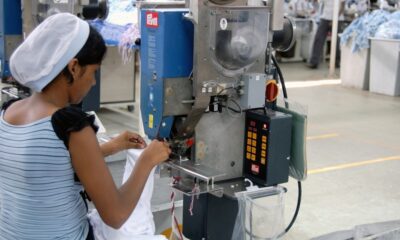


A significant minority equity investment from John Hogg Technical Solutions will now support the spinout’s industrial validation in working mill environments.
SwitchDye, a University of Leeds spinout, has secured investment from John Hogg Technical Solutions to scale its eco-friendly polyester dyeing technology.
Using a fizzy water-based system, it cuts chemical use, water consumption, and energy needs.
It will support real-world mill validation and commercialisation, aiming to reduce textile pollution and enable more circular manufacturing.
John Hogg will provide technical input, manufacturing and stewardship expertise, along with access to customer networks to help SwitchDye move from lab to mill at pace.
“SwitchDye’s pioneering approach to polyester dyeing will help to drive a more circular and sustainable textile industry,” said professor Nick Plant, University of Leeds.
Polyester makes up more than half of all global fibre output. Dyeing fibre is highly energy intensive and consumes 600 billion litres of water every year across the globe, the university said in a press release.
Textile production is estimated to be responsible for about 20 per cent of global clean water pollution, and polyester dyeing alone releases around 280,000 tonnes of waste dye and other chemicals annually.
“SwitchDye’s pioneering approach to polyester dyeing will help to drive a more circular and sustainable textile industry. This is another example of the outstanding talent that exists within our research community and our strength in nurturing and supporting innovation in new technologies,” explained Plant.
Born from an ongoing collaboration between the Schools of Design and Chemistry at Leeds, SwitchDye’s team includes researchers and co-founders Dr Nathaniel Crompton, Dr Harrison Oates, professor Richard Blackburn and professor Chris Rayner.
The new dyes were synthesised in the Wolfson CO2 laboratory in the School of Chemistry and then transferred to the facilities at the University’s School of Design and the Leeds Institute of Textiles and Colour (LITAC), where the team conducted rigorous tests to demonstrate how SwitchDye’s system can remove additives that typically account for up to 90 per cent of chemicals, without compromising performance.
The technology is designed as a drop-in for common dyehouse equipment, allowing mills to keep using their existing machinery.
In addition to the chemical savings and reduction in waste, the new dyeing system can also streamline operations by reducing rinse stages and shortening machine time, using 40 per cent less water and saving on energy. The dyes can also be removed more easily at the end of products’ life, supporting fibre-to-fibre recycling.
The university’s commercialisation team worked alongside SwitchDye to make investor introductions and provided funding to help the team achieve commercial validation.
“Partnering with John Hogg gives us the technical expertise and industry reach to move from lab success into consistent, real-world application. Over the coming months, we’ll be working closely with dyehouses and brands to demonstrate how the technology integrates into existing equipment and delivers measurable savings,” Dr Harrison Oates, chief technology officer at SwitchDye, said.
“The partnership with SwitchDye marks the start of an inspiring journey with the potential to improve the future of textile manufacturing for many years to come. At John Hogg, we have always taken pride in understanding our customers’ needs and the evolving demands of the market. Being part of an innovation that delivers a true step forward in sustainable dyeing technology is something we are genuinely excited about. We also see clear alignment between our businesses, with John Hogg’s wider capabilities helping to accelerate SwitchDye’s path to commercialisation,” Sam Walton, chief technical officer at John Hogg, said.
Fibre2Fashion News Desk (RR)
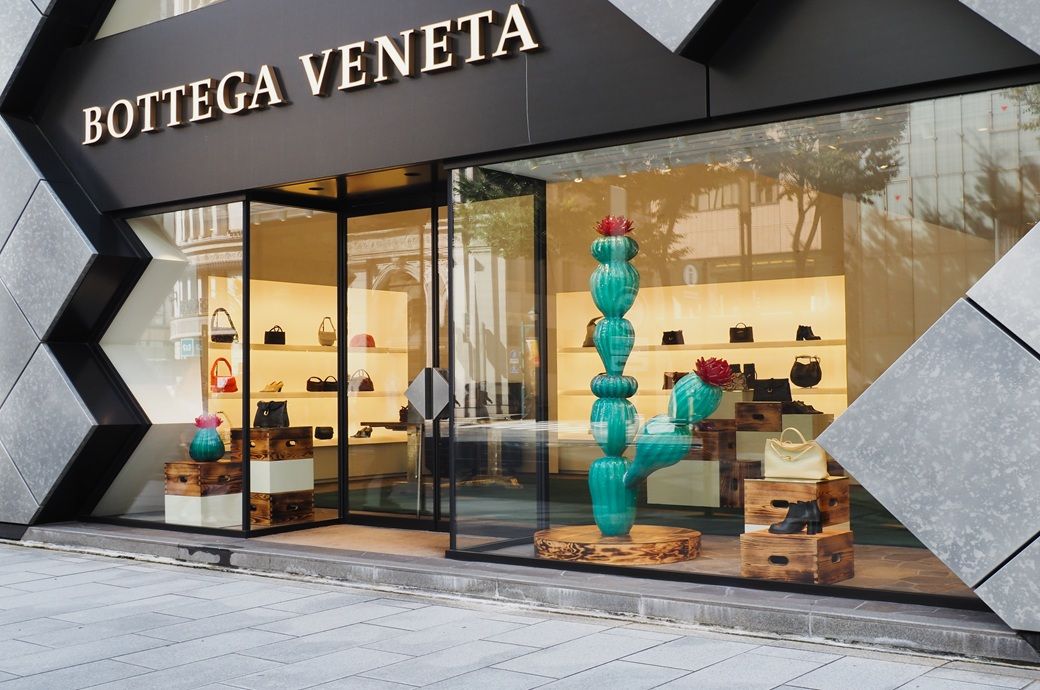
This partnership brings together ICCF’s deep understanding of the Chinese luxury ecosystem and cultural landscape with the Kering long-standing expertise in craftsmanship, operations and brand development in Europe.
Kering has partnered with ICCF and will take a minority stake to support the growth of ICICLE.
The collaboration combines ICCF’s insight into China’s luxury market with Kering’s expertise in craftsmanship and brand building.
Backed by Kering’s House of Wonders initiative, the deal aims to expand ICICLE internationally and broaden its product range.
The investment of Kering will support the next phase of development of ICCF’s flagship brand ICICLE, including the continued international expansion of the brand, as well as the enrichment of its product offering across new categories.
Founded in 1997 in Shanghai, ICICLE is a fashion brand known for a design aesthetic rooted in Eastern philosophy, bringing together natural materials, refined craftsmanship and a quiet, contemporary sensibility. The brand specializes in women’s and men’s ready-to-wear and accessories and operates more than 200 stores, including flagship locations in Beijing, Shanghai and Paris.
This strategic partnership is driven by House of Wonders, a strategic initiative newly launched by Kering, designed to selectively support emerging luxury Houses with strong cultural relevance across markets, categories and geographies. Through House of Wonders, Kering aims to build long-term value through a disciplined, partnership-driven approach, engaging with brands defined by a distinctive vision, deep authenticity and global resonance potential.
Note: The headline, insights, and image of this press release may have been refined by the Fibre2Fashion staff; the rest of the content remains unchanged.
Fibre2Fashion News Desk (RM)
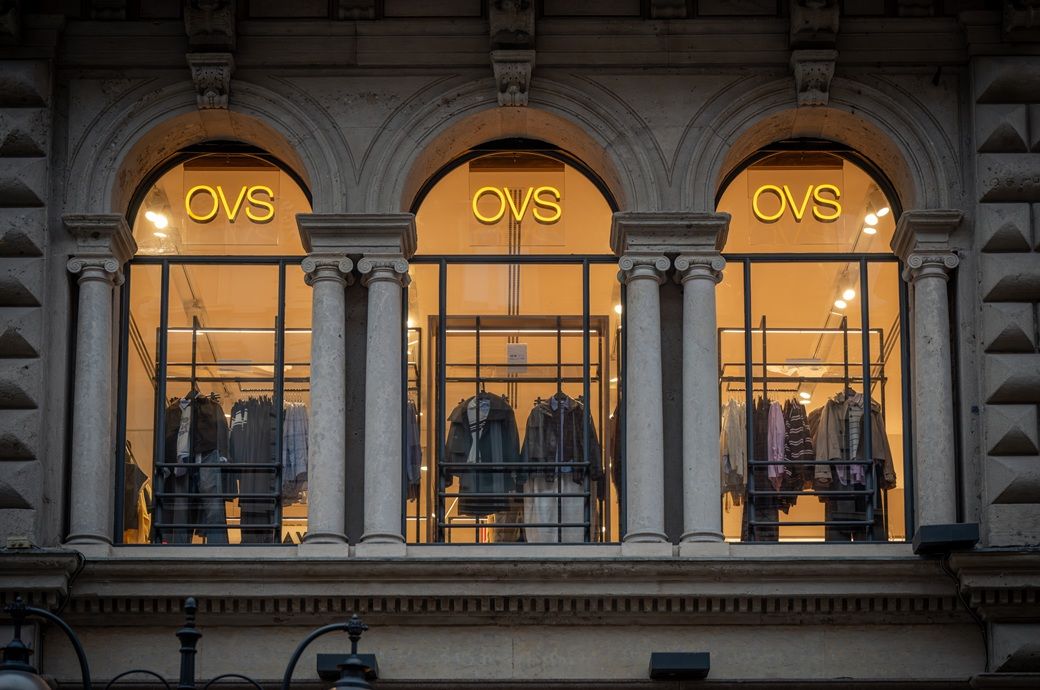
The company’s net sales rose 7 per cent year on year (YoY) to €1,745.9 million (~$2.06 billion) in FY25 ended January 31, 2026. Excluding Goldenpoint, sales growth stood at 2.9 per cent, significantly outperforming the reference market, which expanded by just 0.3 per cent during the period. Directly operated stores generated €1,431.3 million in revenue, up 8.2 per cent YoY, while franchising and B2B channels contributed €314.7 million.
OVS has posted record FY25 sales of €1,745.9 million (~$2.06 billion), up 7 per cent YoY, driven by like-for-like growth and Goldenpoint consolidation.
Adjusted gross margin rose 8.8 per cent, while net profit increased 14.8 per cent.
Key brands delivered solid EBITDA gains.
Womenswear and beauty led growth, with early FY26 performance remaining strong on robust collection demand.
The group delivered strong improvements across key financial metrics. Adjusted gross margin rose to €1,033 million, up 8.8 per cent YoY, with margin expanding to 59.2 per cent. Adjusted net profit was €89.4 million, an increase of 14.8 per cent YoY.
At the brand level, OVS reported EBITDA of €172.6 million, up €9.8 million YoY, while Upim recorded €44.0 million, compared with €40.1 million in 2024. Stefanel also delivered improved performance, with EBITDA rising by around €4 million. Goldenpoint contributed €3.9 million to EBITDA during its seven-month consolidation period, OVS said in a press release.
“2025 was a year of excellent results, with growth across all the main banners and brands. This performance confirms the validity of a positioning based on quality, stylistic research, and sustainability, which have elevated the perceived value of the brands, effectively intercepting a growing demand for quality products at affordable prices,” said Stefano Beraldo, CEO of OVS.
He added that the group continued to strengthen its brand portfolio, including the launch of Les Copains and extensions of the PIOMBO line, alongside the expansion of Altavia, B Angel, and Utopja. Womenswear and beauty remained standout categories, with the latter supported by Shaka stand-alone stores, now operating 10 locations.
“Another fundamental pillar remains the constant enhancement of the stores, in a context where offline is regaining centrality in customer preferences,” added Beraldo, highlighting investments in store design and customer experience.
Goldenpoint delivered sales growth of around 10 per cent during its initial consolidation phase, supported by product updates and store modernisation, along with purchasing synergies that improved margins.
“The internationalisation strategy of OVS is accelerating, supported by a solid financial position and the success of the womenswear offering. Expansion into the most promising markets is planned for 2026,” Beraldo said.
The 2026 financial year is showing significant growth compared to 2025 thanks to the very positive reception of the new collections, added the release.
Fibre2Fashion News Desk (SG)


Meta says it will cut 8,000 jobs as AI spending grows

Prince William sparks AI debate in motorsport with ‘weak link’ remark

How ‘Michael’ continues to smash the box office despite backlash

-

 Fashion1 week ago
France’s LVMH Q1 revenue falls 6%, shows resilience amid Iran war
-

 Entertainment1 week ago
Is Claude down? Here’s why users are seeing errors
-

 Sports1 week ago
PSL 11: Peshawar Zalmi win toss, opt to field first against Quetta Gladiators
-

 Tech1 week ago
The Deepfake Nudes Crisis in Schools Is Much Worse Than You Thought
-
 Business1 week ago
Standard Life buys rival in £2b deal to create savings giant
-

 Tech1 week ago
CYBERUK ’26: UK lagging on legal protections for cyber pros | Computer Weekly
-

 Sports1 week ago
World Cup kit ranking: Which teams will look best in 2026?
-

 Tech1 week ago
Cyber Essentials closes the MFA loophole but leaves some organisations adrift | Computer Weekly