

Tech
New control system teaches soft robots the art of staying safe


Imagine having a continuum soft robotic arm bend around a bunch of grapes or broccoli, adjusting its grip in real time as it lifts the object. Unlike traditional rigid robots that generally aim to avoid contact with the environment as much as possible and stay far away from humans for safety reasons, this arm senses subtle forces, stretching and flexing in ways that mimic more of the compliance of a human hand. Its every motion is calculated to avoid excessive force while achieving the task efficiently. In MIT Computer Science and Artificial Intelligence Laboratory (CSAIL) and Laboratory for Information and Decisions Systems (LIDS) labs, these seemingly simple movements are the culmination of complex mathematics, careful engineering, and a vision for robots that can safely interact with humans and delicate objects.
Soft robots, with their deformable bodies, promise a future where machines move more seamlessly alongside people, assist in caregiving, or handle delicate items in industrial settings. Yet that very flexibility makes them difficult to control. Small bends or twists can produce unpredictable forces, raising the risk of damage or injury. This motivates the need for safe control strategies for soft robots.
“Inspired by advances in safe control and formal methods for rigid robots, we aim to adapt these ideas to soft robotics — modeling their complex behavior and embracing, rather than avoiding, contact — to enable higher-performance designs (e.g., greater payload and precision) without sacrificing safety or embodied intelligence,” says lead senior author and MIT Assistant Professor Gioele Zardini, who is a principal investigator in LIDS and the Department of Civil and Environmental Engineering, and an affiliate faculty with the Institute for Data, Systems, and Society (IDSS). “This vision is shared by recent and parallel work from other groups.”
Safety first
The team developed a new framework that blends nonlinear control theory (controlling systems that involve highly complex dynamics) with advanced physical modeling techniques and efficient real-time optimization to produce what they call “contact-aware safety.” At the heart of the approach are high-order control barrier functions (HOCBFs) and high-order control Lyapunov functions (HOCLFs). HOCBFs define safe operating boundaries, ensuring the robot doesn’t exert unsafe forces. HOCLFs guide the robot efficiently toward its task objectives, balancing safety with performance.
“Essentially, we’re teaching the robot to know its own limits when interacting with the environment while still achieving its goals,” says MIT Department of Mechanical Engineering PhD student Kiwan Wong, the lead author of a new paper describing the framework. “The approach involves some complex derivation of soft robot dynamics, contact models, and control constraints, but the specification of control objectives and safety barriers is rather straightforward for the practitioner, and the outcomes are very tangible, as you see the robot moving smoothly, reacting to contact, and never causing unsafe situations.”
“Compared with traditional kinematic CBFs — where forward-invariant safe sets are hard to specify — the HOCBF framework simplifies barrier design, and its optimization formulation accounts for system dynamics (e.g., inertia), ensuring the soft robot stops early enough to avoid unsafe contact forces,” says Worcester Polytechnic Institute Assistant Professor and former CSAIL postdoc Wei Xiao.
“Since soft robots emerged, the field has highlighted their embodied intelligence and greater inherent safety relative to rigid robots, thanks to passive material and structural compliance. Yet their “cognitive” intelligence — especially safety systems — has lagged behind that of rigid serial-link manipulators,” says co-lead author Maximilian Stölzle, a research intern at Disney Research and formerly a Delft University of Technology PhD student and visiting researcher at MIT LIDS and CSAIL. “This work helps close that gap by adapting proven algorithms to soft robots and tailoring them for safe contact and soft-continuum dynamics.”
The LIDS and CSAIL team tested the system on a series of experiments designed to challenge the robot’s safety and adaptability. In one test, the arm pressed gently against a compliant surface, maintaining a precise force without overshooting. In another, it traced the contours of a curved object, adjusting its grip to avoid slippage. In yet another demonstration, the robot manipulated fragile items alongside a human operator, reacting in real time to unexpected nudges or shifts. “These experiments show that our framework is able to generalize to diverse tasks and objectives, and the robot can sense, adapt, and act in complex scenarios while always respecting clearly defined safety limits,” says Zardini.
Soft robots with contact-aware safety could be a real value-add in high-stakes places, of course. In health care, they could assist in surgeries, providing precise manipulation while reducing risk to patients. In industry, they might handle fragile goods without constant supervision. In domestic settings, robots could help with chores or caregiving tasks, interacting safely with children or the elderly — a key step toward making soft robots reliable partners in real-world environments.
“Soft robots have incredible potential,” says co-lead senior author Daniela Rus, director of CSAIL and a professor in the Department of Electrical Engineering and Computer Science. “But ensuring safety and encoding motion tasks via relatively simple objectives has always been a central challenge. We wanted to create a system where the robot can remain flexible and responsive while mathematically guaranteeing it won’t exceed safe force limits.”
Combining soft robot models, differentiable simulation, and control theory
Underlying the control strategy is a differentiable implementation of something called the Piecewise Cosserat-Segment (PCS) dynamics model, which predicts how a soft robot deforms and where forces accumulate. This model allows the system to anticipate how the robot’s body will respond to actuation and complex interactions with the environment. “The aspect that I most like about this work is the blend of integration of new and old tools coming from different fields like advanced soft robot models, differentiable simulation, Lyapunov theory, convex optimization, and injury-severity–based safety constraints. All of this is nicely blended into a real-time controller fully grounded in first principles,” says co-author Cosimo Della Santina, who is an associate professor at Delft University of Technology.
Complementing this is the Differentiable Conservative Separating Axis Theorem (DCSAT), which estimates distances between the soft robot and obstacles in the environment that can be approximated with a chain of convex polygons in a differentiable manner. “Earlier differentiable distance metrics for convex polygons either couldn’t compute penetration depth — essential for estimating contact forces — or yielded non-conservative estimates that could compromise safety,” says Wong. “Instead, the DCSAT metric returns strictly conservative, and therefore safe, estimates while simultaneously allowing for fast and differentiable computation.” Together, PCS and DCSAT give the robot a predictive sense of its environment for more proactive, safe interactions.
Looking ahead, the team plans to extend their methods to three-dimensional soft robots and explore integration with learning-based strategies. By combining contact-aware safety with adaptive learning, soft robots could handle even more complex, unpredictable environments.
“This is what makes our work exciting,” says Rus. “You can see the robot behaving in a human-like, careful manner, but behind that grace is a rigorous control framework ensuring it never oversteps its bounds.”
“Soft robots are generally safer to interact with than rigid-bodied robots by design, due to the compliance and energy-absorbing properties of their bodies,” says University of Michigan Assistant Professor Daniel Bruder, who wasn’t involved in the research. “However, as soft robots become faster, stronger, and more capable, that may no longer be enough to ensure safety. This work takes a crucial step towards ensuring soft robots can operate safely by offering a method to limit contact forces across their entire bodies.”
The team’s work was supported, in part, by The Hong Kong Jockey Club Scholarships, the European Union’s Horizon Europe Program, Cultuurfonds Wetenschapsbeurzen, and the Rudge (1948) and Nancy Allen Chair. Their work was published earlier this month in the Institute of Electrical and Electronics Engineers’ Robotics and Automation Letters.







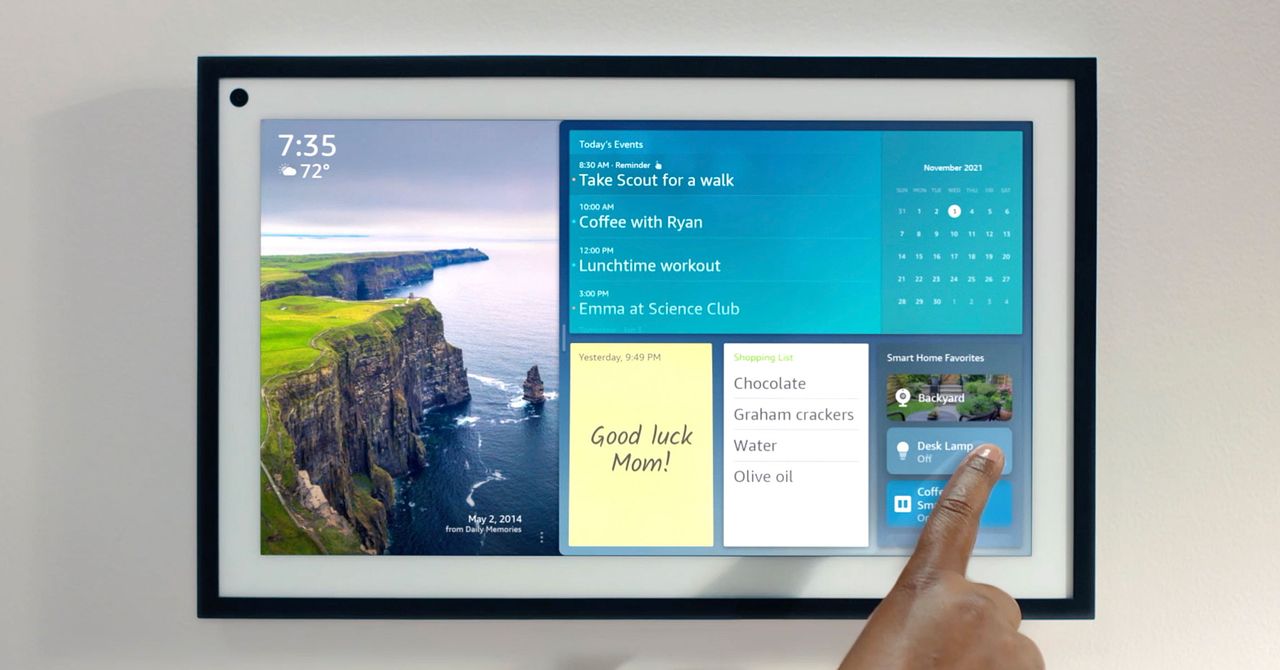
I stuck Amazon’s Echo Show 15 and its Alexa+ AI assistant in my kitchen for a month. Things have not gone well.
Source link

South Korean officials have warned that the US-Israel war with Iran could hit the global semiconductor supply chain if it disrupts the flow of critical industrial materials from the Middle East.
South Korea’s semiconductor sector, led by giants like Samsung Electronics and SK Hynix, produces about two-thirds of the world’s memory chips. If the Middle East’s supply of chipmaking materials is disrupted, semiconductor production could slow unless alternative sources are found quickly.
The Helium Problem
One material at risk is helium, which is essential in chip manufacturing for managing heat, detecting leaks, and maintaining stable temperatures in fabrication equipment. For many of these uses, there is no real substitute.
About 38 percent of the world’s helium is produced by Qatar, where large extraction facilities are tied to the natural gas industry. This concentration means that disruptions can quickly ripple through the global supply chain.
National oil company QatarEnergy declared force majeure on March 4, after stopping its gas production and downstream operations due to ongoing attacks. Downstream facilities turn gas into other products, including urea, polymers, methanol, and aluminum.
South Korea’s Industry Ministry said the country also depends on the Middle East for 14 other materials in chipmaking, such as bromine and some chip-inspection equipment. While some of these materials can be sourced domestically or from other markets, shifting suppliers in the semiconductor sector is difficult because chipmakers need to test and validate new sources to meet strict purity standards.
Companies say the situation is manageable for now. As reported by Reuters, SK Hynix said it has secured diverse supply chains and maintains sufficient helium inventories, adding that there is “almost no chance” its operations would be affected in the near term.
Contract chipmaker TSMC similarly said it does not currently anticipate a significant impact, while GlobalFoundries stated it is in direct contact with suppliers and has mitigation plans in place.
Stuck in Transit
Even if Qatar’s gas production restarts, the semiconductor industry is vulnerable to disruptions in regional shipping routes. Much of the world’s energy and petrochemical exports from the Persian Gulf pass through the Strait of Hormuz, a key maritime choke point.
If shipping through this corridor is interrupted for an extended period, it could slow the movement of industrial gases and petrochemicals that chipmakers rely on. Disruptions to oil and gas exports from the region have also already pushed global energy prices higher: Brent crude, the European benchmark, is priced at $80 per barrel at the time of publication.
Energy costs are a major factor in semiconductor production. Fabrication plants run large clean rooms that need constant electricity and cooling, so chipmakers are sensitive to changes in global energy prices. Industry representatives in South Korea warned that a prolonged conflict could push energy prices higher, likely leading to higher semiconductor production costs and potentially higher chip prices.
These risks come as semiconductor supply chains are already stretched by growing demand from AI computing. Chip demand from AI data center operators has tightened supply across several electronics sectors, including smartphones, laptops, and automobiles.
A Long-Term Problem
For now, the immediate impact on chip production is unclear. Major chipmakers usually maintain a mix of suppliers and stockpile specialty gases and chemicals to help weather short-term disruptions.
But if instability in the region continues, pressure on supply chains will likely grow. A drawn-out conflict that hits energy infrastructure, export facilities, or shipping routes could slowly squeeze the global supply of materials needed for chipmaking.
This could delay plans by major technology companies to expand artificial intelligence infrastructure in the Middle East. Firms such as Amazon, Microsoft, and Nvidia have been positioning the UAE as a hub for AI computing capacity.
This story originally appeared on WIRED Middle East.

Chances are that when you google “mattress store near me,” one of the first results you will see is Mattress Firm. This brick and mortar titan carries both established mattress brands like Serta and Sealy, as well as many online brands, like Purple, letting you go see for yourself if it’ll be the mattress for you. And if you were looking for an excuse to hop in the car and head over, we have a Mattress Firm coupon available right now, as well as tons of Mattress Firm promo codes to save big on those big (and small) purchases. Fingers crossed that you could start sleeping better, potentially as soon as tonight.
Upgrade Your Sleep Sale: Save Up to $600 (Plus Get a Free Adjustable Base)
This year, Mattress Firm wants to make it even easier (and more affordable) to upgrade your sleep with the Upgrade Your Sleep Sale. During this sale, you can save up to $600 and get a free adjustable base included on select mattresses, through April 28. You’ll receive a free Sleepy’s Basic adjustable base (a $300 value) with select mattress purchases—this means a free queen adjustable base with a minimum $499 purchase, or free king adjustable base with minimum $599 purchase.
Get 15% Off When You Sign Up for Emails
To make sure you never miss out on Mattress Firm discount codes, you can sign up for email notifications. By doing so, you automatically get one! You can get an extra 15% off on your first order. Heads up that it can’t be combined with other coupons, nor can it be applied to specific brands and models, including Nectar, Purple, Sealy Hybrid, Tempur-Pedic, Stearns & Foster, and Serta iComfort.
Free Adjustable Base (Up to $499 Value) With Select Mattresses
First and foremost, make sure you have or are getting a mattress that’s compatible with an adjustable base. If you’re all set bed-wise, but have been looking for the right time to buy an adjustable base, consider this your sign: select mattresses come with a free adjustable base (up to $499 value). At last, you can sit up in bed or kick up your feet to your heart’s content.
Score Up to $300 in Instant Credits and Gifts
Mattress Firm’s got a gift for you, just ‘cuz. For those eyeballing Tempur-Pedic, Sealy, and Sterns & Foster in particular, it’s your lucky day, as there are Mattress Firm coupon codes for all three of these brands.
Starting with Tempur-Pedic, when you buy a qualifying Tempur-Pedic mattress, you can receive a $300 Instant Credit on these adjustable bases: Tempur-Ergo, Tempur-Ergo Smart Base, Tempur-Ergo ProSmart Base, Tempur-Ergo ProSmart Air Base, or the Sealy Ease Base. Use code TEMPURGIFT. You can also get a $300 credit toward these same adjustable bases when you purchase a qualifying Stearns & Foster mattress: use code STEARNSGIFT at checkout.
Lastly, if you wanted to pair a Sealy mattress with the Sealy Ease adjustable base (or any of the aforementioned adjustable bases), there’s a Mattress Firm coupon for that, too. Use code SEALYGIFT at checkout, and get a $200 Instant Credit on select Sealy and Tempur-Pedic adjustable bases.
Take 20% Off With Military, Medical, Student, or Teacher Discounts
Sleep is a necessity for everyone. But for those who work all day on their feet, and have to be dialed in at all times, sleep is critical. This is especially true for first responders, nurses, doctors, and medical professionals. As a way to say “thank you” for all that you do, there’s a special mattress firm discount just for you. Use the Mattress Firm first responder discount for 20% off select purchases. It’s for one-time use, but renews every 90 days when you re-verify your status.
For military members, as a way to thank you for your service, you can use the Mattress Firm military discount for 20% off select purchases as well. It’s a one-time use code, but re-verify your status every 90 days, and you can get a new one!
If you’re a teacher or student, there’s also a Mattress Firm discount for you, too. To help you bounce back after long days teaching, or late nights studying, use this Mattress Firm student discount code for 20% off select purchases. Like the first responder and military coupons, it’s a one-time usage code that can be renewed every 90 days when you re-verify your status.


Maharashtra’s Rs 7.69-Lakh-Crore Budget: Who Gains? Who Pays More?

Stock market today: Which are the top losers and gainers on March 6- check list – The Times of India

Bangladesh road map aims at raising tax-to-GDP ratio to 15% by 2035
Attock Cement’s acquisition approved | The Express Tribune

Policy easing drives Argentina’s garment import surge in 2025

India Us Trade Deal: Fresh look at India-US trade deal? May be ‘rebalanced’ if circumstances change, says Piyush Goyal – The Times of India

-
Business1 week ago
Attock Cement’s acquisition approved | The Express Tribune
-
 Fashion1 week ago
Policy easing drives Argentina’s garment import surge in 2025
-
Business1 week ago
India Us Trade Deal: Fresh look at India-US trade deal? May be ‘rebalanced’ if circumstances change, says Piyush Goyal – The Times of India
-

 Politics1 week ago
What are Iran’s ballistic missile capabilities?
-

 Politics1 week ago
US arrests ex-Air Force pilot for ‘training’ Chinese military
-

 Sports7 days ago
LPGA legend shares her feelings about US women’s Olympic wins: ‘Gets me really emotional’
-
 Business7 days ago
Greggs to reveal trading amid pressure from cost of living and weight loss drugs
-

 Sports1 week ago
Sri Lanka’s Shanaka says constant criticism has affected players’ mental health