

Business
NHL strikes first-ever deal with prediction markets Kalshi and Polymarket


The National Hockey League said Wednesday it’s reached a multi-year licensing agreement with prediction markets Kalshi and Polymarket. More sports leagues may be coming soon.
Tarek Mansour, Kalsh’si co-founder and CEO, told CNBC’s “Squawk Box” the deal marked a “seminal moment” for prediction markets and the company.
“A league like the NHL partnering with us is a strong sign that prediction markets are here to stay,” Mansour said.
As part of the NHL deal, Kalshi and Polymarket will gain access to the league’s proprietary data and rights to use NHL marks and logos. In return, Mansour said, the hockey league will get a suite of customer protections. The NHL said both companies will receive brand exposure during broadcasts.
Mansour said the NHL deal could be replicated across other leagues: “Be on the lookout for more announcements soon,” he told CNBC.
Representatives for the NBA and NFL did not immediately respond to requests for comment. MLB declined to comment.
In August, the NFL expressed its concern about prediction markets, which allow customers to trade on the outcomes of events across entertainment and culture like election results or the length of the ongoing government shutdown.
Kalshi and other event trading platforms are regulated by the Commodity Futures Trading Commission. Yet many states, regulators and tribes are pushing back on prediction markets, arguing they amount to unregulated gambling. Multiple state and federal lawsuits are in progress over the alleged risks.
The American Gaming Association said in a statement Wednesday that the NHL deal “sends a troubling message.”
“The platforms in question fail to comply with essential standards,” the AGA said. “Worse, they are currently offering sports wagers in all 50 states to anyone 18 years of age—some of which have not authorized any form of legal sports betting and those that have largely define 21 as the prevailing legal age for wagering.”
Keith Wachtel, president of NHL Business, told CNBC he feels comfortable with Kalshi and Polymarket from a regulatory and integrity standpoint, noting that sportsbooks like FanDuel and DraftKings have also struck partnerships with prediction platforms.
He said the league’s interest in prediction markets lies in the opportunity to reach new fans.
“What’s great about prediction markets is it goes beyond sport,” he said. “It gives opportunity to watch a different audience grow significantly.”
Mansour said criticism of the market is par for the course for a disruptor and that he feels confident in Kalshi’s regulatory setup. He said Kalshi has spent years working with the federal government to create a regulated prediction markets.
“When we think about the announcement today, the NHL deal is really about that. It’s essentially a validation of the fact that we have established the right set of customer protection and the right set of market integrity measures to protect our markets, but also the game,” he said.




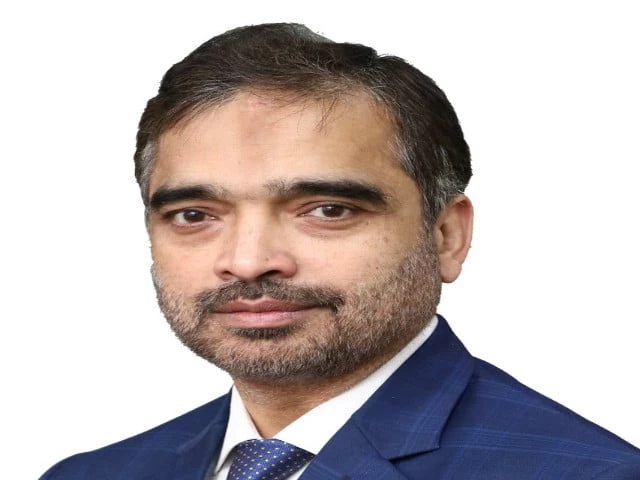

BHP has named Brandon Craig as its new chief executive to replace Mike Henry at the helm of the world’s largest mining company.
Mr Craig, who is currently BHP’s Americas boss, will start on July 1, when Mr Henry steps down after six-and-a-half years in the role.
The Australian mining giant – which switched its main listing from London to Sydney in 2022, but retained a standard listing in the UK – said Mr Henry had helped the firm establish itself as the world’s biggest copper producer.
But he also presided over two failed attempts to buy rival Anglo American to further bolster its copper portfolio, last November walking away from a deal just 18 months after its previous ill-fated approach.
Former FTSE 100 company BHP had looked to muscle in on the agreed mega-merger between Anglo and Canadian rival Teck Resources before pulling out.
Ross McEwan, BHP chairman and former NatWest chief executive, said Mr Craig’s “discipline and focus” would help him drive the group’s strategy forwards.
“We would like to recognise the outstanding contribution of Mike Henry to BHP as chief executive,” he added.
“Under his leadership, BHP has transformed into a safer and more productive company, financially strong and sharply focused on shareholder value and social value.”
Mr Craig has worked at BHP for more than 25 years, having joined in 1999.
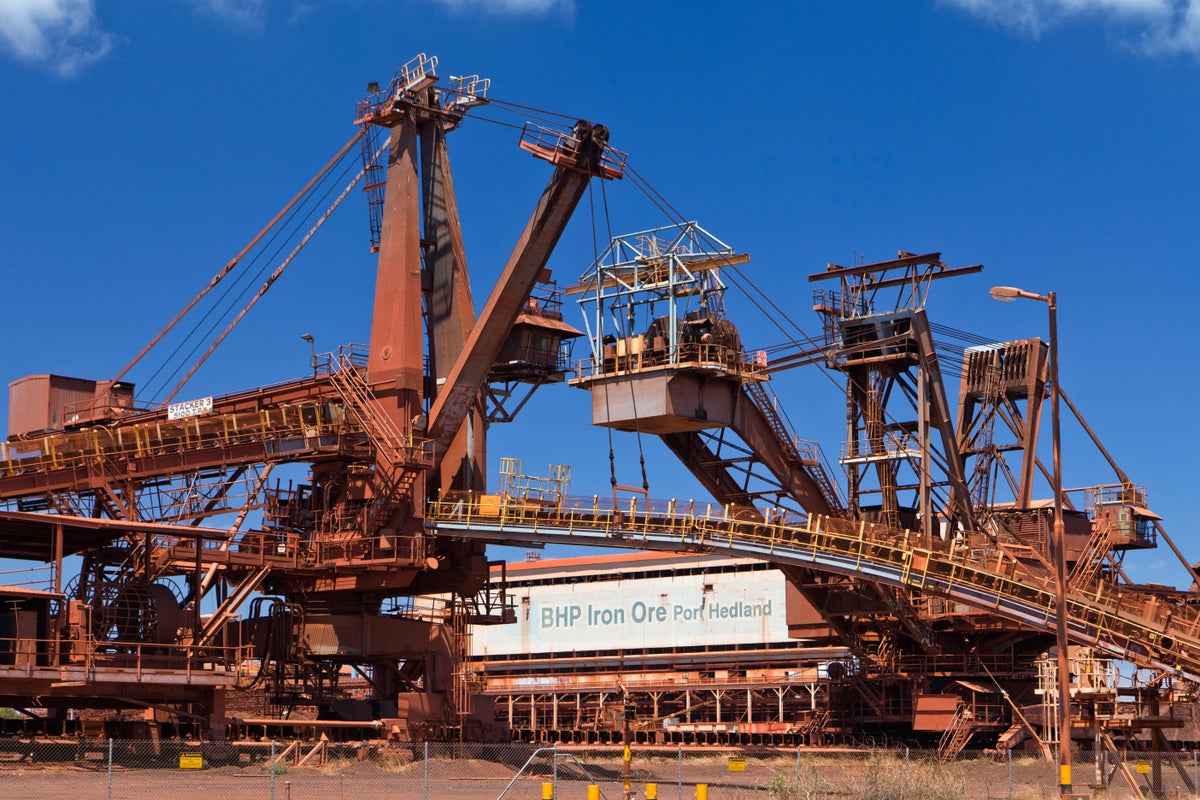
Before his current role, he also previously led the group’s Western Australia iron ore business.
He will take on the chief executive role with a 1.9 million US dollar (£1.4 million) annual salary, plus benefits, with the potential for cash and share awards worth up to a maximum of 6.8 million dollars (£5.1 million) each year and possible long-term incentive share awards of up to 3.8 million dollars (£2.8 million) a year.
Mr Craig said: “It is an honour and privilege to succeed Mike Henry as chief of BHP.
“Thanks to his leadership, BHP is well positioned for the future.
“Mike will be remembered for his strategic decision-making, portfolio transformation, operational excellence and focus on safety and high-performance culture.”
Outgoing boss Mr Henry said: “It has been a privilege to serve as chief executive of BHP and to have worked with so many truly talented people. I am proud of what we have achieved together.”

Free childcare support for working parents varies across the UK, depending on the child’s age.
Source link
Business
LPG crisis: Centre pushes states to fast-track switch to PNG amid Hormuz supply disruption – The Times of India
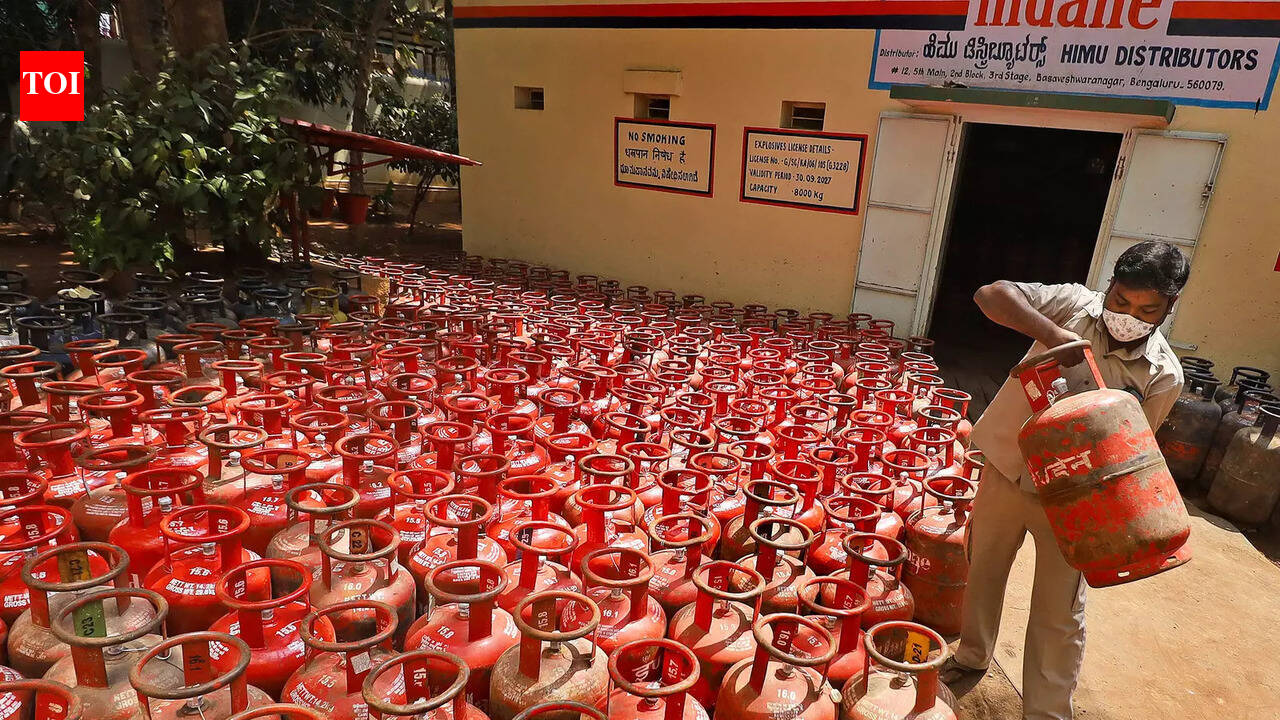
As the Middle East crisis continues to escalate, its impact is now being felt across Indian households and businesses such as eateries and restaurants, with the country relying on imports for 60% of its LPG needs. Amid rising concerns over LPG supply flows, the government is encouraging both households and commercial users to shift towards PNG.It has urged states to fast-track approvals and cut charges so that more homes can shift to piped natural gas (PNG) at a time when liquefied petroleum gas (LPG) supplies remain under stress. According to an official cited by ET, states have been asked to speed up permissions for laying pipelines and to do away with road restoration and related fees imposed by local authorities. The aim is to accelerate infrastructure rollout and make it easier for households to adopt PNG.As part of the relief measures, the petroleum and natural gas regulatory board has waived imbalance charges for city gas companies, shippers and consumers “as a temporary relief measure in light of the extraordinary circumstances” due to ongoing Iran war. These charges are typically imposed when the actual quantity of gas taken or injected by a shipper differs from the amount scheduled on the pipeline network.Officials said the Centre is trying to overcome “structural constraints” that have slowed the growth of PNG connections. Sujata Sharma, joint secretary at the ministry of Petroleum and Natural Gas, outlined a series of steps proposed to states in a presentation shared on Monday.These include directing states to:
- Issuing deemed permission for pending applications for laying city gas distribution (CGD) pipelines
- Mandating approval of all new CGD permissions within 24 hours
- Waiving road restoration and permission charges levied by state or local authorities
- Relaxing working hours and working seasons
- Appointing state nodal officers for support, coordination and faster implementation
Meanwhile, the gap between LPG and PNG usage remains wide. India has around 10 million active PNG consumers, compared with about 330 million LPG users.Hospitality and consumers are already feeling the strain of LPG-related disruptions. The Hotel and Restaurant Association (Western India) (HRAWI) has approached the Maharashtra government seeking an extension or staggered payment of annual licence fees, saying a commercial LPG shortage has forced several establishments to shut. In Patna, residents have flagged delayed deliveries and cases where cylinders are marked as delivered but not received, prompting the district administration to step up monitoring, even as officials maintain there is no shortage. The impact is also visible in other industries. In Gujarat’s Morbi, around 430 ceramic units are set to remain shut for at least three weeks after the West Asia conflict disrupted gas supplies essential for manufacturing, according to an industry representative.


Sales at US apparel, clothing accessories stores up 4% YoY in Jan 2026

US’ Stitch Fix Q2 FY26 revenue rises 9.4% to $341.3 mn

Ryan Gosling ‘Project Hail Mary!’ reaches ‘New Heights’

Stock market crash today (March 12, 2026): Nifty50 opens below 23,600; BSE Sensex down over 900 points on continuing US-Iran war – The Times of India

Intertextile Shanghai 2026: Fringe events spotlight market trends

What time will NASA’s 600 kg satellite crash to Earth today— 14 years after launch?

-
Business6 days ago
Stock market crash today (March 12, 2026): Nifty50 opens below 23,600; BSE Sensex down over 900 points on continuing US-Iran war – The Times of India
-
 Fashion1 week ago
Intertextile Shanghai 2026: Fringe events spotlight market trends
-
 Entertainment1 week ago
What time will NASA’s 600 kg satellite crash to Earth today— 14 years after launch?
-

 Fashion1 week ago
German brand Adidas posts 13% revenue growth in 2025
-

 Fashion7 days ago
UK’s Topshop unveils Tolu Coker capsule collection
-

 Tech7 days ago
Meta Developed 4 New Chips to Power Its AI and Recommendation Systems
-
 Business1 week ago
US ignites Iran war, but Gulf Arab states pay the price | The Express Tribune
-

 Fashion7 days ago
India’s textile recycling market may reach $3.5 bn by 2030: Report