

Business
Oman shift may reshape remittances | The Express Tribune


KARACHI:
Pakistan’s dependence on remittances is growing as it seeks to finance its expanding trade deficit. One of the countries contributing to these remittances is Oman, where many Pakistani workers send valuable foreign exchange back home. Meanwhile, Oman Vision 2040 aims for long-term economic transformation, which could significantly change employment opportunities for thousands of Pakistani expatriate workers.
As Oman gradually shifts toward a more digital and knowledge-based economy, it is also tightening labour market regulations through its omanisation policy. Remittances from the Gulf region continued to dominate Pakistan’s inflows in February, reflecting the large concentration of Pakistani workers in Middle Eastern labour markets. From Oman alone, overseas Pakistanis sent $92.6 million during the month, slightly lower than the $105.6 million recorded in January, but still maintaining a steady contribution to overall inflows.
Alongside Oman, other Gulf Cooperation Council countries collectively contributed about $317.2 million, including Qatar with $102.8 million, Kuwait $77 million and Bahrain $44.8 million. Meanwhile, the two largest Gulf corridors, the United Arab Emirates and Saudi Arabia, remained the dominant sources, sending $696.2 million and $685.5 million respectively in February, underscoring the continued importance of Gulf economies for Pakistan’s remittance inflows and external account stability. The transition reflects a broader structural shift in Oman’s growth model. With non-oil activities now contributing more than 70% of the country’s gross domestic product, economic expansion is increasingly driven by sectors such as logistics, digital infrastructure, advanced services and industrial operations. As these systems become more complex, demand is expected to move from basic operational labour toward workers capable of handling data, coordinating digital platforms and operating technologically advanced systems.
For Pakistani workers, many of whom have historically been employed in construction, maintenance, logistics and technical trades, this change could gradually redefine the types of skills required to remain competitive in the Omani labour market.
Industry observers say the challenge is not the availability of technology or infrastructure, but the availability of skilled workers able to operate and manage those systems efficiently. “At a certain stage, technology stops being the constraint. People become the limiting factor,” said technology investor and infrastructure operator Matvii Diadkov, who has worked on ecosystem-level digital infrastructure deployments across logistics, e-commerce and real estate sectors in Oman and the wider region. “Systems only scale when there are enough skilled operators to run them, improve them and pass that knowledge forward,” he noted through an email communication.
Oman already has strong digital infrastructure foundations, with internet penetration exceeding 95% and nationwide mobile coverage supporting advanced services. However, information and communication technology professionals still represent only about 2-3% of the country’s workforce.
Regional benchmarks suggest that more than 40% of jobs now require at least some level of digital capability, highlighting a gap between infrastructure development and workforce readiness.
For expatriate workers, including Pakistanis, this gap may create both opportunities and risks. While specialists with strong technical or digital skills may find continued demand in areas such as engineering, healthcare and advanced system operations, mid-level operational roles could face increasing pressure as Oman prioritises employment opportunities for its own citizens. The tightening of labour market regulations is part of Oman’s broader omanisation strategy, which seeks to increase the participation of Omani nationals in private-sector jobs. Under the country’s updated labour law, companies can hire foreign workers only when suitable local candidates are unavailable, and firms may replace expatriate employees with Omani workers under localisation plans.
This policy shift is occurring alongside demographic dynamics that add further pressure to the labour market. More than half of Oman’s population is under the age of 35, while youth unemployment remains structurally higher than the national average, estimated at around 10-12%. Analysts say the future trajectory of Pakistani workers in Oman will largely depend on how quickly they can upgrade their skills to match the evolving demands of a more technologically advanced economy.
While many Pakistani migrants already work in technical fields such as engineering, electrical maintenance and healthcare, experts note that the next phase of economic transformation will require stronger capabilities in digital system operations, data management, logistics coordination and industrial automation. “Another challenge is the absence of publicly available data on the exact digital skill levels among Pakistani expatriates working in Oman, making it difficult to measure how well their training aligns with the country’s future workforce needs,” Matvii Diadkov said.
Some analysts argue that closer cooperation between Pakistan and Oman on skills development could help address the mismatch.
Potential initiatives include joint certification programmes, pre-departure technical training, digital verification of professional qualifications and sector-specific training for industries such as logistics, energy infrastructure and industrial operations.
Education specialists note that talent development in digital sectors often takes eight to twelve years to mature, meaning early investments in training and institutional partnerships could play a crucial role in determining the long-term competitiveness of Pakistan’s overseas workforce.




NEW DELHI: The West Asia conflict is pushing govt to look at a faster transition towards renewable energy, including the possibility of increasing ethanol blending in petrol from 20-25%, although in a calibrated manner. This will come along with increased refining capacity within the country, so that there is a buffer in the system and greater domestic resilience, those familiar with the discussions said, pointing out that sustaining refineries at 100% capacity is not sustainable.While Barmer refinery has begun operations, expansion at Numaligarh is underway and work on integrated refineries on the west coast is also under focus. Apart from a mega refinery in Maharashtra, a new facility in Gujarat is also planned.Officials said rising use of renewables, biofuels and hydrogen in the energy mix was no longer just an environmental issue, but a strategic necessity in a situation like the present one, where the military conflict in West Asia has disrupted global energy supplies, triggering a supply crisis and a surge in oil and gas prices.According to officials, 20% ethanol blending has helped India save 4.5 crore barrels of crude annually and reduce foreign exchange outflow by around ₹1.5 lakh crore so far. Given the concerns over fuel efficiency and impact on vehicles, govt is expected to take a gradual approach that addresses the anxiety on ethanol blending. The third pillar on energy is expanding the strategic petroleum reserves.

A cup of coffee and strawberry frosted donut with sprinkles at a Dunkin’ Donuts location in Los Angeles, Sept. 6, 2017.
Patrick T. Fallon | Bloomberg | Getty Images
Dunkin’ and Buffalo Wild Wings owner Inspire Brands has confidentially filed for an initial public offering, the company announced on Friday.
If Inspire goes public, it will be one of the biggest-ever restaurant offerings. Private equity firm Roark Capital, which backs Inspire, is reportedly seeking a valuation of roughly $20 billion.
Inspire was founded in 2018 through a merger between Arby’s and Buffalo Wild Wings. Acquisitions followed: Sonic Drive-In later in 2018 and Jimmy John’s in 2019. And in 2020, Inspire took Dunkin’ and its sister chain Baskin Robbins private in an $11 billion deal.
Across those six chains, Inspire has more than 33,300 restaurants worldwide and $33.4 billion in annual sales, according to the company’s website.
Inspire isn’t the only restaurant company pursuing an IPO. Last month, Jersey Mike’s also announced that it had confidentially filed with the Securities and Exchange Commission.
The market for initial public offerings has been tepid, although that could change later this year. Market volatility, economic uncertainty and recent poor performance among IPO stocks has led to a backlog of listings.
However, several blockbuster IPOs, such as the SpaceX offering that could value the company at more than $1 trillion, are anticipated in the coming months.
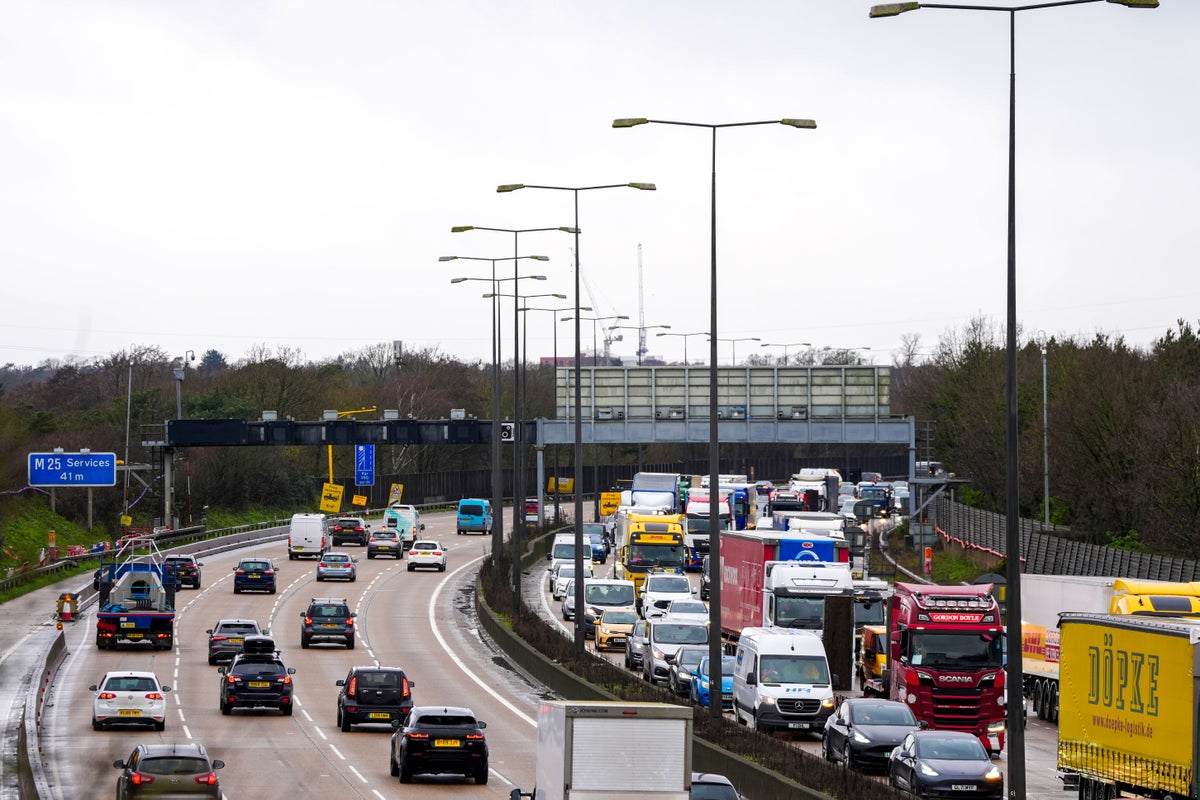
Millions of car finance payouts are in jeopardy after the UK’s financial watchdog indicated its compensation scheme faces significant delays, changes, or even collapse.
This uncertainty stems from four legal challenges against the Financial Conduct Authority (FCA).
The FCA has advised motor finance firms to prepare for the possibility that its redress scheme, which could see an average payout of £829, may not proceed.
The regulator stated that while a hearing date is unclear, these cases are unlikely to be heard before October.
In the meantime, it is in discussions about the “possibility of suspending some elements” of its compensation scheme, while still urging lenders to prepare for payouts.
But the regulator said it was also considering its options should parts of the scheme be quashed by the courts, including proceeding with a revised version or asking lenders to plan for a scenario where “there would be no scheme”.
This could mean lenders need to be ready to respond to complaints from car finance customers individually, rather than under the rules of an industry-wide programme set by the FCA.
“Many people will be frustrated that the legal action will delay payouts due to begin this year,” the FCA said.
“We remain committed to ensuring consumers receive any compensation owed as promptly as possible.”
The FCA set out the final details of its compensation scheme in March, which it estimated could cost the industry about £9.1 billion in total.
It had been expecting millions of claims to be paid out this year and the vast majority settled by the end of 2027.
The financial services arms of carmakers Volkswagen and Mercedes-Benz and the car finance arm of French bank Credit Agricole, as well as Consumer Voice, a group representing consumers, are asking the courts to quash the scheme, arguing the rules are unlawful.
“Between the four separate legal challenges, it is claimed in effect that the FCA’s approach to establishing the schemes has been both unduly favourable to consumers and unduly favourable to lenders,” the watchdog said.
At least one claim alleges that the FCA has breached the rights of lenders under the 1998 Human Rights Act, according to the watchdog.
Despite the uncertainty of the legal cases, the watchdog is still advising consumers to complain directly to their lender if they think they might be owed compensation, which they can do for free using a template letter on its website.

[CinePlex360] Please moderate: “Texas orders im

Timberwolves’ coach Finch blasts Tony Brothers for ‘unprofessional’ conduct

Top Sri Lankan Buddhist monk arrested over alleged sex abuse

-

 Politics6 days ago
Iran weighs US reply delivered via Pakistan as Trump signals opposition to deal terms
-

 Tech1 week ago
Almost half of UK businesses hit by cyber attacks | Computer Weekly
-

 Tech1 week ago
This Indigenous Language Survived Russian Occupation. Can It Survive YouTube?
-

 Fashion1 week ago
Canada’s Lululemon appoints Esi Eggleston Bracey to board of directors
-

 Fashion1 week ago
US’ J.Jill, Inc. appoints Kimberly Wallengren as CMO
-

 Entertainment1 week ago
David Allan Coe, country singer who wrote “Take This Job and Shove It,” dies at age 86
-
 Business1 week ago
Government hikes jet fuel prices by 5% for international airlines – The Times of India
-

 Fashion1 week ago
US’ Gap partners with Victoria Beckham on timeless wardrobe essentials