

Tech
Our Editors’ Favorite Big Screen Chromebook Is Now $159


Back to school is always a great time to pick up a deal on a new laptop for the upcoming semester, and the Asus CX15 Chromebook is available at Walmart for $159. It may not be the fanciest option, but it has a sizable screen and a full keyboard with a numpad, all for less than the cost of a new textbook. If you’re just looking for a no-frills Chromebook for occasional web-based work and a slightly larger display, this is a great deal.
When it comes to performance, the CX15 isn’t terribly exciting, with an Intel Celeron N4500 and 4 GB of memory. Fortunately, that should be fine for regular note-taking, email sending, and essay editing, with most of that work happening in your browser anyway. The extra-large 15-inch screen is great for putting two windows next to each other while getting some work done, or for watching a movie in the evening, even if the color accuracy isn’t the best.
The Chromebook CX15 is available in two colors, a classic and professional Pure Gray as well as a more fun and friendly Fabric Blue. Both feature the full-size keyboard, which is going to make writing out long paragraphs more comfortable, and the full numpad for you math and science nerds out there. The touchpad isn’t our favorite, with some occasional clunkiness, but you could do a lot worse for the price.
It has only 120 GB of internal storage, which is fairly common for Chromebooks, because it’s expected you’ll lean heavily on Google’s cloud storage options. To that end, the Asus Chromebook CX15 includes three months of the Google One AI Premium Plan, which includes 2 TB of cloud storage as well as a variety of AI-enhanced tools. You’ll also get three months of YouTube Premium, which gives you an ad-free experience while watching videos and listening to music.
If the Asus Chromebook CX15 isn’t speaking to you, there are several other deals currently running on some of our other favorite Chromebooks. We’ve also put together a list of our favorite back-to-school laptop deals if you’re specifically looking for a new laptop to bring to class or the library.













Minutes after Donald Trump announced that the US and Israeli governments had launched a “major combat operation” against Iran in the early hours of Saturday morning, disinformation about the attack and Tehran’s response flooded X.
WIRED has reviewed hundreds of posts on X, some of which have racked up millions of views, that promote misleading claims about the locations and scale of the attack.
Elon Musk’s social media platform is a verifiable mess: In some cases, alleged video footage of the attack shared in posts on X are actually months or years old. In several posts, video footage of apparent attacks have been attributed to incorrect locations. A number of images shared on X appear to be altered or generated with AI. Other posts attempt to pass off video game footage as scenes from the conflict.
X did not respond to a request for comment. Under Musk’s stewardship, X has become a haven for disinformation, especially during major global breaking news events. At the beginning of the Israel-Hamas war, and more recently during anti-immigration enforcement protests in LA, the platform has drowned in inaccurate and faulty posts.
Almost all of the most viral posts reviewed by WIRED on Saturday came from accounts with blue check marks, meaning they pay X for its premium service and could be eligible to earn money based on how much engagement their posts generate, even if the content is false. While some posts with disinformation have a community note appended beneath them to correct the record, they remain up on the site, and it’s unclear how many people viewed them before the notes appeared.
One video posted by a blue check mark account claimed to show ballistic missiles over Dubai; the clip actually showed Iranian ballistic missiles fired at Tel Aviv in October 2024. The post has been viewed over 4.4 million times.
One of the most viral clips shared on X in the hours after the attack claims to show an Israeli fighter jet being shot down by Iranian air defense systems. The video has been shared by dozens of accounts, including one post which has been viewed more than 3.5 million times. The provenance of the video is unclear, but there have been no credible reports of any Israeli jets being shot down over Iran on Saturday.
Another account that claims to be an expert in open source intelligence posted a video showing explosions, alongside the caption: “6 Iranian Hypersonic Missiles hit the Indian-invested Israeli Haifa port. Massive damages reported.” The video has been viewed 64,000 times, but the footage was actually captured last July and shows an Israeli attack on the defense ministry in Damascus, Syria.
In a number of cases, pro-Iranian accounts have been using images and footage from Saturday’s attacks to falsely claim successful strikes against Israel. “IRANIAN MISSILE IMPACT IN TEL AVIV RIGHT NOW,” the Iran Observer account wrote in a post featuring an image of Dubai. The post had been viewed over 200,000 times before it was deleted, but dozens of other posts sharing the same image and making the same claims remain on X.
Tehran Times, a news outlet aligned with the Iranian government, posted what appears to be an AI-generated image on X which claims to show that “an American radar in Qatar was completely destroyed today in an Iranian drone strike.” The use of AI generated images was flagged on X by Tal Hagin, a senior analyst with open source intelligence company Golden Owl. While there are reports that drone and missile attacks targeted the US Navy’s 5th Fleet headquarters in Bahrain, there are no reports yet of similar successful attacks in Qatar.
A pro-Trump account, which also features a blue check mark, posted images claiming to show the before and after pictures of the palace of Iranian Supreme Leader Ali Khamenei, which was targeted during Saturday’s missile attacks. (In a post on Truth Social, Trump claimed Khamenei was killed in an attack.) While the after picture appears to accurately show the palace after the attack, the before picture shows the Mausoleum of Ruhollah Khomeini, which is located on the other side of Tehran. The post has been viewed 365,000 times.
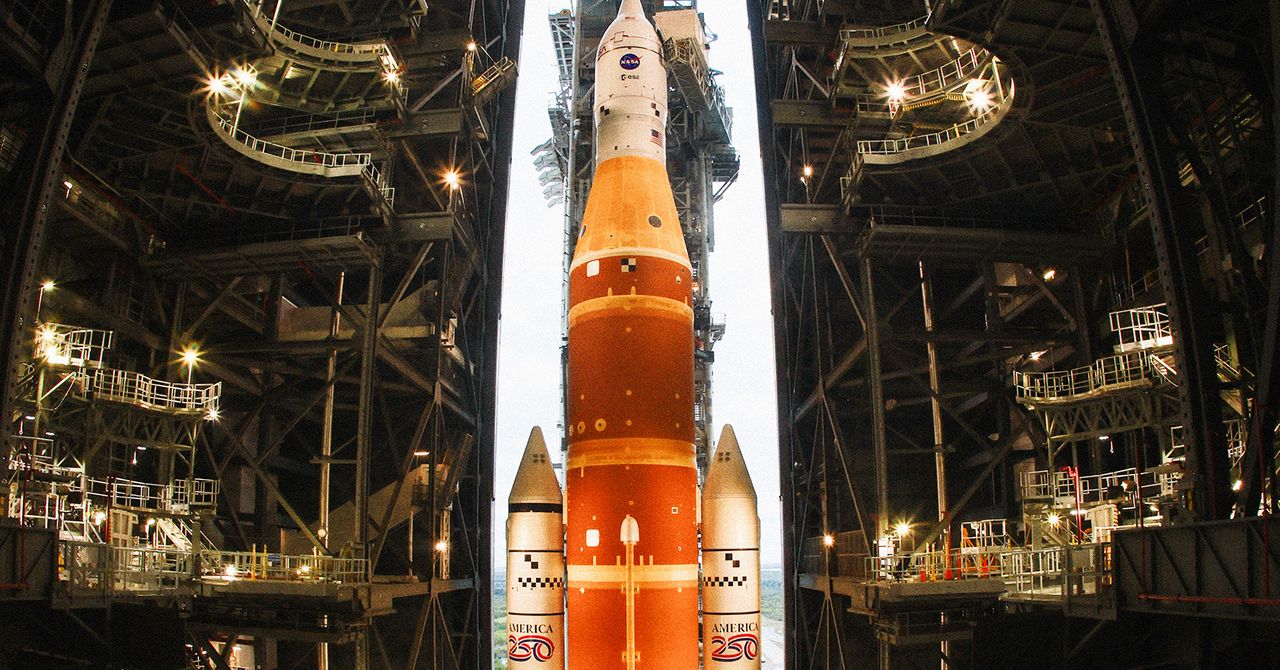
“This is just not the right pathway forward,” Isaacman said.
A senior NASA official, speaking on background to Ars, noted that the space agency has experienced hydrogen and helium leaks during both the Artemis I and Artemis II prelaunch preparations, and these problems have led to monthslong delays in launch.
“If I recall, the timing between Apollo 7 and 8 was nine weeks,” the official said. “Launching SLS every three and a half years or so is not a recipe for success. Certainly, making each one of them a work of art with some major configuration change is also not helpful in the process, and we’re clearly seeing the results of it, right?”
The goal therefore is to standardize the SLS rocket into a single configuration in order to make the rocket as reliable as possible, and launching as frequently as every 10 months. NASA will fly the SLS vehicle until there are commercial alternatives to launch crews to the moon, perhaps through Artemis V as Congress has mandated, or perhaps even a little longer.
Is Everyone on Board?
The NASA official said all of the agency’s key contractors are on board with the change, and senior leaders in Congress have been briefed on the proposed changes.
The biggest opposition to these proposals would seemingly come from Boeing, which is the prime contractor for the Exploration Upper Stage, a contract worth billions of dollars to develop a more powerful rocket that was due to launch for the first time later this decade. However, in a NASA news release, Boeing appeared to offer at least some support for the revised plans.
“Boeing is a proud partner to the Artemis mission and our team is honored to contribute to NASA’s vision for American space leadership,” said Steve Parker, Boeing Defense, Space & Security president and CEO, in the news release. “The SLS core stage remains the world’s most powerful rocket stage, and the only one that can carry American astronauts directly to the moon and beyond in a single launch. As NASA lays out an accelerated launch schedule, our workforce and supply chain are prepared to meet the increased production needs.”
Solid Reasons for Changing Artemis III
NASA’s new approach to Artemis reflects a return to the philosophy of the Apollo program. During the late 1960s, the space agency flew a series of preparatory crewed missions before the Apollo 11 lunar landing. These included Apollo 7 (a low-Earth-orbit test of the Apollo spacecraft), Apollo 8 (a lunar orbiting mission), Apollo 9 (a low-Earth-orbit rendezvous with the lunar lander), and Apollo 10 (a test of the lunar lander descending to the moon, without touching down).
With its previous Artemis template, NASA skipped the steps taken by Apollo 7, 9, and 10. In the view of many industry officials, this leap from Artemis II—a crewed lunar flyby of the moon testing only the SLS rocket and Orion spacecraft—to Artemis III and a full-on lunar landing was enormous and risky.
The Artemis II crew rehearse a walkout from the Neil A. Armstrong Operations and Checkout Building at NASA’s Kennedy Space Center.Photograph: Joe Raedle/Getty Images
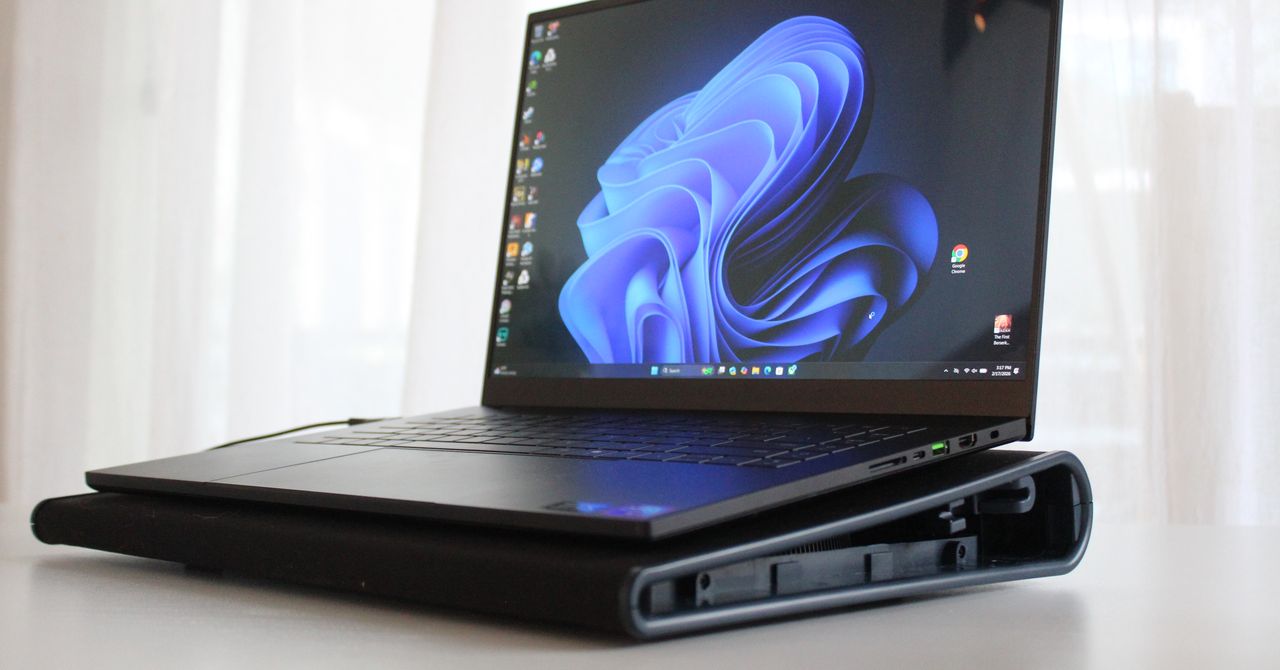
The idea of using a laptop cooling pad feels antiquated. These days, laptop chips have become extremely efficient. The fans on MacBooks (if they even have them) are barely used, and both Intel and Qualcomm are pushing efficiency on the Windows front.
But people keep buying laptop cooling pads, so surely there is a use case in 2026 that actually makes sense, right? I tried out a couple cooling pads paired with a couple of different gaming laptops, and walked away surprised at how effective they could be.
Do Cooling Pads Actually Work?
Photograph: Luke Larsen
Laptop cooling pads have been around for decades, and the idea has always been simple: provide extra air to blow through a laptop that’s otherwise restricted by its own cooling system. In theory, more air means lower temperatures—and, ultimately, better performance. This is the whole idea of the power modes that exist in Windows, which ramp up the RPMs (rotations per minute) of the fans to add more air to both improve performance. More than that, less heat also means a longer-lasting laptop that doesn’t degrade as quickly over time. It’s by that same logic that laptop cooling pads offer help.
The problem, however, is that a cooling pad is a rather inefficient way of transferring air into your device. Most laptop cooling pads, including the two that I tested, use one large fan or two smaller fans to blast cold air across the bottom of the laptop. This is the first reason why the vast majority of modern laptops won’t benefit much from a cooling pad, as these laptops tend to only have vents along the hinge. Without vents or open holes, blowing air across a sheet of metal or plastic isn’t going to do anything to cool the components on the other side. It’ll only generate a bunch of fan noise.
Gaming laptops are the main exception, though, which is why they are the primary use case for such an accessory. Most gaming laptops have a few open vents, usually above the fans, like the Razer Blade 16, which is one of the laptops I used to test these cooling pads. Laptops like the Blade 16 are designed for intensive tasks like gaming, video editing, or local AI processing—and use a high-wattage GPU and CPU to get the kind of performance you need. My model has two of the most powerful laptop components on the market: the RTX 5090 and Ryzen 9 HX 370. As you might guess, they generate a lot of heat when cranked up. Modern chips tend to max out at 100 degrees Celsius, before throttling back performance to bring down temperatures.
Most laptops use fans to cool these components, but the thickness of the laptop chassis is also a determining factor in how much the system will need to throttle back performance to keep temperatures down. In the end, it’s geometry and physics, and every millimeter of space in the laptop chassis has an effect on how cool it can keep its internal components. And unlike in a large desktop PC, you have very restricted space. That’s especially true in the modern era, where even gaming laptops have become increasingly thin.


Yorkshire Cat Rescue sees rise in abandoned cats as costs increase

Ramadan, Eid remittances to keep rupee stable

Protests erupt in Iran after Khamenei martyred in US-Israel attack

-
 Business1 week ago
US Top Court Blocks Trump’s Tariff Orders: Does It Mean Zero Duties For Indian Goods?
-

 Fashion1 week ago
ICE cotton ticks higher on crude oil rally
-

 Entertainment1 week ago
The White Lotus” creator Mike White reflects on his time on “Survivor
-
 Business1 week ago
Eye-popping rise in one year: Betting on just gold and silver for long-term wealth creation? Think again! – The Times of India
-

 Politics1 week ago
Pakistan carries out precision strikes on seven militant hideouts in Afghanistan
-

 Sports1 week ago
Brett Favre blasts NFL for no longer appealing to ‘true’ fans: ‘There’s been a slight shift’
-

 Fashion1 week ago
Climate risks could impact fashion industry by 34% in 2030: Aii
-

 Politics1 week ago
US Supreme Court strikes down Trump’s trade tariff measures