

Tech
Reinventing industry: Carbon capture technologies lead the charge against climate change


Researchers are testing a new method of capturing CO2 from energy-intensive industries and converting it into valuable chemicals and fuels.
In a potential game-changer for heavy industry, a magnesium-oxide mine in Greece received seven special containers in November 2024 with equipment designed to capture CO₂ and transform it into a valuable chemical, right there on site.
Long blamed for driving up the planet’s temperature, CO2 could now be converted into jet fuel for passenger aircraft—cutting emissions from both mining and transport.
“We just started capturing CO2, which is an amazing milestone,” said Dr. Haris Yiannoulakis, research and development manager at Grecian Magnesite, the producer of magnesium oxide.
The containers came from the Petrobrazi oil refinery in Romania. There, the carbon capture technology had been tried out as part of a project called ConsenCUS, involving seven countries and three test sites.
Getting down
The EU has set its sights on slashing greenhouse gas emissions by 55% by 2030, compared to 1990 levels. The ultimate goal: climate neutrality for industry by 2050.
ConsenCUS brings together new technologies to trap CO₂ from three notoriously hard-to-abate industries: oil refining, mining and cement production. These sectors face a double challenge, as CO₂ is generated both from burning fossil fuels and from the raw materials themselves.
For example, at the Grecian Magnesite mine site, raw material magnesite—a natural mineral found in rocks—is mined and heated up to 2,000°C to yield magnesium oxide. This material is crucial to a wide range of European industries, from steel and glass to fertilizers, animal feed and pharmaceuticals.
The downside, however, is that the thermal treatment releases CO2 both from the decomposition of magnesite and the fuel required for the process.
Three steps
The pilot plant in Greece is now tackling CO₂ conversion in three steps, explains Sara Vallejo Castaño, a chemical engineer at Wetsus research institute in the Netherlands.
First, a capture column separates CO₂ from factory gases, mixing it with water and potassium hydroxide. The CO₂ dissolves and reacts, forming potassium carbonate, which locks the gas in liquid form.
The second step uses electricity to raise the acidity of the solution, which releases CO2.
This method is simpler and greener than traditional heating or hazardous chemicals because it uses only electricity and water as resources.
A third step turns the CO2 into formic acid (or formate), a simple, naturally occurring chemical that can be found in nettles and ant bites.
“Formic acid is a well-known molecule used in the chemical sector,” said Dirk Koppert, the coordinator of ConsenCUS at New Energy Coalition, a nonprofit organization in the Netherlands.
One Dutch company, Coval Energy, already produces formic acid in this way from CO2. The acid is then fed to microbes to make fats and proteins. The proteins could be ingredients in cattle and fish feed, while the fatty acids could one day be used as a replacement for jet fuel.
Tough cement
The first testing site for the new technology was at Aalborg Portland in northern Denmark. This is one of the largest cement manufacturers in Europe, producing up to 1.8 million tons of gray cement and 0.8 million tons of white cement annually and operating since 1889.
Sustainability is a major selling point for its cement. The factory now uses non-fossil fuels for more than 30% of its heating needs for gray cement production, for example.
“We are reducing our dependence on fossil fuels and reducing CO2 emissions,” said Jesper Damfoft, sustainability director at the company.
But the manufacturing of cement still releases CO2 in the process.
The main cement ingredients in Aalborg are sand, dredged from the Limfjord waterway, and chalk from a local quarry. This calcium-rich chalk is heated to temperatures of about 1,500°C to produce lime (calcium oxide), which is essential for manufacturing cement.
When heated, the chalk’s carbon and oxygen atoms combine to form CO₂ gas, making cement production a major source of global emissions—by some estimates, accounting for 7%–8% of the world’s total.
A way forward is to capture and store CO2 underground, or put it to other uses, such as by making formic acid.
Under the EU’s emissions trading scheme, the price per excess ton of CO2 that companies have to pay stood at around €73 in June 2025, but it is expected to rise.
“Carbon prices are relatively low, but are predicted to be €150 per ton in 2030, and who knows what they will be beyond that,” said Yiannoulakis. Clearly, European industries must prepare.
The new capture technology remained in Greece until June for testing. The hope is to move the technology closer to a commercial plant and put it to work to capture CO2.
Working out the technicalities of how to capture CO2 gas and produce a desirable chemical required a dozen industry and research partners to come together, including those from universities in Canada and China.
“Without EU funds, we would not be able to build this project and test these technologies,” said Koppert.
Bringing communities on board
However, technical expertise is only part of the story.
Jacob Nielsenat from Robert Gordon University in Scotland has been investigating how to give citizens a voice in these new technologies.
He quickly realized that “lots of people didn’t know what carbon capture is, so we were asking people to give us their opinion on something they didn’t know anything about.”
Along with his colleague Kostas Stavrianakis, he invented a card game to prompt discussions on carbon capture. Both believe that results will come. “Most citizens are perfectly able to understand the complexities around these technologies,” said Stavrianakis.
He emphasized that the industry needs to talk to local people. “If you want a project to go ahead, it is always better to involve communities so they can feel part of it.”
This article was originally published in Horizon the EU Research and Innovation Magazine.
Citation:
Reinventing industry: Carbon capture technologies lead the charge against climate change (2025, August 22)
retrieved 22 August 2025
from https://techxplore.com/news/2025-08-reinventing-industry-carbon-capture-technologies.html
This document is subject to copyright. Apart from any fair dealing for the purpose of private study or research, no
part may be reproduced without the written permission. The content is provided for information purposes only.












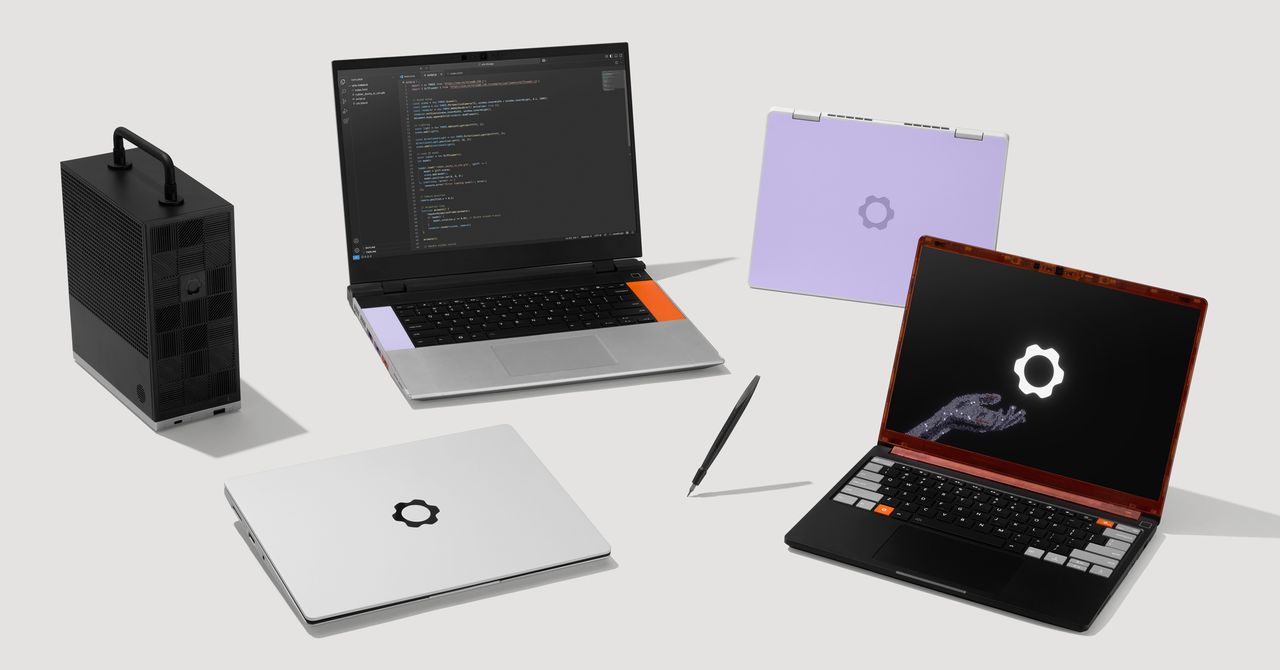
Framework, the company that makes laptops designed for optimal repairability, announced a new version of its main product, a 13-inch screen laptop. It’s called the Framework Laptop 13 Pro, and it has far better battery life, a touchscreen, a haptic touchpad, and is fitted with Intel processors.
At an event in San Francisco today, Framework CEO Nirav Patel showed off the company’s new tech, opening with a joke about making Framework AI—something the company is very much not doing. Framework’s whole thing, after all, is aiming to give users control over the physical tech they use.
“That industry is fighting for you to own nothing, and they own everything,” Patel said about the AI industry. “We’re fighting for a future where you can own everything and be free.”
Framework used the event to detail other updates coming to its 16-inch laptop. It also showed off previews of an official developer kit and a wireless keyboard for controlling your rig from the couch.
Framework 13 Pro
As the name implies, the 13 Pro is a step up from the company’s last version, the Framework 13. It’s also pricier, starting at $1,199 for a DIY Edition that requires assembling the computer yourself. Pre-built units start at $1,499 but can be upgraded with more features. Framework says it will start shipping the 13 Pro in June.
Framework’s signature move for its products is the ability to take the thing apart. The 13 Pro is made with that ethos in mind, so its parts can be easily swapped out, upgraded, or replaced. Four Thunderbolt 4 interfaces let you pick which ports (USB-C, HDMI, etc.) you want and then choose where to place them. Framework says it planned the laptop with cross-generation compatibility in mind, so current Framebook 13 laptop owners will be able to use new 13 Pro parts like the mainboard, display, and battery, and put them into their existing machine.
The big changes in the guts of the 13 Pro come from Framework’s shift away from using an AMD processor to Intel’s Core Ultra Series 3 processors, which Framework described in its press release as “just insanely efficient.” That efficiency, along with a bigger battery, translates to more than 20 hours of battery life while streaming 4K Netflix videos, at least that’s the claim. That’s almost 12 hours longer than the Framework 13.

Courtesy of Framework

Courtesy of Framework

OpenAI launched a new image generation AI model on Tuesday, dubbed ChatGPT Images 2.0. This model can generate more than one image from a single prompt, like an entire study booklet, as well as output text, including in non-English languages, like Chinese and Hindi. This release is available globally for ChatGPT and Codex users, with a more powerful version available for paying subscribers.
When any major AI company releases a new image model, it can revive interest and boost usage, especially if social media users adopt a meme-able trend, transforming images of themselves. Last year, Google’s launch of the Nano Banana model was a major moment for the company, especially when users started posting hyperrealistic figurines of themselves online. Earlier this year, ChatGPT Images made waves on social media as users shared AI-generated caricatures.
What’s Different?
Since the new model can tap into ChatGPT’s “reasoning” capabilities, Images 2.0 can search the internet for recent information and generate more than one image at a time. In essence, the bot can use additional steps to output more thorough generations from a single prompt. Images 2.0 also has a more recent knowledge cutoff date: December 2025.
This also means that outputs from the new model are more granular. For example, I generated an infographic with San Francisco’s weather forecast for the next day, as well as activities worth doing. The image ChatGPT generated included accurate weather details for the rainy day, along with accurate-looking drawings of the Ferry Building, Castro Theater, Painted Ladies houses, and Transamerica Pyramid.
Additionally, Images 2.0 is more customizable for users who want unique aspect ratios for image outputs. The new model can generate images, ranging from 3:1 wide to 1:3 tall, and users can adjust the image’s size as part of their prompt to the AI tool.
First Impressions
After a few hours of generating images with the new model, I was generally impressed with the text rendering capabilities, in English at least. Not that long ago, image outputs featuring text, from any of the major models, often included numerous malformed characters or words with errant extra letters. ChatGPT struggled to label images accurately two years prior, so the cleaner, more complex outputs from Images 2.0 are a sign of continued improvement. Google has also focused on improving image outputs featuring text in its recent iterations of Nano Banana.

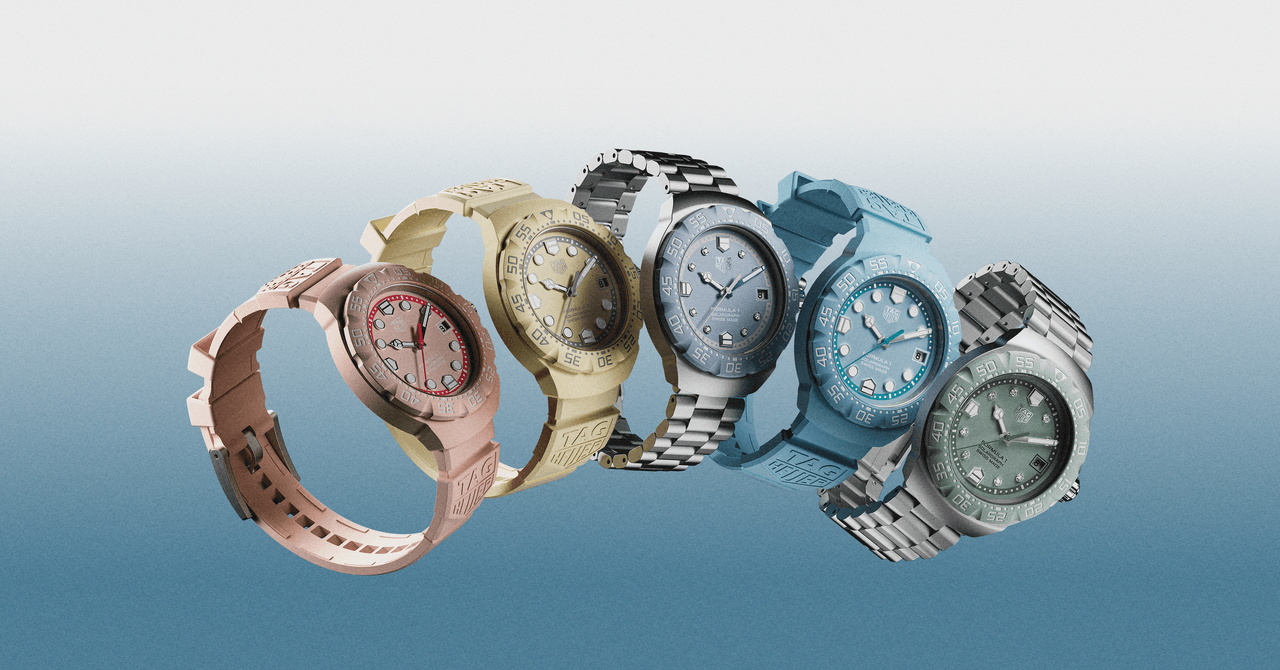
No doubt looking to find some breathing space after the hubbub of Watches and Wonders last week, TAG Heuer has dropped an update to its 2025 revamped collection of the brand’s iconic plastic-cased 1980s watch, the “Formula 1.”
The five new pieces are called the “pastel collection” by TAG, and all are built on the same solar-powered Formula 1 Solargraph 38 mm that launched in March last year. Two models feature a sandblasted stainless steel case, while the remaining three have cases made from TAG’s proprietary bio-polamide plastic, Polylight.
It’s these Polylight versions that, for WIRED, are the stars of the new mini collection. Coming in pastel blue, beige, and pink, and sporting case-matching rubber straps and bidirectional-rotating Polylight bezels, they reference classic F1 designs that made the line iconic in the first place.

The stainless steel models have a 3-link sandblasted steel bracelet and either a “pastel green” or “lavender blue” dial with matching Polylight bezels. The dials on both watches also see eight diamonds replace the circular hour markers. TAG says these models add “a touch of refinement for those seeking sophistication,” but considering these “luxury” F1s will retail at $2,800, as opposed to the already punchy $1,950 full Polylight versions, our pick is most definitely the plastic pieces.
Not only do these blue, beige, and pink versions pleasingly hark back to vintage F1 designs—though now 38 mm in size instead of the original 35 mm—but also, just like all F1 Solargraphs, they come equipped with screw-down crowns and casebacks, making for 100 meters of water resistance and ensuring these will serve well as dive and sports watches. My recommendation? Go for the pink, it looks superb on the wrist. The beige is a very close second.



Ranking the Top 20 Players in the Men’s College Basketball Transfer Portal

NATO jets intercept Russian bombers over Baltic Sea

FIFA to put more World Cup tickets on sale for all games

-

 Fashion5 days ago
France’s LVMH Q1 revenue falls 6%, shows resilience amid Iran war
-

 Sports1 week ago
The case for Man United’s Fernandes as Premier League’s best
-

 Entertainment1 week ago
Palace left in shock as Prince William cancels grand ceremony
-
 Business1 week ago
UK could adopt EU single market rules under new legislation
-

 Entertainment6 days ago
Is Claude down? Here’s why users are seeing errors
-

 Fashion1 week ago
Energy emerges as biggest cost driver in textile margins
-
 Business1 week ago
Delta Air Lines unveils first new Delta One suite in premium cabin arms race
-

 Fashion1 week ago
Asia claims largest share of markets on Kearney FDI Confidence Index