

Sports
Overreactions, big questions from five wild-card games: Have the Patriots still not beat a good team?

-
Dan Graziano
-
Ben Solak
Close
Ben Solak
ESPN
- Ben Solak joined ESPN in 2024 as a national NFL analyst. He previously covered the NFL at The Ringer, Bleeding Green Nation and The Draft Network.
The NFL playoffs are officially underway. The Rams narrowly edged the Panthers, and the Bears took down the NFC North-rival Packers in a wild comeback. On Sunday, the Bills held off the Jaguars, the 49ers took down the defending champion Eagles and the Patriots won a low-scoring affair over the Chargers.
What are the main lessons and takeaways from each wild-card matchup, and what’s next for these teams? We asked national NFL reporter Dan Graziano and NFL analyst Ben Solak to help size up every matchup from the opening round and look forward from all angles. For each wild-card game, Solak is answering one big remaining question and Graziano is judging the legitimacy of one potential overreaction.
Let’s jump in, making sense of potential offensive changes for the Chargers and Eagles, the Bills’ Super Bowl window, the Jaguars’ rushing attack, Caleb Williams‘ growth and Bryce Young‘s future. And check back all weekend for more snap reactions as games happen.
Jump to:
LAC-NE | SF-PHI | BUF-JAX
GB-CHI | LAR-CAR



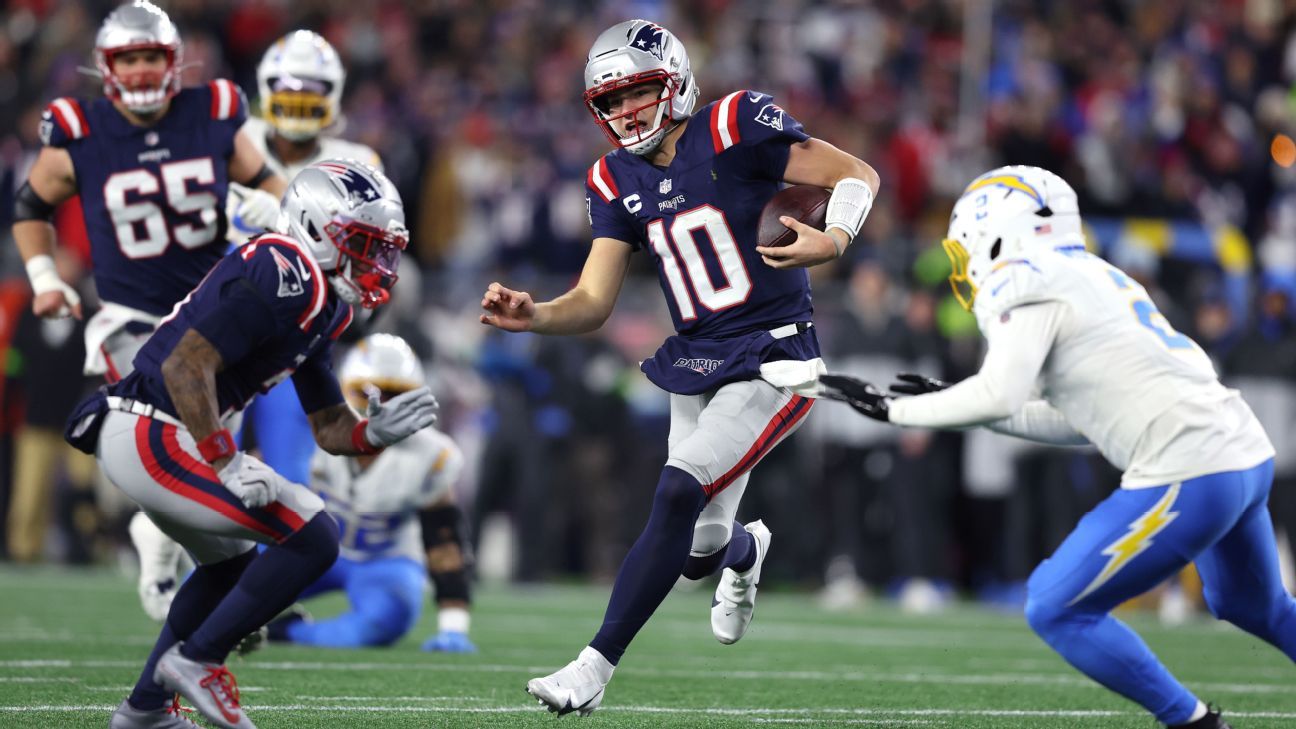
‘The Patriots STILL haven’t beaten anybody good!’ Overreaction?
No, not an overreaction. Oh sure, they won. Which is all that matters at this point. But their performance did not scream “No. 2 seed/Super Bowl contender,” and it did little to tamp down the notion of them being an untested team that could struggle against better competition. The Chargers are now only the third team the Patriots have beaten this season that made the playoffs. One of the other two was the Panthers, who finished their season 8-10 after losing to the Rams on Saturday. And the final one was the Bills, to whom they also lost to later in the season.
The Patriots made some plays when they had to against the Chargers. They made their field goal attempts, which really matters in games that are touchdown-free until the final 10 minutes. But they were also sloppy with the ball and didn’t generate much of their usual exciting, explosive offense. The Chargers’ defense was one of the best at limiting explosive plays this season, so that might have been a part of it. But it would have been hard to watch this game and not think a team with a functional offense could have knocked out New England in the first round.
So what happens now? Did quarterback Drake Maye & Co. get their stinker out of the way early and survive it? Do they learn from this and play better next week against the Steelers or Texans? Or does this advanced level of competition do them in, the way their critics feared all season that it might?
We’ll have to wait a week for the answers. Coach Mike Vrabel has pressed every correct button in his first season as the Patriots’ coach, and MVP contender Maye has not let anything bother him. They’ll get either the Steelers and a chance to avenge a Week 3 loss in which they turned the ball over five times, or a Texans team that would be coming in on a 10-game win streak and features an even tougher defense than the Chargers.
This is the survive-and-advance time of the year, and the fact that the Patriots won ugly doesn’t disqualify them from winning it all. It just adds a little bit of strength to the arguments of those who continue to believe this team is playing over its head. — Graziano
Why haven’t the Justin Herbert-led Chargers won a playoff game?
Herbert has officially gone 0-3 in his first three postseason starts. He is only the fourth quarterback this century to go winless in his first three postseason starts, joining Andy Dalton, Matt Ryan and Matthew Stafford.
The general NFL consuming public is reasonably suspicious of Herbert among the modern quarterbacking elites, as he doesn’t have the wins that Patrick Mahomes or Josh Allen have, let alone QBs such as Jalen Hurts or Brock Purdy. Though Herbert didn’t play a great game Sunday, it’s hard to construct an argument that he lost the game for the Chargers.
The Chargers clearly need new interior offensive linemen. Though the injuries at tackle submarined the whole line, all three starters on the interior were the expected ones preseason: Bradley Bozeman at center, Zion Johnson at left guard and Mekhi Becton at right guard. Bozeman and Johnson have not been starting-caliber players for years, and Becton is only an average-level starter.
On 12 of Herbert’s 18 starts in 2025, the Chargers gave up a quick pressure rate (pressures in under 2.5 seconds) greater than 15%. The league average for quick pressure rate this season was 13.8%. The Chargers have also been consistently outschemed under coordinator Greg Roman. His usage of wonky personnel and diverse running schemes is valuable, but the Chargers haven’t delivered against playoff-caliber defenses. Though the offensive line was dreadful, few if any efforts were made to change the game around the offensive line. No screens, rollouts, trick plays. When was the last time the Chargers truly outschemed their opponent?
Of course, that doesn’t explain away the four-interception game against the Texans in the 2024 postseason, nor the collapse against the Jaguars in the 2022 postseason. Taking the collective weight of those three losses and calling Herbert a postseason disappointment is a fair assessment. But of the three quarterbacks he has joined (and, not for nothing, Peyton Manning would also qualify if we included the 1999 season), he’s clearly more of a Stafford character than a Dalton one.
Postseason success will come to Herbert when he plays for a more well-rounded team. As unsatisfying as it is to say, it’s the truth. — Solak
0:24
Patriots deck Herbert to force fumble
K’Lavon Chaisson drops Justin Herbert and forces a fumble.


‘The 49ers can make a legit Super Bowl run.’ Overreaction?
Yes, overreaction. The 49ers are an easy team to like and respect. They are TOUGH tough. They’ve been without their two best players on defense (linebacker Fred Warner and defensive end Nick Bosa) for months. They played more than a month without quarterback Brock Purdy. Tight end George Kittle was in and out of the lineup all season — and he’s now out for however long their season continues after tearing his Achilles in Philadelphia. It is a miracle that they’re one of the eight divisional-round teams, and they deserve admiration for the extent to which they’ve fashioned chicken salad out of … well, everything that has happened to them this year.
But the 49ers have to go play in Seattle, and we just saw that game last weekend. Playing the Seahawks at home with the division title and the NFC’s top seed on the line, the Niners put up a meager 173 yards of total offense in a 13-3 loss. Now, the Seahawks will be at home and coming off a bye, while the Niners will limp in after a physically brutal win over the defending Super Bowl champs.
Will it help that left tackle Trent Williams, who didn’t play in Week 18, is expected to play next week? Sure. But the 49ers still won’t have Kittle, and their run game isn’t very good without him. Running back Christian McCaffrey remains a playmaker for Purdy in the passing game, but they averaged 3.5 yards per rush attempt in Sunday’s win. That’s not out of character for the Niners, as they averaged 3.8 in the regular season (30th in the NFL). They’re limited in what they can do on offense, and the Seahawks have the kind of defense that can take advantage of that.
There was a point in the fourth quarter when I thought, “Whoever wins this game is getting smoked in the next round,” and I kind of stand by it. The 49ers are just about out of players, and the Eagles couldn’t do anything against a team that was just about out of players.
It was a fitting end for a 2025 Eagles team that was never as many believed it to be. Even as they marched down for the go-ahead score, it never felt like they would get it. A child born during the third quarter of this game could have figured out the Eagles were going to Dallas Goedert on the final play, and they did despite him being triple-covered. It was peak 2025 Eagles — no creativity, no juice. They weren’t a great team; they just won a lousy division. Meanwhile, the Seahawks won the only division in NFL history in which three teams won at least 12 games. Kudos to Kyle Shanahan, Robert Saleh and Co. for getting as far as they got with their roster crumbling around them. But it’s only getting tougher from here. — Graziano
0:28
49ers stop Eagles on 4th down to clinch victory
Eric Kendricks makes a great play on defense to stop the Eagles from scoring and secure the 49ers’ 23-19 win vs. the Eagles.
The lingering question: Is the Eagles’ offensive breakup inevitable?
There is no worse-kept secret in the NFL than the frustration internally and externally with the Eagles’ offensive coaching this season. Coordinator Kevin Patullo, promoted to replace the outgoing Kellen Moore, has been a longtime assistant for coach Nick Sirianni. But Patullo was evidently underqualified for his role. Wide receiver A.J. Brown was visibly upset to varying degrees throughout the year. Running back Saquon Barkley was not nearly as productive as he was last season. Quarterback Jalen Hurts continued to struggle with throwing to the middle of the field.
There will almost certainly be a new offensive coordinator in Philadelphia next season — the fifth in five years. But perhaps the greatest question is if anything else will be new in the Eagles’ offense? Brown, who went over 20 minutes of game clock in the second half without a target and was seen arguing with Sirianni on the sideline, was a rumored target for many teams at the trade deadline. His contract represents a substantial dead cap ($66.9 million) if he’s traded, and he would likely have to collaborate with the Eagles’ front office and finagle the finances if he demands a trade.
Other than Brown, tight end (and key red zone option) Dallas Goedert will be a free agent. At 31, he’ll want to cash in on what probably will be his final good years, and the Eagles don’t have a ton of cap space to pay him. But they also don’t have a good TE2 waiting in the wings. Right tackle Lane Johnson, a franchise mainstay for more than a decade, missed the end of the season because of a foot injury and will turn 36 this spring. How much longer does he want to play — and how effective would he be? It feels like a bigger change than a mere coordinator switch is on the horizon for Philadelphia’s offense as the Eagles look to get back on top of the NFC. — Solak


‘This really is Josh Allen‘s best chance to win the Super Bowl.’ Overreaction?
No, not an overreaction. This has been the #narrative since the preseason. The Bills were set up with one of the easiest-looking schedules. They’ve played one game all season outside of their home time zone. Patrick Mahomes missed the playoffs. Joe Burrow and Lamar Jackson missed the playoffs. Allen and the Bills, the theory went, had the road cleared for them and were in line to finally get over that postseason hump.
But a funny thing happened on the way to the coronation. This season’s Bills turned out to be … not as good as usual. The defense never really got it together and still looks very vulnerable. Jacksonville ran for over 100 yards outside the tackles in Sunday’s game, the first time a Jaguars team has done that in more than three years. Buffalo is incredibly banged-up and short-handed on both sides of the ball. It didn’t have an answer for Trevor Lawrence until the stunning tipped-ball interception that locked down Sunday’s win. The Bills will likely be a road underdog next weekend.
But what the Bills do have is guts and experience — and Allen, who plays with multiple simultaneous injuries and doesn’t have a star WR1 but somehow finds a way to do whatever it takes. Yes, even if that’s a 10-yard tush push on fourth-and-1 at the opponent’s 11-yard line with a minute left in a playoff game. The Bills have a winning culture, put in place by coach Sean McDermott and GM Brandon Beane, who both get a lot of grief for not getting over the hump. But they have built a postseason mainstay out of a team that — their critics may forget — had missed the playoffs 17 years in a row before it got there.
Jacksonville had the better team this season. Honestly, it looked very much as if it had the better team Sunday. But Allen and the Bills willed their way to a win, and they’re still going. There is still no Mahomes dragon to slay. There is no team left in the field with anywhere close to Buffalo’s postseason experience. This is the year without the dominant team. This is the NFL playoffs, where no one knows who’s supposed to win; where everyone’s favorite team is an NFC 5-seed that barely beat a sub-.500 team in the first round. There is no way we can rule out a Josh Allen Super Bowl run, even if this is far from the best team he has ever brought to the playoffs. Someone has to win this thing.
Find me a team that has been through more than the Bills. Find me a team that’s hungrier. Find me a team that’s more certain it can do what it takes to win games this time of year. Find me another team with Josh Allen. — Graziano
The lingering question: Why didn’t the Jaguars run it more?
About halfway through the third quarter, you, me and every armchair coach in America were wondering the same thing: Why weren’t the Jaguars relying on the running game? Jacksonville was gaining almost 10 yards per carry through their first seven drives, and the deficit was never greater than one score. Lawrence was not bad, but he was certainly erratic, and it felt like the Jaguars’ passing game might be one big mistake away from disaster.
Well, the Jags rolled down the field on their next two drives, scoring touchdowns on 11- and 10-play sequences that collectively took up 11 minutes of clock. The running game was sprinkled in, but it was Lawrence ripping throws with accuracy and aggression that created the scoring opportunities. During the back half of the regular season, the Jaguars had been an extremely one-dimensional offense, ranking fourth in success rate on dropbacks but 31st in success rate on designed runs. They were third in EPA per play on dropbacks but 30th in EPA per play on designed runs. It’s hard to stop dancing with the one that brought you, even when the Bills were so willing to play with light boxes and surrender ground against the run.
0:24
Travis Etienne Jr. shakes off a tackle attempt to put Jags back up late in 4th
Trevor Lawrence finds Travis Etienne Jr., who powers through a tackle attempt to give the Jaguars a lead with a little over four minutes remaining.
Even despite his shaky accuracy and first-quarter interception, Lawrence had a 48.5% dropback success rate (Allen was 42.1%) on the day. The Jaguars certainly could have run the ball more in an effort to shorten the game and minimize the number of second-half possessions Allen got. And I’d make a strong guess that coach Liam Coen and GM James Gladstone will invest serious offseason resources into bolstering the offensive line to ensure they have the sort of running game that they can trust all season long.
At the end of the day, the Jaguars lost a brutally close game to an excellent Bills team. As with all losing teams, there were plenty of little things they could have done better. But someone has to lose the ballgames, and Jacksonville — despite its truly excellent season and legitimate Year 1 leap under Coen — drew the shorter straw Sunday. — Solak


‘Caleb Williams is going to win the MVP award next season.’ Overreaction?
No, not an overreaction. The Bears fell behind 21-3 at halftime. Williams completed less than 50% of his passes and threw two interceptions. And despite pouring it on in the second half, the Bears were down 27-24 at the two-minute warning — at home as the No. 2 seed — to their oldest and most hated rival. It was all setting up for a massive Bears playoff letdown. Until they won.
Williams hit DJ Moore for a 25-yard go-ahead touchdown pass with 1:43 left to complete a furious comeback, and for the seventh time this season, Chicago won a game it trailed in the final two minutes of regulation. Williams can put you through the full spectrum of emotion on literally any snap. But you watched him pick up a fourth-and-8 and a third-and-10 on his way to the touchdown pass that cut the lead to three and turned the Soldier Field crowd all the way up to 11, and you probably thought something along the lines of, “Yeah, there’s something magic about this kid.” You watched him get the ball back after the Packers’ missed a field goal attempt with 2:56 to go and you thought, “Yeah, I kind of think he’s got this.”
Williams can make throws other quarterbacks can’t make, and he appears to be the kind of player whose pulse chills all the way out in the moments that send the pulses of others through the roof. That’s why even when it’s not going great, you feel as if there’s a good chance it eventually will. With Williams in his second season as an NFL quarterback and Ben Johnson in his first year as an NFL head coach, Chicago went 11-6, won a division out of which the other three teams made last season’s playoffs and still has a chance to win the whole thing. The Bears have young skill position talent all over the place around Williams. They can spend their offseason beefing up the defense, too. Is there a compelling reason to believe they’ll be worse next season than they were this season? Nope.
Williams should continue improving with this group around him and Johnson coaching him. If next season’s Bears win 12 or more, and Williams wins five or six of those in the final two minutes, he can be the darling of the MVP voting body. There are a lot of “ifs” there, sure, but this isn’t far-fetched. — Graziano
The lingering question: What’s wrong — and right — with Ben Johnson’s fourth-down decision-making?
The fourth-down haters were out in full force at the end of the first half, as Johnson’s Bears went 1-for-4 there, including a failed fourth-and-5 at their 32-yard line. This was a particularly aggressive call. The NFL Next Gen Stats model favored a punt, while the ESPN model very, very narrowly favored a “go.”
Should Johnson have gone for all those early fourth downs? I’m not sure. The defense felt as if it had no stops in it, but as evidenced by the second half, it did. It’s hard to know from the outside what goes into every decision.
What we can say confidently is that the Bears were making massive, easy mistakes on fourth down. The interception targeting Luther Burden III on fourth-and-6 came because the rookie receiver was confused at the line. The second-half fourth-and-1 failure in the red zone was a result of a blown pass protection. Even the fourth-and-5, way backed up, looked like a huge Burden catch-and-run … until the ball was tipped at the line.
0:27
Bears pull within 3 after TD to Zaccheaus
Caleb Williams throws a beautiful pass to Olamide Zaccheaus for the Bears touchdown, and the two-point conversion is good.
The story of the Bears’ win — and the Bears’ season — isn’t one of decisions; it’s one of execution. Chicago made a lot of sloppy mistakes on offense to start the season and improved later in the schedule. In this first playoff game for a young offense, the Bears made plenty of easy mistakes and improved as the game progressed. These cardiac Bears are living by the hair on their chinny chin chins, and its hard to win all of your playoff games that way. But they are doing exactly what a young team needs to do in the playoffs: settling down, fighting back and learning what it takes to win January football. — Solak


‘Bryce Young is going to get a top-10 QB contract this offseason.’ Overreaction?
Yes, overreaction. Look, massive respect to Young and the Panthers here. The Rams won, but Carolina made all of us who thought it could pull off an upset look good. Young was fearless and fun and everything teams want their quarterbacks to be in big moments. He was 21-for-40 for 264 yards and a touchdown pass, and he also ran for a touchdown. He hit Jalen Coker for the go-ahead TD with 2:39 to go, only to watch his defense inexplicably go into prevent mode with way too much time left, as the Rams marched down the field for the winning score. But Young did everything he could to try to keep his season — in which he threw for 3,011 yards, 23 touchdown passes and 11 interceptions for a division champion — alive. Yes, an 8-9 division champion, but still.
All of that said, it’s too soon for the Panthers to commit. If Young wants to sign a Sam Darnold or Baker Mayfield type of deal, go ahead and do that, Carolina. Well worth it, given the promise Young showed this season and the investment the team has already made in him. But if he wants Tua Tagovailoa money? Uh-uh.
Young is signed through 2026, and the Panthers have an option for 2027, which I feel extremely confident they will pick up because there’s no reason not to do so. They’ll basically have him for $30 million over the next two years if they do that. That’s a totally reasonable investment that would allow them to gather more data and decide whether he’s the franchise guy they believed him to be when they traded up to select him first in 2023. The fifth-year option (and the franchise tag, frankly, if they want to do that in 2028) afford the team the opportunity to make Young prove it again.
Young doesn’t seem like the kind of guy who needs the affirmation that would come with the long-term deal. I’m sure he knows a ton of things he can do better and looks forward to a chance to work on them. Heck, he’s better off waiting and having an even better year in 2026 and negotiating off that. Big hat tip to Young and the Panthers, but it’s still way early. — Graziano
The lingering question: What have the two games against the Panthers taught us about the Rams?
There are plenty of big differences between the Panthers’ regular-season upset of the Rams and their near postseason repeat. The connecting thread is how successfully the Panthers tested the Rams’ defensive backs in coverage. In the first matchup, it was with shot plays late in drives to score big touchdowns; in this game, the Panthers ripped off explosives to Tetairoa McMillan and Coker. The ball came out fast from Young, which helped neutralize the Rams’ pass rush, as Carolina wagered on its supersized receivers against the Rams’ smaller defensive backs. It generally worked.
Nickelback Quentin Lake returned to the starting lineup for the first time since Week 11, and the Panthers immediately tested him, too. Lake was targeted 10 times and allowed 7 receptions for 83 yards, as the big slot Coker in particular gave him trouble (5 catches on 5 targets for 62 yards). As the Rams advance, I’d expect more teams to test that secondary in 50-50 and contested situations, whether deep down the sideline or in the middle of the field. It isn’t a big group, and physical receivers give it challenges accordingly.
1:19
Should Rams be concerned after tight win over Panthers?
Alex Smith, Tedy Bruschi, Rex Ryan and Randy Moss discuss the Rams’ 34-31 wild-card win over the Panthers.
Of course, the Rams have struggled with turnovers against Carolina, as well: three takeaways in the first game, then one (plus the blocked punt) in the second game. In general, the Panthers do well discouraging the play-action pass and forcing Matthew Stafford to play more patiently. And when he plays patiently, he’s forced to scramble more or take more checkdowns — not his preferred style of play. — Solak
NEWYou can now listen to Fox News articles!
Shortly after the maize and blue confetti fell in celebration of Michigan’s win over UConn in the national championship game, college basketball’s transfer portal was officially opened.
According to reports, over 2,000 Division I men’s basketball players have already entered their names into the portal, which will be open for two weeks, from April 7 to April 21.
It’s a deep and talented pool of transfers who will have a significant impact on the outcome of the 2026-27 college basketball season.
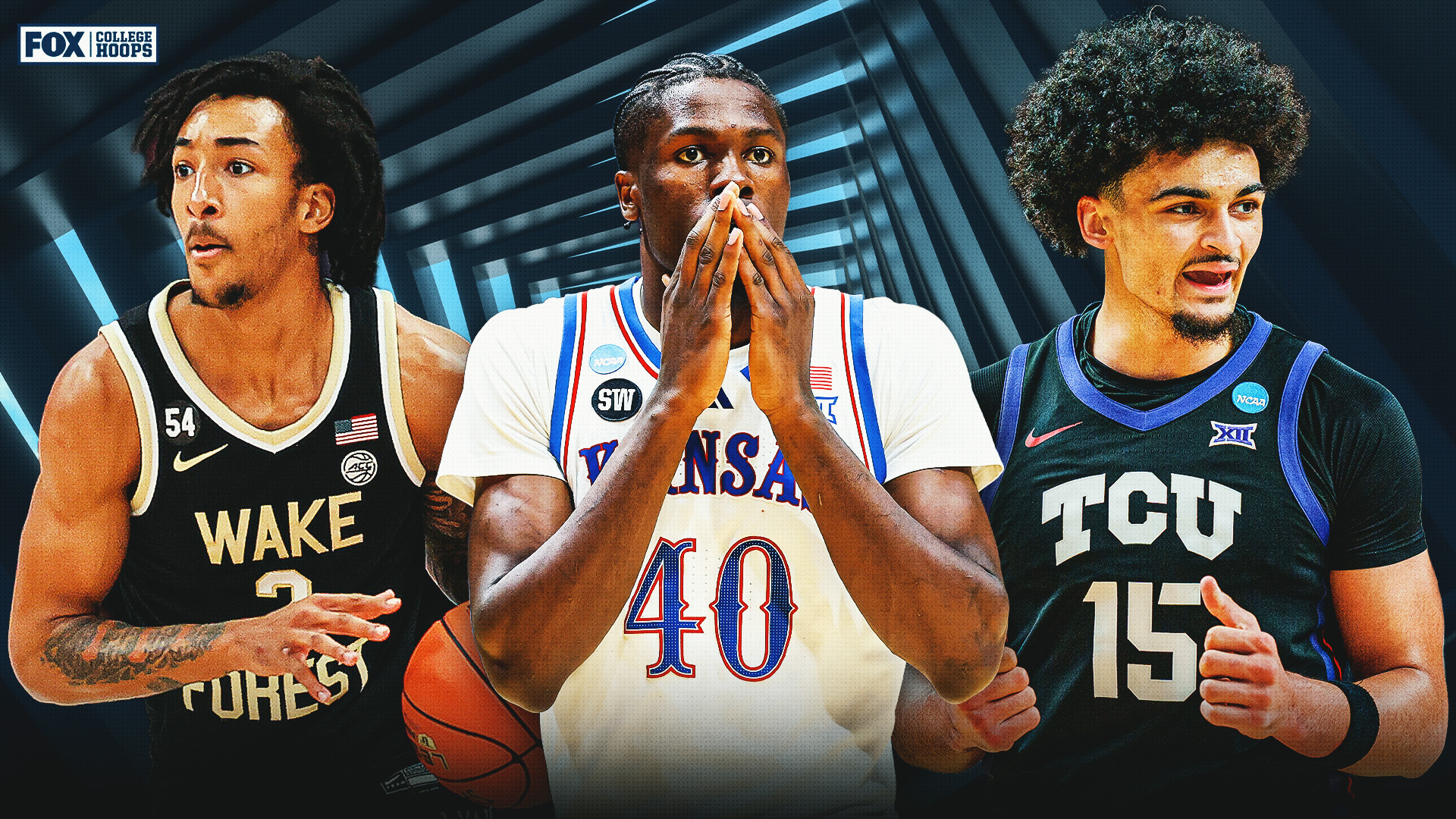
We ranked the top 20 transfers to keep an eye on over the next two weeks as transfer decisions unfold.
Burton is a dual-threat scoring guard. He led the ACC in scoring with 21.3 points per game as a sophomore and then followed that up by averaging 18.5 points per game during his junior year at Notre Dame. After three seasons with the Fighting Irish, Burton enters the portal with one year of eligibility remaining.
Update: Burton has committed to play for Indiana.
Freeman is a budding star who can score at all three levels. He plays with a smoothness to his game, averaging 16.5 points and 7.2 rebounds per game en route to earning honorable mention All-ACC honors. He was a former five-star recruit in the 2024 high school class, but he has battled injuries throughout his first two seasons at Syracuse. Freeman has two years of eligibility remaining.
Update: Freeman has committed to play for St. John’s
Sherrell is a physical presence with a strong motor on the glass. He averaged 11.1 points and 6.2 rebounds in 23.9 minutes per game as a sophomore at Alabama. In a system that emphasized high-volume 3-point shooting, his full skill set wasn’t on display. With two years of eligibility remaining, he could emerge as a do-it-all forward in a different role.
Update: Sherrell has committed to play for Indiana.
Diop is an athletic big man, and at 7-foot-1, he’s a rim-protecting presence and a capable lob threat. He averaged 13.6 points and 2.1 blocks per game in his freshman season at Arizona State. He was born in Senegal and came to the United States from Spain before last season. At 21 years old, he has more experience than most rising sophomores.
Lewis is a dynamic guard whose game is built on getting into the lane and creating for himself and his teammates. One of the best finishers in the nation, he averaged 12.2 points and 5.3 assists per game while leading Villanova to the NCAA Tournament. Lewis has three years of eligibility remaining but has also entered his name into NBA Draft consideration and the transfer portal.
Update: Lewis has committed to play for Miami.
Cyril is an imposing paint presence on both sides of the ball. He’s an elite rim-protector and efficient pick-and-roll partner. He averaged 9.3 points and 2.2 blocks per game during his sophomore season at Georgia, while only playing 21.2 minutes per game. There’s room for a breakout if the playing time increases, and Cyril has two years of eligibility remaining to prove that.
Update: Cyril has committed to play for Miami (Fla.).
Nik Khamenia was one of five freshman who played heavy minutes for Duke this past season. (Photo by Mitchell Layton/Getty Images)
Khamenia is a versatile wing and former top-20 recruit whose role was limited on a loaded Duke roster as a freshman. He averaged 5.7 points and 3.3 rebounds in 19.8 minutes per game. With expanded opportunity, he’s a strong candidate to make a major leap as a sophomore.
Update: Khamenia has committed to play for UConn.
Hill is another elite-level shot maker, overcoming his 6-foot-3 stature with a decisive dribble and high-arcing release. He left his mark on the 2026 NCAA Tournament, knocking down a game-winning shot to lift No. 11 seed VCU over No. 6 seed North Carolina in the first round. Hill averaged 15.0 points per game, shooting 37% from 3-point range en route to earning A-10 Sixth Man of the Year honors. He provided an offensive punch off the bench for the Rams but is certainly a starting caliber player at the high-major level with two years of eligibility remaining.
Update: Hill has committed to play for Tennessee.
Byrd is a standout on both ends of the floor. He withdrew his name from the NBA Draft last year and returned to San Diego State, where he averaged 10.4 points and 4.7 assists per game along with 1.2 blocks and 1.9 steals per contest. He was one of the top defenders in the nation this past season, earning Mountain West Defensive Player of the Year honors.
Update: Byrd has committed to play for Providence.
Johnson is another go-to scoring guard. He separates himself with his ability to facilitate and initiate. He averaged 16.9 points and 3.0 assists per game, leading Colorado in scoring as a freshman while coming off the bench for the first half of the season. With three years of eligibility remaining, Johnson could emerge as the face of a program and the focal point offensively.
Update: Johnson has committed to play for Texas.
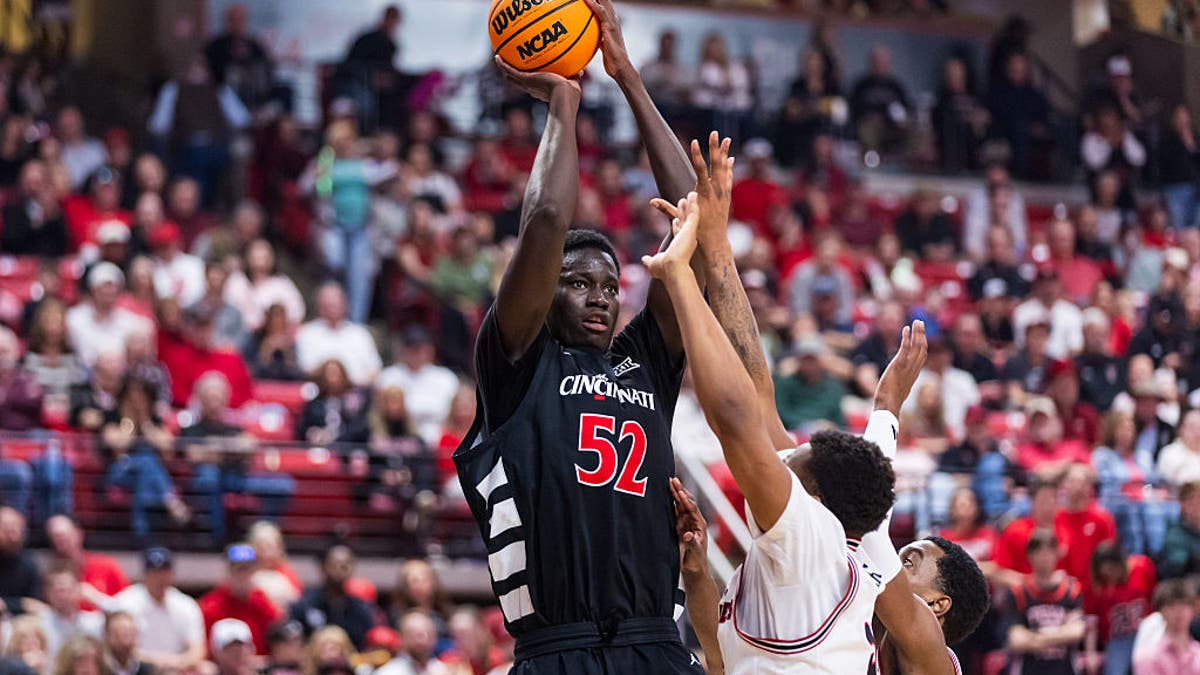
Moustapha Thiam was a significant part of Cincinnati’s late-season surge, averaging 17.7 points over the final nine games. (Photo by John E. Moore III/Getty Images)
Thiam is a crafty big man with a traditional back-to-the-basket game. He’s also an athletically-gifted defender, averaging a Big 12-best 2.6 blocks per game as a freshman at UCF and later helped Cincinnati finish 10th nationally in KenPom defensive efficiency. Entering his junior year, he’s a candidate to break out at his third program.
Vaaks is an elite perimeter shooter with good size, standing at 6-foot-7, which will allow him to consistently get his shot off no matter what level he plays at. He averaged 15.8 points per game while shooting 35% from 3-point range as a freshman at Providence. He started 14 of the final 15 games of the season, increasing his numbers to 18.0 points per game.
Update: Vaaks has committed to play for Illinois.
Shelstad is an offensive engine, creating for himself at all three levels while also facilitating for his teammates. His endless range, blinding speed and timely decision-making makes up for his size (6-foot). He earned All-Big Ten honors as a sophomore but only played 12 games during his junior year at Oregon before sustaining a season-ending hand injury. He averaged 15.6 points and 4.9 assists per game for the Ducks.
Update: Shelstad has committed to play for Louisville.
Murauskas is a three-level scorer. He uses his height to score inside, but is also a talented perimeter shooter both off the catch and dribble. He averaged 18.4 points and 7.6 rebounds per game in his junior season at Saint Mary’s. Murauskas started his college career at Arizona, then played two seasons with the Gaels, entering the portal after head coach Randy Bennett left for Arizona State.
Haggerty is a high-level shot taker and maker, averaging 23.6 points per game on 48.9% shooting at Kansas State this past season. He previously led the American Conference in scoring at Memphis in 2024–25.
Update: Haggerty has committed to play for Texas A&M.
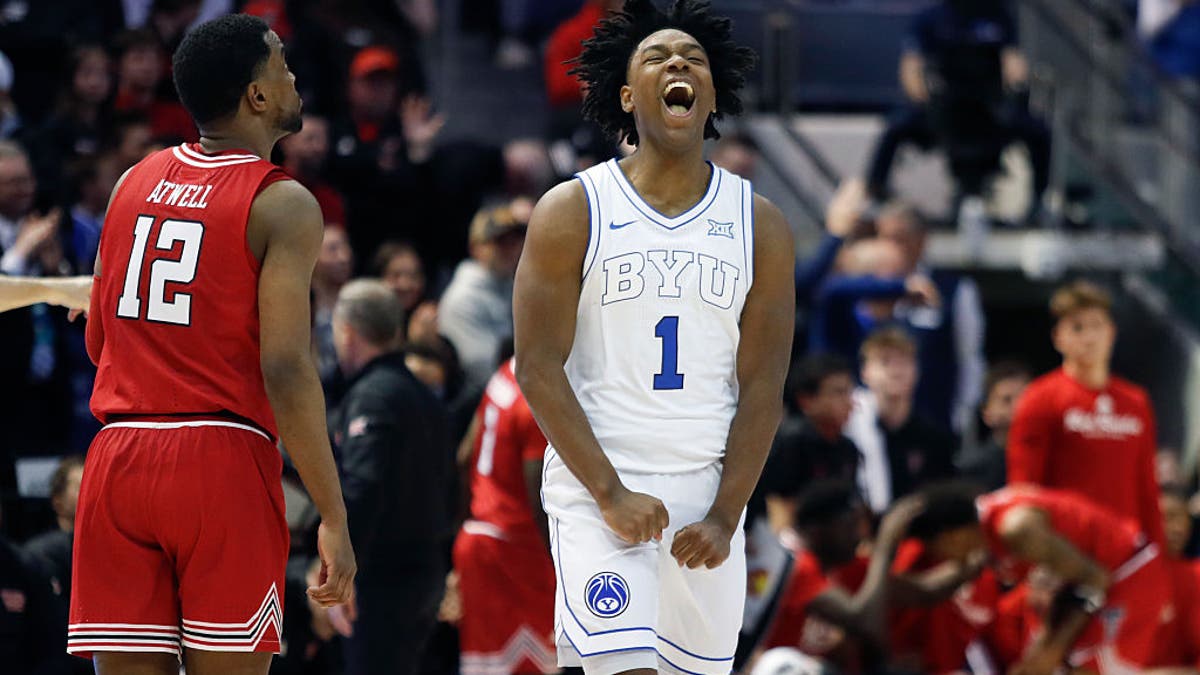
Robert Wright III has led two programs to the NCAA Tournament, and will seek a third school in the NCAA transfer portal. (Photo by Chris Gardner/Getty Images)
Wright plays a downhill, attacking style, always looking to penetrate the lane with his dribble to create for himself and his teammates. He averaged 18.1 points and 4.6 assists per game for BYU during his sophomore season. He also improved as a shooter, increasing his 3-point percentage from 35.2% to 41.0%. It will be Wright’s second consecutive offseason entering the transfer portal, as he went from Baylor to BYU and now will play for a third school in three years.
Update: Wright has returned to play for BYU.
Punch is a steady interior presence on both sides of the ball, with an especially-high IQ on offense. At 6-foot-7, 245 pounds, and without a 3-point shot in his arsenal, he’s undersized and might not fit every system. However, he averaged 14.1 points and 6.8 rebounds per game in his sophomore season at TCU.
Update: Punch has committed to play for Texas.
Harris averaged 21.4 points and 6.5 rebounds per game during his sophomore season at Wake Forest. He thrives in the mid-range, shooting 55.5% from inside the arc, but still has room to improve from the outside. Harris can be the lead scorer on a high-major team with two years of eligibility remaining.
Blackwell averaged 19.1 points per game during his junior season at Wisconsin. In his three seasons in Madison, the Badgers were unable to advance past the first weekend of the NCAA Tournament, so Blackwell is seeking a place to compete for his final season of eligibility.
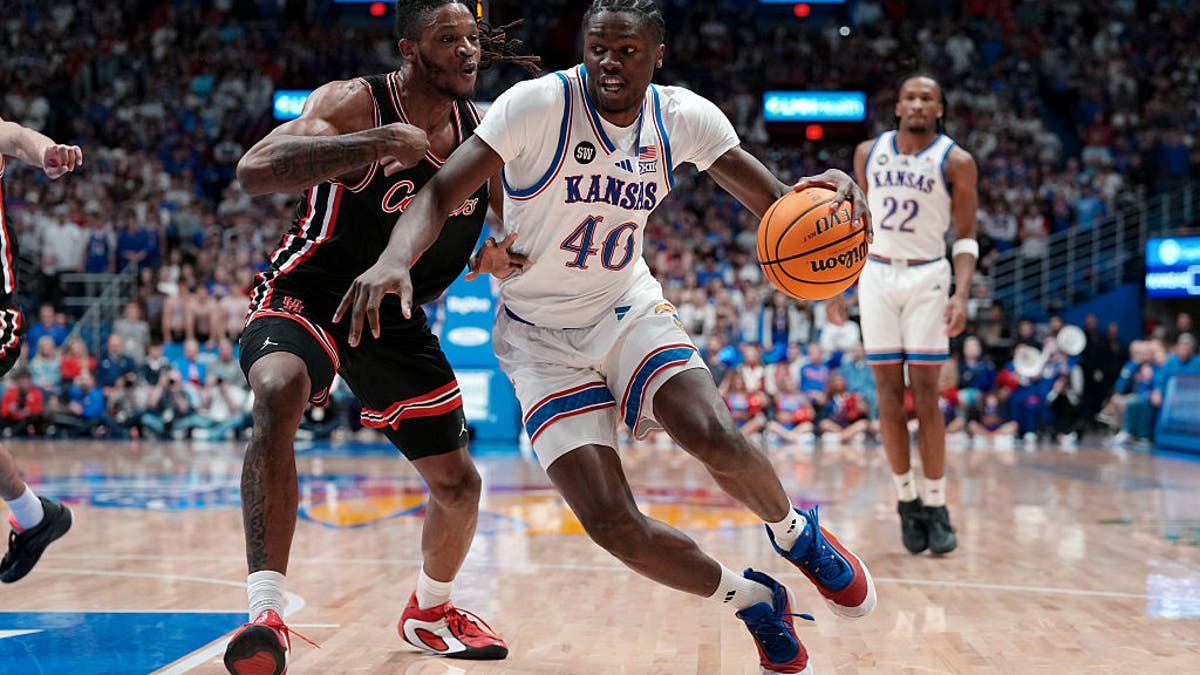
Flory Bidunga won Big 12 Defensive Player of the Year in his sophomore season at Kansas. (Photo by Ed Zurga/Getty Images)
Bidunga averaged 13.3 points and 2.6 blocks per game during his sophomore season at Kansas. His rim-protection prowess earned him Big 12 Defensive Player of the Year honors and a spot on the all-conference team. Bidunga entered his name into the NBA Draft, while keeping his portal options open.
Update: Bidunga has committed to play for Louisville.
FIFA is putting more World Cup tickets on sale after angering some fans by adding new, more expensive categories.
Soccer’s governing body announced Tuesday it will make more tickets available at 11 a.m. ET Wednesday for all 104 games in Categories 1, 2 and 3 plus the new “front category” pricing it added this month.
The new category sparked online complaints from fans who said they thought the better seats in the categories they had bought tickets for were withheld and they were assigned less favorable locations.
FIFA in December put tickets on sale at prices ranging from $140 for Category 3 in the first round to $8,680 for the final, then raised prices to as much as $10,990 when sales reopened on April 1.
FIFA did not respond to an April 9 request for comment about the new ticket categories it added.
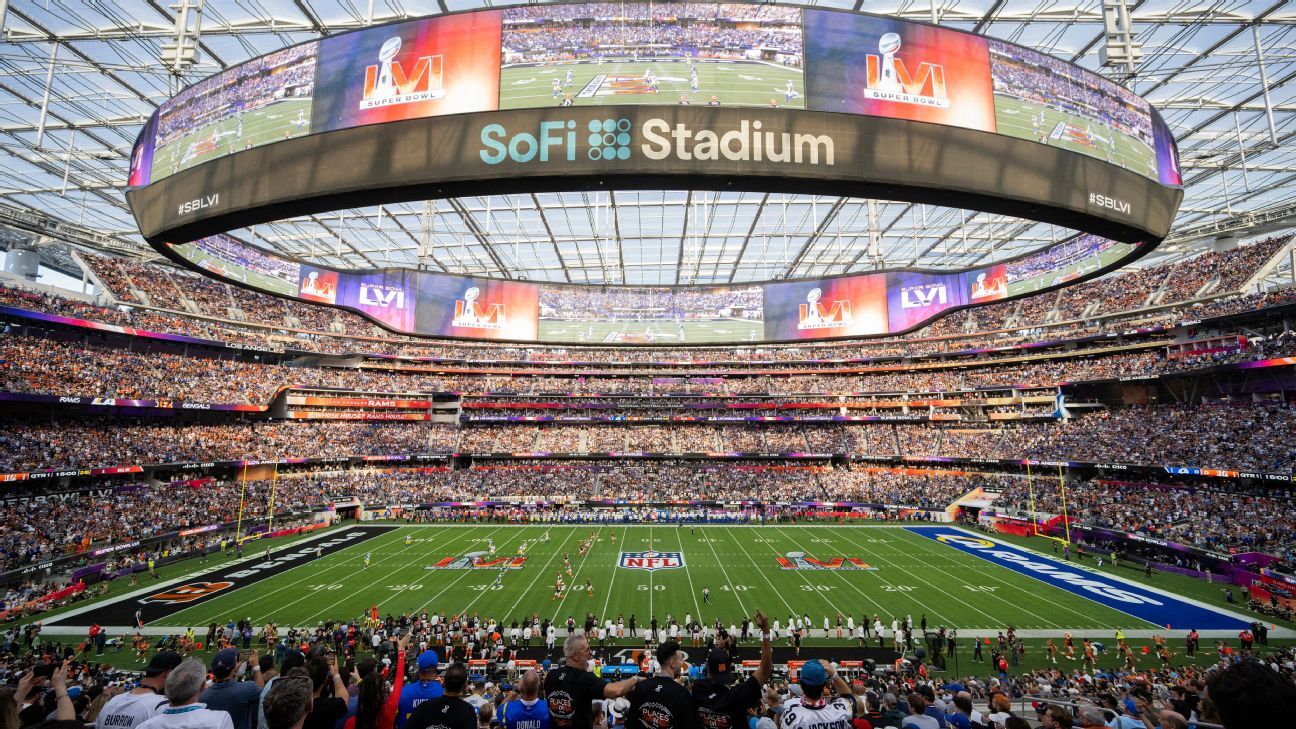
Also Tuesday, The Athletic reported that tickets sales are lagging for the U.S. opener against Paraguay on June 12 at Inglewood, California. It said a document distributed to local organizers dated April 10 said 40,934 tickets had been purchased for the U.S.-Paraguay game and 50,661 for the Iran-New Zealand contest on April 15. FIFA projects SoFi’s World Cup capacity at about 69,650, noting it may change.
FIFA’s December sale priced U.S.-Paraguay tickets at $1,120, $1,940 and $2,735, and Iran-New Zealand seats at $140, $380 and $450.
-
Jeremy Woo
Close
Jeremy Woo
ESPN
- NBA draft analyst and writer
Joined ESPN.com in 2023
Covered the NBA and NBA draft for Sports Illustrated from 2015-2023
Multiple Authors
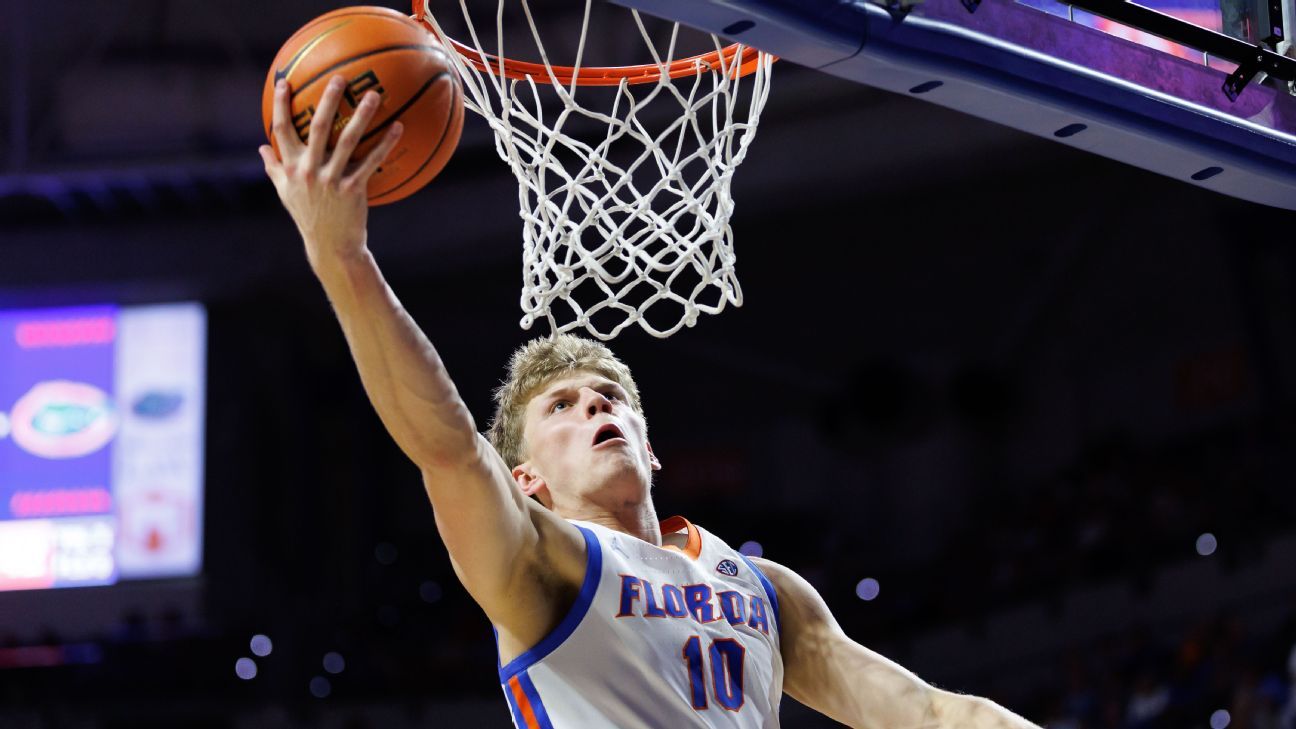
Florida forward Thomas Haugh will return to the Gators for his senior season, he told ESPN on Tuesday, delaying an opportunity as a potential lottery pick and likely cementing Florida as the preseason No. 1 team in men’s college basketball.
Haugh, the No. 13 prospect in ESPN’s Top 100 for the 2026 draft, becomes the highest-ranked prospect to announce his return to college. He is the first player since Michigan State’s Miles Bridges in 2017 to opt for another year of school while projected as an NBA lottery pick.
The 6-foot-9 Pennsylvania native’s decision to return follows the same announcement last week from frontcourt mate Alex Condon, while starting center Rueben Chinyelu announced Monday he’s testing the NBA draft waters but will maintain his college eligibility to return to Florida if he withdraws from the draft.
“Most guys in my position in the draft, it would be a no-brainer to go to the NBA,” Haugh told ESPN. “It’s not just the NIL. It’s a chance to play with my boys. To play for coach [Todd] Golden. To go to the school I love to play for. It was definitely a tougher decision than last year, but it was best for my career and future.”
When the buzzer sounded in Tampa at the end of Florida’s 73-72 second-round loss to 8-seed Iowa, Golden worried that this might have been the last time his national championship-winning frontcourt would play together. Haugh had eyes on the NBA, and Condon and Chinyelu were also weighing NBA options. With the nature of the transfer portal, it was unclear who would be back.
Haugh earned third-team All-America honors and first-team All-SEC honors this past season, averaging 17.1 points and 6.1 rebounds per game, and was tracking comfortably for the middle of the first round. There was no expectation that he’d return.
“I think that lit a fire underneath me,” Haugh said of the NCAA tournament loss. “I [didn’t] want my last memory of Florida basketball to be that.”
“The hardest part was the initial week,” Golden told ESPN. “His mind had been made up, he was going. When the season ended the way it did for us, it was a little bit of a punch in the stomach. Allowed a little more to reflect. Not only on that game, but how the season ended and where we are. That moment allowed for this to happen.”
At their end-of-season meeting, Golden and Haugh joked about him having another year of eligibility. But the idea of Haugh returning for his senior season didn’t appear to have any momentum until Haugh’s family, and agent Aaron Klevan of THE·TEAM, approached Golden and asked what a potential return would look like in terms of situation and compensation.
“They really didn’t need to sell much,” Haugh said. “Coach Golden and the staff did a great job, not pressuring me. They’re my guys. They’re going to text me and call me regardless. They didn’t do much recruiting. I grew up a Florida fan. Tim Tebow. The back-to-back national championships. The 2014 team, I remember. They didn’t really have to sell me.”
While NIL wasn’t the sole factor, Haugh will be among the highest-paid players in college basketball next season. He will earn revenue share compensation similar to what mid-first-round picks are guaranteed, in addition to lucrative true NIL and endorsement deals.
The first-round rookie contract scale is tied to a given year’s salary cap, with guaranteed money tied to each slot 1-30 in descending order of value. In 2025-26, the average Year 1 salary for an NBA rookie picked in the 11-15 range, where Haugh was projected, was $4,309,660 — a number he projects to clear easily this season.
“The unique angle that we were able to drive home to Tommy’s family and Aaron Klevan, this dude has real bottom-line NIL value,” Golden said. “That’s an area right now where elite college athletes have an advantage over mid-tier pros. Tommy Haugh’s legitimate NIL value at Florida is 10-20 times what his NIL value would be on an NBA team next year. Because of the brand awareness at Florida, he will have been here for four years, all of those things along with him returning, our supporters really appreciate the loyalty.”
Financial incentives have broadly changed for all NBA prospects, with college programs now capable of competing against multiyear rookie contracts in the short term. Those market forces, coupled with what NBA executives view as a much thinner draft in 2027, have caused a flood of college players to stay in school without testing the draft waters.
Haugh told ESPN he plans to continue focusing on his 3-point shooting and improving his comfort level playing small forward. There is room for him to improve his current standing with another strong season, particularly with the NBA’s uncertainty around the strength of next year’s incoming freshman class.
“Getting this group of guys back together for one last run, they’re going to have a lot of attention and notoriety, a lot of it deserved,” Golden said. “We’re going to have a ton of pressure, a ton of eyeballs on us this year. But it’s a privilege. Use it to fuel us the right way. Can’t allow it to splinter us. But we’d much rather be the hunted than the hunters. We just have to accept there’s a lot of pressure that comes with that.”


Ranking the Top 20 Players in the Men’s College Basketball Transfer Portal

NATO jets intercept Russian bombers over Baltic Sea

FIFA to put more World Cup tickets on sale for all games

-

 Fashion5 days ago
France’s LVMH Q1 revenue falls 6%, shows resilience amid Iran war
-

 Sports1 week ago
The case for Man United’s Fernandes as Premier League’s best
-

 Entertainment1 week ago
Palace left in shock as Prince William cancels grand ceremony
-
 Business1 week ago
UK could adopt EU single market rules under new legislation
-

 Entertainment6 days ago
Is Claude down? Here’s why users are seeing errors
-

 Fashion1 week ago
Energy emerges as biggest cost driver in textile margins
-
 Business1 week ago
Delta Air Lines unveils first new Delta One suite in premium cabin arms race
-

 Fashion1 week ago
Asia claims largest share of markets on Kearney FDI Confidence Index