

Business
Pakistan eyes BRICS+ to boost trade | The Express Tribune

LAHORE:
Pakistan’s fashion and textile industry is stepping into a new era of global engagement as the BRICS+ Fashion Summit 2025 in Moscow opens fresh opportunities for trade diversification and cultural diplomacy.
The event, endorsed by more than 50 of the world’s leading fashion weeks, has provided a vital platform for countries like Pakistan to showcase their textile artistry, innovation and craftsmanship to non-traditional markets beyond the West.
The Pakistan Readymade Garments Manufacturers and Exporters Association (PRGMEA) hailed the successful organisation of the summit and called for using this international platform to strengthen Pakistan’s trade and fashion outreach across Central Asia and Russia.
Mubashar Naseer Butt, PRGMEA’s former central chairman who represented Pakistan for the third time at the summit, said the BRICS+ initiative presents a major opportunity to diversify Pakistan’s export markets beyond the West by building stronger linkages with the fast-growing Eurasian economies.
“BRICS+ is not just an exhibition, it is a bridge between economies, cultures and people,” Butt said. “Pakistan has the creativity, production capacity and craftsmanship to excel in new markets. The summit allows us to project our textile heritage, from Ajrak and Pashmina to embroidered fashion collections, in ways that connect with global buyers seeking authenticity and diversity.”
The BRICS+ Fashion Summit, which brought together participants from more than 100 emerging and established markets, also led to the formation of the BRICS International Fashion Federation (BRICS IFF). Supported by dozens of international fashion weeks, the federation aims to foster cross-cultural collaboration, sustainability and innovation through design and technology.
For Pakistan, participation in such global platforms is crucial as it looks to lessen its export dependence on the West. Textile exports, the backbone of the national economy, stood at $17.88 billion in fiscal year 2024-25, according to the Pakistan Bureau of Statistics. However, nearly two-thirds of these exports still go to traditional Western destinations, mainly the United States and the European Union.
Butt emphasised that Pakistan is ideally positioned to act as a trade bridge between South Asia, Central Asia and Europe. To turn that geographical advantage into tangible results, he called for the creation of a Pak-Russia Business Council under the BRICS+ framework and the establishment of reliable banking channels to ensure smooth transactions between Pakistani exporters and Russian importers.
He also urged for visa facilitation for business leaders and more structured participation of Pakistani brands in the upcoming BRICS+ fashion events.
Nisar Ahmed, a textile trader, said that platforms like BRICS+ offer a much-needed space for Pakistan’s textile sector to evolve. “To tap the true potential of this platform, Pakistan has to show the world its creativity while speeding up value addition in textile products,” he said. “Our competitors are already blending heritage with high fashion and technology. If we want to remain relevant, we must invest in modern design capabilities, sustainable production and quick delivery models,” he added.
The BRICS+ summit also highlighted the growing importance of Fashion Tech – a field that merges technology with fashion through innovations like 3D clothing modeling, smart fabrics and virtual try-ons. Such advancements, experts believe, can help Pakistan cut production costs, improve design efficiency and align with sustainability standards increasingly demanded by global buyers.
However, experts agree that Pakistan’s textile future depends on how fast it adapts to new realities. While cultural richness gives Pakistan an edge, the country’s real breakthrough lies in innovation, consistency and global visibility.
“Fashion today is about more than fabric, it’s about storytelling, technology and speed. If Pakistan combines all three, the world will start looking towards us not just as a manufacturer, but as a trendsetter.” Ahmed said, adding “this is the only way for Pakistan to increase the export revenue towards $25 billion per year, a landmark figure, which is still a dream for country’s vibrant sector.”



Business
LPG crisis eases: Operations back to normal in many factories as commercial LPG supplies improve; workers return – The Times of India
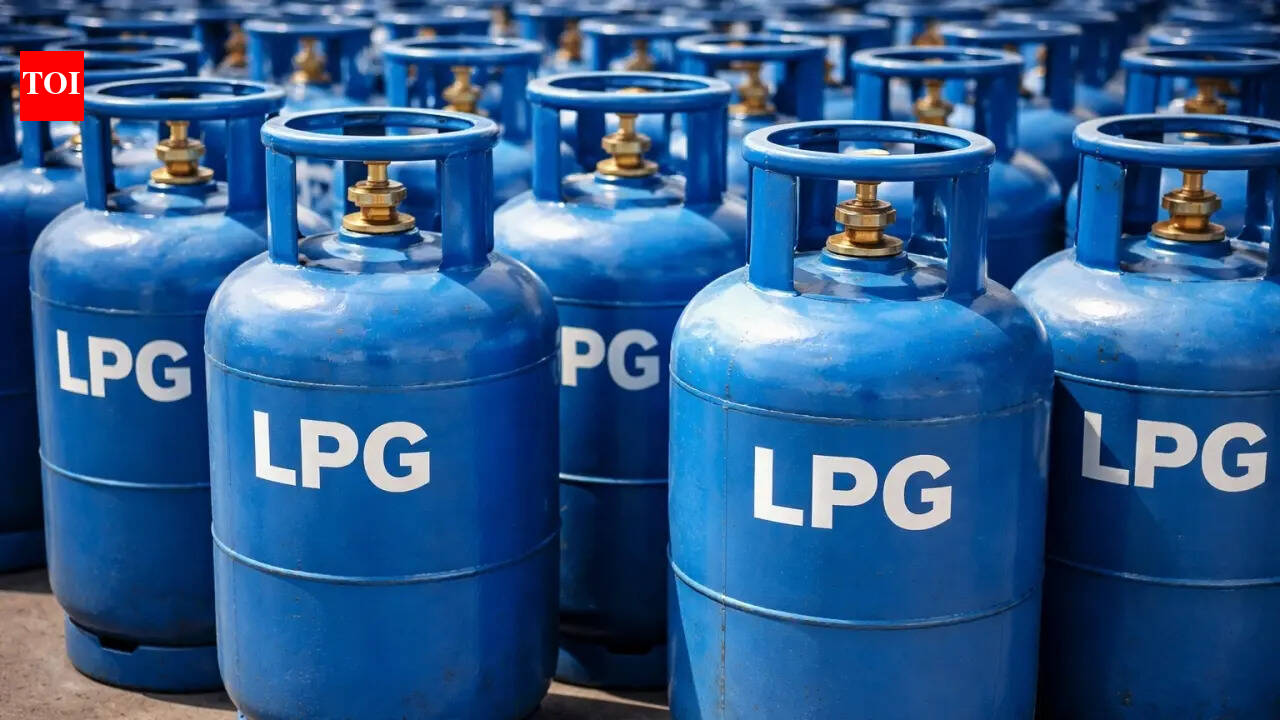
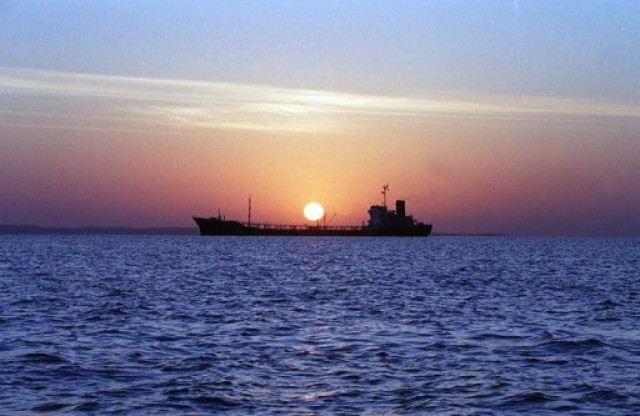
LPG crisis for factories across the country seems to be easing as the government steps up availability of commercial liquefied petroleum gas. Production disruptions are gradually subsiding as supplies of commercial LPG improve and migrant workers return to factories, supported by companies providing meals or alternative cooking solutions.This improvement follows the government’s move on Friday to raise the allocation of commercial LPG by an additional 20 percentage points, taking it to 70 per cent of pre-disruption levels that had been affected by the Gulf conflict and Iran’s near blockade of the Strait of Hormuz.
The Centre has designated sectors such as steel, automobiles, textiles, dyes, chemicals and plastics as priorities, given their labour-intensive operations and strong interlinkages with other industries, according to an ET report.Companies operating in these sectors have started to see operations gradually stabilise.Liquefied petroleum gas is extensively used across industries such as automobiles and electronics, particularly in processes like brazing and paint shop operations, as well as in segments like food processing.
Availability of Commercial LPG supplies
Industry players indicated that LPG availability has become more stable.“Earlier we had visibility of one-two days; now it’s about a week,” said Kamal Nandi, head of the appliances business at Godrej Enterprises. “There are no issues with labour or raw materials, and production is running at full throttle,” he was quoted as saying.An executive from the automobile sector noted that supply constraints at smaller vendors are easing, while larger manufacturers have managed to limit disruptions by adopting alternative fuel options.“The higher allocation for non-domestic LPG and inclusion of automobiles as a priority sector is a big help,” he said.Mayank Shah, vice president at Parle Products, said improved LPG availability is enabling previously impacted plants to move back towards optimal production levels. He added that companies have urged the government to include packaged foods among the priority sectors.Ajay DD Singhania, chief executive of Epack Durable, noted that supplies have recovered to nearly 60 per cent of normal levels and are likely to rise to around 80 per cent this week. “The new normal is that we have to follow up daily to secure LPG supplies, but availability has improved,” Singhania said. “Workforce retention is no longer a challenge with us offering meals or cooking support. However, production losses over the past three-four weeks are not recoverable.”Attendance levels have also improved as several firms introduced canteen meals, reducing reliance on LPG for cooking. Earlier, supply disruptions had led to absenteeism among migrant workers and a temporary outflow, as higher black market prices and the shutdown of small eateries and mess facilities made food access difficult.A senior executive in the auto components sector said companies are now providing meals across shifts or offering incentives of up to Rs 5,000 to offset higher LPG costs and retain workers. “Attendance has returned to normal,” he said.Avneet Singh Marwah, chief executive of Super Plastronics, said the migrant workforce has returned as supply pressures have eased. The company produces televisions under the Kodak, Thomson and Blaupunkt brands.
Business
Rupee rebounds from record low: Currency rises 128 paise to 93.57 against US dollar – The Times of India

Rupee opened the week in green, recovering sharply in early trade after regulatory intervention aimed at curbing banks’ currency exposure. The currency climbed to 93.57 against the US dollar, on Monday, gaining 128 paise from its previous close, after opening at 93.62 in the interbank foreign exchange market. This comes days after the currency had hit a record low of 94.85 on Friday, following a steep fall of 89 paise. The turnaround follows a directive issued by the Reserve Bank of India on March 27, 2026, which placed a cap of $100 million on the Net Open Position (NOP-INR) that banks can hold overnight. Lenders have been asked to comply with the new limit by April 10. Market participants said the move is prompting banks to reassess their positions, particularly those with long dollar holdings in the onshore market. As these positions are reduced, dollar sales are expected to increase, lending short-term support to the rupee. “As banks begin adjusting their positions, they are likely to sell dollars in the market, which can temporarily support the rupee. This creates a phase of relief, driven by position unwinding, not by a major shift in fundamentals, but still meaningful in the near term,” Amit Pabari, Managing Director at CR Forex Advisors told PTI. Even so, the broader environment remains challenging for the Indian currency. The dollar continues to draw strength from safe-haven demand, keeping the dollar index above the 100 mark and restricting any sustained appreciation in the rupee. The dollar index was last seen marginally lower by 0.06% at 100.09. At the same time, rising crude oil prices are adding to pressure, with Brent crude trading 2.16% higher at $115 per barrel in futures. Geopolitical tensions have played a key role in pushing oil prices higher amid concerns over supply disruptions. “For India, this is critical. Being a major oil importer, higher oil prices increase dollar demand, which directly puts pressure on the rupee,” Pabari said. He added that despite the current relief, the rupee’s outlook remains sensitive to global factors such as oil price movements, geopolitical developments and the strength of the US dollar. Dalal Street also reflected the cautious mood, with the BSE Sensex dropping 1,191.24 points to 72,391.98 in early deals, and the Nifty 50 declining 349.45 points to 22,470.15. Foreign institutional investors were also seen pulling back, having sold equities worth Rs 4,367.30 crore on a net basis on Friday, as per exchange data.
MUMBAI: RBI has placed consumer empowerment through portable bank accounts and cross-border efficiency at the centre of its Payments Vision 2028, signalling a new focus to improving user experience and reducing friction in money movement.While customers can freely open accounts with any bank, savings accounts are considered ‘sticky’ because of multiple standing instruction to send and receive money into the specified account. RBI’s work around this stickiness is a Payments Switching Service where all standing instructions are centralised. This centralised interface will allow customers to view and migrate all payment mandates, both incoming and outgoingreducing dependence on individual banks making accounts portable.A key thrust is on making cross-border payments faster, cheaper and more accessible. The central bank plans a comprehensive review of the ecosystem to identify regulatory, operational and technological bottlenecks, aligning domestic systems with global standards shaped by the G20.Proposed changes aim to lower entry barriers for firms, promote innovation and reduce delays in cross-border fund transfers, even as India has been signing agreements with other countries to link domestic fast payments systems and enable CBDC acceptance.


Riyadh opens rail freight route linking eastern ports to Jordan border
LPG crisis eases: Operations back to normal in many factories as commercial LPG supplies improve; workers return – The Times of India

Iran deal may be finalized ‘soon’, says Trump

-

 Politics6 days ago
Afghanistan announces release of detained US citizen
-

 Tech6 days ago
Can a Home Appliance Fix the Problem of Soft-Plastic Waste?
-

 Sports1 week ago
Men’s March Madness live tracker: Updates on Saturday’s games
-
 Business6 days ago
Property Play: Home flippers see smallest profits since the Great Recession, real estate data firm says
-

 Entertainment6 days ago
UN warns migratory freshwater fish numbers are spiralling
-

 Sports1 week ago
Arne Slot: Liverpool’s defeat to Brighton ‘hurts a lot’
-

 Sports6 days ago
Broadcast industry CEO says consolidation is ‘essential’ to compete for NFL soaring media rights prices
-
 Business6 days ago
Gold prices soar in Pakistan – SUCH TV