

Sports
Pakistan hockey’s long sunset | The Express Tribune

PUBLISHED
March 22, 2026
KARACHI:
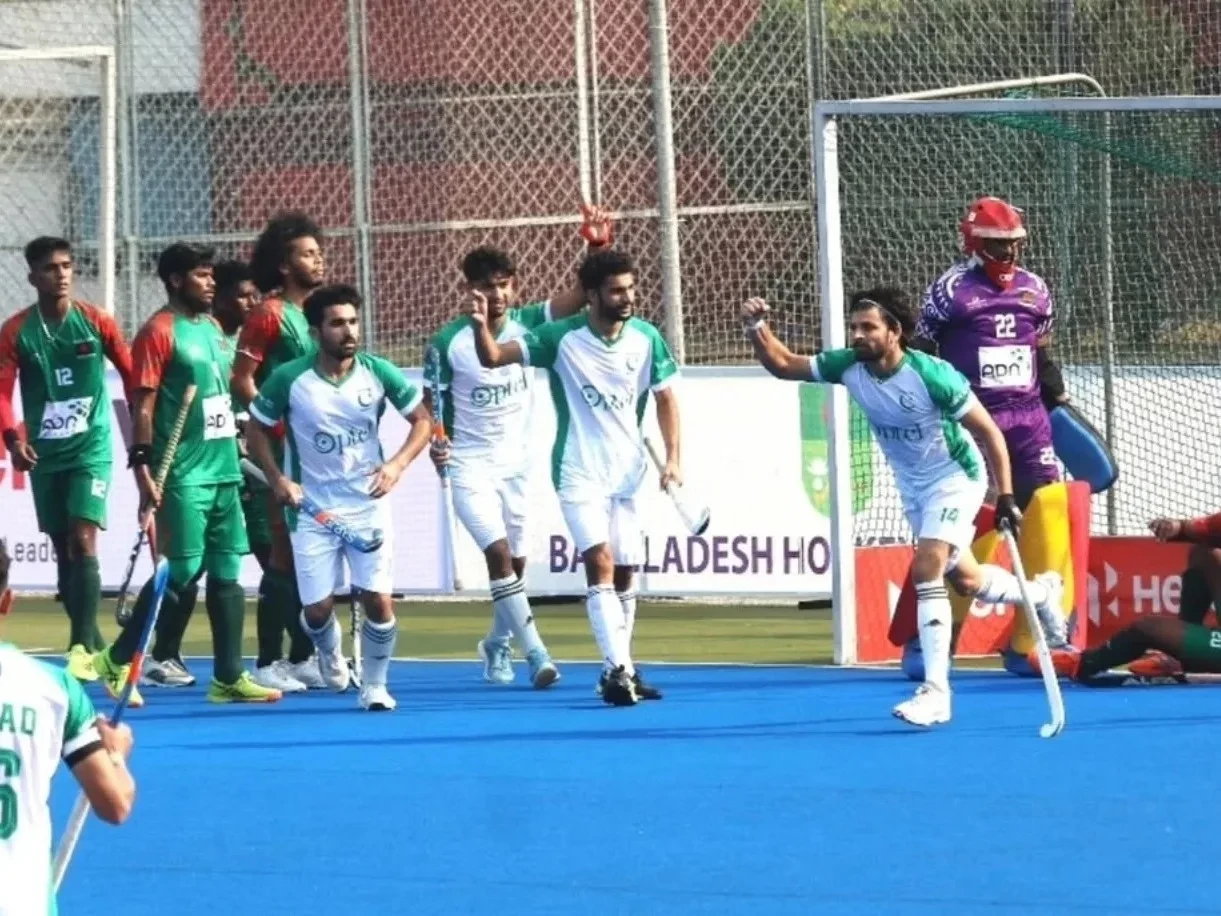
For the national sport of Pakistan, moments of celebration have been rare in recent years. The national team’s qualification for the Hockey World Cup after eight years has provided one such moment, a result that has been welcomed across the hockey community.
Yet even as the team returns to the global stage, the questions surrounding Pakistan hockey have not entirely disappeared.
In many ways, the recent success sits alongside a familiar reality, where moments on the field offer hope, but the structures around the sport continue to struggle.
The latest round surfaced during the national team’s recent tour when reports began circulating that players had been left managing their own accommodation arrangements abroad. Instead of the organised travel and lodging expected for an international side, members of the squad found themselves staying in short-term rentals and taking care of basic tasks themselves while preparing for matches.
“The boys are making their own breakfast in the morning. They are washing their dishes or hours, cleaning their bedrooms and toilets. We hardly have time to rest,” said Pakistan captain Ammad Butt.
For a team representing the country at the international level, the story struck a nerve. Within hours, the accounts spread across social media and the hockey community. Former players expressed disappointment, fans questioned how such a situation could arise, and once again the conversation shifted from performance on the field to the management of the sport.
The response that followed also felt familiar. Officials linked to the arrangements stepped aside quietly. Explanations were offered, resignations submitted, and the controversy appeared to settle, at least on the surface.
But for those who have followed Pakistan hockey closely, the episode did not feel new.
Over the past decade, similar controversies have surfaced with uncomfortable regularity. The details change, but the pattern remains. One year the issue revolves around funding, another around team preparation, travel arrangements or delayed allowances. Criticism grows louder, officials resign, and the system continues much the same way it did before.
For journalists covering the sport, that pattern has become difficult to ignore.
The issue is rarely a single incident. It reflects deeper structural problems that continue to shape Pakistan hockey, from administrative uncertainty and financial constraints to player preparation and domestic development.
A decade of repeating problems
Since around 2014, the sport has moved through several phases of leadership, each arriving with promises of revival. Administrations have changed, committees have been formed, and former players have been brought into coaching and managerial roles with the belief that their experience could reconnect the team with its past success.
Yet the broader picture has rarely shifted. The structure of the Pakistan Hockey Federation (PHF) has remained largely familiar. The presidency has often been held by retired bureaucrats or military officials, while the secretary’s position has frequently been filled by former Olympians. At the coaching level too, former players who once represented Pakistan with distinction have been entrusted with guiding the next generation.
On paper, the arrangement carries a certain logic. Few people understand Pakistan hockey better than those who helped build its legacy.
But the results have struggled to reflect those intentions. Over the years, Pakistan has slipped in international rankings while struggling to keep pace with teams that have adapted more quickly to the demands of modern hockey. Occasional victories and promising tournaments have appeared, but they have rarely translated into sustained progress.
The latest controversy involving the national team’s tour only reinforced that pattern, where logistical issues, public criticism and administrative reshuffling have become recurring features of Pakistan hockey.
Part of the challenge lies in how dramatically the sport itself has changed. International hockey today is faster, more tactical and far more structured than before. Teams study opponents through video analysis, track player movement through data and prepare carefully designed penalty corner strategies. Training programmes are built around detailed fitness conditioning to maintain peak performance during tournaments.
Pakistan’s setup, however, has often struggled to keep pace with these developments. Camps still rely largely on conventional routines, while the analytical support, sports science and performance monitoring that many teams now treat as standard remain limited.
The result is a gap that has become increasingly difficult to bridge. On one side stand decorated Olympians and administrators who once carried Pakistan’s colours with distinction. On the other side is a modern sport that has evolved faster than the structures trying to manage it.
Within that reality, the current generation of players is trying to build its future.
Modern hockey and Pakistan’s struggle to keep pace
Hockey today is not the same sport Pakistan once ruled. The game has changed quietly but dramatically over the past two decades. Matches are faster, transitions are sharper, and teams operate within carefully planned systems. Players rarely stay on the field for long stretches. Rolling substitutions keep fresh legs coming in, allowing teams to maintain a high tempo from the first whistle to the last.
Tactics have also become far more organised. Teams press collectively, defend in structured formations, and attack through patterns that are rehearsed repeatedly during training. Even penalty corners, once seen as moments of individual skill, are now built around detailed planning. Variations are practised, angles are studied, and every movement is timed.
Much of this preparation now happens away from the pitch. International teams spend hours analysing opponents through video footage. Training sessions are supported by fitness specialists and performance analysts. GPS devices are commonly used to measure how much players run during practice, how quickly they recover, and whether their workload is being managed properly during a tournament.
Fitness has become central to the modern game. The ability to maintain speed and intensity over several matches often separates winning teams from the rest.
Pakistan’s training camps, however, still operate in a very different environment. Preparation largely follows traditional routines, and the kind of technical support that many international teams rely on remains limited. Sports science is rarely part of the conversation, and monitoring players’ fitness or recovery through data is still uncommon.
Even basic aspects of athlete preparation can highlight the difference. Players have often spoken about the absence of structured nutrition plans during camps. Sugary drinks are still commonly available during training sessions, while specialised recovery or energy drinks are rarely part of the setup.
None of these issues alone decides a match. But when a team is competing against opponents who prepare through detailed planning, technology and scientific support, those small gaps gradually begin to show on the field.
The domestic structure problem
Beyond the national team, the deeper challenge lies within the domestic structure that once kept Pakistan hockey alive.
For a long time, the sport depended heavily on departmental teams. Organisations such as WAPDA, PIA, National Bank and Railways did not just compete in national tournaments, they also provided employment to players. For many young athletes, that system offered a clear path. A player could begin at school level, move into club hockey, find a place in a departmental side and eventually push for national selection.
Over the years, that structure has slowly weakened. Several departments have reduced their involvement in hockey, while some have withdrawn completely. As those teams disappeared, so did many of the opportunities that once allowed players to continue the sport with some financial stability. Domestic competitions still exist, but they no longer carry the same depth or consistency that once defined them.
The impact is most visible at the grassroots level.
For many young players today, hockey does not appear to offer the kind of future it once did. In earlier decades, representing a department often meant secure employment alongside sport. Today that certainty is largely missing. Without contracts or long-term financial backing, many players eventually reach a point where they must choose between continuing hockey or focusing on education and work.
Coaches working at junior levels often talk about this shift. Participation in school and academy competitions has gradually declined. It is very different from an earlier time when hockey grounds in many cities remained full late into the evening, with young players practising long after sunset.
Now many of those youngsters are turning towards other sports, or stepping away from competitive sport altogether.
When fewer players enter the system at the beginning, the impact eventually reaches the national team as well.
The funding blame game
Financial constraints are often presented as the central problem facing Pakistan hockey. Yet the question of funding has rarely been straightforward.
For years, responsibility has moved back and forth between the Pakistan Hockey Federation and the Pakistan Sports Board. Federation officials frequently point to limited government support, while the sports board maintains that funds allocated to the sport have already been released. It is a familiar cycle in which accountability becomes difficult to establish.
The recent controversy surrounding the national team’s overseas tour briefly brought that tension into public view. Pakistan captain Butt said players were given different explanations regarding the situation during the trip. According to him, officials from the sports board maintained that funds had already been provided to the federation, while members of the team management suggested that the amount released was not sufficient for the tour.
The management, however, rejected the allegations. Head coach Tahir Zaman described the situation as exaggerated and said the arrangements made during the team’s transit in Sydney had been misrepresented.
What followed was another round of administrative turbulence. At the time, the federation was headed by president Tariq Bugti, who blamed the issue on financial limitations and differences with the Pakistan Sports Board (PSB). The president later imposed a two-year ban on Butt, accusing him of influencing other players against the management. The decision triggered criticism across the hockey community, and within days Bugti stepped down from his position. This pattern is not new.
In February 2026, Mohyuddin Ahmad Wani was appointed as the ad hoc president of the federation with a mandate to stabilise its affairs and oversee fresh elections. One of the early decisions of the new administration was to revoke the ban on the captain before the team departed for the World Cup qualifying tournament.
Hockey in Pakistan operates with limited commercial backing and almost no long-term sponsorship strategy. Without sustained corporate partnerships or a professional league, the sport remains heavily dependent on government support.
The recent World Cup qualification, however, has briefly shifted the conversation. For the first time in years, Pakistan hockey is being discussed for what has happened on the field rather than off it.
But whether this moment represents a turning point or simply a temporary lift is still an open question.
Signs of progress on the field
The national team’s recent campaign in the World Cup qualifying tournament has offered one such glimpse. Pakistan not only reached the semi-final stage but went on to secure qualification for the FIH Men’s Hockey World Cup, marking their return after eight years.
For the players, the achievement has been the result of persistence through a difficult period for the sport.
Captain Butt credited the squad’s collective effort after securing a place in the knockout stage. “As my team performed, I give all the credit to my team. We qualified for the semi-final, that is a very important match for my team,” he said ahead of the decisive encounter. “As you know there is a knockout, so it is very important for us to win this match. We have to qualify for the World Cup as well.”
The captain also acknowledged the support the team received by the PCB chairman and the government. “They listened to us and facilitated the players in the best way,” he said.
Beyond the immediate results, the campaign has also shown small but encouraging signs within the team. Several younger players have begun to find their place in the squad, while the team’s performances have suggested a group still willing to compete despite the uncertainty surrounding the sport.
Between legacy and the road ahead
Pakistan hockey today sits in an uneasy space between memory and possibility.
For older fans, the sport still carries the weight of a remarkable past. Olympic gold medals, World Cup triumphs and decades of dominance once made Pakistan one of the defining powers of world hockey. Those achievements remain an important part of the country’s sporting identity.
The recent World Cup qualification has shown that the ability to compete at a high level still exists within the current group of players. It has also reminded many that the sport’s decline has never been about a lack of talent alone.
Yet the structural challenges remain unchanged. Domestic pathways are still limited, administrative instability continues, and long-term planning remains uncertain.
One side carries the memory of a sport that once defined national pride. On the other side is a team that has shown it can still fight, even within an imperfect system.
Whether this qualification becomes the beginning of something sustained, or simply another isolated moment, will depend not on the players, but on whether the system around them finally begins to change.








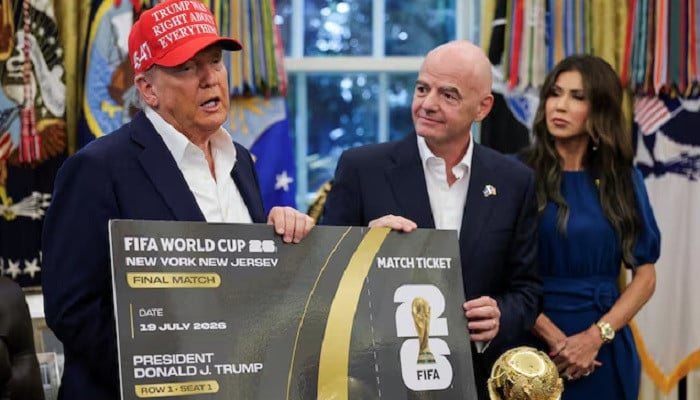
The Trump administration will temporarily waive visa bond requirements for eligible World Cup ticket-holders from countries subject to a controversial US travel deposit scheme, a State Department official said on Wednesday.
Citizens from 50 countries have been required since last year to pay deposits ranging from $5,000 to $15,000 to obtain tourist visas for the United States, with the money refunded upon departure. Washington said the measure was introduced to prevent visa overstays.
Assistant Secretary of State for Consular Affairs Mora Namdar said the bond requirement would now be lifted for qualifying football fans attending this summer’s FIFA World Cup.
“(The United States is) waiving visa bonds for qualified fans who bought World Cup tickets and opted in to FIFA PASS as of April 15, 2026,” Namdar told Al Jazeera.
The waiver also applies to eligible players, coaches and team staff from the affected countries.
Five nations subject to the visa bond rules qualified for the World Cup: Algeria, Cape Verde, Ivory Coast, Senegal and Tunisia.
However, separate Trump administration restrictions remain in place for some countries, including Haiti and Iran, whose citizens face broader entry bans under US immigration directives.
“We remain committed to strengthening US national security priorities while facilitating legitimate travel for the upcoming World Cup tournament,” Namdar said in a statement.
The FIFA World Cup will take place in June and July across the United States, Canada and Mexico. The tournament opens on June 11 in Mexico, while the first match in the United States is scheduled for June 12 in Inglewood, California. The final will be played on July 19 at MetLife Stadium in East Rutherford, New Jersey.
The US launched the FIFA PASS system in January to speed up visa processing for ticket-holders. To qualify for the waiver, fans from affected countries had to register through the programme by April 15.
The administration’s immigration crackdown has drawn scrutiny ahead of the tournament, including concerns over the presence of US Immigration and Customs Enforcement officers at venues.
Human Rights Watch last month urged FIFA to seek an “ICE Truce” during the tournament, including guarantees against immigration enforcement operations at stadiums and related sites.
The Department of Homeland Security said international visitors attending the games “have nothing to worry about” if they hold legal immigration status.
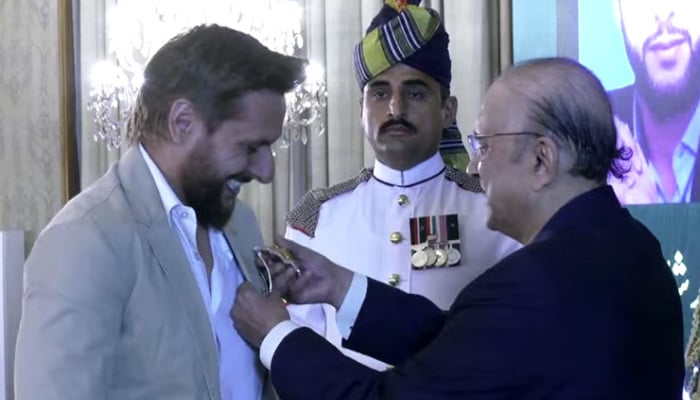
Former Pakistan captain and all-rounder Shahid Afridi has been conferred Hilal-e-Imtiaz, the country’s second-highest civilian award, in recognition his outstanding services in the field of sports.
The award was conferred by President Asif Ali Zardari during a prestigious ceremony held at Aiwan-e-Sadr. Afridi was recognised for guiding Pakistan to their historic 2009 T20 World Cup triumph.
The honour also acknowledged Afridi’s contributions to England’s county cricket and his leadership role in the World Championship of Legends.
After receiving the award, Afridi wrote on X that receiving the Tamgha-e-Imtiaz from the president is an honour for him, adding that it represents not only his achievement but that of the entire Pakistani nation.
The former Pakistan captain said the award reflected the love, prayers and support he had received from the public throughout his career.
Afridi dedicated the honour to Pakistan’s martyrs, saying it was also in recognition of those who sacrificed their lives for the country.
He concluded by praying for Pakistan’s continued safety and prosperity.
The 46-year-old made exceptional contributions to Pakistan cricket across all formats, having played 398 ODIs and scored 8,064 runs, including 39 half-centuries and six centuries, while also claiming 395 wickets with nine five-wicket hauls.
In the T20I format, the right-handed batter featured in 99 matches, scoring 1,416 runs and taking 98 wickets.
Afridi also enjoyed vast experience in franchise cricket, representing teams in the Pakistan Super League, Lanka Premier League, Bangladesh Premier League, Caribbean Premier League, Champions League Twenty20, Big Bash League and Indian Premier League.
He was a key member of Pakistan’s squad that won the 2009 ICC World Twenty20, where they defeated Sri Lanka national cricket team in the final courtesy of Afridi’s all-round performance.
He scored an unbeaten 54 off 40 deliveries, including two fours and two sixes, and also claimed one wicket.
Sports
Cherie DeVaux reflects on making Kentucky Derby history as first female trainer to win the race
NEWYou can now listen to Fox News articles!
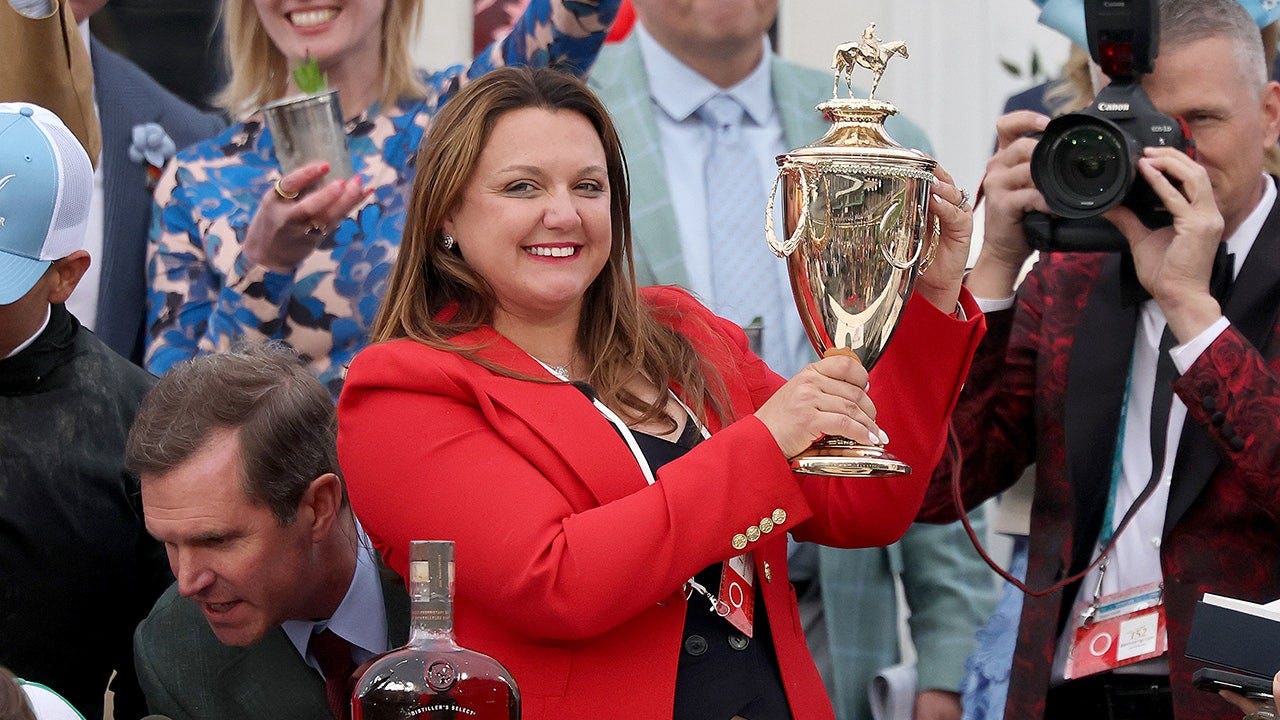
Cherie DeVaux made history when Golden Tempo won the Kentucky Derby at the beginning of May, becoming the first female trainer to win the first leg of the Triple Crown.
DeVaux, 44, said that while she never made her gender part of her identity as a horse trainer, it was the one thing she wanted to do as a female.
“It was the one thing as a female I wanted to do just cause I thought it would be – it’s a neat benchmark. There are 151 runnings with all men, and then it’s me,” DeVaux told Fox News Digital in a recent interview.
CLICK HERE FOR MORE SPORTS COVERAGE ON FOXNEWS.COM
Cherie DeVaux, trainer of Golden Tempo, celebrates with the trophy in the winner’s circle after the 152nd Kentucky Derby at Churchill Downs in Louisville, Kentucky, on May 2, 2026. (Michael Reaves/Getty Images)
“I have never made a stand that my gender was part of my identity as a trainer. I am a horse trainer. We all work really hard, male, female. So it wasn’t on the heels of being a female.”
For DeVaux, she was happy that the conversation about a female winning the Kentucky Derby could finally move on.
“I actually was getting a bit – I don’t want to say tired in a bad way, but that question kept coming up, and it’s like it’s time for the conversation to move on from it is how I felt. I quipped in the post-Derby interview, ‘Thank God I don’t have to answer that question anymore,’” DeVaux said.
The Saratoga Springs, New York, native, said that it’s an honor to be someone that people look up to.
“It’s an honor. And I hold great respect with the fact that I am somebody now that people, women, men, people look up to. That’s something that I don’t lose sight of, and I’m just out doing my thing, and if that can inspire somebody else, it’s a bonus on top,” DeVaux said.
“I’ve always felt like we need to be doing – we train horses, but we can reach the community, or others, just by doing what we’re doing and conducting yourself, holding yourself accountable and to a higher standard.”
GOLDEN TEMPO TO SKIP PREAKNESS STAKES, ENDING TRIPLE CROWN BID AS TRAINER CITES LONG-TERM HEALTH
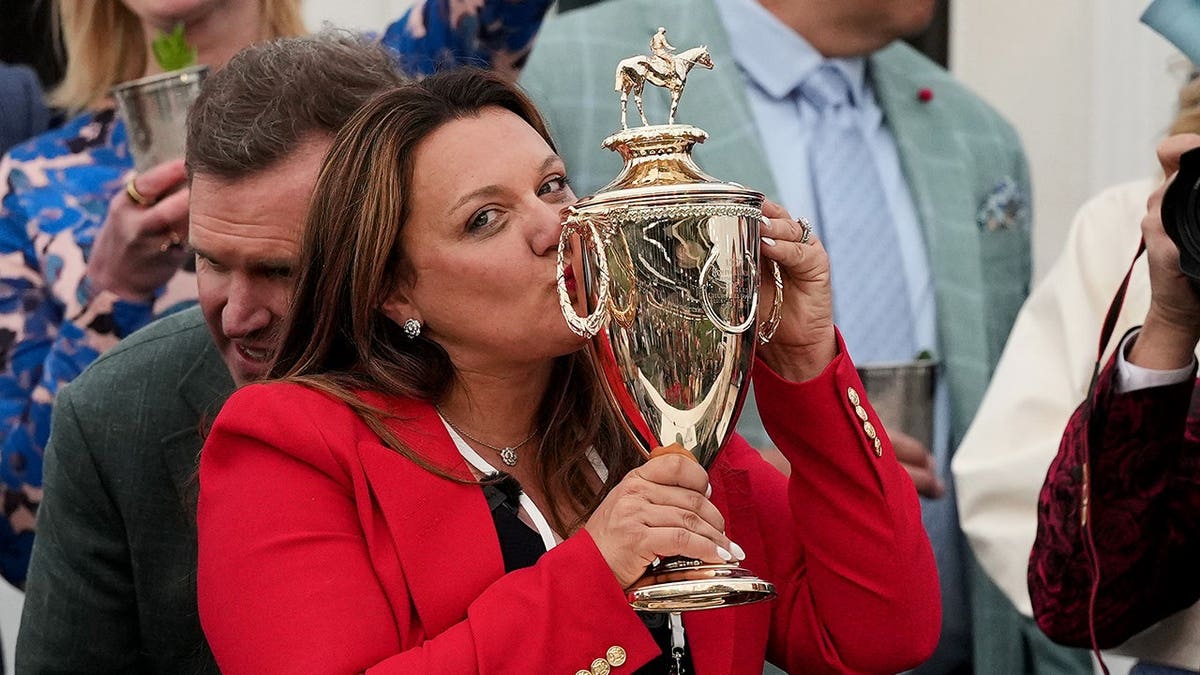
Trainer Cherie DeVaux kisses the trophy after Golden Tempo won the 152nd Kentucky Derby at Churchill Downs in Louisville, Kentucky, on May 2, 2026. (Abbie Parr/AP Photo)
DeVaux, about a week and a half removed from the Kentucky Derby win, said that things are finally starting to settle down.
“It’s been overwhelming in a really amazing way,” DeVaux said. “Been busy, doing a lot more extracurriculars other than running our stable, which I keep joking that when a league wins a championship, they go to Disney World, and we continue to have a lot of horses to train. So, things are starting to quiet down a little bit and getting back to the enjoyment of working with our horses and training the rest of the stable.”
Going into the race, Golden Tempo was 23-1 to win the Kentucky Derby. DeVaux said she felt good about Golden Tempo but was tempering her expectations.
“I felt that Golden Tempo was going to run a really good race. We targeted the race. We had a plan with him. He checked all the boxes. He got to the race in great order, but realistically, it’s the derby. And it’s our first trip to the derby, and there’s a lot of horses in it. It’s not a very good chance you’re going to win, right?” DeVaux said.
“So, just realistic expectations that I put on the whole situation was let’s have fun. Hopefully, Golden Tempo runs a really good race. He comes with a run and we’re going to be happy with that.”
JORDON HUDSON, BILL BELICHICK TAKE IN CHURCHILL DOWNS DURING KENTUCKY DERBY WEEKEND

Trainer Cherie DeVaux stands outside a barn after a workout at Churchill Downs in Louisville, Kentucky, on April 27, 2026. (Charlie Riedel/AP Photo)
Golden Tempo’s running style is described as a deep closer, which means that he comes up to the pack from way out of it. DeVaux said they have tried to use blinkers to get him more engaged in the beginning of the race, but it’s just not his style.
Golden Tempo stayed true to form during the Kentucky Derby, as he surged from the back and into the lead late. DeVaux was making sure he didn’t dig himself too deep of a hole with a slow start.
“Most of the race, I was just keeping an eye on him, seeing how the race is unfolding in front of him. And there was a fast pace and a lot of those horses have not shown the propensity to want to go a mile and a quarter. Golden Tempo came closing at a mile and 3/16 in the Louisiana Derby. So, we were very confident in his ability to handle that distance,” DeVaux said.
“When I picked him up, I had a feeling that he was going to make a really good run and have a good showing of himself, but had given himself so much to do. So, as he’s picking them off, and he’s coming, and he’s coming and then when he got to Renegade is when it was like, ‘Oh my goodness, this might be happening’ to he got his head in front, and you know, the rest is history as they say.”
“I blacked out the last part of it when he won because I just couldn’t believe that he won the race. Like it was just disbelief of I can’t believe that really just happened.”
THE SURPRISING COST OF RENTING A HORSE STALL AT CHURCHILL DOWNS DURING THE KENTUCKY DERBY
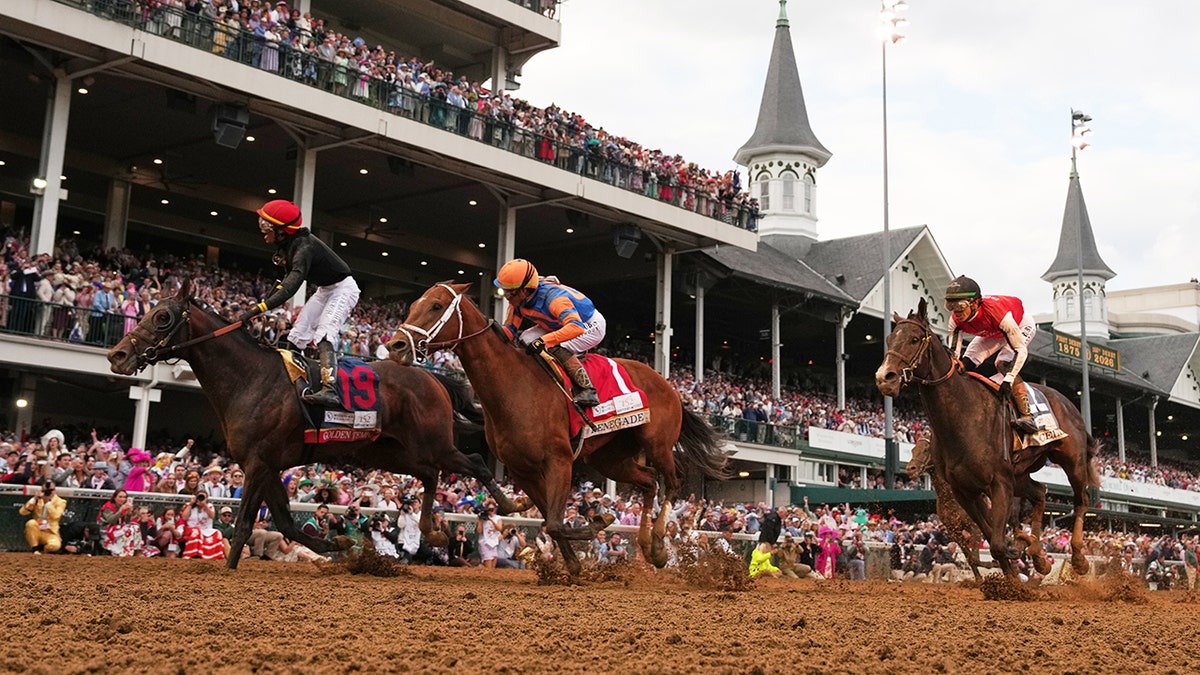
Jockey Jose L. Ortiz celebrates after riding Golden Tempo to victory in the 152nd Kentucky Derby at Churchill Downs in Louisville, Ky., on May 2, 2026. (Abbie Parr/AP Photo)
Amid the chaos after winning, DeVaux said she hasn’t sat down and truly reflected on it all but has spent some time thinking about her journey into history.
“In brief moments, I find myself thinking about things that have happened in my life where I questioned my path, and it’s not just the path to me being a trainer. I was talking about something that happened in my late 20s with a relationship that went really badly, and I was telling my assistant actually about it. I thought if I could survive that, I can survive anything,” DeVaux said.
“I’ve had these moments along the way that I could have been discouraged, I could have left, and instead I just had the fortitude to push forward.”
The fortitude to push forward has indirectly led to her Instagram messages being flooded with congratulations.
“There have been a lot and still muddling through the inbox,” DeVaux said. “I didn’t realize how many messages you can really get on Instagram. Flavor Flav is the one that was jarring to me a little bit when he saw I was in New York, like ‘hey we have an event’ which my little ’90s child in me was thinking that was pretty cool.”
CLICK HERE TO DOWNLOAD THE FOX NEWS APP
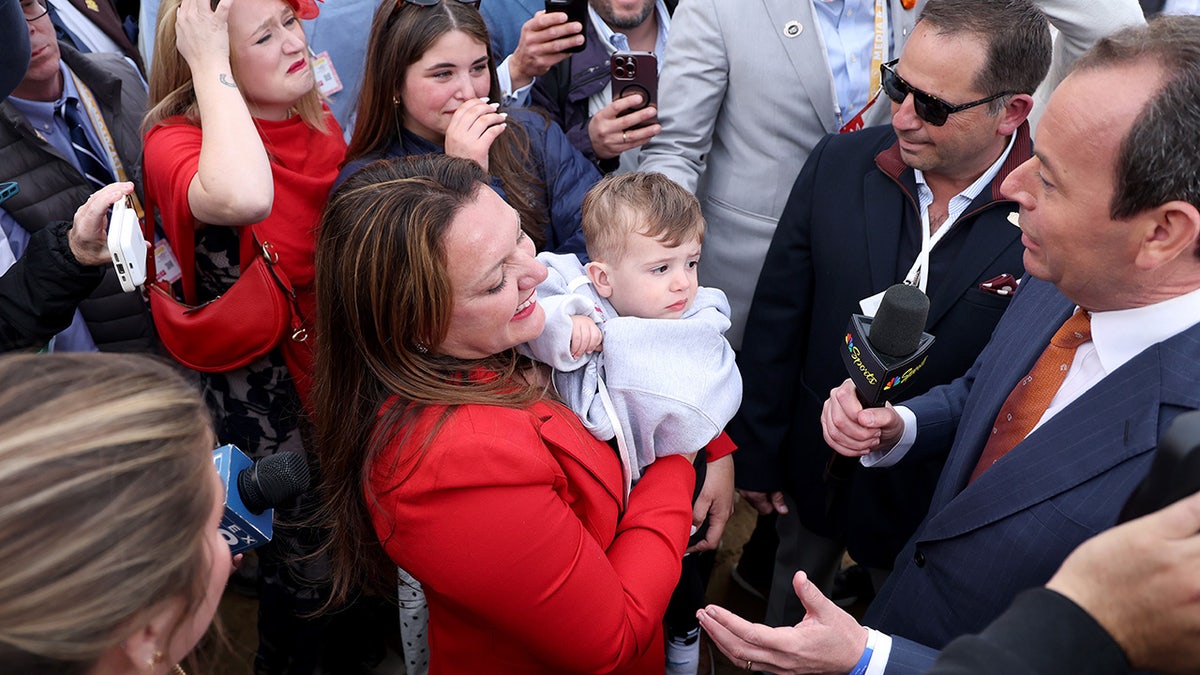
Cherie DeVaux celebrates after becoming the first female trainer to win the Kentucky Derby during the 152nd running at Churchill Downs in Louisville, Kentucky, on May 2, 2026. (Andy Lyons/Getty Images)
For DeVaux, she never thought she would be here.
“I’ve been overwhelmed really with like the reaction videos of just Golden Tempo running, my reaction being a woman and you know that’s just something I never would have thought would have touched anybody,” DeVaux said.
“I’m just doing my thing, cheering my horse on.”
Follow Fox News Digital’s sports coverage on X, and subscribe to the Fox News Sports Huddle newsletter.


It Sure Seems Like These Instagram Ads Think You’re Doing Cocaine All Wrong

Why is stock market up today? Sensex rises over 1,000 points; Nifty50 above 23,700 – top reasons for rally – The Times of India

US LMI sees fastest level of expansion since March 2022 in April 2026

-

 Tech6 days ago
A new frontier: Identity stack evolves for agentic systems | Computer Weekly
-

 Tech6 days ago
‘Orbs,’ ‘Saucers,’ and ‘Flashes’ on the Moon: Pentagon Drops New UFO Files
-

 Tech6 days ago
Nick Bostrom Has a Plan for Humanity’s ‘Big Retirement’
-

 Fashion6 days ago
New orders in German manufacturing up 5% MoM in Mar 2026: Destatis
-
 Sports6 days ago
Shaheen Afridi achieves landmark feat during opening Test against Bangladesh
-

 Tech6 days ago
What Microsoft Executives Really Thought About OpenAI in 2018
-

 Entertainment6 days ago
Rihanna embraces new tattoo given by children
-
 Tech6 days ago
The Canvas Hack Is a New Kind of Ransomware Debacle