

Business
Pfizer to seek FDA approval for Lyme disease vaccine candidate despite trial miss


Thomas Fuller | Nurphoto | Getty Images
Pfizer on Monday said it will seek regulatory approval for a Lyme disease vaccine candidate despite the shot failing a late-stage trial.
Pfizer said the vaccine missed the trial’s statistical goal because not enough people in the study contracted Lyme disease to be confident in the results. Still, the company said the shot reduced the rate of infection by more than 70% in people who received the vaccine versus placebo, efficacy the company thinks is strong enough to take to regulators.
“The efficacy shown in the VALOR study of more than 70% is highly encouraging and creates confidence in the vaccine’s potential to protect against this disease that can be debilitating,” Pfizer Chief Vaccines Officer Annaliesa Anderson said in a statement.
A vaccine for Lyme disease isn’t expected to become a best-seller for Pfizer, with the company’s partner Valneva estimating peak annual sales of $1 billion. Pfizer expects overall revenue of around $60 billion this year, with its Covid-19 vaccine representing more than $5 billion of that forecast.
But Pfizer had billed the Lyme vaccine results as one of its major catalysts this year, and it represented a chance to introduce the only human vaccine for Lyme disease.
Moving forward with a shot that technically failed a clinical trial under an administration that has preached stricter scrutiny for vaccines may prove risky for Pfizer, and it could serve as a litmus test for vaccine policy in the U.S.
Lyme disease is an illness caused by bacteria most commonly spread to humans from ticks. It can cause arthritis, muscle weakness and pain. About half a million Americans are diagnosed with or treated for Lyme disease every year, according to estimates from the Centers for Disease Control and Prevention.
Despite the disease’s prevalence, especially in the Northeast, there isn’t a vaccine for humans available. A company that would later become GSK introduced a shot called LYMErix in 1998 but pulled it only a few years later after public concerns about safety tanked demand. That experience hobbled development of Lyme vaccines for humans, though multiple companies now make them for dogs.
Pfizer and Valneva have faced their own setbacks. In 2023, the companies dropped about half of the participants in the Phase 3 trial because of quality concerns with third-party clinical trial site operator Care Access. The trial had initially enrolled about 18,000 people and after the cuts ended up with about 9,400.
The companies’ vaccine targets the outer surface protein A of the bacteria that cause Lyme disease. A vaccinated person creates antibodies that are passed to a tick and prevent the bacterium from being transferred from the tick to the human. The series involves three shots in the first year, then a booster dose the following year.
The companies said they didn’t observe any safety concerns in the trial.


Business
WNBPA President Nneka Ogwumike says new CBA will have a major impact on players’ bank accounts

The Women’s National Basketball Player’s Association ratified the terms of a new collective bargaining agreement Monday, calling it “transformational” and “bigger than basketball.”
The new CBA begins this season and runs through 2032.
When asked her opinion of the most important outcome from the deal, WNBPA President Nneka Ogwumike had two words: “Bank accounts.”
“Being able to have your worth tied mostly in your salary is all that we’ve been fighting for, and it’s what we were able to achieve,” Ogwumike told CNBC Sport in an interview.
The deal increases the average player salary to $583,000 in 2026 with the potential to increase to more than $1 million by 2032. The maximum salary for players will now be $1.4 million in 2026 and could grow to more than $2.4 million by 2032, based on current WNBA financial projections.
Ogwumike acknowledged the salary increases may change players’ plans for how they spend their off-seasons.
The average WNBA salary was $120,000 in 2025, spurring many players to play abroad or in other leagues, such as 3-on-3 league Unrivaled, for extra money.
“Prioritizing where you want to play is going to look a lot different now that we’ve been able to negotiate a structure, a salary structure, that is tied to the revenue of the business,” Ogwumike said.
Several WNBA players, including five-time WNBA All-Star Napheesa Collier, have expressed a loss of confidence in WNBA Commissioner Cathy Engelbert in recent months, criticizing her empathy and communication with players. Ogwumike expressed optimism that players will be able to work in tandem with Engelbert under the new CBA structure.

“I told her that we’re standing here with you, Cathy,” Ogwumike said. “We were able to come to this deal and go through the process of this deal, however bumpy or smooth it was, we got here. It’s important for her to understand that we as players are at the table with her and all WNBA leadership to have achieved something that’s incredibly historical. So, I feel like there probably isn’t a better way to represent us settling our differences and moving forward in a league that we all care about then by signing this deal.”
Watch CNBC Sport’s full interview with WNBPA President Nneka Ogwumike.
— CNBC’s Jessica Golden contributed to this report.
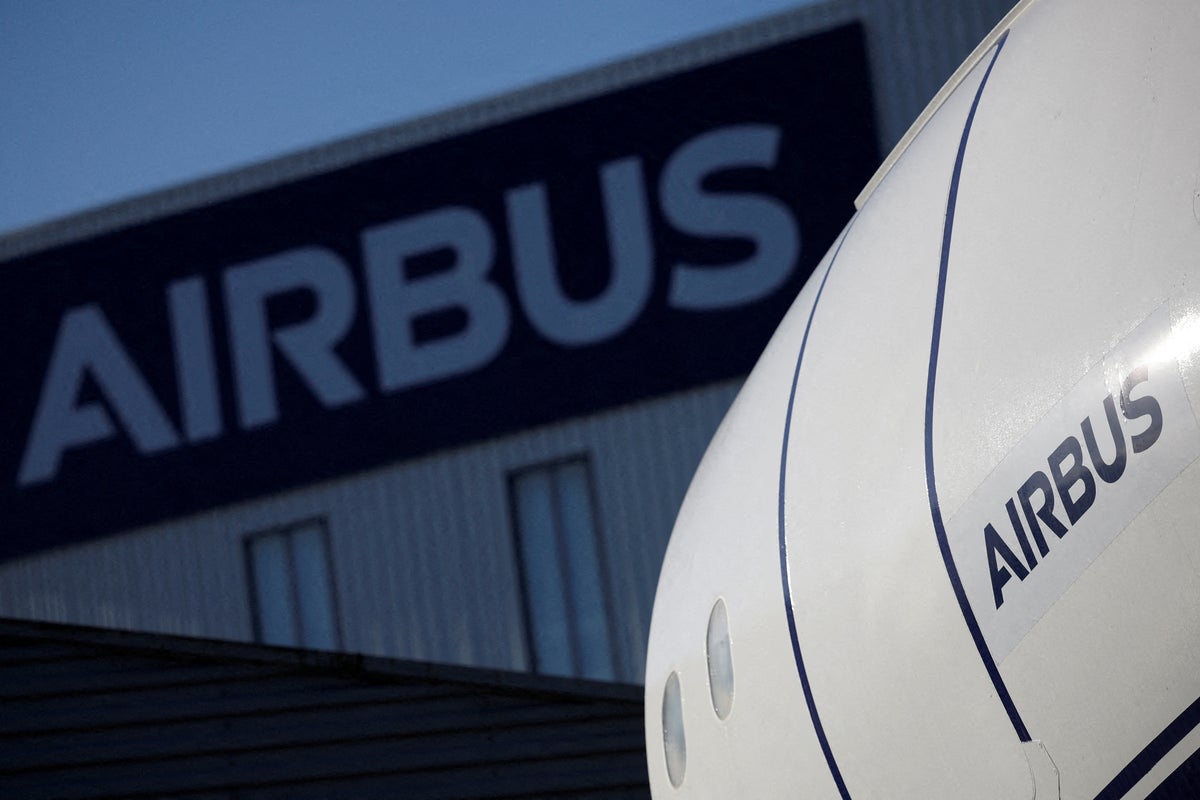
Aerospace and defence giant Airbus has agreed to acquire UK cybersecurity firm Ultra Cyber, a strategic move to bolster its European cyber defence capabilities.
The Maidenhead-based company, employing over 200 staff, will be purchased for an undisclosed sum from private equity firm Advent International. Ultra Cyber currently forms part of Advent’s Cobham Ultra defence business.
Airbus expects the deal, set to finalise in the second half of 2026, to reinforce its position as a “trusted, sovereign partner for the UK and a key supplier to its allies”.
The acquisition will also bolster its cybersecurity presence across Europe, complementing existing operations in Newport, Wales.
The acquisition follows Airbus’s purchase of German cybersecurity firm Infodas in 2024.
Ultra Cyber was originally part of former FTSE 250 firm Ultra Electronics, which was bought by defence firm Cobham for £2.6 billion in 2021, a year after Cobham had been bought by Advent.
Last year, Advent agreed to buy Ultra Precision Control Systems from US firm Eaton and Bloomberg reported earlier this month that the private equity firm is also looking to sell of its Ultra Maritime business after recent conflicts stoked demand.
Mike Schoellhorn, chief executive of Airbus Defence and Space, said: “This acquisition testifies to our long-term commitment to the UK as a core home market.
“By joining our expertise with Ultra Cyber’s unique capabilities, we are acting as a long-term, trusted partner to the UK Ministry of Defence.
“We are building the resilient, sovereign infrastructure required to help keep the UK and its allies ahead in the cyber domain.”
Shonnel Malani, managing partner at Advent and chairman of the board at Ultra Electronics, said: “During what has been a time of major geopolitical tension and uncertainty, we are proud that the investments made in Ultra Cyber, under Advent’s ownership, have supported efforts to help protect the country and its allies from electronic warfare, and contributed to strengthening the UK’s sovereign capabilities.”
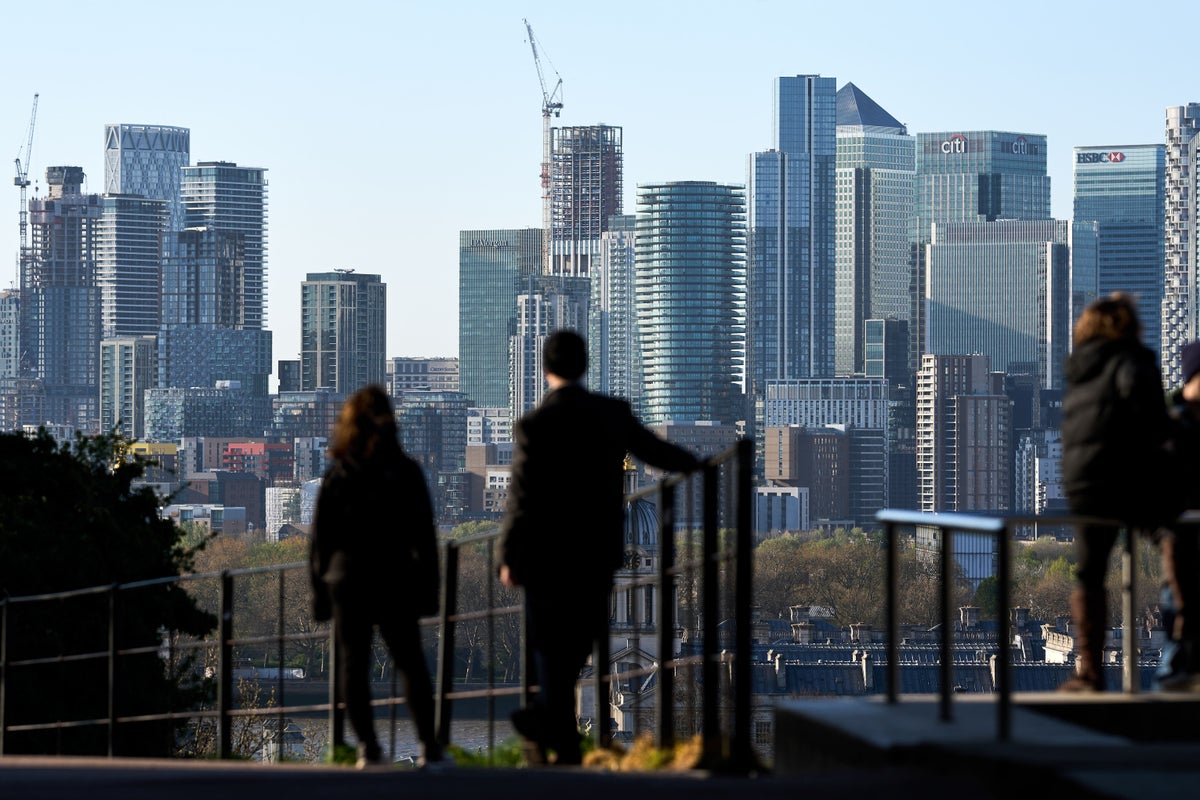
The FTSE 100 ended a rollercoaster day in the red on Monday, although it was well above earlier hefty lows on hopes of an end to the Iran war.
US President Donald Trump said that he had instructed strikes against Iranian energy sites to be postponed for five days, and that talks were under way to end hostilities.
Mr Trump said the US has held “productive conversations” with Iran on a “complete and total resolution” of the conflict.
Tom Stevenson, investment director at Fidelity International, said Mr Trump’s “dramatic U-turn” has “once again triggered gyrations in global financial markets”.
The FTSE 100 index closed down 24.18 points, 0.2%, at 9,894.15.
In a fluctuating trading session, the blue-chip index traded as high as 10,036.65 and as low as 9,670.46.
The FTSE 250 was down 95.31 points, 0.5%, at 21,246.66, above an early low of 20,626.98.
The Aim All-Share was down 4.75 points, 0.7%, at 713.42, after falling as low as 693.87.
In a post on Truth Social, Mr Trump said he had instructed officials to delay any strikes on Iranian power plants and energy infrastructure for five days, subject to the outcome of ongoing discussions.
The reversal came ahead of a Monday night ultimatum for the Islamic republic to either reopen the Strait of Hormuz shipping lane, or see Mr Trump “obliterate” its power plants.
However, Iranian media said there were no negotiations between Tehran and Washington.
“There are no talks between Tehran and Washington,” said the Mehr news agency, citing Iran’s foreign ministry, adding that Mr Trump’s statements were part of a push “to reduce energy prices”.
Mr Trump claimed his administration was discussing with an unidentified “top person”, but not the country’s Supreme Leader Mojtaba Khamenei, who is believed to be injured.
“We’ve wiped out the leadership phase one, phase two, and largely phase three. But we’re dealing with the man who I believe is the most respected and the leader,” Mr Trump told reporters in Florida.
David Morrison, senior market analyst at Trade Nation said: “It’s difficult to know how seriously to take this latest interjection from President Trump.
“It certainly doesn’t make trading any easier, although that’s a side issue when so many lives are at stake.
“But that’s a risk with wars, particularly when there’s chaotic and mercurial leadership on both sides.
“This appears, at first glance, to let the Trump administration off the hook.
“As many analysts pointed out, the lack of any clear, achievable war aims meant that President Trump could walk away, claiming victory, at any point.
“That appears to be what he is doing now.”
But Mr Morrison added that traders will also be mindful that this could be a “false dawn”.
The issues which weighed on equities before the outbreak of this war “are still there,” he added.
“And more so. Two months ago, investors were looking forward to additional rate cuts this year. That is no longer the case.”
Prime Minister Keir Starmer welcomed the talks between the US and Iran, and said the UK had been told about them beforehand.
Brent oil was quoted at 102.07 dollars a barrel at the time of the London equities close on Monday, down from 109.78 dollars late on Friday.
However, it had earlier traded as high as 114.67 dollars.
The head of the International Energy Agency, Fatih Birol, warned that in the event of a protracted war, daily oil losses put the world on track for a crisis worse than the combined impact of both 1970s oil shocks and Russia’s invasion of Ukraine.
On the FTSE 100, oil majors BP and Shell fell 4.2% and 2.3% respectively.
On the FTSE 250, oil exploration firms Ithaca Energy and Harbour Energy slid 8.8% and 6.5%.
Conversely, airlines rallied on hopes for lower fuel prices and less disruption to the travel industry.
British Airways owner International Consolidated Airlines Group rose 4.5%, and budget airline easyJet climbed 2.4%.
The about turn in oil saw gold pare early heavy losses.
The yellow metal traded at 4,376.19 dollars an ounce on Monday, still down against 4,593.70 dollars on Friday, but above early lows of 4,117.89 dollars.
In European equities on Monday, the CAC 40 in Paris closed up 1.2%, while the Dax 40 in Frankfurt ended 1.5% higher.
Stocks in New York were higher.
The Dow Jones Industrial Average was up 1.4%, the S&P 500 index was 1.2% higher, and the Nasdaq Composite climbed 1.3%.
The yield on the US 10-year Treasury was quoted at 4.38%, stretched from 4.37%.
The yield on the US 30-year Treasury was unchanged at 4.94% from Friday.
In London, the yield on 10-year gilts fell back sharply.
They traded at 4.91% at the time of the London close, after touching 5.09% earlier on Monday.
The lower UK bond yields saw rate-sensitive housebuilders rally.
Barratt Redrow rose 4.3%, Persimmon firmed 2.6% and Taylor Wimpey added 1.2%.
The pound was quoted higher at 1.3390 dollars at the time of the London equities close on Monday, compared to 1.3323 dollars on Friday.
The euro stood at 1.1579 dollars, higher against 1.1561 dollars.
Against the yen, the dollar was trading lower at 158.79 yen compared to 159.20 yen.
On the FTSE 100, Croda rose 5.6%, as Goldman Sachs double-upgraded the specialty chemicals firm to “buy” from “sell”.
The broker said Croda’s market recovery actions have delivered ahead of the broker’s expectations from an organic sales growth perspective, outperforming peers.
Entain jumped 8.2%, following a report in the Wall Street Journal that a pair of US senators are introducing legislation to prohibit entities regulated by the Commodity Futures Trading Commission from listing contracts related to sporting events.
The WSJ report said this will include prediction-market exchanges Kalshi and Polymarket’s US platform.
“The CFTC is greenlighting these markets and even promoting their growth,” US senator Adam Schiff said.
“It’s time for Congress to step in and eliminate this backdoor which violates state consumer protections, intrudes upon tribal sovereignty and offers no public revenue.”
Entain, which owns Ladbrokes, also has a 50% stake in BetMGM in the US.
“We expect a material positive share price reaction for Entain”, said Citi analyst Monique Pollard.
The biggest risers on the FTSE 100 were Entain, up 44.8p at 588.8p, Antofagasta, up 230.0p at 3,373.0p, Croda, up 143.0p at 2,697.0p, Anglo American, up 158.0p at 3,025.0p and IAG, up 15.7p at 361.5p.
The biggest fallers on the FTSE 100 were BT, down 12.6p at 199.7p, BAE Systems, down 110.0p at 2,140.0p, BP, down 23.7p at 538.6p, Tesco, down 16.2p at 452.7p and Admiral, down 106.0p at 3,102.0p.
Tuesday’s global economic calendar has Japan’s inflation figures overnight, a slew of flash composite PMI readings, and the Richmond Fed manufacturing index in the US.
Tuesday’s UK corporate calendar has half-year results from housebuilder Bellway, and full-year results from premium drink mixer manufacturer Fevertree Drinks and B&Q owner, Kingfisher.
– Contributed by Alliance News


Zinedine Zidane reaches verbal agreement to take France job – sources
A Mysterious Numbers Station Is Broadcasting Through the Iran War

Meghan Markle’s Aussie visit could be a soft launch for ‘As Ever’

-

 Entertainment1 week ago
Iran at war
-
 Entertainment1 week ago
Strategic oil stocks to be released ‘immediately’ in Asia and Oceania: IEA
-

 Sports1 week ago
Japan suffers shocking collapse to Venezuela in World Baseball Classic
-
 Business1 week ago
‘Gruesome’ war bets fuel calls for Kalshi Polymarket crackdown
-
 Business1 week ago
New Income Tax Act 2025 To Take Effect From April 1: 10 Key Changes That Will Affect Your Money
-

 Sports1 week ago
Transfer rumors, news: Real Madrid open to Camavinga exit, as Premier League clubs circle
-

 Sports5 days ago
March Madness 2026 – How to watch in SA, start time, schedule, TV channel for NCAA championship basketball tournament
-
 Sports1 week ago
Chinese Grand Prix LIVE: Latest updates as Antonelli stays in lead, Russell overtakes Hamilton