

Business
RBI Governor Says Rupee Depreciation Normal, Banking System Strong

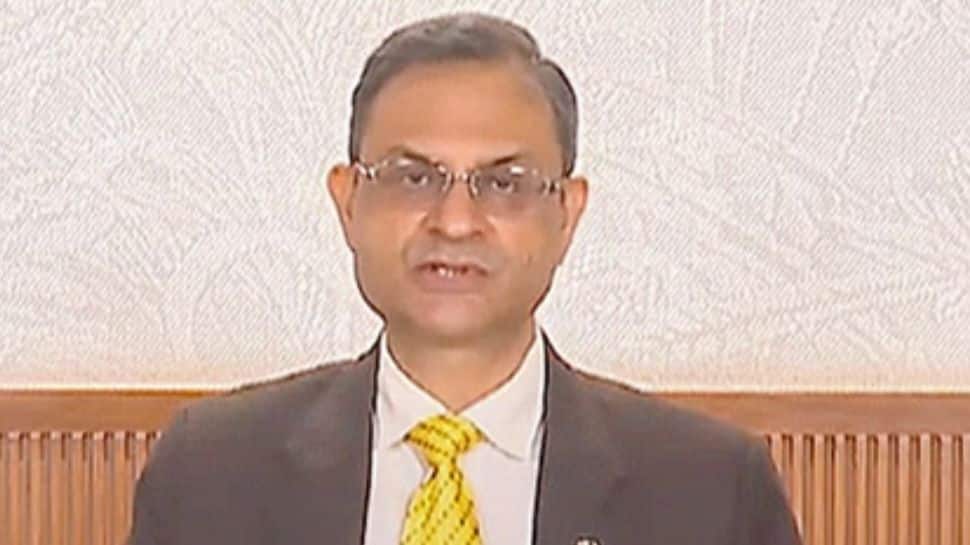
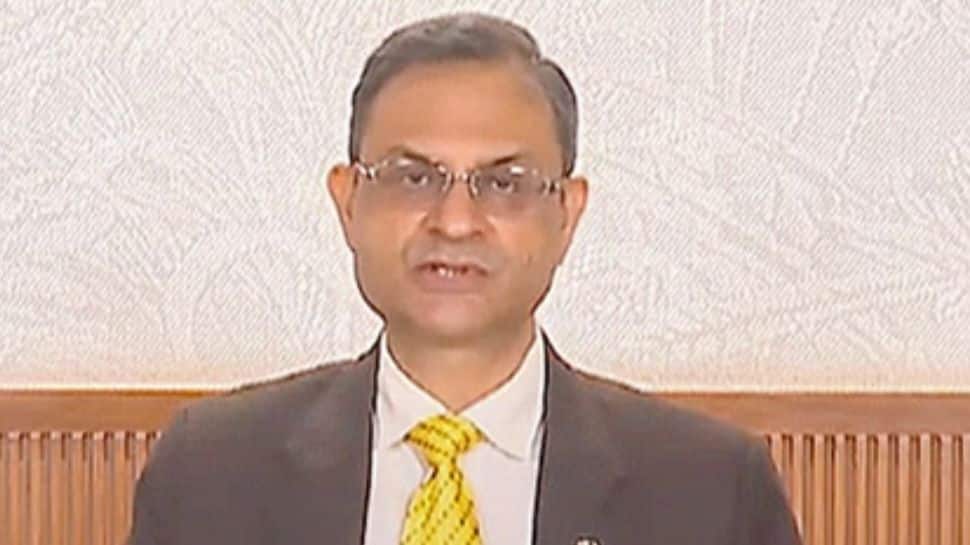
New Delhi: Sanjay Malhotra has completed his first year as RBI Governor at a time when global volatility, tariff shocks and geopolitical tensions have tested financial systems everywhere. In an exclusive conversation with Zee Business Managing Editor Anil Singhvi, Malhotra discussed a wide array of topics, including interest-rate options ahead of the next MPC meeting, the rupee’s recent slide against the US dollar, the central bank’s gold reserves, foreign investment in banks, and the regulator’s broader priorities for financial stability. He said the RBI has navigated a difficult global backdrop with measured policy decisions and signalled that future rate cuts remain on the table depending on data and inflation trends.
Here are key excerpts from the interview:
Q1. How do you look back at your first year as RBI Governor?
Ans. The past year brought a series of external challenges from US tariff actions to the Russia–Ukraine conflict and tensions in West Asia. Despite this, it has been a satisfying year for both the RBI and the wider economy. We reduced the repo rate by 100 basis points, supported liquidity whenever required, strengthened supervisory frameworks and focused on customer service. Inflation moved back inside the 2–6 per cent band and GDP growth reached 7.8 per cent in the June quarter. Banks and NBFCs became stronger, and 2.75 lakh customer-service camps were held nationwide. Overall, it has been a demanding but successful year.
Q2. Is the RBI prepared to cut interest rates in upcoming policy meetings?
Ans. Our mandate is clear: keep inflation under control and support growth. We do not take either an overly aggressive or overly defensive stance. As we had indicated in the October MPC, the direction for rate cuts is positive, but the actual decision will depend entirely on incoming data and deliberations in the next MPC meetings.
Q3. Does India need to increase its gold reserves further?
Ans. Over the past eight years, the RBI has added nearly 300 tonnes of gold. Our total holding is now around 880 tonnes, roughly 15 per cent of our forex reserves. Decisions on further purchases are highly sensitive, but India’s gold and foreign-exchange buffers are strong and stable.
Q4. The rupee has touched life lows. Is this concerning?
Ans. The rupee’s long-term trajectory is guided mainly by inflation differentials. A mild depreciation over time is natural. Historically, the rupee has weakened around 3 per cent a year. The RBI does not defend any specific level but ensures volatility stays contained so that businesses can plan without uncertainty.
Q5. Personal and unsecured loans are rising quickly. Is this a worry?
Ans. Asset quality remains satisfactory and the banking system is not facing systemic risk. Borrowers must, however, remain disciplined and repay loans on time. The MSME segment always requires monitoring but is stable at present. We continue to track this space closely.
Q6. Foreign investment in Indian banks is rising. Is the RBI comfortable with this?
Ans. Yes. Foreign ownership in the Indian banking system is still below 7 per cent — well under the 15 per cent limit. We encourage foreign participation but have safeguards to prevent excessive influence. The trend is positive and not a cause for concern.
Q7. Can an Indian commercial bank feature among the world’s top 10 lenders?
Ans. Certainly. The government is focused on banking-sector strength and the RBI is working towards building large, competitive and globally relevant banks. With India’s economic expansion, that milestone is very achievable.
Q8. How is the RBI using artificial intelligence in the financial system?
Ans. The RBI is already a front-runner globally in adopting AI. We use it to strengthen cybersecurity, improve fraud detection, enhance credit-risk assessment and analyse large data flows. Banks too are being encouraged to adopt AI safely to improve service quality and risk management.
Q9. How is India safeguarding its economy amid global weakness?
Ans. India’s current account deficit was only 0.6 per cent last year. It may rise slightly due to recent tariffs, but remains well within control. Our forex reserves are around USD 700 billion and the banking system is strong. India’s digital payments infrastructure is among the fastest globally. These fundamentals cushion us against global volatility.
Read More: Will RBI cut rate in the next policy? Governor Sanjay Malhotra in conversation with Anil Singhvi
Q10. What role will the RBI play as India moves towards a USD 5-trillion economy?
Ans. Our job is to make sure the economy has a stable foundation to grow on. India can reach the USD 5-trillion mark only if its financial system remains strong through that journey. That means keeping banks and NBFCs well-capitalised, maintaining financial stability and ensuring that services — from basic savings accounts to large corporate lending — work smoothly for every user. RBI’s focus over the next two years will be simple but critical: keep the system safe, keep growth steady and make day-to-day banking easier and more reliable for 140 crore Indians. A resilient financial sector is the backbone of long-term growth. Our effort is to strengthen that backbone every single day.
Q11. What message would you give borrowers and consumers?
Ans. Those who take loans must repay responsibly. Protecting customer data is a top priority for the RBI. We will continue to work on improving service standards across banks and financial institutions.




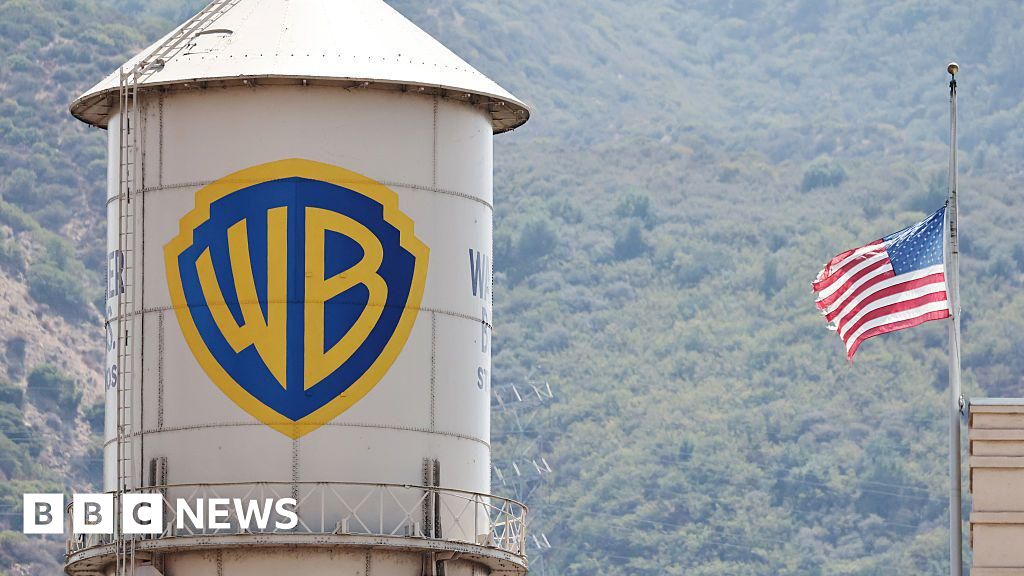
The approval came as Donald Trump is to attend a dinner with billionaire Paramount backers the Ellisons.
Source link
Business
France Ends Airport Transit Visa Requirement for Indian Travellers | Business – The Times of India

France has lifted the airport transit visa requirement for Indian nationals with effect from April 10, the French Embassy in India announced on Thursday.Indian nationals holding ordinary passports are no longer required to obtain an airport transit visa when passing through the international zone of airports located on French territory during a layover en route to a third country.The change follows a decree amending the 2010 regulations on documents and visas required for the entry of foreigners into French territory. The decree was adopted and published in the French Official Gazette (Journal Officiel) on April 9, 2026.MEA welcomes the moveThe Ministry of External Affairs welcomed the announcement.“We welcome the announcement on the operationalisation of visa-free transit for Indian nationals transiting through French airports,” MEA Spokesperson Randhir Jaiswal said.He recalled that the removal of the transit visa requirement for Indian passport holders was agreed between Prime Minister Narendra Modi and French President Emmanuel Macron during their meeting in Mumbai in February this year.“The government of France has now operationalized this agreement,” Jaiswal added.Who benefitsThe measure applies to Indian nationals transiting through mainland France exclusively by air, remaining in the international airport zone without entering French territory.President Macron had announced during his visit to India in February that measures would be taken to ease travel for Indian nationals via France.
Poll
What do you think is the main advantage of this visa policy change?
The updated procedures have been reflected on the France-Visas platform.

Comcast topped Wall Street’s revenue and earnings estimates for the first quarter on Thursday, lifted by NBC’s sports slate in February and improving broadband customer losses.
The company said it lost 65,000 broadband customers compared with 183,000 losses in the same period last year. Heightened competition from wireless providers like Verizon and T-Mobile has led to quarterly customer losses for Comcast and its cable peers in recent years – which has weighed on these companies’ stocks in particular.
In response, Comcast in the last year has shifted its strategy and introduced more competitive pricing packages in a bid to reduce the broadband losses. The company has also leaned on its mobile business for growth, which added 435,000 new lines during the quarter. In total, Comcast now has 9.7 million mobile customers.
The company also reported 322,000 cable TV customer losses – fewer than the 427,000 in the same period last year.
Revenue for Comcast’s connectivity and platforms unit, which includes its Xfinity-branded broadband, cable TV, and mobile businesses, decreased 2% to $17.32 billion.
The company’s stock climbed as much as 8% in premarket trading.
Here’s how Comcast performed for the period compared with average analyst estimates, according to LSEG:
- Earnings per share: 79 cents adjusted vs. 73 cents expected
- Revenue: $31.46 billion vs. $30.43 billion expected
Comcast’s net income fell nearly 36% to $2.17 billion, or 60 cents per share, compared to $3.38 billion, or 89 cents a share, during the same period last year. Adjusting for one-time items including amortization and investments, Comcast reported earnings per share of $0.79.
Adjusted earnings before interest, taxes, depreciation and amortization were down roughly 17% to $7.93 billion.
Comcast’s overall revenue increased roughly 5% to $31.46 billion for the quarter.
Revenue got a boost from Comcast’s NBCUniversal, which aired a slate of sports – including the Super Bowl, Winter Olympics and NBA All-Star Weekend, during the quarter – that the company coined as “Legendary February.”
The media business, which is made up of NBCUniversal, recorded a nearly 61% increase in revenue to $7.28 billion during the quarter. Excluding the Olympics and Super Bowl – which provided significant boosts to advertising sales – revenue for the unit was up about 13%.
Live sports remains the highest rated programming on traditional TV and streaming, and beckon the most advertising dollars. The Super Bowl, in particular, breaks records annually when it comes to its pricey commercial spots. NBC received an average $8 million per 30-second ad, CNBC reported.
Domestic advertising for the media unit was up 135% to $3.45 billion for the quarter. Excluding the Super Bowl and Winter Olympics, it was up 4.7% to $1.54 billion.
NBC’s sports roster also helped lift streaming service Peacock during the quarter. Peacock subscribers increased 12% year over year to 46 million. Peacock nearly doubled revenue to $2.1 billion compared to the same period last year. The streamer recorded a quarterly loss of $432 million compared to a loss of $215 million in the prior year period.
Adjusted EBITDA for the media segment decreased to a loss of $426 billion due to higher operating expenses related to the costs associated with the Winter Olympics and Super Bowl, as well as the cost of the NBA rights.
NBCUniversal is part of the overall content and experiences segment, which also includes the film studio and theme parks – each of which saw sales climb year-over-year.
Revenue for the film studio was up 21% to $3.43 billion, while Universal theme parks revenue increased 24% to $2.33 billion. The theme parks were boosted by the opening of Epic Universe last May.

Warner Bros shareholders approve Paramount’s $111bn takeover

Spoiler alert! "Survivor" castaway on elimination from game, role on the jury

‘Summer House’ is going to get cancelled? details revealed

-

 Fashion1 week ago
France’s LVMH Q1 revenue falls 6%, shows resilience amid Iran war
-

 Entertainment1 week ago
Is Claude down? Here’s why users are seeing errors
-

 Sports1 week ago
PSL 11: Peshawar Zalmi win toss, opt to field first against Quetta Gladiators
-

 Tech1 week ago
The Deepfake Nudes Crisis in Schools Is Much Worse Than You Thought
-

 Politics1 week ago
Iran in continuous message exchange with mediator Pakistan after US talks: Report
-
 Business1 week ago
Standard Life buys rival in £2b deal to create savings giant
-

 Tech1 week ago
CYBERUK ’26: UK lagging on legal protections for cyber pros | Computer Weekly
-

 Sports1 week ago
World Cup kit ranking: Which teams will look best in 2026?