

Business
Reeves’ ‘mansion tax’ makes ‘no sense’, former IFS director warns

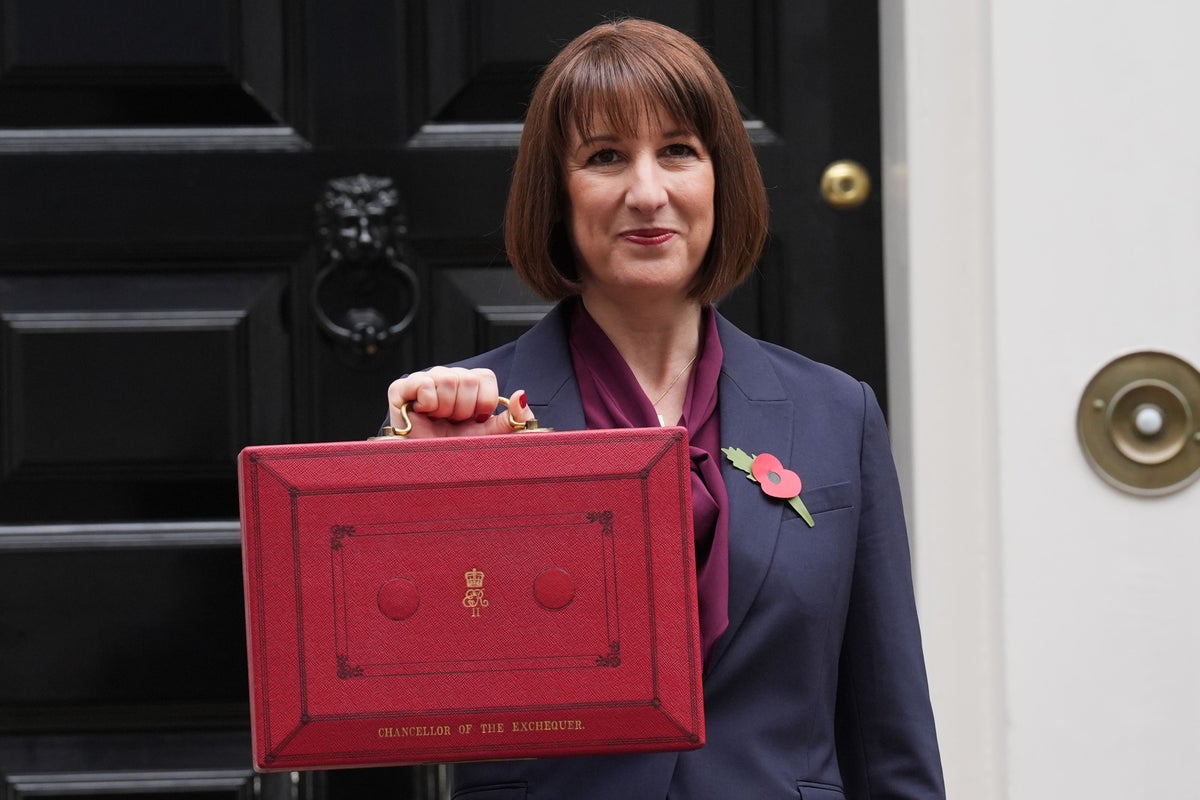
Rachel Reeves’s plans to levy a “mansion tax” on high-value properties make no sense and could cause the Treasury to lose money, one of Britain’s leading economists has warned.
Paul Johnson, the former director of the Institute for Fiscal Studies (IFS), told The Independent he was “staggered” at reports that the Treasury is considering such a move, saying it could “block up the entire housing market”.
His intervention came as mortgage brokers and financial planners rounded on the chancellor after reports that she is considering hitting the owners of expensive properties when they sell to plug a £40bn hole in the public purse.
The mooted plans would mean higher-rate taxpayers paying 24 per cent of any gain in the value of their home, while basic rate taxpayers would be hit with an 18 per cent levy. Currently, capital gains tax is not paid on the sale of primary residences.
The threshold is still under consideration, sources told The Times, but a £1.5m starting point would hit around 120,000 homeowners who are higher-rate taxpayers. with capital gains tax bills of £199,973.
Mr Johnson called for a major overhaul of housing taxation as a whole, warning that levying capital gains tax on high-value properties at the same time as stamp duty would mean “no one would ever sell their properties”.
“I think there are all sorts of practical problems with it. It would gum up the housing market at the top end hopelessly. So I think, personally, it’s a non-runner. I think it would be very hard to design in a way that would raise significant money, and indeed, it could lose the Treasury money. Because, you know, you could lose the money you’re currently getting in stamp duty.
“I just can’t believe that they’re considering it. I’m staggered that they’re flying this flag. It, to me, makes no sense.”
Calling for an overhaul of housing taxation, Mr Johnson said council tax was “far too low on expensive properties” while stamp duty is a “disaster area”. But he said that “talking about [levying] capital gains tax when you’ve still got stamp duty would clearly be hopeless. You need to think about these in conjunction with one another. It’s just not sensible in any world to be talking about these things individually.”
Mr Johnson said the stagnation in the property market would be made even worse if the Conservatives pledged to reverse any such policy. “That would guarantee that nobody would move. People would hope that someone else would win the next election and wait to sell. So there’s a huge practical problem there.”
Property experts also warned that such a plan would stall housing sales and add to the exodus of the super-rich from the UK.
Financial adviser Scott Gallacher, a director at Rowley Turton wealth management, said a level of £1.5m would prevent most older homeowners, particularly those who bought properties in the 1980s and 90s, from selling houses.
He added that this would “kill off the upper end of the property market” and be difficult to implement. Mr Gallacher said: “It would be insane if it creates a cliff edge in that properties over £1.5m are subject to capital gains tax on the entire gain, as properties sold at £1.49m would incur no CGT, whereas £1.5m might be a six-figure bill. If it’s only on gains above £1.5m, then the CGT raised would be minimal, as potentially you’d be exempting six or even seven-figure gains.”
He added: “Homeowners, especially older ones, who perhaps bought their houses in the 1970s or 1980s, would be daft to sell and incur a huge CGT liability. Instead, they would be incentivised to hold on to the home until they die and pay no CGT.”
Simon Gerrard, chairman of Martyn Gerrard Estate Agents, warned that a mansion tax plan would leave families who bought homes in London more than a decade ago facing “eye-watering” tax bills. “Meanwhile, those who are actually wealthy know how to bypass these moves and won’t pay it,” he said.
He told The Independent: “After the deadline passes, people will simply not sell their homes. The property market above the threshold will die until Labour are voted out and the policy is repealed under a more sensible government.”

Laith Khalaf, head of investment analysis at AJ Bell, said the tax-free nature of primary residences was “deeply embedded in the psyche of homeowners”.
He warned: “A mansion tax set at high level would naturally cause people to worry it was just the thin end of the wedge, and the next time the government needs a bit of money they could just lower the threshold.
“It would also be an impediment to mobility in the housing market, as those with properties which might fall foul of the tax would be inclined to sit on them for longer, leaving a log jam in the housing ladder below them.”
And critics warned the tax change would add to the reported exodus of super-rich individuals fleeing Britain. Stephen Perkins, managing director of Yellow Brick Mortgages, said: “I can see a lot of families in London being caught with this higher tax bill, and it may push more wealthy tax contributors to exodus the UK, which is already a problem following the Chancellor’s last budget.”
A Treasury spokesman said: “The best way to strengthen public finances is by growing the economy, which is our focus. Changes to tax-and-spend policy are not the only ways of doing this, as seen with our planning reforms, which are expected to grow the economy by £6.8bn and cut borrowing by £3.4bn
“We are committed to keeping taxes for working people as low as possible, which is why at last autumn’s Budget we protected working people’s payslips and kept our promise not to raise the basic, higher or additional rates of income tax, employee national insurance, or VAT.”

A mothballed carbon dioxide plant is to be reopened with a Government grant of up to £100 million amid fears of shortages caused by the Iran war.
Business Secretary Peter Kyle signed off the grant to reopen the Ensus plant on Teesside, according to the Financial Times.
It is understood the grant will pay to get the plant up and running again for an initial three-month period.
The plant was mothballed last year after a trade deal with the US cut tariffs on bioethanol, its main product.
It will be reopened due to its ability to produce CO2 as a by-product. The gas is vital for several sectors, including drinks and the nuclear industry, but supply has been disrupted thanks to soaring energy costs on other sources such as fertiliser factories.
The grant for the Ensus plant is the first major intervention by the UK Government aimed at tackling possible shortages caused by the Iran conflict.
But fears range much wider than CO2, with former BP executive Nick Butler telling Times Radio the UK could face oil and gas shortages in two to three weeks.
He said: “There will be shortages and I think the Government now should be seriously planning how they’re going to handle that and part of that is maximising supply.”
On Tuesday, Shell chief executive Wael Sawan issued a similar warning at an industry conference.
Ministers continue to insist the supply of petrol remains reliable.
Energy minister Michael Shanks told MPs on Wednesday the Government was “absolutely not” planning for blackouts or petrol rationing, insisting the UK had a “strong and diverse range of supplies”.
The key question remains how long Iran’s effective blockade of the vital Strait of Hormuz will last.
On Thursday, Foreign Secretary Yvette Cooper will urge Iran to reopen the Strait of Hormuz as she travels to the G7 Foreign Ministers’ meeting in France.
She will make clear that the UK will help ensure safe passage for ships through the strait and provide an additional £2m in humanitarian aid to Lebanon.
Ms Cooper is expected to hold talks with counterparts, including US secretary of state Marco Rubio, France’s Jean-Noel Barrot, and Germany’s Johann Wadephul.
The strait remained closed on Wednesday evening, despite Iran’s foreign minister Abbas Araghchi claiming it was open to “non-hostile” shipping.
The conflict continued with Washington saying it would hit Iran “harder” if Tehran refused to accept it had been “defeated militarily”.
White House spokeswoman Karoline Leavitt insisted “productive” talks were continuing between Washington and Tehran.
But Mr Araghchi said in a message on his Telegram channel, translated from Farsi, that there had been “no negotiations or discussions with the American side” and suggested the US had effectively admitted defeat.
He said: “Didn’t they talk about ‘unconditional surrender’ before? What happened now that they are talking about negotiations and calling for them?
“I will explain that there are no negotiations, but the fact that they are mobilising their highest officials to negotiate with the Islamic Republic indicates their acceptance of defeat.”

new video loaded: How Kharg Island May Change the Trajectory of the Iran War
By Peter Eavis, Gilad Thaler, Edward Vega, Lauren Pruitt and Joey Sendaydiego
March 25, 2026

Crude rose back above $100 a barrel as the US and Iran clashed over bringing the conflict to an end.
Source link


Man United’s big night was disappointing, but not their spirit
Government grant to reopen CO2 plant amid fears of Iran-linked shortages

Trump to visit China in May after Iran war delay

Sales at US apparel, clothing accessories stores up 4% YoY in Jan 2026

Justice Department Says Anthropic Can’t Be Trusted With Warfighting Systems

March Madness 2026 – How to watch in SA, start time, schedule, TV channel for NCAA championship basketball tournament

-
 Fashion1 week ago
Sales at US apparel, clothing accessories stores up 4% YoY in Jan 2026
-
 Tech1 week ago
Justice Department Says Anthropic Can’t Be Trusted With Warfighting Systems
-
 Sports1 week ago
March Madness 2026 – How to watch in SA, start time, schedule, TV channel for NCAA championship basketball tournament
-
 Business1 week ago
Stocks and pound rise as US rate call approaches
-

 Entertainment1 week ago
Val Kilmer revived 1 year after death through AI
-
 Business1 week ago
Brits cashing in jewellery as gold price hits record high
-

 Sports1 week ago
WBC championship: USA-Venezuela preview, live updates, analysis
-

 Tech1 week ago
Meta Is Shutting Down Horizon Worlds on Meta Quest