

Tech
Researchers explore how AI can strengthen, not replace, human collaboration

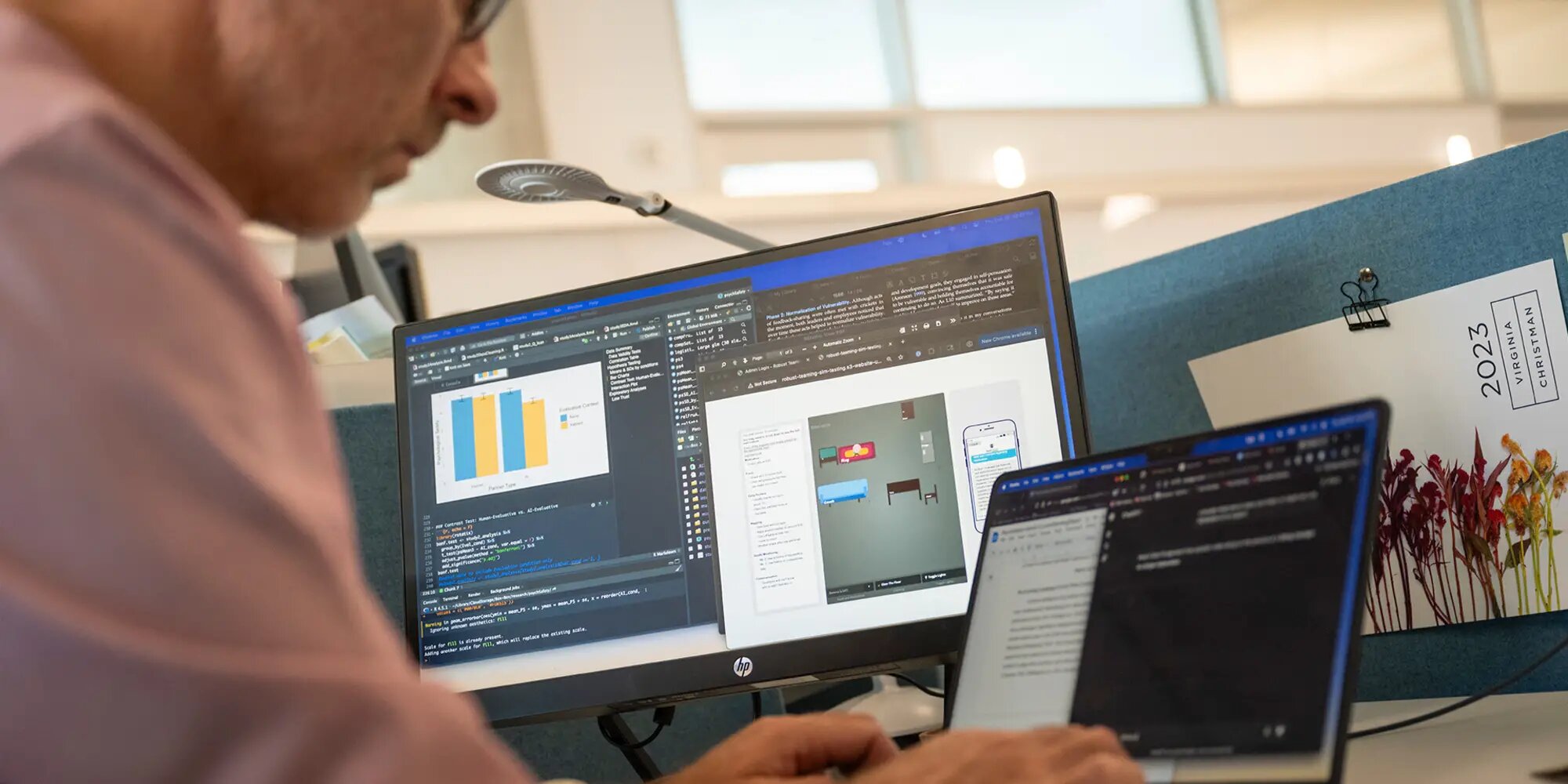
Researchers from Carnegie Mellon University’s Tepper School of Business are learning how AI can be used to support teamwork rather than replace teammates.
Anita Williams Woolley is a professor of organizational behavior. She researches collective intelligence, or how well teams perform together, and how artificial intelligence could change workforce dynamics. Now, Woolley and her colleagues are helping to figure out exactly where and how AI can play a positive role.
“I’m always interested in technology that can help us become a better version of ourselves individually,” Woolley said, “but also collectively, how can we change the way we think about and structure work to be more effective?”
Woolley collaborated with technologists and others in her field to develop Collective HUman-MAchine INtelligence (COHUMAIN), a framework that seeks to understand where AI fits within the established boundaries of organizational social psychology.
The researchers behind the 2023 publication of COHUMAIN caution against treating AI like any other teammate. Instead, they see it as a partner that works under human direction, with the potential to strengthen existing capabilities or relationships. “AI agents could create the glue that is missing because of how our work environments have changed, and ultimately improve our relationships with one another,” Woolley said.
The research that makes up the COHUMAIN architecture emphasizes that while AI integration into the workplace may take shape in ways we don’t yet understand, it won’t change the fundamental principles behind organizational intelligence, and likely can’t fill in all of the same roles as humans.
For instance, while AI might be great at summarizing a meeting, it’s still up to people to sense the mood in the room or pick up on the wider context of the discussion.
Organizations have the same needs as before, including a structure that allows them to tap into each human team member’s unique expertise. Woolley said that artificial intelligence systems may best serve in “partnership” or facilitation roles rather than managerial ones, like a tool that can nudge peers to check in with each other, or provide the user with an alternate perspective..
Safety and risk
With so much collaboration happening through screens, AI tools might help teams strengthen connections between coworkers. But those same tools also raise questions about what’s being recorded and why.
“People have a lot of sensitivity, rightly so, around privacy. Often you have to give something up to get something, and that is true here,” Wooley said.
The level of risk that users feel, both socially and professionally, can change depending on how they interact with AI, according to Allen Brown, a Ph.D. student who works closely with Woolley. Brown is exploring where this tension shows up and how teams can work through it. His research focuses on how comfortable people feel taking risks or speaking up in a group.
Brown said that, in the best case, AI could help people feel more comfortable speaking up and sharing new ideas that might not be heard otherwise. “In a classroom, we can imagine someone saying, “Oh, I’m a little worried. I don’t know enough for my professor, or how my peers are going to judge my question,” or, “I think this is a good idea, but maybe it isn’t.” We don’t know until we put it out there.”
Since AI relies on a digital record that might or might not be kept permanently, one concern is that a human might not know which interactions with an AI will be used for evaluation.
“In our increasingly digitally mediated workspaces, so much of what we do is being tracked and documented,” Brown said. “There’s a digital record of things, and if I’m made aware that, ‘Oh, all of a sudden our conversation might be used for evaluation,’ we actually see this significant difference in interaction.”
Even when they thought their comments might be monitored or professionally judged, people still felt relatively secure talking to another human being. “We’re talking together. We’re working through something together, but we’re both people. There’s kind of this mutual assumption of risk,” he explained.
The study found that people felt more vulnerable when they thought an AI system was evaluating them. Brown wants to understand how AI can be used to create the opposite effect—one that builds confidence and trust.
“What are those contexts in which AI could be a partner, could be part of this conversational communicative practice within a pair of individuals at work, like a supervisor-supervisee relationship, or maybe within a team where they’re working through some topic that might have task conflict or relationship conflict?” Brown said. “How does AI help resolve the decision-making process or enhance the resolution so that people actually feel increased psychological safety?”
Creating a more trustworthy AI
At the individual level, Tepper researchers are also learning how the way in which AI explains its reasoning affects how people use and trust it. Zhaohui (Zoey) Jiang and Linda Argote are studying how people react to different kinds of AI systems—specifically, ones that explain their reasoning (transparent AI) versus ones that don’t explain how they make decisions (black box AI).
“We see a lot of people advocating for transparent AI,” Jiang said, “but our research reveals an advantage of keeping the AI a black box, especially for a high ability participant.”
One of the reasons for this, she explained, is overconfidence and distrust in skilled decision-makers.
“For a participant who is already doing a good job independently at the task, they are more prone to the well-documented tendency of AI aversion. They will penalize the AI’s mistake far more than the humans making the same mistake, including themselves,” Jiang said. “We find that this tendency is more salient if you tell them the inner workings of the AI, such as its logic or decision rules.”
People who struggle with decision-making actually improve their outcomes when using transparent AI models that show off a moderate amount of complexity in their decision-making process. “We find that telling them how the AI is thinking about this problem is actually better for less-skilled users, because they can learn from AI decision-making rules to help improve their own future independent decision-making.”
While transparency is proving to have its own use cases and benefits, Jiang said the most surprising findings are around how people perceive black box models. “When we’re not telling these participants how the model arrived at its answer, participants judge the model as the most complex. Opacity seems to inflate the sense of sophistication, whereas transparency can make the very same system seem simpler and less ‘magical,'” she said.
Both kinds of models vary in their use cases. While it isn’t yet cost‑effective to tailor an AI to each human partner, future systems may be able to self-adapt their representation to help people make better decisions, she said.
“It can be dynamic in a way that it can recognize the decision-making inefficiencies of that particular individual that it is assigned to collaborate with, and maybe tweak itself so that it can help complement and offset some of the decision-making inefficiencies.”
Citation:
Researchers explore how AI can strengthen, not replace, human collaboration (2025, November 1)
retrieved 1 November 2025
from https://techxplore.com/news/2025-10-explore-ai-human-collaboration.html
This document is subject to copyright. Apart from any fair dealing for the purpose of private study or research, no
part may be reproduced without the written permission. The content is provided for information purposes only.










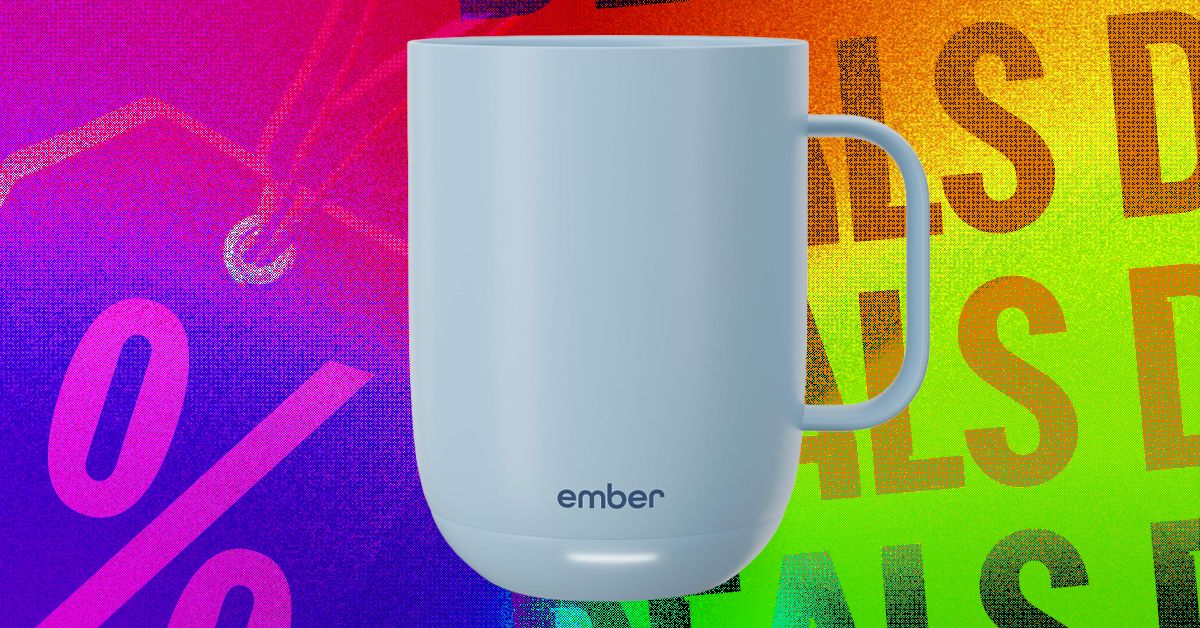
The Ember Smart Mug 2 is niche, but it has a loyal following. Even though we think there are better mug warmers on the market, Ember is like Apple AirPods or Kleenex. People want what they want. Right now, for Mother’s Day, the Ember Smart Mug 2 is on sale for just under $100, a 30 percent discount and a match of the very best price we’ve tracked. You can save at Amazon, Best Buy, and the manufacturer’s website.
This smart mug is probably overkill. It has a smartphone app that notifies you when your coffee reaches the ideal temperature, and its onboard light also provides a visual indicator that your brew is ready. It intelligently adjusts power usage to keep your drink warm when you’re nearby, and turns off when you’re not around. The self-heating mug is on sale in a few variations—10 or 14 ounces, in blue, white, black, and purple.
The mug offers up to 80 minutes of powered heating time, or you can pop it on the included charging coaster to keep the battery going all day. And you don’t need the smartphone app unless you want to precisely dictate your coffee temperature—the mug defaults to 135 degrees Fahrenheit without your specific input.
Our main gripe is that this proprietary warming system is not dishwasher safe. You need to hand-wash each component, and ensure you do so carefully, because the items are not cheap to replace. But if Mom has been putzing around the house drinking perpetually microwaved coffee, perhaps an upgrade is in order. We have additional recommendations in our guide to the Best Coffee Warmers. You may also want to check our related stories on the Best Espresso Machines, Best Coffee Machines, and Best Pod Coffee Makers.
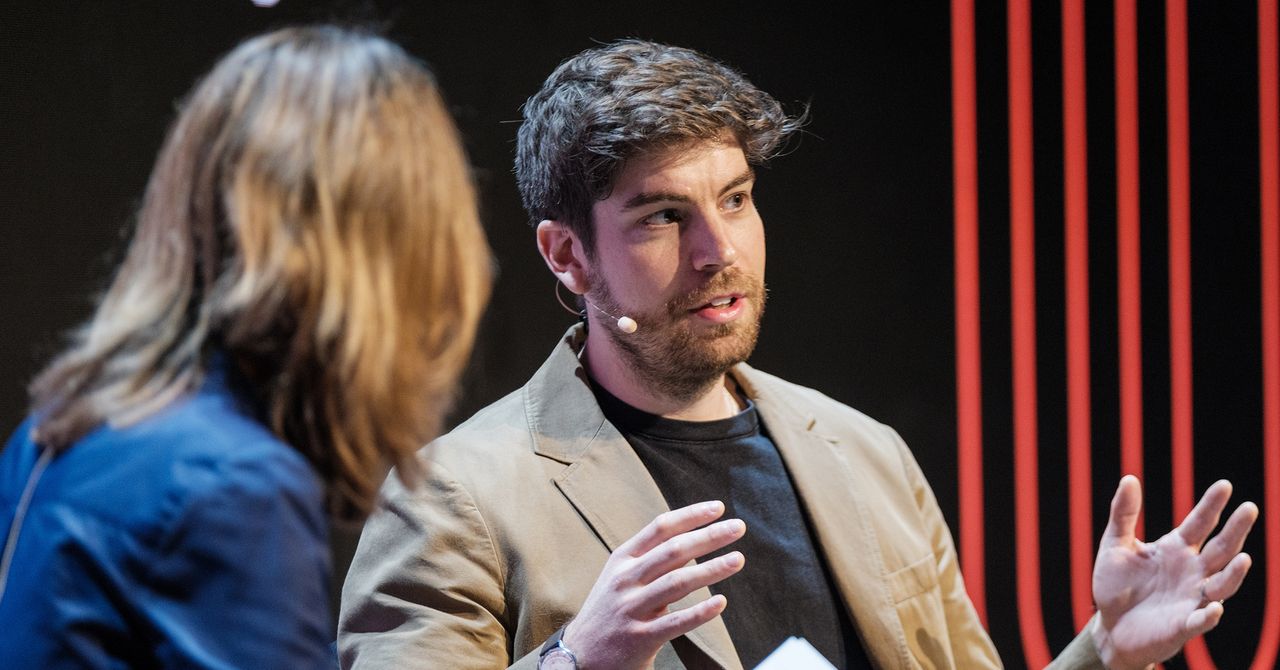
Google DeepMind’s AlphaFold has already revolutionized scientists’ understanding of proteins. Now, the ability of the platform to design safe and effective drugs is about to be put to the test.
Isomorphic Labs, the UK-based biotech spinoff of Google DeepMind, will soon begin human trials of drugs designed by its Nobel Prize–winning AI technology. “We’re gearing up to go into the clinic,” Isomorphic Labs president Max Jaderberg said on April 16 at WIRED Health in London. “It’s going to be a very exciting moment as we go into clinical trials and start seeing the efficacy of these molecules.”
Jaderberg did not elaborate on the timeline, but it’s later than the company had planned to initiate human studies. Last year, CEO Demis Hassabis said it would have AI-designed drugs in clinical trials by the end of 2025.
Isomorphic Labs was founded in 2021 as a spinoff from Alphabet’s AI research subsidiary, Google DeepMind. The company uses DeepMind’s AlphaFold, a groundbreaking AI platform that predicts protein structures, for drug discovery.
Built from 20 different amino acids, proteins are essential for all living organisms. Long strings of amino acids link together and fold up to make a protein’s three-dimensional structure, which dictates the protein’s function. Researchers had tried to predict protein structures since the 1970s, but this was a painstaking process given the astronomically high number of possible shapes a protein chain can take.
That changed in 2020, when DeepMind’s Hassabis and John Jumper presented stunning results from AlphaFold 2, which uses deep-learning techniques. A year later, the company released an open-source version of AlphaFold available to anyone.
In 2024, DeepMind and Isomorphic Labs released AlphaFold 3, which advanced scientists’ understanding of proteins even further. It moved beyond modeling proteins in isolation to predicting other important molecules, such as DNA and RNA, and their interactions with proteins.
“This is exactly what you need for drug discovery: You need to see how a small molecule is going to bind to a drug, how strongly, and also what else it might bind to,” Hassabis told WIRED at the time.
Since its release, the AlphaFold platform has been able to predict the structure of virtually all the 200 million proteins known to researchers and has been used by more than 2 million people from 190 countries. The breakthrough earned Hassabis and Jumper the Nobel Prize for chemistry in 2024, with the Nobel committee noting that AlphaFold has enabled a number of scientific applications, including a better understanding of antibiotic resistance and the creation of images of enzymes that can decompose plastic.
Earlier this year, Isomorphic Labs announced an even more powerful tool, what it calls IsoDDE, its proprietary drug-design engine. In a technical paper, the company touts that the platform more than doubles the accuracy of AlphaFold 3.
The startup has formed partnerships with Eli Lilly and Novartis to work together on AI drug discovery and is also advancing its own “broad and exciting pipeline of new medicines” in oncology and immunology, Jaderberg said.
“The exciting thing about the molecules that we’re designing is because we have so much more of an understanding about how these molecules work, we’ve engineered them to be very, very potent,” Jaderberg told the audience at WIRED Health. “You can take them at a much lower dose, and they’ll have lower side effects, off target effects.”
Last year, Isomorphic appointed a chief medical officer and announced it had raised $600 million in its first funding round to gear up for clinical trials. Meanwhile, the company has been building a clinical development team. Its mission is to “solve all disease.”
“It’s a crazy mission,” Jaderberg said. “But we really mean it. We say it with a straight face, because we believe this should be possible.”

Security leaders should be turning offensive AI cyber tools on their own systems before threat actors do, exploiting the innate defenders’ advantage to attain the high ground and increase their chances of withstanding a cyber attack.
So says Yinon Costica, co-founder of Google-owned Wiz, who, speaking at Google Cloud Next in Las Vegas, argued that defenders can win against attackers by using AI to exploit an advantage that may not appear obvious at first glance, that of context.
“The same AI model can obviously produce very different results based on the context that we feed into it,” said Costica. “Now, attackers hopefully have much less context about us while as defenders we do have a lot of context about our environments that we can share with the model.
“If, as defenders, we take the first movers’ advantage and we use the AI against ourselves, with the context we have, we actually stand a chance to win…. But we need to act fast,” he said.
“We need to start using AI against ourselves as much as possible, whether it’s to scan attack surfaces, scan code, scan anything, in order to be the first one to see the results and not to wait for the bad guys to do it before us.”
As speed becomes ever more of the essence in cyber security, Costica conceded that this would be a challenge for defenders – but noted that the tools to do this are rapidly becoming available. To try to help, Wiz unveiled three new AI agents at Google Cloud Next – red, green and blue – which are named for the human cyber teams they are designed to help.
“What agents allow us to do is really to get to the next level of acceleration [and] automation of security work,” said Costica.
The red agent is designed to assist red team penetration testing work by probing deep into its owners’ IT estate, identifying potential exposures, such as application programming interfaces (APIs), end-of-life edge networking kit or operational technology (OT) assets, and runs penetration tests on them. The green agent follows on by automating the triage process, something that can take ages for humans. Finally, the blue agent acts as a detective, doing the investigative work that can also be a lengthy process for human teams.
“These three agents together form a layer that is autonomous and automated. Its not revolutionary in that it aligns closely to how security teams have been working for many years, but now it allows each team to automate their workflows,” said Costica.
“It’s like living in the future in the eyes of security teams because it means that from the moment they find a risk, they can automate the process to find who owns it and deliver the code fix to complete and redeploy to production.”
A little over a month on from the closure of the $32bn acquisition of Wiz – Google’s largest purchase to date – the two organisations reaffirmed their commitment to providing a unified security platform, retaining Wiz’s brand, that will enhance the speed with which customers detect, prevent and respond to threats, especially emerging ones created using AI.
They duo also claim their combined capability will accelerate adoption of multicloud security and spur more confidence in innovation around cloud and AI. Wiz’s products are also to continue to be made available across other platforms, including Amazon Web Services (AWS), Microsoft Azure and Oracle Cloud. It also announced support for Databricks and agent studios like AWS Agentcore, Microsoft Azure Copilot Studio, and Salesforce Agentforce, as well as Gemini Enterprise Agent Platform of course, and continues to support security ecosystems with integrations to the outer layer of the cloud, including Google Cloud Apigee, Cloudflare AI Security for Apps, and the Vercel platform.
Behind the scenes, Wiz has also updated how it integrates security detections from Wiz Defend with Google Security Operations and Mandiant Threat Defence to make life easier for human analysts.
And it announced new capabilities to secure the AI-native deployment cycle. These include scanning vibe coded applications for issues; AI-generated code scanning and vulnerability remediation; agent-based remediation allowing teams to automate remediation workflows; and an AI bill of materials (AI-BOM) to keep on top of the use of shadow AI for coding.


NASCAR makes major change in front office, including new CEO in unprecedented move: report

Extended interview: Don Cheadle – CBS News

Charlie Sheen updates on relationship with old pal Jon Cryer

-

 Fashion1 week ago
France’s LVMH Q1 revenue falls 6%, shows resilience amid Iran war
-

 Tech1 week ago
CYBERUK ’26: UK lagging on legal protections for cyber pros | Computer Weekly
-

 Sports5 days ago
WWE WrestleMania 42 Night 2: Live match results and analysis
-

 Sports1 week ago
Faheem Ashraf backs Islamabad United’s push, calls league a ‘career-changing platform’
-

 Sports5 days ago
NCAA men’s gymnastics championship: All-time winners list
-
 Business1 week ago
PepsiCo earnings beat estimates as North American food business improves
-

 Tech1 week ago
Anthropic Plots Major London Expansion
-

 Entertainment4 days ago
Lee Anderson, Zarah Sultana kicked out of UK Parliament for calling PM ‘liar’