

Business
RSS Feed Generator, Create RSS feeds from URL


RSS Feed Integrations
Make your RSS feed work better by integrating with your favorite platforms. Save time by connecting your tools together. No coding required
Add dynamic news feeds to your website using our customizeable widgets. No coding required!
{content}
http://source_url

The Netflix logo is pictured at the company’s offices on Vine in Los Angeles, Dec. 5, 2025.
Patrick T. Fallon | AFP | Getty Images
For years, Netflix top brass would tell investors they were builders not buyers. Now, that sentiment toward growth may be changing.
On Thursday Netflix reported its quarterly earnings. Typically, Netflix’s earnings calls are focused on metrics like engagement, content spending, price hikes and membership. While those factors were still present on Thursday’s call, analysts were also questioning Netflix’s merger and acquisition aspirations following the Warner Bros. Discovery sale process.
Late last year, Netflix emerged as a bidder for WBD, surprising many in the industry and market. Even more stunning was an announcement in December that Netflix had reached a deal to acquire WBD’s film studio and streaming assets in a $72 billion deal.
While the transaction initially raised eyebrows, it’s now opened the door to questions from media onlookers and insiders about whether the company needs to pursue other deals as streaming becomes more competitive.
Netflix co-CEO Ted Sarandos said Thursday that questions also arose both internally and externally about the company’s ability to do such a megadeal.
“What we did learn, though, was that our teams were more than up to the task,” said Sarandos. “We’ve learned so much about deal execution, about early integration.”
Netflix had said its reasoning was simple for the pivot toward a big acquisition. Despite being the largest streaming service by far when it comes to subscribers — 325 million paid global members reported in January — it wanted to deepen its bench of franchises and intellectual property, and get more squarely in the movie studio business.
Paramount Skydance ultimately upended the deal in February with a superior bid, and Netflix walked away (collecting its $2.8 billion breakup fee in short order).
“But mostly, we really built our M&A muscle,” Sarandos said. “And the most important benefit of this entire exercise, though, was that we tested our investment discipline.”
‘M&A muscle’
Netflix CEO Ted Sarandos arrives at the White House in Washington, Feb. 26, 2026.
Andrew Leyden | Getty Images
Sarandos’ newfound openness to M&A has left some wondering whether the streaming giant could be on the lookout for new targets.
After all, its library of intellectual property and its relationship to the movie studio business are still right where they were before it took on the WBD deal.
Although Wall Street was clearly not a fan of Netflix’s proposed acquisition of WBD — shares fell 15% between the announcement of the deal and the day it fell apart, and have since risen about 26% — the media landscape will be undeniably different if Paramount’s takeover is approved.
Paramount is seeking to buy the entirety of WBD’s business — cable TV networks, film studio, streaming and all. That would create a behemoth of a competitor for Netflix and its media peers on various fronts.
“The way the WBD cards fell matters a lot. A probable combination of Paramount+ and HBO Max changes the streaming landscape in ways Netflix hasn’t really had to contend with before,” said Mike Proulx, vice president and research director at Forrester, prior to Netflix’s earnings release.
“I just want to remind you that we said this from the beginning that the WB deal was a nice to have, not a need to have. We are very confident in the core business,” Sarandos said Thursday. He added that Netflix viewed its biggest risk going into the deal process as losing focus on its core business.
“As you can see from our Q1 results, we did not lose focus,” he said.
Still, Netflix’s earnings report, and particularly its forward-looking guidance, seemed to disappoint investors.
The company’s stock dropped roughly 10% in extended trading after the streamer maintained full-year guidance despite a first-quarter revenue beat and the termination of the WBD deal.
Netflix stock sinks after Q1 earnings report.
“The bigger surprise this quarter was the unchanged full-year margin guidance despite walking away from the Warner Bros. deal and related M&A costs,” said analyst Robert Fishman of MoffettNathanson in a research note Friday.
Netflix, for its part, didn’t spend too much time on M&A during the earnings call, instead focusing on its more familiar talking points like user engagement, a growing advertising business, and spending on content that holds onto members (and helps justify price hikes).
The return to Netflix’s typical narrative appeared to be welcome.
“Post WBD, the company could return to its relentless focus on growing revenue and profits by leveraging its global subscriber scale,” said Fishman in Friday’s note. He added that Netflix management “emphasized the success of its recent price increases and noted that retention was strong,” as well as that it remains on track to double ad revenue this year.
Still, Proulx of Forrester said in a note after the earnings call that while Netflix was back to being “squarely focused on executing its tried‑and‑true playbook,” questions still remained.
“None of that changes the reality that the streaming market is more competitive than it was a year ago,” Proulx said. “Pricing power has to be earned quarter by quarter, and holding engagement as prices rise remains the central challenge across the streaming market. Netflix is betting that steady execution on its core business wins in a more crowded, consolidating market.”
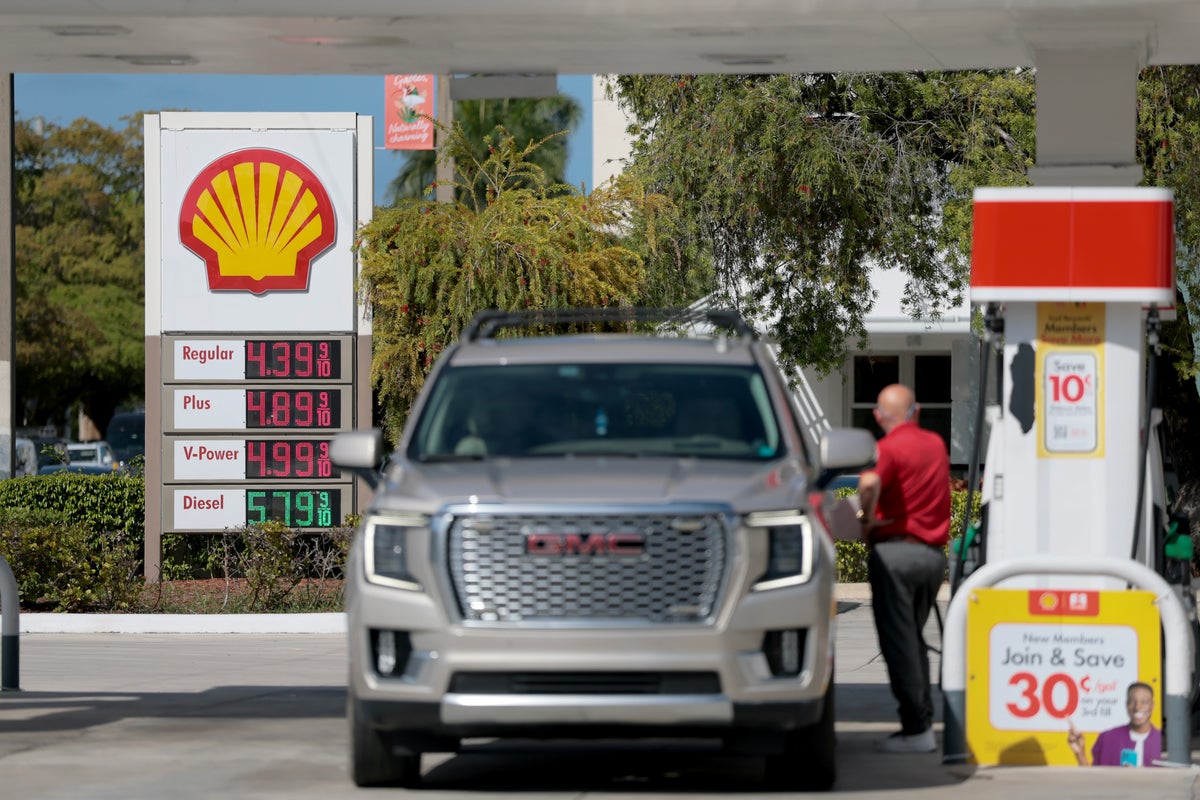
Oil prices plummeted by more than 10 per cent on Friday, extending earlier losses, following an announcement from Iran’s foreign minister that the Strait of Hormuz remains open for all commercial vessels during the current ceasefire period, mirroring the ceasefire in Lebanon.
Brent crude futures LCOc1 dropped by $11.12, or 11.2%, to $88.27 a barrel at 13:11 GMT. US West Texas Intermediate crude futures CLc1 fell $11.40, or 12%, to $83.29 a barrel.
The fall in prices came after Iranian foreign minister Abbas Araghchi wrote on X: “In line with the ceasefire in Lebanon, the passage for all commercial vessels through Strait of Hormuz is declared completely open for the remaining period of ceasefire, on the coordinated route as already announced by Ports and Maritime Organisation of the Islamic Rep. of Iran.”
US president Donald Trump confirmed the news with his own post on Truth Social, writing: “Iran has just announced that the Strait of Iran is fully open and ready for full passage! Thank you!”
UBS analyst Giovanni Staunovo stated: “Comments from Iran’s foreign minister indicate a de-escalation as long as the ceasefire is in place, now we need to see also if the number of tankers crossing the Strait increases substantially.”
The market had already seen prices decline earlier in the day amid speculation of further talks between the US and Iran over the weekend, coupled with a 10-day ceasefire between Lebanon and Israel, fueling investor optimism that the wider Middle East conflict might be drawing to a close.
Adding to the diplomatic momentum, Donald Trump stated that Tehran had offered not to possess nuclear weapons for more than 20 years, addressing a significant point in ongoing discussions.
“We’re going to see what happens. But I think we’re very close to making a deal with Iran,” Trump told reporters outside the White House on Thursday.

As grocery chains face mounting pressure from inflation-weary shoppers and growing competition, some in the industry are starting to rely on artificial intelligence to protect margins without losing customers.
Traditional levers to protect profits or drive sales, like raising prices or running blanket promotions, are becoming less effective as shoppers split trips across multiple retailers in search of value. That dynamic has helped drive market share gains for discounters like Dollar General and warehouse clubs like Costco, forcing traditional grocers to rethink how they compete.
Many are turning to more targeted, tech-enabled strategies to balance affordability with profitability. One emerging approach is using data and AI to adjust pricing on perishable inventory, especially items nearing their “best-by” dates. Historically, about 30% of food in American grocery stores is thrown away each year, and some experts estimate that translates to nearly $18.2 billion in lost value.
Now with years of high inflation and a recent spike in gas prices making it harder for households to afford food, companies are trying to assume less of that loss, otherwise referred to as “shrink.”
“We see AI as a meaningful opportunity to both improve the customer experience and drive productivity across our business,” said Kroger Chairman Ronald Sargent on the company’s most recent quarterly earnings call. “We’re already seeing results from more competitive pricing.”
According to a Deloitte study, 89% of people are shopping for discounts and deals. Numerator data shows that shoppers are visiting 23% more retailers to purchase their groceries.
That makes setting the right prices at the right time more crucial than ever.
Still, making the right real-time pricing decision requires a break from traditional playbooks. Platforms like Flashfood are helping grocers dynamically price those items, which could aid them in limiting losses from food waste.
“Not only is everyone now a value shopper, but shoppers have the information and resources available to find the best deal,” said Flashfood CEO Jordan Schenck. “This raises the stakes in terms of competition between grocers, because they’re now competing with value-specific retailers.”
This has created a unique paradigm shift for grocers who have seen increased competition from other retailers, Schenck said, and pressure to figure out how to create value without eroding their brands through yellow sticker markdowns and discounting.
Flashfood connects shoppers with local grocery stores to purchase food nearing its best-by date at a discount. Users browse, purchase and pay for items directly through the app, then pick up orders from a designated “Flashfood zone” fridge in store.
Kroger’s Flashfood app.
Courtesy: Kroger
Flashfood says it helps grocers to sell fresh food by converting what would have been shrink into incremental revenue. The company is expanding to more than 100 additional Kroger stores this month, building on a footprint that already spans over 2,000 locations across North America.
The pitch is that retailers don’t have to choose between offering affordability to shoppers and boosting their margins. By using AI to target discounts precisely, rather than marking down an entire category, Flashfood says stores can improve sell-through while reducing waste. The end goal is more sales of perishable food and less product ending up in landfills.
Flashfood says its partners, which include Kroger but also regional chains like Piggly Wiggly, Loblaws and Gelson’s, and have reduced shrink by an average of 27% while also driving incremental traffic. Shoppers using the app make nearly four additional trips per month on average and spend about $28 more per visit on full-priced items beyond their discounted purchases, according to the company.
Advertisement for Kroger’s Flashfood app.
Courtesy: Kroger
At the same time, the data generated from these systems is giving retailers deeper insight into consumer behavior by identifying what products will sell, at what price and at what point in their shelf lives. That’s especially important in categories like fresh foods and bakery, where margins are tighter and spoilage risk is higher.
“Grocery stores have some of the best personalized data, but not all grocery stores know what to do with the data,” said Roth Capital Partners analyst Bill Kirk. “Kroger has been at the forefront of recognizing the importance of their data and the insights that can be derived.”
Kirk has a buy rating on the stock and $78 price target, higher than its Thursday closing price of $67.77.
Bridging that gap between surplus inventory and value-seeking shoppers is emerging as one of the clearest opportunities grocers are trying to cash in on to improve profitability.


NBA star hits back at NYC Mayor Zohran Mamdani for blaming him over expensive playoff tickets

Premier League Top 50: Ranking the best players of the season with a month to go

Gazing Into Sam Altman’s Orb Now Proves You’re Human on Tinder

-

 Tech1 week ago
As the Strait of Hormuz Reopens, Global Shipping Will Take Months to Recover
-

 Tech1 week ago
This AI Button Wearable From Ex-Apple Engineers Looks Like an iPod Shuffle
-

 Politics1 week ago
Indian airlines hit hardest after Dubai limits foreign flights until May 31
-

 Entertainment5 days ago
Palace left in shock as Prince William cancels grand ceremony
-

 Sports4 days ago
The case for Man United’s Fernandes as Premier League’s best
-

 Politics1 week ago
Chinese, Taiwanese will unite, Xi tells Taiwan opposition leader
-

 Entertainment6 days ago
Dua Lipa hits major career high ahead of wedding with Callum Turner
-
 Business4 days ago
UK could adopt EU single market rules under new legislation