Connect with us

Entertainment

Sam Asghari still ‘respects’ ex Britney Spears

Published

on

Sam Asghari still ‘respects’ ex Britney Spears
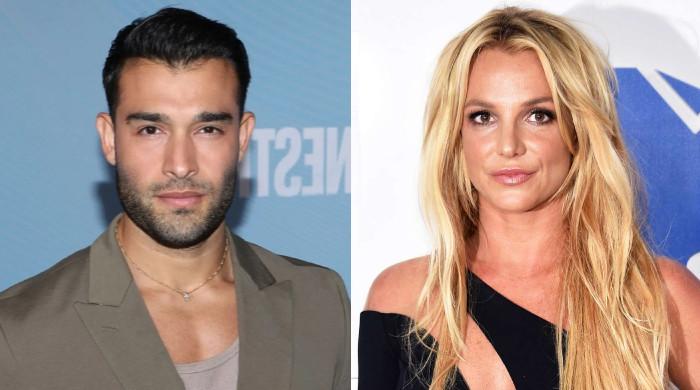

Sam Asghari talks about marriage to ex-wife Britney Spears

Sam Asghari is keeping things respectful when it comes to his ex-wife, Britney Spears. 

The actor, 31, opened up about their past relationship in a new interview with Playgirl, sharing that he holds nothing but admiration for the pop star, 44, despite their marriage ending in 2024.

Asghari referenced an Iranian proverb that advises never speaking ill of someone with whom you’ve shared a bond. 

“And whatever follows is irrelevant,” he told the magazine. 

“So, I always want to respect that. I’m always going to stick to that, and that’s the number one thing for me.”

The couple first met on the set of Spears’ Slumber Party music video in 2016, got engaged in September 2021, and married the following June.

They separated in August 2023, and their divorce was finalized in May 2024. 

Asghari spoke warmly of Spears in the interview, emphasizing that what matters is the bond they shared behind closed doors. 

“The best thing you can do is celebrate the past, appreciate the past, and not dwell on the fact that it’s over,” he said. “Be happy it ever even happened.”

Though he is currently dating Brooke Irvine, Asghari continues to support Spears from afar. 

After Spears called their marriage “a fake distraction” in an August 2025 Instagram post, Asghari issued a statement through his rep, “Our marriage was very real to me. It may have been short, but we were together for seven years. I was in love with her, will always have love for her, and wish her the best always.”

He also reflected on the impact of their high-profile relationship on his career. 

“When you’re in such a public relationship … it sort of gave me that platform for who I am,” Asghari explained, while noting it also meant he had to “work harder to prove myself.”

Even after their split, Asghari’s words show he values the connection he shared with Spears and remains grateful for their time together.



Source link

Continue Reading
Click to comment

Leave a Reply

Your email address will not be published. Required fields are marked *

Entertainment

Pakistan hosts quadrilateral meeting to discuss Middle East tensions

Published

on

Pakistan hosts quadrilateral meeting to discuss Middle East tensions


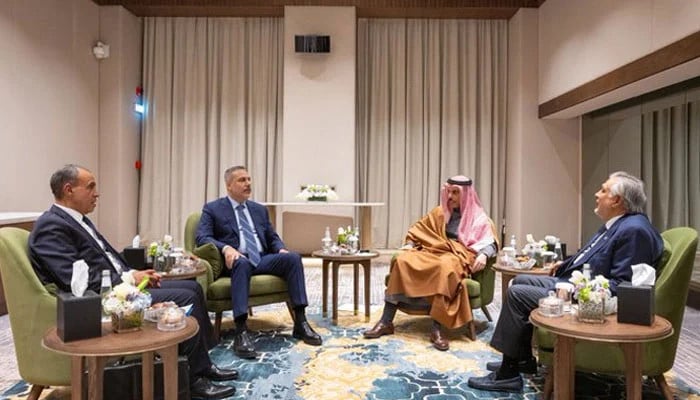
Saudi FM holds a coordination meeting with foreign ministers of Pakistan, Turkey, and Egypt on March 19. — X/@KSAMOFA
  • Meeting to focus on easing tensions amid Middle East war.
  • Pakistan emerges as mediator between Iran, US.
  • FMs of Turkiye, Egypt arrive, Saudi FM due in Islamabad.

Pakistan is all set to host a quadrilateral meeting of foreign ministers from Saudi Arabia, Turkiye, and Egypt from March 29-30 in Islamabad to deliberate upon a variety of issues, including efforts to reduce the ongoing tensions in the region amid the US-Israeli war on Iran.

Islamabad has emerged as a key facilitator between Iran and the United States as their war drags on, serving as an intermediary for messages between the two sides.

The meeting comes amid efforts to open a window for diplomacy to end the nearly month-long war between the US, Israel, and Iran, which began on February 28 and has affected the broader Middle East.

In this regard, Turkish Foreign Minister Hakan Fidan and Egyptian Foreign Minister Badr Abdelatty arrived in Islamabad a day earlier on an official visit.

Meanwhile, Saudi Foreign Minister Prince Faisal bin Farhan Al Saud is scheduled to arrive today.

The Egyptian foreign minister arrived at the Ministry of Foreign Affairs, where he was warmly received by Deputy Prime Minister and Foreign Minister Ishaq Ishaq Dar.

During the meeting, both sides held discussions on the Middle East tension as well as strengthening bilateral relations between Pakistan and Egypt.

Two days earlier, DPM Dar confirmed that indirect talks between the United States and Iran were underway through messages being relayed by Pakistan, with Turkiye and Egypt also helping in the effort.

These efforts included direct contact between Chief of Defence Forces (CDF) and Chief of Army Staff (COAS) Field Marshal Asim Munir and US President Donald Trump on Sunday, confirmed by the White House.

Subsequently, Pakistan delivered a US proposal to Iran, a senior Iranian source told Reuters on Wednesday. The source did not reveal details of the proposal or confirm if it was the 15-point US framework reported by media outlets.

However, Iran rejected the US proposal, insisting it will end the ongoing “imposed war” on its own terms and timeline, a senior political-security official told Press TV.

Iran outlined five conditions for ending the war: a complete halt to “aggression and assassinations”; mechanisms to prevent the war from being reimposed; guaranteed payment of reparations; resolution across all fronts and resistance groups; and international recognition of Iran’s control over the Strait of Hormuz.

As part of preparations, Prime Minister Shehbaz Sharif said he had a detailed telephone conversation with Iranian President Masoud Pezeshkian earlier today (Saturday), lasting over one hour.

The call was the PM’s second conversation with Pezeshkian in five days, both of which focused on de-escalation and dialogue.

“I reiterated Pakistan´s strong condemnation of the continued Israeli attacks on Iran, including recent strikes on civilian infrastructure, and conveyed Pakistan´s solidarity with the brave people of Iran,” he wrote on X.

PM said he also expressed his condolences on the tragic loss of precious lives and prayed for the swift recovery of the injured and displaced.

“I apprised him of Pakistan’s ongoing diplomatic outreach — engaging the United States and brotherly Gulf and Islamic countries — to facilitate dialogue and de-escalation.”

The PM Office said separately that Pezeshkian “stressed the need to build trust in order to facilitate talks and mediation”.

‘Dialogue and diplomacy’

Separately, DPM Dar held a telephonic conversation with Iranian Foreign Minister Abbas Araghchi, according to a statement issued by the Foreign Office. 

The two leaders discussed the evolving regional situation and ongoing developments.

The deputy premier emphasised the need for de-escalation, stressing that dialogue and diplomacy remain the only viable path for lasting peace.

He also underscored the importance of an end to all attacks and hostilities.

Dar said that Pakistan remains committed to supporting all efforts aimed at restoring regional peace and stability.



Source link

Continue Reading

Entertainment

Demystifying the PTI

Published

on

Demystifying the PTI


Supporters and activists of the Pakistan Tehreek-e-Insaf (PTI) hold flags at a rally in Peshawar. — AFP/File

To understand the PTI as merely another political party is to miss the phenomenon altogether. The PTI is not simply the story of one leader, one election cycle, or one episode of political engineering. It is the outcome of deeper structural shifts in Pakistani society over the last two decades – demographic transformation, the communications revolution, the rise of digital politics, the emergence of a restless middle class and the inability of traditional parties to adapt to a rapidly changing political landscape.

That is why the PTI should neither be treated as a mystery nor dismissed as a passing wave. It is a symptom of a changing society – and of politics that has been fundamentally reshaped by demographics, technology and narrative. To demystify the PTI, we must go back to the early 2000s. Between 2000 and 2009, during the Musharraf era, when the leadership of the two major political parties was in exile, Pakistan and the wider region went through three overlapping revolutions that quietly redrew the political map.

The first was demographic. Pakistan became an overwhelmingly young country. A large majority of our citizens fell below 30, and an even larger share below 40. The lowering of the voting age to 18 further widened the political space for first-time voters. This generation was fundamentally different. It was less tied to biradari loyalties, less deferential to inherited political arrangements, and more receptive to messages of disruption, authenticity and change. The second was the information revolution. The spread of private television channels broke the state’s ‘9pm Khabarnama’ monopoly over political narrative. Politics moved from controlled broadcasts into homes and drawing rooms. Debate became sharper, faster and more emotionally charged, and citizens were exposed to competing narratives.

The third and most transformative was the mobile and digital revolution. Television opened up politics, but mobile phones and social media transformed it. Cheap connectivity altered how people interacted, organised and formed opinions. Politics was no longer fought only through rallies, newspapers and local electables. It moved into timelines, clips, memes and WhatsApp groups. Narrative began to travel faster than organisation and emotion faster than fact.

These three shifts fundamentally changed the social foundations of politics, which brought forward a new middle-class urban and semi-urban youth, students, professionals, salaried households, overseas-linked families and first-generation graduates. Historically, these groups had remained bystanders in politics. Pakistan’s traditional political order was dominated by patronage, biradari networks and entrenched local hierarchies. But this new class was more educated, more connected,and more self-aware. Its expectations rose sharply. So did its frustration with a political system that did not speak its language.

This phenomenon was not unique to Pakistan. Across the world, traditional parties have come under pressure from insurgent movements that thrive on anger, anti-elite sentiment, moral absolutism and disruption. In India, the Anna Hazare movement of 2011 captured public frustration with corruption and governance failures. It created space for the Aam Aadmi Party, while Narendra Modi and the BJP recognised the shift and successfully weaponised anti-corruption and anti-dynasty politics against Congress to win the 2014 election.

The lesson was clear: when established parties fail to read structural change, new actors step in and convert social discontent into political capital. In Pakistan, however, this churn took a more distorted form. Here, the anti-political mood was not only spontaneous but also cultivated. During the Musharraf era, mainstream political parties were systematically delegitimised in the name of accountability. A sustained campaign portrayed traditional political leadership as corrupt, dynastic, incompetent and morally bankrupt to provide legitimacy to the martial law regime. An entire generation grew up absorbing this narrative. This messaging was relentless. It seeped into classrooms, television debates, and everyday conversations. Over time, it shaped perceptions so deeply that distrust of traditional politics became almost instinctive among large sections of the middle class.

This prepared the ground for a political force that could present itself as morally superior to the entire system. Imran Khan entered politics not as a conventional politician but as a celebrity outsider with enormous symbolic advantages. He brought with him fame, charisma and the image of personal integrity. More importantly, he connected with the emotional vocabulary of the emerging middle class. To many young Pakistanis, especially in urban and educated circles, he symbolised rebellion against a stagnant status quo.

By 2011, some elements within the establishment were projecting the PTI as an alternative national force. Its slogans were powerful and familiar: anti-corruption, anti-dynasty, anti-status quo, moral cleansing. But unlike genuine reform movements that build institutions, the PTI reduced politics to a morality play: one pure leader versus a corrupt political class. This framing was designed to fit the psychology of a media-driven society. In today’s political environment, outrage travels faster than policy. A slogan is easier to sell than a governance framework. A viral accusation spreads farther than a serious discussion. Despite this, PML-N won the 2013 election largely because performance still mattered. Governance in Punjab under CM Shehbaz Sharif had established the PMLN’s credibility on delivery. But what followed showed how difficult it had become for performance alone to survive in a toxic information ecosystem.

The 2014 Islamabad sit-in, engineered by a cobbled-together opposition alliance, was not another attempt to install Imran Khan in power after his 2013 election defeat by destabilising an elected government through agitation, spectacle and narrative warfare. When that effort failed, the campaign intensified through other means. The PTI and its sponsors invested early and aggressively in social media. They understood the grammar of the new battlefield long before anyone else, building digital networks, mobilising overseas supporters, penetrating campuses and mastering emotional messaging, hashtags and sustained vilification. This was narrative domination. Traditional parties were slow and complacent, being well entrenched in traditional power bases. They continued to rely on conventional modes of communication, while the PTI occupied digital space with relentless consistency. It did not just build support, it built belief.

This mattered because Pakistan’s institutions are not insulated from society. Judges, bureaucrats, military officers, media professionals and urban families all have roots in the middle classes and inhabit the same information ecosystem. Their perceptions were shaped by the same talk shows, social media trends and digital narratives. Over time, repetition creates acceptance. The irony is that this was happening precisely when the PML-N’s 2013–18 government was successfully delivering on major national challenges. The acute energy crisis was solved, terrorism was defeated, Infrastructure development was accelerated and CPEC emerged as a major transformative national initiative. By the logic of democratic politics, such performance should have ensured a smooth electoral victory. But in hyper-mediated politics, perception often overshadows performance.

The PTI’s rise to power in 2018 must be seen in this broader context. It was not the result of its popularity. It reflected a convergence of political engineering, judicial intervention and narrative warfare. The disqualification of prime minister Nawaz Sharif, the construction of a moral narrative around ‘Sadiq and Ameen’ by the Saqib Nisar-led judiciary and the controversial RTS collapse on election night all contributed to shaping the outcome for which a narrative had been built. Once in power, the PTI’s central weakness became evident. It was far better at mobilising anger than managing a state. Five finance ministers in a short span reflected economic incompetence. Political victimisation deepened with all senior PMLN leaders jailed on bogus charges. Media restrictions increased. Pakistan’s diplomatic standing weakened. The party that promised a ‘new Pakistan’ ended up reproducing and deepening many of the same patterns it had condemned.

Its removal through a vote of no-confidence in the constitution was, therefore, not a conspiracy but a democratic correction. However, the PTI’s most consequential turn came after its ouster. Instead of remaining in parliament and engaging politically, it pivoted towards grievance, victimhood and rage. The ‘foreign conspiracy’ narrative was layered onto its earlier themes. This gave supporters a powerful emotional framework: that their leader had been wronged by a grand betrayal. This is where the PTI evolved into a movement with cult-like characteristics. In such politics, devotion becomes identity and supporters are no longer just voters; they become believers. It is also at this stage that the party adopted one of the most dangerous traits of cult politics: attacking state institutions when they no longer aligned with its objectives.

For years, the PTI benefited from proximity to centres of power. But when that alignment fractured, its rhetoric turned sharply against the same institutions. Public anger was redirected away from democratic processes toward the state itself. Sadly, the PTI’s approach to politics reversed the progress in Pakistan for greater democratisation and took the country back to the politics of the 1990s. Yet, here lies the PTI’s deepest contradiction. While attacking state institutions publicly, it simultaneously seeks engagement with the very establishment it criticises. It bypasses parliament and elected governments, and instead calls for dialogue with unelected centres of power. It condemns the system, yet seeks accommodation within it. It attacks institutions, yet appeals to them for rescue. This is not principled democratic politics. It is expedient politics.

However, the party’s rise also reflects failures of traditional parties. Large segments of society – youth, professionals, women and first-generation educated citizens – felt excluded. They wanted participation, recognition and mobility. Instead, they encountered closed political structures. This alienation has not expressed itself only through the PTI. It is visible in other emerging patterns as well. The rise of Joint Action Committees in AJK and Gilgit-Baltistan, and the worrying ingress of some extremist groups among educated youth, are not isolated phenomena. They are symptoms of a deeper revolt by the middle classes against traditional politics, which they see as disconnected from their aspirations.

This problem is compounded by structural constraints. In a country of over 240 million people, democracy offers limited opportunity through a total of 1,085 national and provincial assembly seats. Democracy becomes a narrow gate, controlled by a small club. The failure to establish empowered local governments has worsened this exclusion. Despite the 18th Amendment, real grassroots devolution has not occurred. This creates a vacuum – and vacuums are filled by movements that thrive on grievance, identity and emotional mobilisation. That is why effective local government reform is essential. It can create thousands of leadership opportunities, channel youth energy constructively and reconnect democracy with everyday governance.

Demystifying the PTI, therefore, is not about denying its support but about understanding its roots. The PTI is not invincible. It is not inexplicable. It is the political expression of ignored social change, misused technology and unaddressed frustration. The answer is not simply to oppose the PTI but to outgrow the conditions that made it possible.

Traditional parties must open their doors to new voices. They must democratise internally, embrace digital engagement seriously and create space for youth, middle classes and professionals. They must strengthen local governments and make democracy inclusive. Above all, they must recognise a simple truth: the new middle class does not respond to patronage. It responds to ideas, dignity, participation, purpose, and seeks representation.

The PTI grew in the gap between a changing society and stagnant political structures. If that gap remains, the PTI or something very much like it will continue to thrive. If that gap is closed, the phenomenon will fade. That is how the PTI should be understood. And that is how it should be defeated.


The writer is the federal minister for planning, development, and special initiatives. He tweets/posts @betterpakistan and can be reached at: [email protected]


Disclaimer: The viewpoints expressed in this piece are the writer’s own and don’t necessarily reflect Geo.tv’s editorial policy.


Originally published in The News


Source link

Continue Reading

Entertainment

Pakistan rejects India’s remarks on Shia community, calls them ‘cynical, diversionary’

Published

on

Pakistan rejects India’s remarks on Shia community, calls them ‘cynical, diversionary’


Foreign Office spokesperson Tahir Hussain Andrabi speaks during a weekly press briefing on October 31, 2025 in Islamabad. — Screengrab X@ForeignOfficePk
  • India had alleged ‘systemic victimisation of minorities’ in Pakistan.
  • FO says India’s comments cannot “mask its own record” of discrimination.
  • Andrabi cites mob lynchings, attacks on mosques, violence against minorities.

The Foreign Office (FO) on Saturday dismissed the Indian Ministry of External Affairs’ (MEA) so-called “concerns” about Pakistan’s Shia community, calling the remarks “cynical and diversionary” and an “exercise in deflection masquerading as concern.”

This response follows comments by India’s MEA, which cited statements it attributed to Chief of Army Staff and Chief of Defence Forces Syed Asim Munir. 

CDF Munir had met with Shia clerics in Rawalpindi earlier this month, and according to a statement issued by the Inter-Services Public Relations (ISPR), the meeting focused on national security and the role of ulema in maintaining societal harmony. 

The ISPR statement added that CDF Munir emphasised that religious sentiments must not be exploited to incite violence in the country.

The Indian MEA spokesperson Randhir Jaiswal, as quoted by Indian news agency ANI on Friday, said that the remarks reflected Pakistan’s “systemic victimisation of minorities”.

Responding a day later, FO spokesperson Tahir Andrabi said, “Pakistan rejects India’s remarks as cynical and diversionary — an exercise in deflection masquerading as concern.”

The foreign ministry official said that India’s comments could not “mask its own record of the steady normalisation of discrimination and violence against Muslims, Christians, and other marginalised communities — from curbs on worship to mob vigilantism and the targeting of homes and livelihoods”.

“These patterns are well-documented,” MoFA’s Andrabi said, adding, “The escalating wave of mob lynchings targeting Muslims is deeply abhorrent and underscores a climate of unchecked brutality.” 

In the year 2025, more than 55 Muslims were reportedly lynched in India, and since January 2026, over 19 Muslims have been killed by violent mobs, according to the spokesperson.

“Extremist groups have unlawfully sought the destruction of 11 mosques. Perpetrators of crimes against Muslims often act with impunity, enabled by state patronage, and are seldom held to account,” he said.

“Pakistan urges India to address these serious and well-documented concerns within its own borders, ensure the protection of Muslim, Christians and other communities in accordance with its constitutional and international obligations, and refrain from making unfounded and politically motivated statements about others,” the statement concluded.


Source link

Continue Reading

Trending