

Tech
Solar energy is now the world’s cheapest source of power, study finds


Solar energy is now so cost-effective that, in the sunniest countries, it costs as little as £0.02 to produce one unit of power, making it cheaper than electricity generated from coal, gas or wind, according to a new study from the University of Surrey.
In a study accepted for publication in Energy and Environment Materials, researchers from Surrey’s Advanced Technology Institute (ATI) argue that solar photovoltaic (PV) technology is now the key driver of the world’s transition to clean, renewable power.
Professor Ravi Silva, co-author of the study and Director of the ATI at the University of Surrey, said, “Even here in the U.K., a country that sits 50 degrees north of the equator, solar is the cheapest option for large-scale energy generation.
“Globally, the total amount of solar power installed passed 1.5 terawatts in 2024—twice as much as in 2020 and enough to power hundreds of millions of homes. Simply put, this technology is no longer a moonshot prospect but a foundational part of the resilient, low-carbon energy future that we all want to bring to reality.”
The research team also found that the price of lithium-ion batteries has fallen by 89% since 2010, making solar-plus-storage systems as cost-effective as gas power plants. These hybrid setups, which combine solar panels with batteries, are now standard in many regions and allow solar energy to be stored and released when needed, turning it into a more reliable, dispatchable source of power that helps balance grid demand.
Despite many reasons to be optimistic, the ATI research team points to several challenges—particularly connecting large amounts of solar power to existing electricity networks. In some regions, such as California and China, high solar generation has led to grid congestion and wasted energy when supply exceeds demand.
Dr. Ehsan Rezaee, co-author of the study from the University of Surrey, commented, “Connecting growing levels of solar power to electricity networks is now one of the biggest challenges. Smart grids, artificial intelligence forecasting and stronger links between regions will be vital to keep power systems stable as renewable energy use rises.”
Professor Silva added, “With the integration of energy storage and smart grid technologies, solar is now capable of delivering reliable, affordable and clean power at scale. Innovations in materials such as perovskite solar cells could boost energy output by up to 50% without increasing land use.
“However, progress will depend on consistent, long-term policy support. Initiatives such as the Inflation Reduction Act in the US, the EU’s REPowerEU plan and India’s Production Linked Incentive scheme show how clear direction can drive investment and innovation. Sustained commitment and international collaboration will be essential if we are to accelerate the world’s transition to a clean and reliable energy system.”
More information:
Ehsan Rezaee et al, Solar Energy in 2025: Global Deployment, Cost Trends, and the Role of Energy Storage in Enabling a Resilient Smart Energy Infrastructure (2025). DOI: 10.22541/au.175647950.09188768/v1
Citation:
Solar energy is now the world’s cheapest source of power, study finds (2025, October 6)
retrieved 6 October 2025
from https://techxplore.com/news/2025-10-solar-energy-world-cheapest-source.html
This document is subject to copyright. Apart from any fair dealing for the purpose of private study or research, no
part may be reproduced without the written permission. The content is provided for information purposes only.











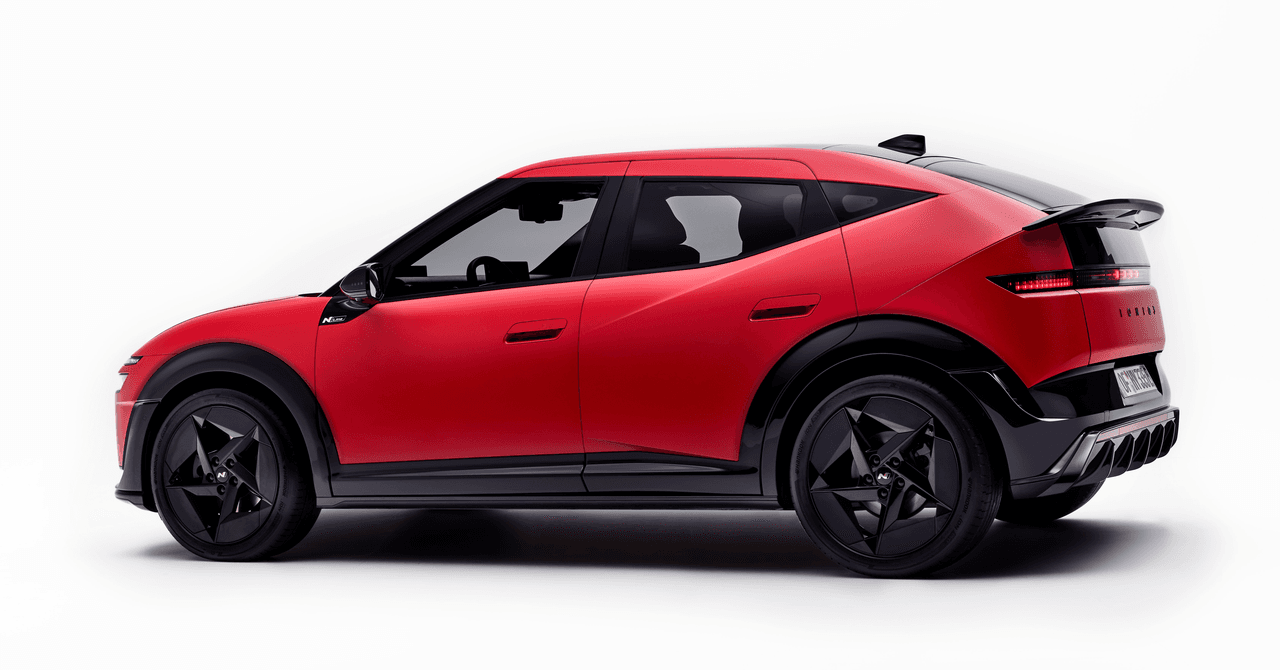
Hyundai has unveiled its Ioniq 3, a fully electric compact hatchback for urban driving designed to be as aerodynamically efficient as possible yet still offer up a surprisingly spacious interior—a trick the carmaker is loftily calling Aero Hatch. The 3 is intended to fill the gap between Hyundai’s Inster supermini and Ioniq 5 crossover.
In profile, the Ioniq 3 has a sleek front end that transitions into a roofline that stays straight over both front and rear occupants before dropping to merge with the rear spoiler. It’s this roofline that maximizes interior headroom for the rear passengers, but it also offers a supposed class-leading drag coefficient of 0.263.
The car has the same underpinnings as its sibling brand, Kia’s EV2. Two battery options will deliver a projected WLTP distance of 344 km (around 214 miles) for the Standard Range Ioniq 3; the Long Range version is supposedly good for a competitive 308-mile range. Built on the group’s Electric-Global Modular Platform (E-GMP), the car has a 400-volt architecture to lower costs rather than the 800-volt system of the Ioniq 5 N, 6, or 9 SUV. Still, this means that if you can find sufficiently fast DC charging, you can, in theory, top up from 10 to 80 percent in approximately 29 minutes (AC charging capability is up to 22 kW).
This is fine, but it is not a match for BYD’s new Blade 2.0 battery tech that WIRED tried, astonishingly allowing the Denza Z9 GT to charge its battery in just over nine minutes from 10 percent. True, that battery tech was in a $100,000 “premium” EV, but it’s coming to BYD’s wider models. And if BYD makes good on its plans to deliver a charging network to rival Tesla’s Supercharger, then very soon buyers will be expecting comparable charge times, and 30 minutes will quickly feel awfully long.
I asked José Muñoz, Hyundai Motor Company president and CEO, whether this new battery technology from BYD concerns him, whether Hyundai—leading the EV pack with 800-volt architectures for so long—needs to match the Blade 2.0’s performance. “We welcome the challenge,” Muñoz tells me. “Every challenge is an opportunity to do better. And I can tell you that, lately, we have a lot of opportunities to do better.”
“We are also working on fast charging,” Muñoz says, adding that Hyundai’s success will be built on not merely one leading technology but many. “There are not more elements that may be offered by the Chinese that we can offer. It’s only a matter of how you mix them. A lot of times, you get stuck into one indicator. I’m an engineer. And we always have the example of the airplanes: What is more important in an airplane, altitude or speed? There is only one answer. You need to achieve both.”

Prego, the pasta sauce company, is getting into hardware with a device that sits on your table and records dinner conversations. No, this isn’t April Fools’.
The Connection Keeper is a round puck that houses two microphones for recording around the table. The recorder was developed in partnership with StoryCorps, the 20-year-old nonprofit that has recorded conversations with more than 720,000 people about their lives.
The Connection Keeper is more of a publicity stunt than a readily available product. Fewer than 100 will be made. The pucks look more like a tuna can than what you’d associate with the pasta sauce brand—small and meant to be tucked aside so as not to attract attention. The whole goal here, Prego and StoryCorps say, is to advocate for keeping people off their phones during dinner.
“Everything now is AI, and everyone has their phones on the table,” says Elyce Henkin, a managing director of StoryCorps studios and brand partnerships. “It interrupts the conversation and the flow. We wanted to get rid of that and go back to the basics and have everyone talking to each other.”
The pucks come packaged with cards inspired by StoryCorps, designed to prompt conversations between family members. Some are aimed at kids; some are aimed at parents or other family members.
The device doesn’t record automatically. Press a button, and the device begins recording CD-quality audio. Push the button again to stop. It records all the audio on a 16-GB microSD card that can hold up to eight hours of audio at a time. Those recordings can then be saved on a StoryCorps microsite or the family’s own storage. There is no cloud connection, no Wi-Fi, and no artificial intelligence features whatsoever.
The more communal element of the project is that StoryCorps will allow users to share their recordings on its website (or keep them private). Anything that has been voluntarily shared will also be physically preserved as a recording along with the larger StoryCorps collection within the US Library of Congress.
Prego is a US company, named after the Italian word for “you’re welcome.” I’ll tell you this from experience growing up in an Italian-American extended family: The Connection Keeper is going to have a hell of a time keeping track of a conversation at a table full of loud uncles and your wine-drunk grandma, who all talk at the same time.
“I think it’s how a lot of families are,” Henkin says. “What StoryCorps does is that it reminds us of our similarities and the humanity that’s in us all, even though we are all different. I imagine that if someone were to go through and listen to the collection, there would be rowdy moments, and there would be kids laughing and moms saying, ‘Don’t eat with your mouth full.’ That’s all part of the truth of it.”

Bose’s QuietComfort Ultra 2 earbuds are the best noise-canceling earbuds you can buy. Right now, they’re $50 off, which matches the best price we tend to see outside of special events like Black Friday and Cyber Monday. If you want to wait until November, they might hit $200 again, but otherwise $250 is a very fair deal—especially since they pop back up to $300 regularly. The discounted price applies to all five color options, including Black, Deep Plum, Desert Gold, Midnight Violet, and White Smoke (another rarity, as usually only the vivid colors go on sale).
Sometimes you just need to quiet the world. Whether it’s to play 10 hours of Coconut Mall on a loop to help you lock in and meet your Friday deadlines (thanks to my colleague Julia Forbes for that suggestion); muffle the crying babies, sniffling neighbors, and mysterious, potentially concerning clunking noises on an airplane; or to help you better appreciate the mix on Space Laces’ Vaultage 004 EP, active noise cancellation makes a huge difference to your listening experience.
The Bose QuietComfort Ultra 2 earbuds also have some of the best active noise cancellation you can find. They sound great out of the box, thanks to a custom sound profile based on the shape of your ears, but you can customize the EQ by using the app. The app also allows you to tweak touch controls and spatial audio.
The battery life lasts for about six hours, or 24 with the charging case. And while the noise cancellation can’t be beaten, these also have a pass-through feature called Aware mode, which filters in outside noise but smooths the loudest bits. That means you’ll be able to hear what’s going on, but you won’t be startled. True-crime podcast listeners, this one’s for you.
In fact, just about the only drawback we can find is that these might not be ideal for folks with super-small ears. Otherwise, they’re great all around, with solid call quality, excellent sound overall, and a sleek aesthetic. We think they offer good value at full price, so an extra $50 off is especially nice.
If you’re in the market for new headphones, but these don’t exactly fit what you’re looking for, we have plenty of other recommendations. Check out our guides to the Best Wireless Earbuds, Best Headphones for Working Out, Best Noise-Canceling Headphones, and Best Open Earbuds for additional hand-tested picks.


Ryanair flight from Milan to Manchester leaves passengers behind due to border delays

Harry Kane vows Bayern Munich have ‘a lot to play for’ after Bundesliga title

Hyundai’s New Ioniq 3 Has Hot-Hatch Looks, but Can It Beat BYD?

-

 Fashion4 days ago
France’s LVMH Q1 revenue falls 6%, shows resilience amid Iran war
-

 Sports1 week ago
The case for Man United’s Fernandes as Premier League’s best
-

 Entertainment1 week ago
Palace left in shock as Prince William cancels grand ceremony
-
 Business1 week ago
UK could adopt EU single market rules under new legislation
-

 Entertainment5 days ago
Is Claude down? Here’s why users are seeing errors
-

 Fashion1 week ago
Energy emerges as biggest cost driver in textile margins
-
 Business1 week ago
Delta Air Lines unveils first new Delta One suite in premium cabin arms race
-

 Tech1 week ago
A Lot of Shops Won’t Fix Electric Bikes. Here’s Why