

Business
Sold 30 items on Vinted? Don’t panic if you get a message about tax


Jennifer MeierhansBusiness reporter
 Getty Images
Jazz singer Billie van der Westhuizen started using Vinted about six months ago to sell clothes and shoes she hadn’t worn for ages.
“I got really into it and was selling loads of stuff,” she says. “Then I got a message saying I needed to enter my National Insurance number. It wasn’t clear at all why it was asking.”
Vinted users who have sold 30 items or made £1,700 in a year are being asked for their NI number, leaving many like Billie confused and some panicking that they will have to pay tax.
But this is not about any tax changes – it’s due to reporting rules for websites and apps that allow users to sell goods or services, including eBay, Etsy, Depop and AirBnb.
Billie, 30, from London, says she entered her NI number as prompted but in hindsight was not sure what it was about.

 Billie van der Westhuizen
“I just sent it but I thought there’s no way they could tax the amount of money I’ve made off this,” she says.
“If I was making thousands maybe, but I reckon I’ve made maybe £500 and I’m selling things for less than I paid for them.”
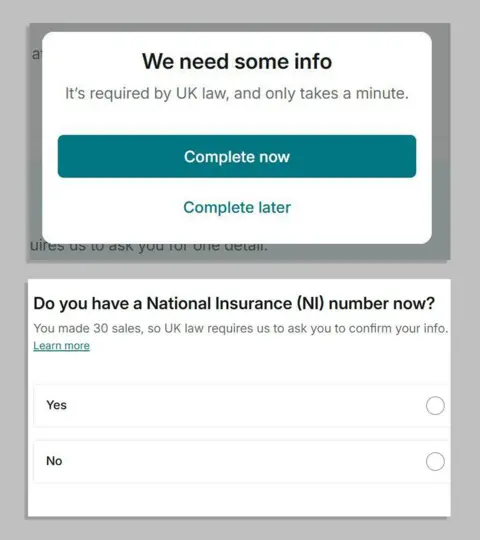
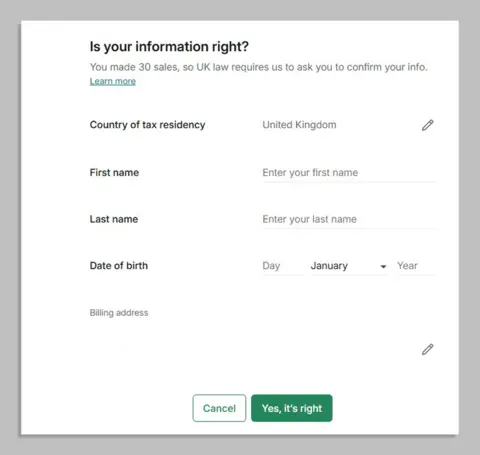
The pop-up alert Billie received sends Vinted users to a form asking for their name, address and NI number “as required by UK law”.
Some Vinted sellers have posted screenshots of the messages on TikTok and Instagram asking if they have to give their details, and if they do, will they be taxed.
 Vinted
One user posted on Reddit: “Vinted is asking for my National Insurance number, does this mean I have to pay taxes? I barely make money on Vinted – what happens if I ignore this?”
Chartered accountant Abigail Foster says while a lot of people may panic when asked for tax information by Vinted, for most users this is nothing to worry about.
“If you’re simply selling your own second-hand clothes or household items, you won’t owe any tax, even when Vinted shares that data with HMRC,” she says.
“This rule is aimed at people who are effectively running a resale business, not those decluttering their wardrobes.”
It would be very easy for HMRC to tell if someone was trading by checking for multiple listings of the same product or items bought and quickly resold for higher prices, she adds.
New reporting requirements for digital platforms came into effect on 1 January 2024 with the government saying they would help it “bear down on tax evasion”.
Vinted sellers reported receiving in-app messages asking for their NI number around this time last year.
Information must be shared with HMRC by the end of the calendar year that sellers hit the 30 item or £1,700 threshold, according to Vinted.
 Vinted
An HMRC spokesperson said: “People remain responsible for their own tax affairs, and for assessing whether they need to complete a tax return to report trading income.
“As your side hustle grows, any unpaid tax might come under the spotlight.
“This could lead to an unexpected and possibly very large tax bill if you haven’t told us about the extra money you’ve been earning. That’s why it’s really important to stay on top of your tax affairs.”
Research commissioned by HMRC in 2022 suggested around one in 10 UK adults participated in what it called the “hidden economy” – earnings that are entirely or partially concealed from the tax authority to avoid paying taxes.
What are the tax rules for online selling?
- Platforms must tell HMRC about anyone who sells more than 30 items or whose total sales hit £1,700 in a year
- This does not automatically mean these people have to pay tax
- Selling your own clothes or other items is not taxable if you’re selling them for less than you originally paid as you are not making a profit
- Tax only applies if you are buying stock to resell, or making more than £1,000 in profit per year
- If you sell an item for more than £6,000, you may need to pay Capital Gains Tax.
- You can use HMRC’s online tool to check if you need to tell the authority about your income
Business
India opposes China-led IFD pact’s inclusion; flags risks to WTO framework and core principles – The Times of India
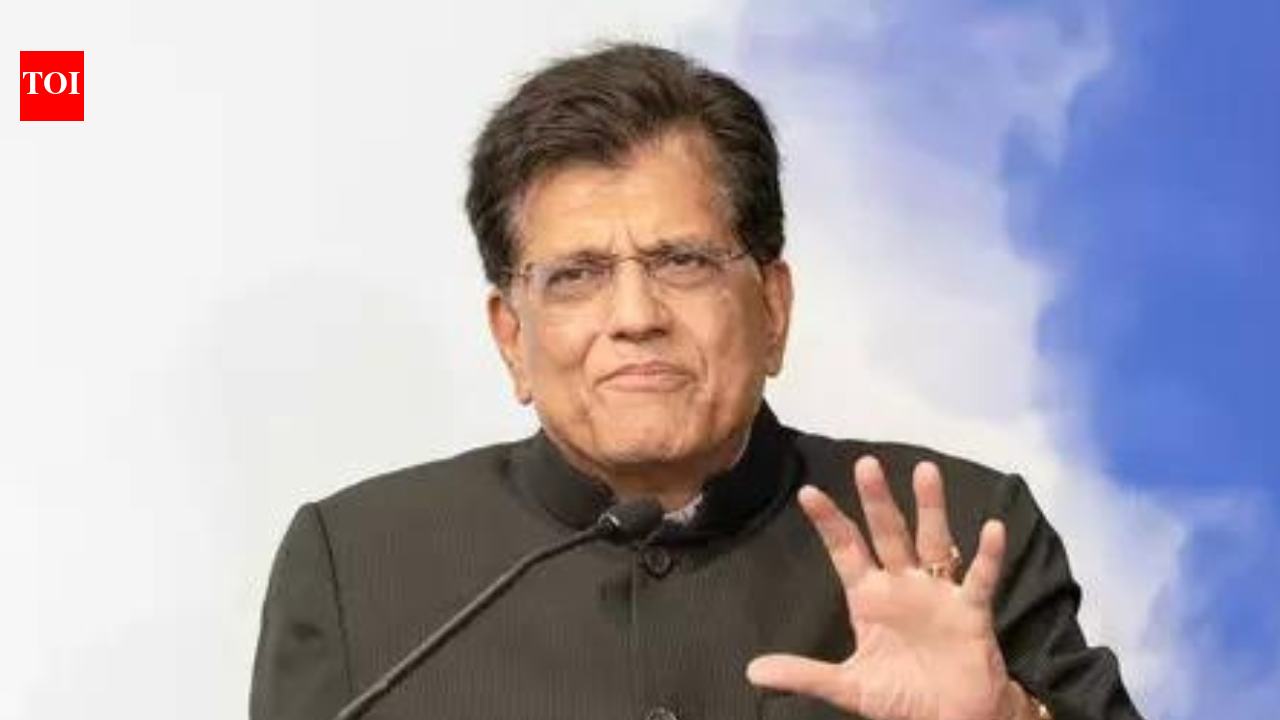
India on Saturday said it has strongly opposed the China-led Investment Facilitation for Development (IFD) Agreement being incorporated into the World Trade Organisation (WTO) framework, flagging concerns over its systemic implications, PTI reported.The issue was raised at the ongoing 14th ministerial conference (MC14) of the WTO in Yaounde, Cameroon, where Commerce and Industry Minister Piyush Goyal said such a move could weaken the institution’s foundational structure.“Incorporation of the IFD agreement risks eroding the functional limits of the WTO and undermining its foundational principles,” Goyal said in a social media post.“At #WTOMC14, drawing inspiration from Mahatma Gandhi ji’s philosophy of Truth prevailing over conformity, India showed the courage to stand alone on the contentious issue of the IFD Agreement and did not agree to its incorporation into the WTO framework as an Annex 4 Agreement,” he said.Annex 4 of the WTO Agreement contains Plurilateral Trade Agreements that are binding only on members that have accepted them, unlike multilateral agreements which apply to all members.Goyal said that as part of WTO reform discussions, members are deliberating on guardrails and legal safeguards for plurilateral agreements before integrating any such outcomes into the framework.“In view of the systemic issue at hand, India showed openness to have good faith, comprehensive discussions and constructive engagement under the WTO Reform Agenda,” he added.India had also opposed the pact during the WTO’s 13th ministerial conference (MC13) in Abu Dhabi.The Investment Facilitation for Development proposal was first mooted in 2017 by China and a group of countries that rely significantly on Chinese investments, including those with sovereign wealth funds. The agreement, if adopted, would be binding only on signatory members.
Business
Middle East crisis: Jubilant FoodWorks reports some Domino’s outlets affected by LPG shortage – The Times of India

Jubilant FoodWorks Ltd (JFL), which operates Domino’s Pizza and Dunkin Donuts in India, has reported constraints in LPG cylinder supplies across parts of its store network due to the ongoing West Asia war, according to ET.In a filing to the BSE, the company said, “Operational impact at this stage is limited and being actively managed. The company is taking several steps to conserve LPG and working overtime to move to alternate energy sources like electricity and piped natural gas (PNG).”It added that it is in continuous touch with oil marketing companies to track developments and respond to the evolving situation. “The company is in constant engagement with oil marketing companies (OMCs) to remain apprised of the latest developments and plan operational responses accordingly, given the rapidly evolving nature of the situation,” the filing said.The company noted that it is closely monitoring the situation as supply disruptions persist.The impact is being felt across the restaurant industry, with several chains facing similar challenges due to LPG shortages.On March 10, the National Restaurant Association of India (NRAI) had advised its five lakh members to consider shorter operating hours, reduce items requiring long cooking times or deep frying, and adopt fuel-saving measures such as using lids while cooking, in view of supply constraints linked to the Gulf war.
Business
Russia sells reserve gold for first time in 25 years to fund Ukraine war deficit: Report – The Times of India

Russia has begun selling physical gold from its central bank reserves for the first time in 25 years, as the government seeks to plug a widening budget deficit driven by sustained military expenditure, according to a report by Berlin-based news outlet bne IntelliNews.Regulatory data show that between 2022 and 2025, Russia sold gold and foreign currency worth over RUB 15 trillion ($150 billion), followed by an additional RUB 3.5 trillion ($35 billion) in just the first two months of 2026, the report noted. In January alone, the Central Bank of Russia sold 300,000 ounces of gold, followed by another 200,000 ounces in February.The move marks a significant shift in reserve management. Earlier, gold transactions were largely notional, involving transfers between the Ministry of Finance and the central bank without physical movement of bullion. In recent months, however, the central bank has started selling actual gold bars into the market.As a result, Russia’s gold holdings have declined to 74.3 million ounces, the lowest level in four years. The disposal of 14 tonnes in January and February is the largest two-month sale since the second quarter of 2002, when 58 tonnes were offloaded in a single tranche.The sales come as Russia’s fiscal position comes under increasing strain. The government ended 2025 with a budget deficit of 2.6 per cent of GDP, compared to an initial projection of 0.5 per cent, Berlin-based bne IntelliNews report noted. Economists estimate the actual deficit could be closer to 3.4 per cent, with some payments deferred to 2026 to limit the reported gap.Pressure on the budget has intensified as oil prices weakened in the second half of the year and US sanctions tightened, reducing the contribution of oil and gas tax revenues to about 20 per cent of total revenues — roughly half of pre-war levels.The decision to sell gold has also been influenced by the sharp rise in bullion prices to above $5,000 per ounce. This surge has pushed Russia’s international reserves to over $809 billion as of February 28, including around $300 billion of assets frozen in the West, according to the Central Bank of Russia. Of this, gold reserves alone are valued at about $384 billion.Russia currently holds more than 2,000 tonnes of gold, making it the world’s fifth-largest sovereign holder, according to World Gold Council data. The country had built up these reserves over the years to reduce dependence on dollar-denominated assets, especially after sanctions imposed following the annexation of Crimea in 2014 and further tightened after the invasion of Ukraine in 2022.Since 2022, the Ministry of Finance has relied on multiple funding channels to manage budget pressures. These include drawing from the National Welfare Fund, which still holds around RUB 4 trillion, increasing issuance of domestic OFZ treasury bonds, and raising value-added tax rates, which account for about 40 per cent of government revenues.The shift to selling physical gold suggests that Russia is now tapping its liquid reserve buffers more directly, underlining the growing fiscal strain as the conflict in Ukraine continues into its fourth year.


‘Strictly Come Dancing’ in chaos as Tess Daly and Claudia Winkleman exit

Man City show why they are worthy WSL title winners as tired United wilt

Trevor Oakes of ‘Showaddywaddy’ dies aged 79, know the reason here

-
 Business1 week ago
Flipkart group CFO to leave co amid IPO plans – The Times of India
-

 Fashion1 week ago
China’s textile & apparel exports surge 17% to $50 bn in Jan-Feb 2026
-

 Sports1 week ago
Rating Adidas’ 2026 World Cup away shirts: Argentina, Spain, Mexico and more
-

 Sports1 week ago
American Conference Commissioner Tim Pernetti thanks Trump for Army-Navy game executive order
-
Tech1 week ago
The Corsair 4000D RS PC Case Keeps Your System Cool
-
 Business4 days ago
Property Play: Home flippers see smallest profits since the Great Recession, real estate data firm says
-
 Business1 week ago
‘Marriage penalty’ in Washington state’s new millionaire tax stirs debate
-

 Tech1 week ago
Gamers Hate Nvidia’s DLSS 5. Developers Aren’t Crazy About It, Either