

Fashion
South Korea to engage US on investment bill after tariff hike threat

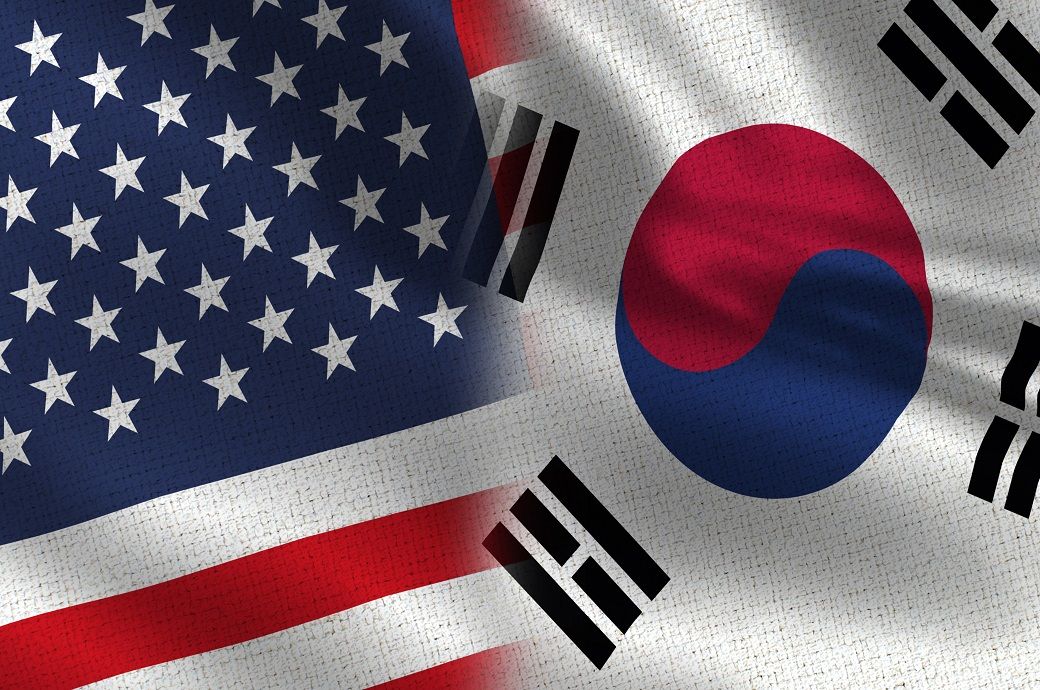
The statement followed President Donald Trump’s announcement to raise reciprocal tariffs and auto duties on South Korea.
South Korea’s Ministry of Economy and Finance has said Seoul will engage with Washington over the ongoing legislative progress on a bill to support the former’s investment plans in the US.
The statement followed President Donald Trump’s announcement to raise reciprocal tariffs and auto duties on South Korea.
South Korea’s Ministry of Trade, Industry and Resources is also closely monitoring the situation.
“We are currently working to gauge the intentions of the US side,” the ministry said in a message to journalists.
“Going forward, we will engage with the US government to explain developments in discussions over the legislation at the National Assembly,” the ministry was quoted as saying by domestic media outlets.
A Truth Social post by Trump said he is raising ‘reciprocal’ tariffs and auto tariffs on South Korea to 25 per cent from 15 per cent as the Korean legislature has not yet completed the domestic process to implement the countries’ bilateral trade deal.
In November 2025, Seoul’s ruling Democratic Party of Korea submitted a special bill to support the country’s $350-billion investment pledge to the United States—part of the tariff deal.
South Korea’s Ministry of Trade, Industry and Resources is also closely monitoring the situation. Industry Minister Kim Jung-kwan, who is currently in Canada, will visit Washington for talks on the matter, with a meeting with US Commerce Secretary Howard Lutnick being arranged, the ministry said in a statement.
Fibre2Fashion (DS)









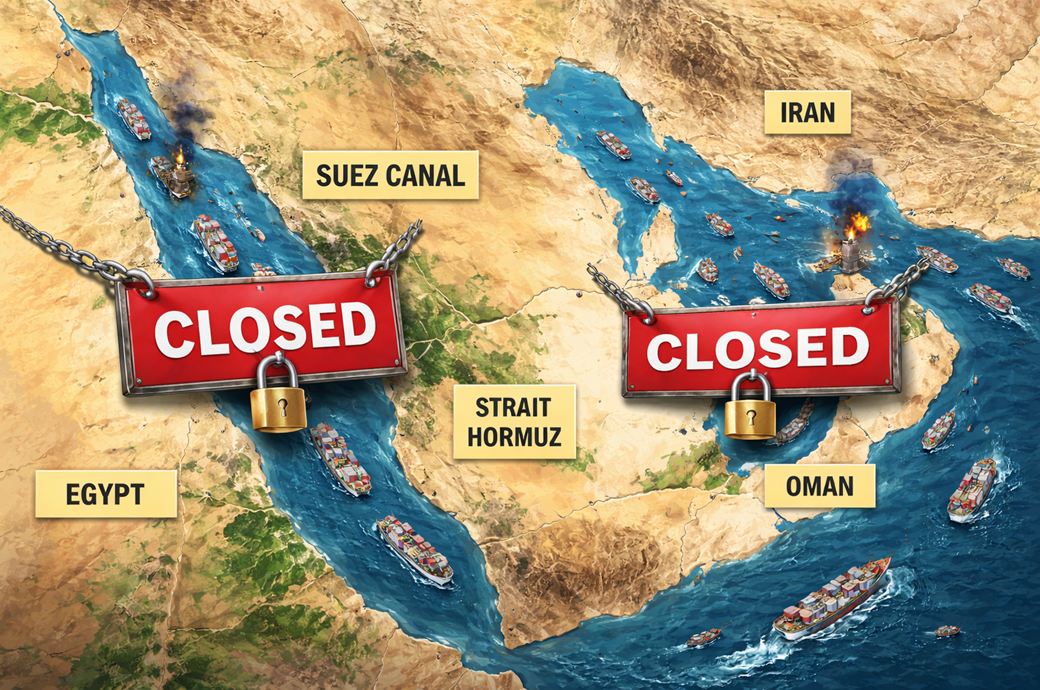
For the first time in modern maritime history, both of the Middle East’s critical shipping chokepoints—the Strait of Hormuz and Bab el-Mandeb (Red Sea)—are simultaneously closed or under active threat to major commercial shipping. Following the launch of US-Israeli strikes on Iran on February **, ****, Iran declared the Strait of Hormuz closed to Western-allied vessels within ** hours. Tanker traffic collapsed from approximately *** vessels per day to near-zero. Within the same **-hour window, Houthi forces in Yemen threatened to resume attacks on Red Sea shipping, forcing Maersk to re-pause all trans-Suez sailings just weeks after a **-month diversion had finally ended.
All four major global container carriers—Maersk, MSC, CMA CGM, and Hapag-Lloyd—suspended Gulf transits on March *. P&I war risk insurance was cancelled by more than ** International Group clubs, effective March *. Dubai’s Jebel Ali port, the critical transshipment hub for South Asian textile manufacturers, has been struck by Iranian missiles and drones, operating at severely reduced capacity. Gulf airline cargo capacity—Emirates, Qatar Airways, Etihad—is down by over ** per cent, crippling the air freight corridor that Bangladesh’s garment exporters depend on for time-sensitive deliveries to Europe.
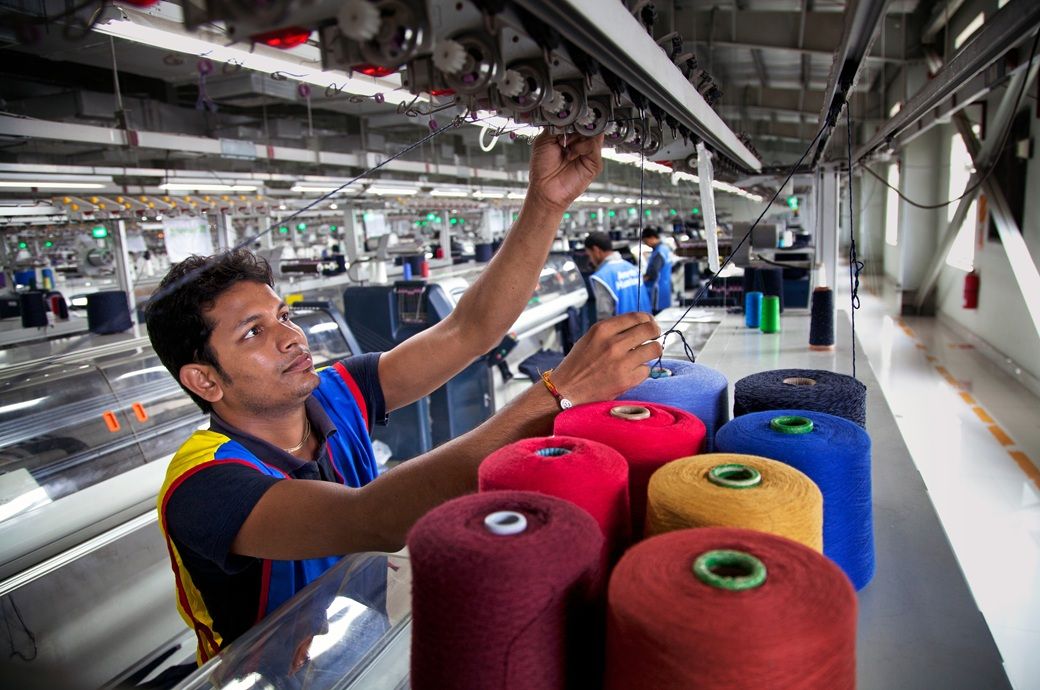
The sector has navigated shocks before, including price wars, factory compliance reforms, political instability and swings in global demand. What makes the current moment different is the simultaneity of pressures. Financial strain, weakening export momentum, rising competition and geopolitical disruptions are emerging at the same time, just as Bangladesh approaches a major transition in its global trade status.
According to export performance data from the Bangladesh Garment Manufacturers and Exporters Association (BGMEA), compiled from Export Promotion Bureau (EPB) statistics, Bangladesh’s ready-made garment (RMG) exports reached $**.** billion between July **** and January ****, accounting for about ** per cent of the country’s $**.** billion merchandise exports. The International Labour Organization estimates that the export-oriented garment sector employs around * million workers, highlighting the scale of an industry central to Bangladesh’s economy.
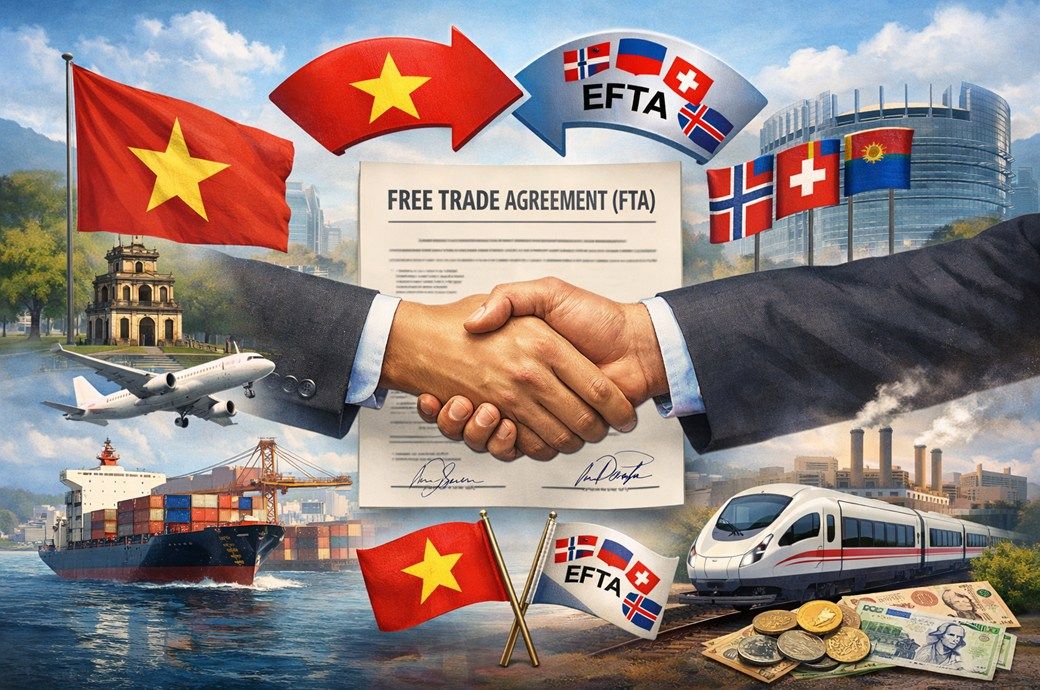
The latter’s Deputy Minister of Industry and Trade Nguyen Sinh Nhat Tan and director of the former’s State Secretariat for Economic Affairs Helene Budliger Artieda agreed that Vietnam and the EFTA will try to conclude talks by late June 2026 on the sidelines of the EFTA ministerial meeting in Iceland,.
Switzerland and Vietnam have agreed to accelerate negotiations on a free trade agreement between Vietnam and the European Free Trade Association (EFTA), aiming to conclude discussions during the 20th negotiation round in Hanoi.
Both sides are targeting finalisation by late June 2026 in Iceland, with the pact expected to drive investment, create jobs and facilitate technology transfer.
The proposed FTA will create new opportunities for Swiss enterprises to expand investment in Vietnam, helping generate jobs, foster technology transfer and support the country’s modernisation drive over the next five years, a domestic news agency reported.
The agreement is also expected to significantly strengthen trade and investment links between Vietnam and Switzerland, while enhancing regional supply chains and promoting sustainable growth.
Fibre2Fashion News Desk (DS)


Suez and Hormuz shut together, triggering global supply shock
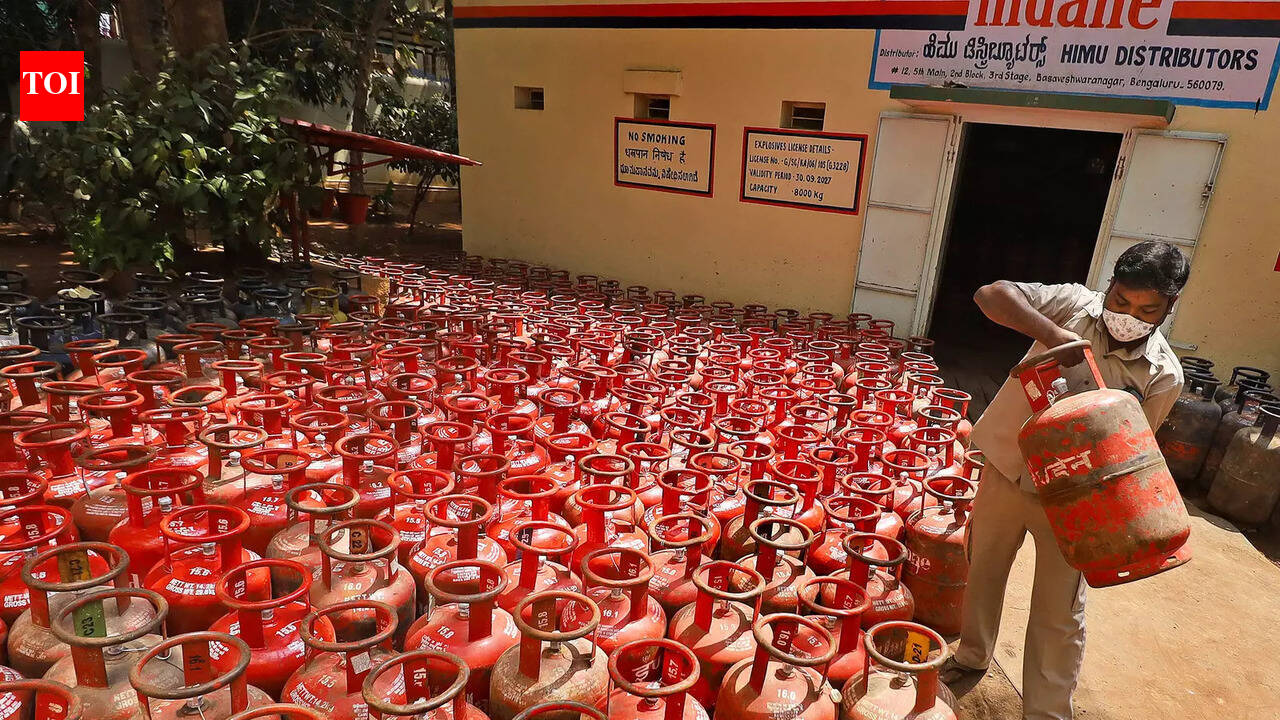
LPG crisis: Centre pushes states to fast-track switch to PNG amid Hormuz supply disruption – The Times of India

Bangladesh apparel faces its toughest stress test amid war disruption

Stock market crash today (March 12, 2026): Nifty50 opens below 23,600; BSE Sensex down over 900 points on continuing US-Iran war – The Times of India

Intertextile Shanghai 2026: Fringe events spotlight market trends

What time will NASA’s 600 kg satellite crash to Earth today— 14 years after launch?

-
Business6 days ago
Stock market crash today (March 12, 2026): Nifty50 opens below 23,600; BSE Sensex down over 900 points on continuing US-Iran war – The Times of India
-
 Fashion1 week ago
Intertextile Shanghai 2026: Fringe events spotlight market trends
-
 Entertainment1 week ago
What time will NASA’s 600 kg satellite crash to Earth today— 14 years after launch?
-

 Fashion1 week ago
German brand Adidas posts 13% revenue growth in 2025
-

 Tech7 days ago
Meta Developed 4 New Chips to Power Its AI and Recommendation Systems
-

 Fashion7 days ago
UK’s Topshop unveils Tolu Coker capsule collection
-

 Fashion7 days ago
India’s textile recycling market may reach $3.5 bn by 2030: Report
-
 Entertainment7 days ago
Gas, food, household prices explained