

Tech
Spray 3D concrete printing simulator boosts strength and design

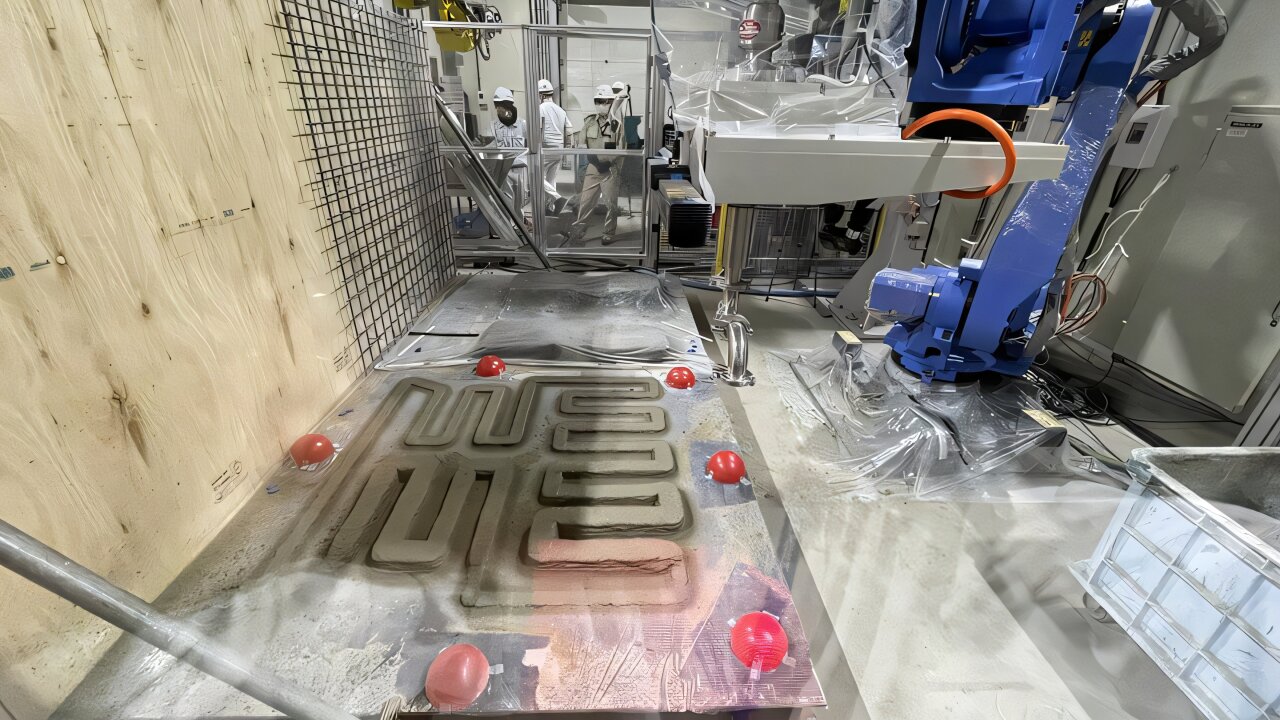
Concrete 3D printing reduces both time and cost by eliminating traditional formwork, the temporary mold for casting. Yet most of today’s systems rely on extrusion-based methods, which deposit material very close to a nozzle layer by layer. This makes it impossible to print around reinforcement bars (rebars) without risk of collision, limiting both design flexibility and structural integrity of builds.
Kenji Shimada and researchers in his Carnegie Mellon University’s Computational Engineering and Robotics Laboratory (CERLAB), are breaking through that limitation with a new simulation tool for spray-based concrete 3D printing.
“Spray-based concrete 3D printing is a new process with complicated physical phenomena,” said Shimada, a professor of mechanical engineering. “In this method, a modified shotcrete mixture is sprayed from a nozzle to build up on a surface, even around rebar.”
The ability to print freely around reinforcement is especially important in places like Japan and California, where earthquakes are an imminent threat and structural strength is critical.
“To make this technology viable, we must be able to predict exactly how the concrete will spray and dry into the final shape,” Shimada explained. “That’s why we developed a simulator for concrete spray 3D printing.”
The new simulator can model the viscoelastic behaviors of shotcrete mixtures, including drip, particle rebound, spread, and solidification time. This way, contractors can assess multiple printing paths based on a CAD design with the simulator to evaluate whether spray 3D printing is a feasible fabrication technique for their structure.
The team traveled to Tokyo, Japan, where Shimizu Corporation already operates spray 3D printing robots to validate their model. In the first test, the team focused on the simulator’s ability to predict shape based on the speed of the nozzle’s movement. With 90.75% accuracy, the simulator could predict the height of the sprayed concrete. The second test showed that the simulator could predict printing over rebar with 92.3% and 97.9% accuracy for width and thickness, respectively.
According to Soji Yamakawa, a research scientist in Shimada’s lab and the lead author of the team’s research paper published in IEEE Robotics and Automation Letters, a simulation of this kind would typically take hours, if not days, to run.
“By making wild assumptions, we were able to successfully simplify a super complex physics simulation into a combination of efficient algorithms and data structures and still achieved highly realistic output,” Yamakawa said.
Future work will aim to increase accuracy by identifying environmental parameters like humidity, optimizing performance, and adding plastering simulation to create smoother finished products.
“There are still so many applications and technologies that we can develop with robotics,” said Kyshalee Vazquez-Santiago, a co-author of the paper and a mechanical engineering Ph.D. candidate leading the Mobile Manipulators research group within CERLAB.
“Even in concrete 3D printing, we are working with an entirely new type of application and approach that has so many advantages but leaves so much room for further development.”
More information:
Soji Yamakawa et al, Concrete Spray 3D Printing Simulator for Nozzle Trajectory Planning, IEEE Robotics and Automation Letters (2025). DOI: 10.1109/lra.2025.3615038
Citation:
Spray 3D concrete printing simulator boosts strength and design (2025, November 11)
retrieved 11 November 2025
from https://techxplore.com/news/2025-11-spray-3d-concrete-simulator-boosts.html
This document is subject to copyright. Apart from any fair dealing for the purpose of private study or research, no
part may be reproduced without the written permission. The content is provided for information purposes only.








Tech
‘Uncanny Valley’: Iran’s Threats on US Tech, Trump’s Plans for Midterms, and Polymarket’s Pop-up Flop

Kate Knibbs: So, you went twice?
Makena Kelly: Yes, Kate. I went twice.
Kate Knibbs: I missed that.
Zoë Schiffer: Wait, is the Pentagon Pizza thing a joke about the pizza predicting the war?
Makena Kelly: Yeah.
Zoë Schiffer: Oh, my God.
Makena Kelly: Because they had these Pentagon pizza trackers up. When I returned the second night, yes, I came back the second night. Everything was working for the most part. There were still some screens that were turned off, but I never saw any actual Bloomberg terminals. There were some monitory Bloomberg type terminal things that it looked like Polymarket had developed themselves, but the real $50,000 Bloomberg terminal was nowhere to be found. And yeah, the second night, again, it was mostly people looking to gawk at the event, except I did find a couple of people who placed some bets on platforms like Polymarket and Kalshi. One was named William, and he said he was a member of the military, wouldn’t give me his full name. And he last year got involved in this for the first time by putting in, I think, all of his tax return into Oklahoma City sports betting.
Makena Kelly, archival audio: So, you used Kalshi?
William, archival audio: Yes.
Makena Kelly, archival audio: When did you first start using the service?
William, archival audio: Probably when I got my tax return back.
Makena Kelly, archival audio: OK.
William, archival audio: So, I filed my taxes pretty early and I was like, “Oh, sweet. I got my tax return. What am I going to do with it?” So, I was like, “I’m going to just put it on Kalshi.”
Makena Kelly: He said that he goes up and down 100 dollars, but he hasn’t made any major winnings. Some of the stuff that we’ve heard. Some people making crazy insider bets making millions and millions of dollars. This is just a guy who was interested in this and just plays it for fun, it sounds like.
Brian Barrett: Kate, what do you see when you see a pop-up like this and Polymarket trying to—is it an attempt to legitimize itself to just a marketing stunt? And how does it tie into what you’re seeing with these companies anyway, that there’s the explosive growth that they’ve got trying to reach out to so many people and getting so many people hooked on what they’re offering?
Kate Knibbs: I mean, this particular event definitely seems like a very bald effort to woo DC-based journalists, if nothing else. One thing that Makena said sort of encapsulates what’s going on right now, the thing about the guys in the Palantir hoodies. So, I think it was the same week that this bar opened. Polymarket announced a partnership with Palantir and Palantir is helping them protect the integrity of their sports market. So, Palantir is going to be basically attempting to help Polymarket catch insider traders and market manipulators in all the sports games, which is kind of wild. I actually asked Polymarket last week whether they had any other deals with Palantir when I was trying to get them to say anything about whether they were investigating the Iran bets that have been raising a lot of eyebrows. And they said that Palantir was only helping them with sports, which I thought was freaking weird. And it speaks to how they’re rapidly expanding, but doing so in this really messy ad hoc way that doesn’t really make a lot of sense. Because I was like, “If you’re going to get Palantir involved, why wouldn’t you have them do this geopolitical stuff instead of March Madness?” Yeah, wild, wild times.

On the hunt for a new Android smartphone? Amazon currently has the 128GB Pixel 10 in Obsidian marked down to just $649, $150 off its usual price. It’s one of our favorite Android smartphones, particularly for users who take a lot of photos.
-
Photograph: Julian Chokkattu
-
Photograph: Julian Chokkattu
-
Photograph: Julian Chokkattu
-


Pixel 10, Pixel 10 Pro, and Pixel 10 Pro XL
The biggest advantage to a Pixel over other Android smartphones is that you get the latest features from Google as soon as they’re available, often before other brands implement them. There are special camera modes that let you stitch together multiple group shots, or help you improve the angle and lighting with helpful tips. You’ll also find novel features like real-time translations and spam call screening, and Google even figured out how to let you AirDrop files with iOS users.
All of that functionality is powered by some of the better hardware you can find in an Android phone. The Pixel 10 sports a 6.3-inch OLED display with a 120Hz refresh rate for gaming and smoother scrolling. The Tensor G5 is a step up from the 10a’s Tensor G4 chip, and sports 12 GB of memory for better performance. They even support Qi2 wireless charging, making them compatible with existing MagSafe accessories.
While the Pixel 10a will satisfy most folks, the Pixel 10 offers a variety of upgrades over the more basic model, most of which pertain to the cameras and image processing. The rear camera has a proper 5X optical zoom, letting you nail those nature shots without scaring the wildlife, and the front camera sports auto-focus, which will make your big group selfies less of a headache. Oddly, the battery is actually a bit smaller in the Pixel 10, but neither disappointed us when it came to longevity.
If you’re sold on the Pixel 10, I spotted the discounted $649 price point for the 128 GB model in both Obsidian and Lemongrass, or $749 in Indigo. If you need more storage, the Obsidian and Frost colors were both marked down to $749 for the upgraded 256 GB version. If you’re wondering what other Android smartphones we like, make sure to check out our in-depth guide with picks from Google, Samsung, and OnePlus.
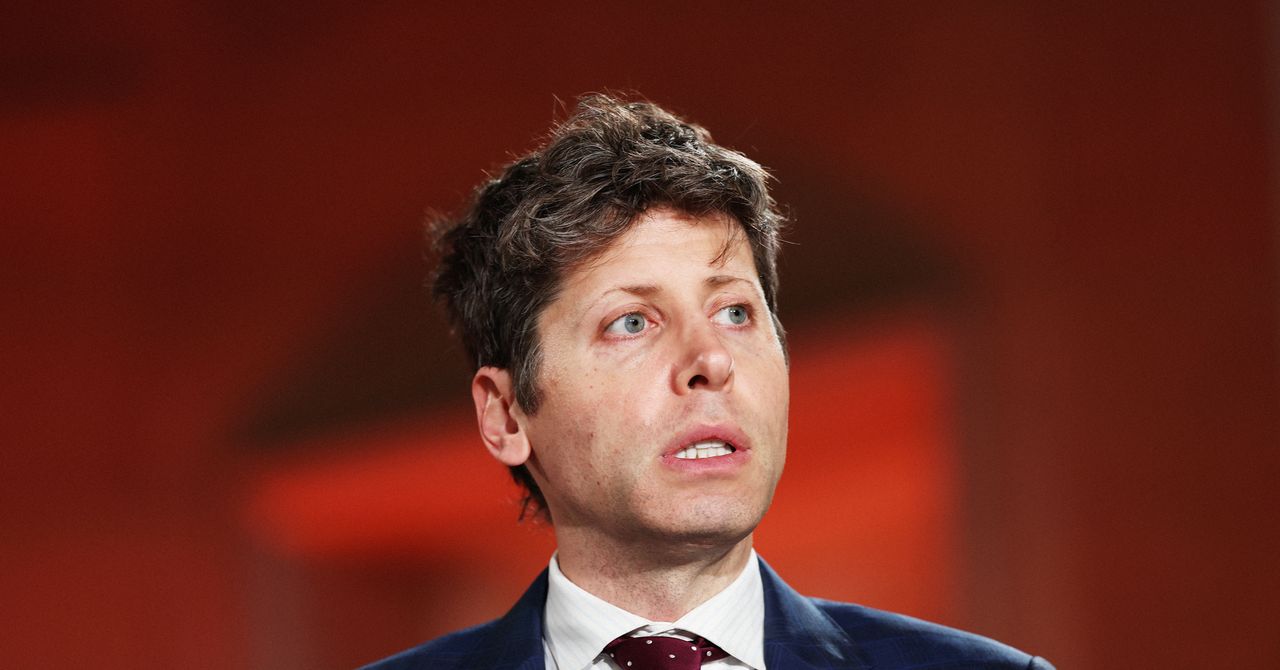
OpenAI announced Thursday that it had acquired the online business talk show TBPN for an undisclosed sum. The move comes as OpenAI struggles with its public image, which has taken a significant hit in recent months.
Since launching in 2024, TBPN has risen in popularity among Silicon Valley circles by offering a daily live stream about the technology industry that’s seen as more tech-friendly than traditional outlets. The show’s two hosts, John Coogan and Jordi Hays, offer real-time commentary on breaking news, cycle through viral social media posts, and interview executives from companies including Meta, Salesforce, Palantir and OpenAI. It’s become especially popular among OpenAI staff and other AI researchers, many of whom are addicted to the social media platform X.
It’s hard to understand how a media startup fits into OpenAI’s core businesses selling ChatGPT, Codex, and a new super app the company is developing to consumers and enterprises. Last month, OpenAI’s CEO of Applications, Fidji Simo, told staff in an all hands meeting that the company needed to cancel its side projects and refocus around its core businesses.
In a memo to staff announcing the acquisition, Simo said the typical communications playbook does not apply to OpenAI. “We’re not a typical company,” she said in the memo, which was also published as a blog. “We’re driving a really big technological shift. And with the mission of bringing AGI to the world comes a responsibility to help create a space for a real, constructive conversation about the changes AI creates—with builders and people using the technology at the center.”
TBPN is a small business compared to OpenAI. The media firm says it generated $5 million in ad revenue last year, and was on track to make more than $30 million in revenue in 2026, according to the The Wall Street Journal. The show reportedly reaches around 70,000 viewers per episode across a variety of platforms. A source close to OpenAI says the company doesn’t expect TBPN to contribute financially to the business, though it will help with OpenAI’s communications strategy.
OpenAI has fallen under increased public scrutiny in recent months. After the company signed a deal with the Department of Defense in February, Anthropic’s Claude surged in downloads and claimed the top spot among Apple’s free apps. OpenAI’s leaders are also dealing with a growing QuitGPT movement which is made up of people who vow to never use OpenAI’s products. OpenAI President Greg Brockman cited AI’s popularity issues as a core reason for his increased political spending.
The acquisition makes OpenAI the latest Silicon Valley player to try owning and operating a news business. In recent decades, there have been several notable examples of technology leaders purchasing media firms, including Jeff Bezos buying The Washington Post, Marc Benioff buying Time Magazine, and Robinhood buying the newsletter company MarketSnacks. In each case, the acquisitions raised immediate questions about whether the outlets would remain truly independent. In her memo, Simo told staff that TBPN will retain editorial independence.
“TBPN is my favorite tech show. We want them to keep that going and for them to do what they do so well,” said OpenAI CEO Sam Altman in a post on X. “I don’t expect them to go any easier on us, [and I] am sure I’ll do my part to help enable that with occasional stupid decisions.”
OpenAI said TBPN will continue to “run their programming, choose their guests, and make their own editorial decisions,” according to Simo’s memo The company also said that TBPN will report directly to OpenAI’s VP of global affairs, Chris Lehane. WIRED previously reported how an economic research team under Lehane had struggled to report on AI’s negative impacts on the economy.


Transfer rumors, news: Four Premier League clubs want Rogers

Video: Skilled Foreign Workers Think About Leaving the U.S.

US manufacturing performance improves in March 2026

-

 Fashion1 week ago
Ho Chi Minh City bizs adjust production plans, seek new supply chains
-

 Sports7 days ago
Illinois defense gets tough, ousts Houston to reach Elite Eight
-

 Entertainment7 days ago
Lee Sang-bo dies at 45: Funeral details revealed
-

 Fashion6 days ago
EU apparel imports slump 15.48% YoY in Jan; Bangladesh hardest hit
-

 Fashion1 week ago
India’s Gen Z to drive half of fashion market by 2030: Reedseer
-

 Sports5 days ago
2026 NCAA men’s hockey tournament: Schedule, results
-
 Business7 days ago
How do you spot a fake online review?
-

 Fashion7 days ago
China rolls out tariff cuts on Congo imports from April 1